A long espresso, or lungo, is made by extracting the same coffee grounds with more water over a longer time, roughly doubling the volume to about 60ml. You get a milder, less concentrated shot with nuanced flavors and slightly higher caffeine. It requires a coarser grind and careful timing to avoid bitterness.
This gentle balance highlights bright acidity and roast notes, offering a refined experience. Keep exploring to master how beans, brewing, and flavor all come together in a perfect lungo. It’s a fun way to enjoy coffee if you like something a bit lighter but still full of character.
What Is a Long Espresso (Lungo)?
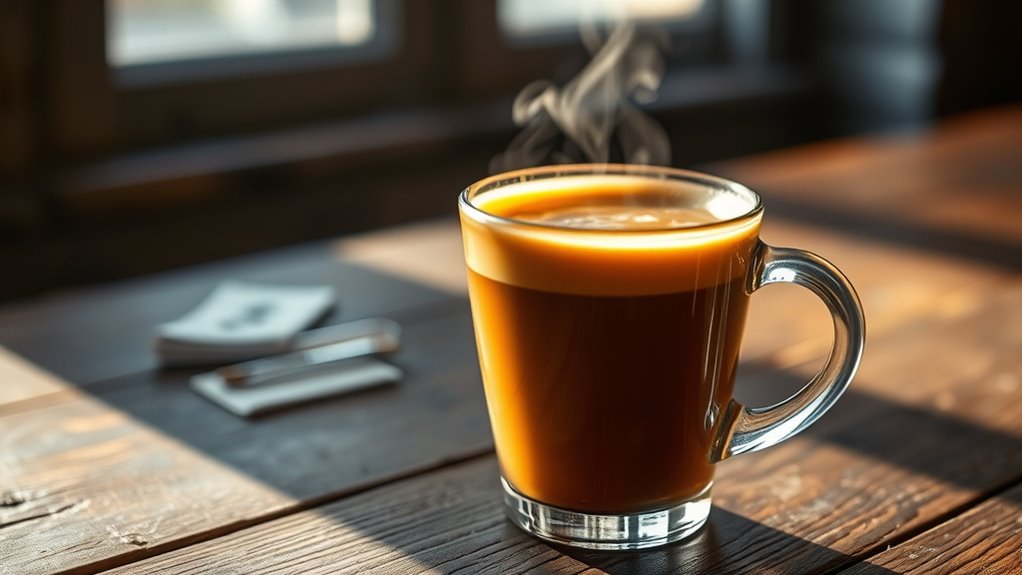
What makes a long espresso, or lungo, different from a regular espresso? You use the same amount of coffee grounds but extend the extraction process with more water, typically resulting in a 1:3 or 1:4 coffee-to-water ratio.
Instead of the usual 30ml shot, a lungo pulls about 60ml, doubling the water volume and lengthening the brew time to around 60 seconds.
This longer extraction releases more flavor compounds, producing a milder, less concentrated coffee with a slightly bitter edge. When you brew a lungo, you emphasize the roast and acidity, creating a distinct flavor profile.
So, it’s not just about more water—it’s about bringing out different notes in the coffee.
The result is a larger volume of coffee that feels more diluted, offering a different experience from the intense, concentrated taste of a standard espresso. If you’re looking for something a bit smoother but still flavorful, a lungo might be just what you want.
Since lungo extraction times exceed standard espresso ranges, adjusting grind size and timing is essential to maintain balance and avoid over-extraction.
Brewing a Long Espresso vs. Standard Espresso
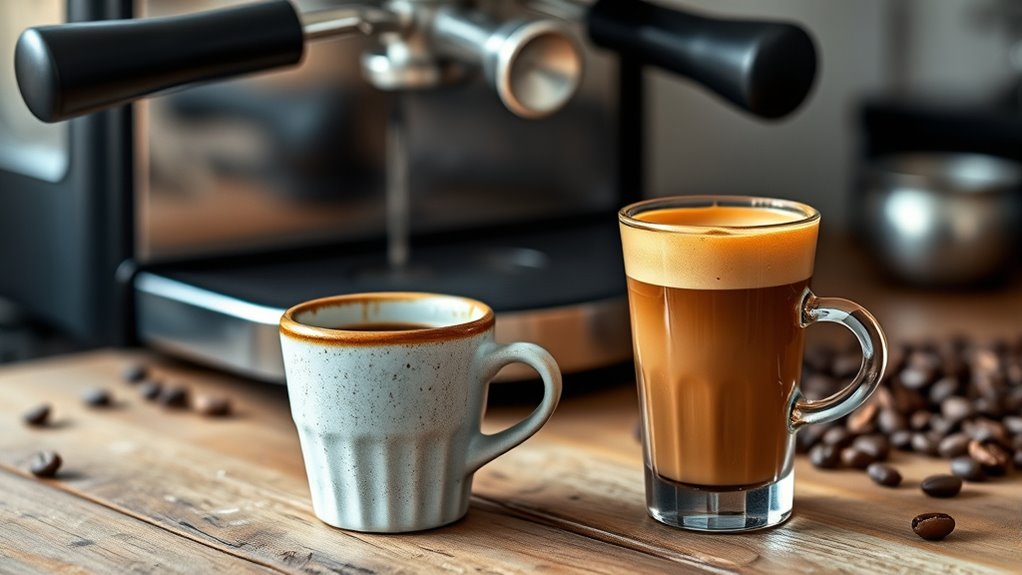
When you’re brewing a long espresso, you actually extend the extraction time to about 60 seconds. This means more water passes through the coffee grounds compared to a standard espresso, which has a shorter shot.
Because of that, you’ll often want to adjust the grind size to be a bit coarser. This helps prevent over-extraction and keeps the bitterness at bay.
Adjusting the grind and extraction time carefully is essential to maintain a balanced flavor profile and avoid sour or bitter notes.
Extraction Time Differences
How does extending the extraction time change your espresso experience? When you brew a long espresso, or lungo, you increase the extraction time well beyond the standard 25-30 seconds, often up to 60 seconds. This longer extraction lets more water flow through the coffee grounds, producing a larger volume with a milder intensity than a standard espresso.
But there’s a catch. The extended time also pulls out extra compounds, including some bitter notes, which subtly shift the flavor profile.
In contrast, a standard espresso’s shorter 25-30 second extraction offers a concentrated, robust shot. Proper grind size adjustments and tamping pressure are essential to avoid over-extraction and maintain a balanced flavor in a long shot espresso.
Grind Size Impact
Extending your espresso’s extraction time affects more than just flavor. It also means you need to adjust the grind size to keep things balanced. When brewing a long espresso, you’ll want a coarser grind to avoid over-extraction because the water stays in contact with the coffee for longer.
On the other hand, a standard espresso uses a finer grind to increase resistance. This speeds up extraction and gives you that concentrated shot everyone loves. Getting this balance right is key to avoiding bitterness or under-extraction.
Fine-tuning the grind size within an ideal range of 200-400 microns is essential for achieving balanced extraction and flavor clarity.
| Aspect | Standard Espresso |
|---|---|
| Grind Size | Fine |
| Flow Rate | Slower |
| Extraction Time | Short |
| Flavor Profile | Concentrated |
| Risk | Under-extraction |
| Aspect | Long Espresso |
| Grind Size | Coarser |
| Flow Rate | Faster |
| Extraction Time | Longer |
| Flavor Profile | Balanced, less bitter |
| Risk | Over-extraction |
Best Beans and Roasts for Long Espresso
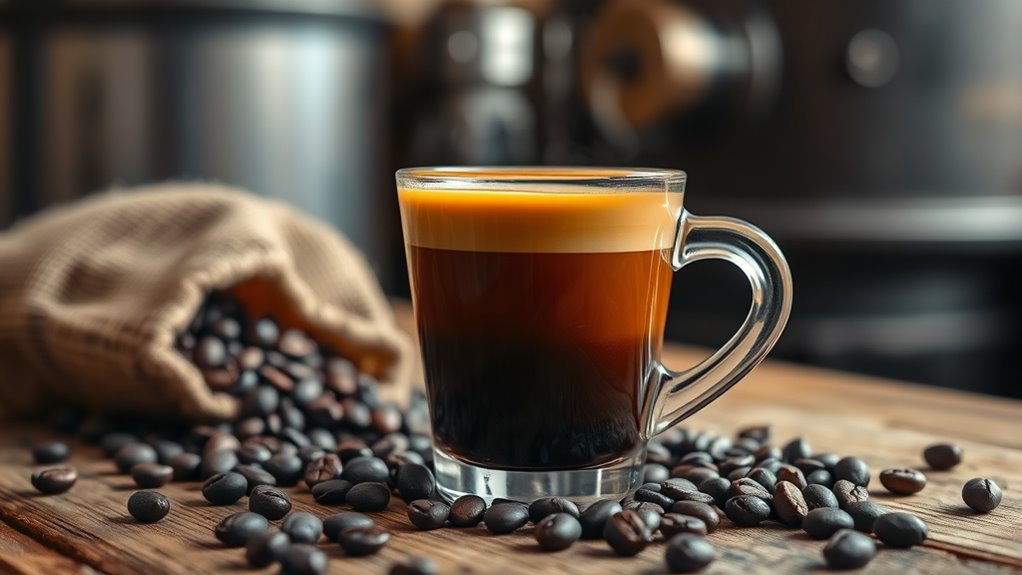
Although choosing the right beans might seem straightforward, selecting light to medium roasts with higher acidity and denser structure will considerably enhance your long espresso. These beans resist over-extraction, preserving clarity and subtlety in flavor.
Selecting light to medium roasts with high acidity helps preserve clarity and subtlety in your long espresso.
Here’s what to focus on:
- Opt for single-origin beans like Ethiopian Yirgacheffe or Kenyan AA to highlight complex, nuanced notes.
- Choose light to medium roasts to prevent bitterness and retain vibrant acidity.
- Avoid dark roasts, as their intense oils often lead to a harsh, smoky profile in longer extractions.
- Use freshly roasted beans, ideally within 2-4 weeks, to maximize brightness and flavor clarity.
Additionally, understanding how extraction time affects caffeine and flavor balance is crucial for brewing the perfect long espresso.
What Does a Long Espresso Taste Like?
What makes a long espresso stand out is its distinctive taste profile that leans toward milder, more nuanced flavors than a standard shot. You’ll notice a smoother, less intense body, where light fruitiness and bright acidity come forward thanks to the extended extraction.
This process allows more water to pass through the grounds, gently pulling out delicate flavors that highlight a balanced interplay of sweetness and subtle bitterness.
While a standard espresso delivers sharp, concentrated notes, a long espresso offers a layered, refined experience with roasted undertones that feel less overpowering.
Just be careful with extraction time. Overdoing it can lead to a slightly bitter or washed-out taste. When done right, you get a rich, complex cup that invites savoring every sip. However, achieving the ideal flavor also depends on factors like grind size and extraction, which are critical to balance taste and flow.
Caffeine in Long Espresso vs. Other Shots
When you compare caffeine in a long espresso to other shots, you’ll notice the larger brew volume usually means more total caffeine per serving.
Sure, the caffeine concentration is lower because of the dilution, but the longer extraction time can actually bump up the caffeine content a bit.
However, it is important to remember that longer extraction times can increase caffeine concentration while also affecting flavor balance.
Caffeine Content Comparison
Since a long espresso pulls more water through the coffee grounds, it naturally contains a higher total caffeine content than a standard espresso shot.
Although the caffeine concentration per ounce stays fairly consistent, the increased volume means you get more caffeine overall.
Here’s how caffeine content compares: a long espresso typically has 70 to 100 mg of caffeine per serving.
Standard espresso shots generally contain slightly less caffeine due to smaller volume.
The caffeine concentration per milliliter remains similar across espresso types.
The higher total caffeine in a long espresso makes it more prominent in your cup.
Understanding this helps you make informed choices based on how much caffeine you want in your coffee.
The longer extraction time in a lungo can lead to a higher caffeine yield, making it a popular choice for those seeking a stronger caffeine boost.
Impact Of Brew Volume
Although a long espresso uses the same amount of coffee grounds as a standard shot, the increased water volume changes how caffeine is experienced in your cup. The larger volume dilutes caffeine concentration, making each ounce less intense, yet total caffeine remains similar. The extended extraction might slightly increase caffeine but not enough to alter the overall impact.
If you drink multiple long espressos, your total caffeine intake can rise considerably due to volume alone.
It is important to note that espresso’s caffeine concentration is much higher per ounce compared to other brewing methods due to its fine grind and high-pressure extraction, contributing to its concentrated caffeine dose.
| Espresso Type | Volume (oz) | Caffeine Content (mg) |
|---|---|---|
| Standard Shot | 1 | 63 |
| Long Espresso | 2 | 70 |
| Double Shot | 2 | 125 |
This table highlights that while volume and caffeine intake vary, concentration shifts how you perceive each shot’s strength.
Drinks That Feature Long Espresso Shots
Three popular drinks that showcase long espresso shots, also known as lungos, are the Americano, long black, and certain cappuccino variations. These drinks benefit from the extended extraction process, which gives you a larger volume with a milder, more layered flavor profile.
When you choose a lungo, expect enhanced roast and earthy notes with slightly increased bitterness. It’s a great way to enjoy espresso if you want something a bit less intense but still full of character.
Here are four drinks featuring long espresso shots:
- Americano – Diluted with hot water, it offers a smooth, less intense taste than a standard espresso.
- Long Black – Similar to an Americano but with water added first, which helps preserve the crema.
- Lungo Cappuccino – Uses lungos to create a balanced, less sharp espresso base.
- Lungo Macchiato – A long shot marked with a small amount of milk or foam, highlighting complexity.
Because lungos involve a longer extraction time than standard espresso shots, they can extract more oils and polyphenols, contributing to their unique flavor profile.
Common Challenges Brewing Long Espresso
When you brew a long espresso, you’ll quickly notice that managing extraction time and grind size becomes vital to avoid bitterness or sourness. If your grind is too fine, the extended pull can lead to over-extraction, resulting in harsh, astringent flavors.
Conversely, using a coarser grind to lengthen extraction risks under-extraction, leaving the shot weak or sour. You also have to maintain consistent water pressure and temperature throughout the longer brewing process, which can be tricky but directly impacts shot quality.
Balancing water volume and contact time is essential to prevent the espresso from becoming either diluted or overly concentrated. Additionally, longer extractions increase the chance of clogging or channeling in your machine, complicating the process and affecting the final cup.
How to Brew the Perfect Long Espresso
Because brewing a perfect long espresso requires careful adjustments, you’ll need to start by using a coarser grind than you’d for a standard shot. This prevents over-extraction during the longer brewing time.
Next, adjust your espresso machine to increase the water volume to about 60ml for a double shot. You’ll want to extend the extraction time to 40-60 seconds to develop rich flavors without bitterness.
Increase water volume to 60ml and extend extraction to 40-60 seconds for rich, balanced flavors.
Throughout the process, closely monitor the pour to maintain balance. To optimize your brew, experiment with parameters like pressure and grind size.
Here’s how to get it right:
- Use a coarser grind to avoid over-extraction.
- Increase water volume to roughly 60ml.
- Extend extraction time to 40-60 seconds.
- Adjust pressure and grind size for smoothness.
Frequently Asked Questions
Can I Make a Long Espresso Using an Automatic Coffee Machine?
Yes, you can make a long espresso with your automatic machine by selecting the lungo setting or manually increasing brew time and water volume.
Just be sure to adjust the grind size carefully to avoid bitterness. This way, you’ll get the perfect balanced extraction.
It’s pretty simple once you get the hang of it! Give it a try and see how you like it.
How Does Water Temperature Affect a Long Espresso Extraction?
Think of water temperature as the conductor of an orchestra. If you don’t keep it between 195°F and 205°F, your long espresso either sounds sour and weak or harsh and bitter.
That messes up the harmony of flavors. So, keeping the temperature just right is key to a great shot every time.
Are Long Espressos Served in a Different Cup Than Regular Espresso?
Yes, you’ll find long espressos served in slightly larger cups, usually 3 to 4 ounces. These cups are designed to hold more volume and preserve temperature.
This way, your coffee’s aroma and flavor stand out compared to standard espresso shots. It makes a noticeable difference when you’re sipping.
Can I Use Decaf Coffee to Make a Long Espresso?
You can use decaf coffee for a long espresso, but expect about 97% less caffeine. Adjust your grind and extraction time carefully to balance flavor since decaf beans extract differently. This can change your espresso’s taste profile quite a bit.
Just keep in mind that the differences in extraction might mean you need to experiment a little to get it just right. But if you’re looking to cut back on caffeine, decaf is definitely a solid choice.
How Long Does It Take to Pull a Perfect Long Espresso Shot?
You’ll want to pull a perfect long espresso shot for about 45 to 60 seconds. This timing lets more water flow through, balancing flavors without bitterness.
Conclusion
Now that you know a long espresso isn’t just a watered-down shot but a bold, complex flavor adventure, you’re ready to elevate your coffee game. Brewing a perfect lungo demands precision and the right beans. Otherwise, you risk a bitter disaster.
Mastering this art reveals a rich, nuanced cup that’s anything but ordinary. So go ahead and embrace the long espresso. It’s like tasting coffee’s hidden symphony in every sip.