Your espresso tastes sour because your grind size is likely too coarse, causing under-extraction and fast shot times. Adjust to a finer grind and increase your dose slightly to slow water flow. Also, raise your brew temperature to 92-96°C for better extraction.
Make sure your beans are properly aged and stored. Finally, keep a strict cleaning routine to prevent flavor contamination. Keep exploring these fixes to master balanced, rich espresso flavor.
How to Adjust Grind Size to Fix Sour Espresso
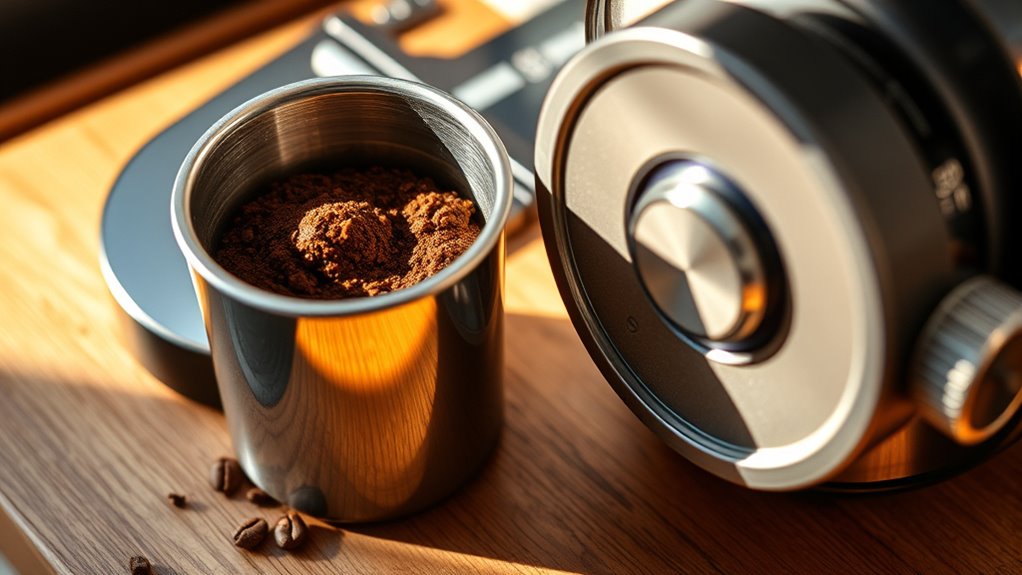
If your espresso shot pulls too quickly, typically under 25 seconds, it’s a clear sign you need to adjust your grind size to a finer setting.
A shot pulling under 25 seconds signals the need for a finer grind adjustment.
A finer grind increases water resistance, which slows the flow and allows for more thorough extraction. This helps reduce sourness in your shot.
Make small, consistent adjustments—about a quarter turn on your grinder. This way, you avoid drastic changes that could spoil the shot.
Aim for a grind texture that resembles powdered sugar.
Keep in mind, too fine a grind risks over-extraction and bitterness, while too coarse leaves sour notes.
After each adjustment, pull a shot and taste it to check the balance.
This precise tuning helps you find the ideal grind size for your beans and equipment, improving flavor without guesswork or unnecessary trial and error.
Remember, maintaining consistent particle size prevents channeling and ensures even extraction for better flavor clarity.
How to Fix Fast Shot Time for Better Espresso
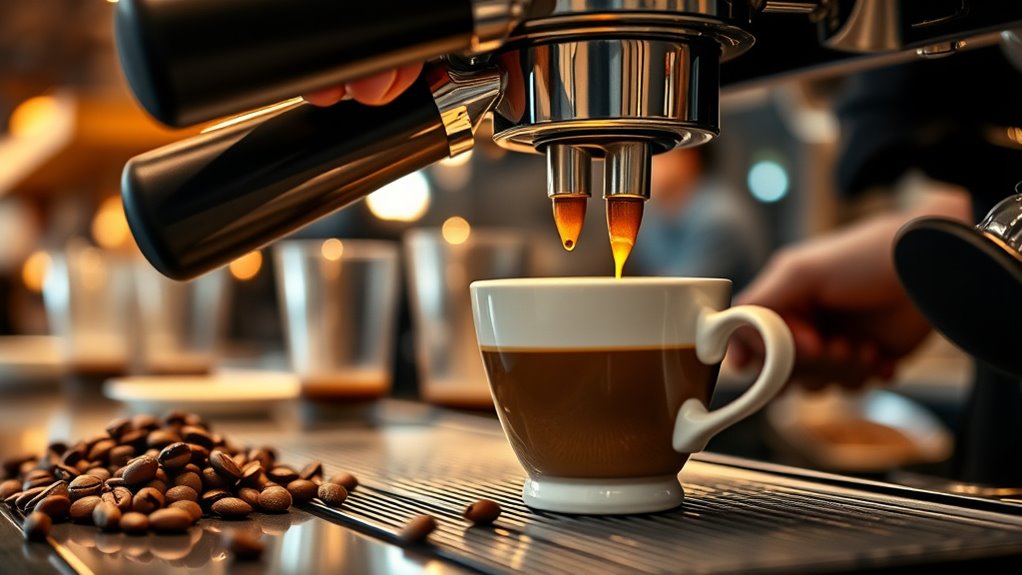
If your shot pulls in under 20 seconds, try dialing your grind a bit finer. This adds more resistance and helps stretch out the extraction time.
Next, make sure your dose is consistent and tamped evenly. This keeps the flow rate steady and helps the shot last longer.
Finally, you might want to bump up your brew temperature by 1-2°C. That can slow down the extraction and bring out a better balance in acidity.
Also, consider extending the pre-infusion time to promote even saturation and reduce channeling for improved flavor consistency.
Adjust Grind Size
When your espresso shot pulls too quickly, typically under 20 seconds, it usually means your grind is too coarse. This causes under-extraction and a sour taste. To fix this, adjust your grind size finer in small increments, about a quarter turn at a time.
A finer grind increases resistance, slows water flow, and extends extraction. This balances the flavors and reduces sourness. After each adjustment, re-tamp the grounds firmly and evenly to prevent channeling, which can skew extraction.
Aim for a consistent shot time between 25 and 30 seconds to optimize flavor. Avoid making large grind changes at once, as over-extraction risks bitterness.
Consistency in grind setting paired with precise tamping is key to dialing in a balanced, well-extracted espresso shot. Understanding the impact of grind size and consistency is essential for achieving optimal extraction and flavor.
Modify Dose Amount
Although adjusting grind size plays a crucial role, modifying the dose amount offers another effective method to fix fast shot times. By increasing your dose slightly, you increase resistance, slowing water flow and extending extraction time. However, be mindful of the basket’s capacity to avoid channeling and uneven extraction.
To optimize dose adjustments:
- Increase dose gradually. Try 20 to 21 grams instead of 18 grams and keep an eye on how the shot time changes.
- Distribute coffee evenly in the basket before tamping. This helps ensure uniform resistance.
- Tamp consistently to maintain stable pressure and avoid flow inconsistencies.
These precise dose modifications help control shot duration. They improve extraction balance and reduce sourness linked to under-extraction. Keep in mind that extraction time of around 25 seconds is ideal for proper caffeine and flavor extraction.
Increase Brew Temperature
Adjusting your dose can impact shot time, but fine-tuning brew temperature plays a big role in controlling extraction speed and flavor balance.
Increasing the brew temperature by 1-2°C slows water flow slightly, which improves extraction and reduces sourness. Before brewing, make sure your espresso machine’s temperature is stable to avoid fluctuations that cause under-extraction and acidity.
Aim for a precise range between 92-96°C (198-205°F). You can check this using a thermometer or your machine’s settings.
Raising the temperature helps dissolve more soluble compounds, especially in light or dense beans, which gives you a richer, less sour shot.
Just be careful not to overheat. Too high a temperature can cause over-extraction and bitterness.
Make small adjustments, and keep an eye on shot time and taste to find the perfect balance. This kind of precise control really helps improve flavor and fix fast shot problems effectively.
Remember that water mineral content also influences how temperature affects taste and consistency, so using properly mineralized water can enhance your espresso’s flavor when adjusting temperature.
Why Water Temperature Matters for Sour Espresso
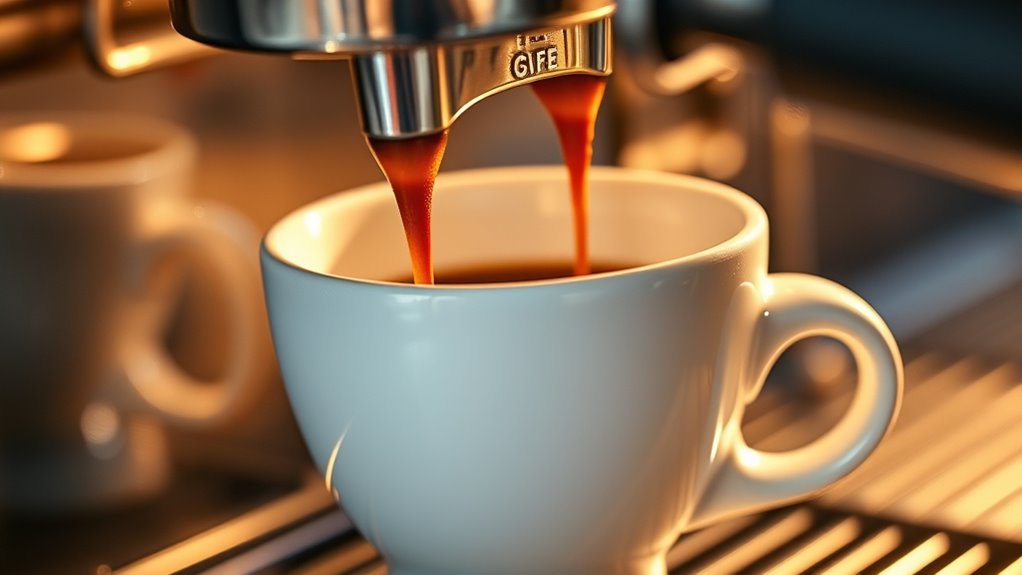
If your water temperature stays below 195°F (90°C), you’ll probably end up under-extracting your espresso, which often brings out sour flavors.
The sweet spot is between 195°F and 205°F (90°C to 96°C), where you can properly pull out the sweetness and balance the acidity.
Just make sure your machine is fully warmed up and keeps a steady temperature so you don’t get those sour notes creeping in.
Even small temperature fluctuations within this range can noticeably shift the flavor balance, so maintaining temperature stability is key to a great shot.
Optimal Temperature Range
When brewing espresso, maintaining water temperature between 92°C and 96°C (198°F to 205°F) is essential to extract balanced flavors without sourness.
If the temperature falls below 92°C, you risk under-extraction, which often produces sour, weak shots. Conversely, exceeding 96°C can cause over-extraction, leading to bitterness and burnt notes.
Consistency is key since temperature fluctuations create shot-to-shot variability and sour flavors. To optimize your espresso, here are some tips:
- Use a PID-controlled machine to maintain stable water temperature.
- Regularly calibrate your machine’s thermostat for accuracy.
- Avoid preheating cups with hot water that can alter brew temperature.
Proper water temperature also works in tandem with the ideal extraction time of 25-30 seconds to ensure a well-balanced shot.
Effects Of Low Heat
Although many factors influence espresso flavor, water temperature stands out as a critical variable that directly affects extraction quality. When your brew water falls below 195°F (90°C), it fails to extract essential flavor compounds fully, leaving your espresso sour, thin, and overly acidic.
Insufficient heat means acids dissolve without balancing sugars and aromatics, resulting in a sharp, unbalanced cup lacking sweetness and body.
Inconsistent machine warm-up often causes low brew temperatures, so guarantee your equipment reaches and maintains proper heat before pulling shots.
Employing a PID temperature controller helps maintain stable temperatures between 195°F and 96°C, allowing you to extract a well-rounded espresso.
Using machines with PID temperature control ensures consistent heat stability, which is essential for preventing sour flavors caused by under-extraction.
How Bean Freshness and Roast Level Affect Sour Espresso
Because freshly roasted beans release excess CO₂, especially within the first five days, you might notice some sourness. This happens because the extra gas disrupts extraction. It creates uneven water flow, which leads to under-extracted, acidic shots.
Also, the roast level plays a big role in flavor acidity and sourness. Here’s what to keep in mind:
- Freshness: Use beans aged 7 to 14 days after roasting. This gives CO₂ time to stabilize, so your extraction is more balanced.
- Roast Level: Light roasts have higher acidity and lower pH. That naturally brings out sour notes if you don’t adjust your brewing parameters.
- Bean Storage: If beans are stale or stored improperly, they lose aromatic oils. This causes uneven extraction and off-flavors, including sourness.
- Investing in a high-quality burr grinder ensures consistent grind size, which is essential for balanced extraction and reducing sour flavors.
How to Clean Equipment to Prevent Sour Espresso
Beyond bean freshness and roast level, the cleanliness of your espresso equipment directly impacts flavor clarity and acidity. Residue and mineral buildup cause sour notes by disrupting extraction balance and water temperature. You must clean regularly to maintain peak performance.
Here’s a quick guide to keeping your gear spotless:
| Equipment Part | Cleaning Method | Frequency |
|---|---|---|
| Group Head | Backflush with detergent | Daily |
| Portafilter | Soak & scrub | After each use |
| Shower Screen | Remove & clean | Weekly |
| Grinder Burrs | Brush & vacuum | Weekly |
| Machine Interior | Descale with solution | Monthly |
Make sure to use fresh brushes and cloths to avoid cross-contamination. This routine prevents off-flavors and keeps your extraction stable, reducing sourness efficiently. Regular descaling protects your machine from damage and ensures consistent water temperature for optimal espresso flavor.
Keeping things clean might sound like a hassle, but it really pays off in every cup you pull!
How to Adjust Dose and Yield to Reduce Sourness
When you tweak your dose and yield, you directly influence the puck’s resistance and extraction efficiency, which can markedly reduce sourness. Increasing your dose slightly or reducing the final yield increases puck resistance, promoting a more complete extraction and balancing acidity.
Here’s how to adjust effectively: Increase your dose by 0.5 to 1 gram to slow water flow, allowing flavors to develop fully.
Lower your yield from about 36 grams to 34 grams for an 18-gram dose to extend contact time.
Monitor shot time carefully, aiming for 25-30 seconds to optimize extraction and minimize sourness. Small increments in dose or yield notably impact acidity and shot time, so adjust gradually and observe results closely for ideal flavor balance.
Frequently Asked Questions
Can Water Quality Affect the Sourness of My Espresso?
Yes, water quality directly affects espresso sourness. You’ll want balanced mineral content and a pH between 7 and 8. Too soft or acidic water tends to increase sourness in your shot.
On the other hand, hard water can neutralize those acids, which might sound good, but it can cause other extraction issues. So, finding the right balance is key to getting that perfect flavor in your espresso.
Does the Type of Espresso Machine Influence Sour Taste?
Think of your espresso machine as a captain steering a ship. PID-controlled machines keep things steady, preventing those sour waves from crashing in.
Older models tend to wobble, making your shots less consistent. With stable temperature and pressure control, you’ll get balanced, reliable espresso every time. This really helps reduce sourness considerably.
How Does Milk Temperature Impact Espresso Sourness?
You’ll reduce espresso sourness by steaming milk to 150°F to 155°F. This temperature balances acidity and sweetness.
If the milk is too cold, it actually makes the sourness stand out more. On the other hand, overheating milk above 160°F breaks down proteins. That causes burnt flavors which only make the taste worse.
Can Altitude or Humidity Cause Sour Espresso?
Yes, altitude lowers boiling points, reducing extraction temperature and causing sour espresso. Humidity affects bean moisture, leading to uneven grind and under-extraction.
You’ll need to adjust temperature and grind consistency to counteract these factors. It’s all about finding the right balance to get that perfect shot every time. Just a little tweak can make a big difference!
Is Sour Espresso Safe to Drink?
Yes, sour espresso is safe to drink since it results from under-extraction, not contamination.
However, avoid it if it smells off or extremely sour. That might indicate spoiled beans or potential health risks.
Conclusion
Think of your espresso like a delicate orchestra. Each element, from grind size to water temperature, plays a vital note. When sourness strikes, it’s a sign that one instrument is out of tune.
By refining your grind, shot time, and dose, and making sure everything is fresh and clean, you bring the harmony back. Master these quick fixes, and your espresso will sing with balanced flavors. It’ll turn every cup into a precise, expertly crafted performance.