You might think espresso is stronger than coffee, but it depends on what you mean by “strong.” Espresso is much more concentrated and intense in flavor, thanks to its fine grind and high-pressure extraction. But it usually has less total caffeine per serving than a full cup of brewed coffee.
Caffeine content varies by serving size, bean type, and roast. If you want to understand how brewing choices and perceptions shape strength, there’s plenty more to uncover.
What Does “Strength” Mean for Espresso and Coffee?
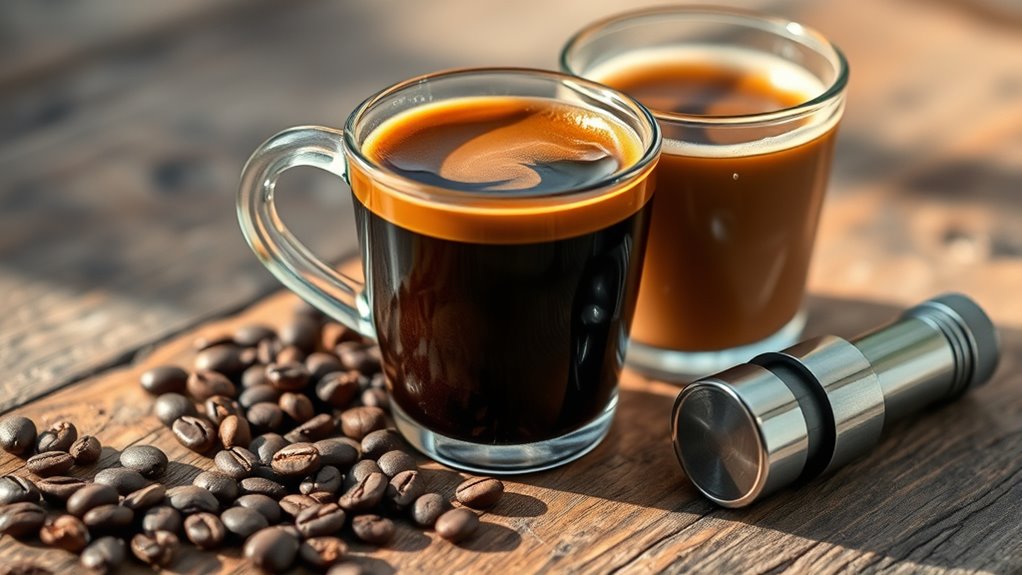
Although many people use the term “strength” loosely, it can mean different things depending on whether you’re talking about espresso or coffee. When you hear “strength,” it might refer to the concentration of coffee solids dissolved in water, known as total dissolved solids (TDS), the total caffeine dose per serving, or even the flavor intensity you experience.
Espresso, for example, boasts a high concentration, typically 8-12% TDS, making it intensely rich per ounce. But that doesn’t mean it always delivers more caffeine than a larger coffee cup.
Your perception of strength often hinges on flavor, aroma, and crema, not just caffeine.
To truly compare espresso and coffee, you need to clarify whether you’re discussing flavor strength, concentration, or total caffeine load. It’s all about knowing what kind of strength you mean before making any judgments.
Optimal espresso extraction also depends on factors like extraction time and grind size to balance flavor and strength effectively.
How Much Caffeine Is in Espresso vs. Coffee?
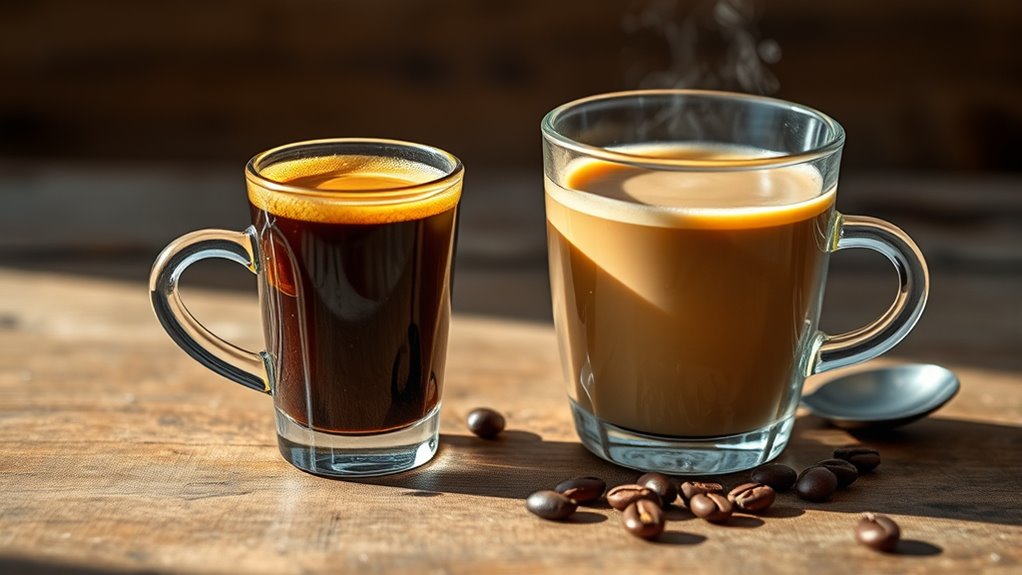
When you compare caffeine content between espresso and brewed coffee, the difference often surprises many coffee lovers. A standard 1-ounce shot of espresso contains about 63 mg of caffeine, while an 8-ounce cup of brewed coffee delivers roughly 95 mg.
Despite espresso’s intense flavor and higher caffeine concentration per ounce, its smaller serving size means it usually has less total caffeine than a regular cup of coffee.
Espresso’s concentrated caffeine packs a punch, but its small size often means less total caffeine than brewed coffee.
If you opt for a double shot of espresso, around 2 ounces, you’re consuming approximately 126 mg of caffeine, which is comparable to a standard brewed coffee.
Ultimately, the total caffeine you ingest depends on the volume you drink. Brewed coffee often wins in total caffeine content because of its larger serving size.
However, factors such as bean type and roast can significantly alter the caffeine content in espresso shots.
How Brewing Methods Affect Espresso and Coffee Caffeine
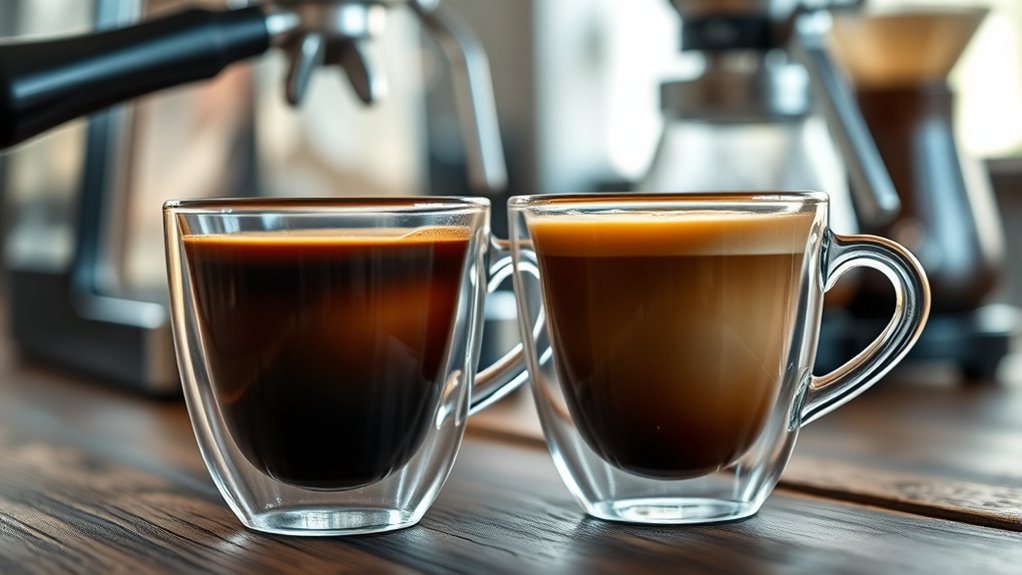
Understanding why espresso and coffee differ in caffeine content means looking closely at how each is brewed. Espresso uses high pressure, around 9 bars, and finely ground beans. It extracts caffeine quickly in 25-30 seconds.
This intense process pulls rich oils and solids, giving espresso its concentrated flavor and thick crema. In contrast, drip coffee relies on gravity, slowly passing hot water through coarser grounds. It takes several minutes.
This longer extraction allows more caffeine to dissolve, often resulting in higher total caffeine per cup. The grind size plays a pivotal role: finer for espresso enhances rapid extraction. Coarser for drip permits steady, thorough caffeine release. The balance of grind size and extraction time is crucial to achieving the desired caffeine levels and flavor profiles in both methods.
Why Espresso Gives a Faster Coffee Energy Boost
Because espresso delivers a highly concentrated shot of caffeine, you feel its effects much faster than with regular coffee. The high-pressure brewing method extracts potent oils and compounds, making the caffeine more bioavailable and intensifying the sensation of alertness.
Espresso’s high-pressure brew boosts caffeine absorption, delivering faster, more intense alertness than regular coffee.
When you take that quick, small shot, caffeine enters your bloodstream within 15 to 45 minutes, much faster than the slower consumption of larger coffee servings.
Plus, the rich crema and bold flavor heighten your sensory experience, tricking your brain into perceiving a stronger, more immediate energy boost.
This rapid absorption and intense taste combo means espresso doesn’t just wake you up. It jolts your system swiftly, providing that quick, focused pick-me-up you crave when time is tight or energy dips sharply.
Because espresso has a caffeine concentration of about 2.1 mg/mL, it delivers a more potent dose per ounce compared to drip coffee.
How Bean Type and Roast Influence Coffee and Espresso Strength
Although brewing method plays a crucial role, the type of coffee bean and its roast level fundamentally shape the strength and character of both espresso and regular coffee.
You’ll find that Robusta beans pack nearly twice the caffeine of Arabica, delivering a bolder, more intense cup. On the other hand, Arabica offers nuanced flavors but less caffeine.
Roasting also matters. Darker roasts have slightly less caffeine because roasting breaks down caffeine molecules, yet they produce richer, smokier profiles that can feel stronger.
The roasting process changes bean chemistry, affecting how caffeine and flavor extract during brewing.
When you blend different beans and roast levels, you can masterfully balance flavor complexity and caffeine content. This way, you tailor your espresso or coffee’s strength to your exact preference.
Additionally, factors like grind size and extraction time influence the final caffeine levels, especially in espresso where precise brewing is key to achieving the desired caffeine concentration.
Serving Size and Its Effect on Perceived Strength
You might think espresso is stronger since it’s served in a tiny 1-2 oz shot packed with intense flavor and caffeine. But here’s the twist—an 8 oz cup of brewed coffee actually has more total caffeine. However, espresso yield and strength are influenced by factors like dose, extraction time, and brew ratios, which affect the concentration and flavor profile of the shot.
Serving Size Differences
When comparing espresso and regular coffee, the difference in serving size plays a crucial role in how strong each beverage feels to you. Espresso is served in small 1-2 oz shots, packing about 63 mg of caffeine in just one ounce.
Regular coffee, however, comes in much larger servings, typically 8 oz or more, with roughly 95 mg of caffeine per cup.
This means that despite espresso’s higher caffeine concentration per ounce, the total caffeine you consume from a standard coffee cup is often greater. The volume difference considerably impacts how much caffeine you ingest overall, and consequently, how strong the drink feels.
Understanding these serving size differences helps you grasp why espresso’s intensity might seem stronger, even though your total caffeine intake could be higher with regular coffee. Makes sense, right? It’s all about the amount you’re actually drinking.
Additionally, the extraction time difference between espresso and drip coffee also influences the flavor intensity and caffeine release in each serving.
Impact On Strength Perception
Since serving size directly influences how you experience the strength of your coffee, it’s important to recognize that larger volumes often create a stronger impression, even if the caffeine concentration is lower.
When you sip an 8 oz brewed coffee, you get about 95 mg of caffeine, more than the 63 mg packed into a single 1 oz espresso shot.
That means the total caffeine content, not just concentration, shapes how strong your coffee feels.
If you order multiple espresso shots, the caffeine and perceived strength increase markedly.
Your brain often equates a bigger cup with more power, so while espresso is concentrated, the smaller size can make it seem less intense.
Understanding this helps you choose your coffee wisely, matching strength to your actual caffeine needs.
Additionally, beverages like shaken espresso enhance the espresso experience by aerating and chilling the coffee, which can affect how the strength and flavor are perceived.
How Grind Size and Extraction Impact Flavor and Caffeine
You’ll notice that grind size really shapes both flavor and caffeine extraction. When the grounds are finer, extraction happens faster, which makes the taste and caffeine hit stronger.
Extraction time goes hand-in-hand with grind size too—if it’s too long or too short, you might end up with a bitter or weak cup.
Getting this balance right is key to mastering how espresso and drip coffee bring out their unique strength and complexity.
Consistent and uniform particle size is crucial to prevent channeling and ensure even extraction.
Grind Size Effects
Although grind size might seem like a small detail, it dramatically shapes the flavor and caffeine content of your coffee. When you adjust grind size, you control how quickly flavors and caffeine are extracted during brewing.
For espresso, you need a very fine grind to achieve the high pressure and quick extraction essential for its bold profile. On the other hand, coarser grinds suit slower methods like French press, emphasizing different taste notes and caffeine release.
Consider these key points about grind size effects:
- Finer grinds increase surface area, speeding up extraction.
- Overly fine grinds risk over-extraction, causing bitterness.
- Coarser grinds slow extraction, offering smoother flavors.
- Grind size directly affects caffeine strength and taste balance.
Mastering grind size transforms your coffee experience profoundly. It’s a game changer you’ll definitely want to get right. Adjusting grind size is also crucial for maintaining the ideal espresso extraction ratio, which balances flavor and strength in every shot.
Extraction Time Influence
How does extraction time shape the flavor and caffeine content of your coffee? When you use a finer grind for espresso, extraction happens rapidly, usually within 25 to 30 seconds, yielding a concentrated shot packed with intense flavors and caffeine. This short, high-pressure pull maximizes the solubility of oils and bitter compounds, giving espresso its bold, robust character.
On the other hand, coarser grounds in drip brewing need several minutes to extract flavors and caffeine, creating a milder, less concentrated cup.
While longer extraction times in methods like cold brew pull out more caffeine overall, they produce a smoother, more mellow taste.
Ultimately, you control your coffee’s strength and flavor by balancing grind size with extraction time. This shapes the brew’s intensity and caffeine punch. It’s all about finding the right combo that suits your taste.
Flavor Versus Caffeine
Grind size and extraction time don’t just shape the overall strength of your coffee. They also determine the delicate balance between flavor complexity and caffeine content. When you grind finer for espresso, you increase surface area, which speeds up flavor and caffeine release.
High-pressure espresso brewing draws out oils and solubles, crafting a rich, bold taste that feels stronger. On the other hand, coarser grounds in drip coffee extract caffeine more slowly. This yields a milder flavor but similar caffeine levels overall.
Consider these key points:
- Fine grind boosts fast caffeine and flavor extraction
- High pressure emphasizes oils, enhancing richness
- Short espresso extraction highlights bitterness and strength perception
- Coarser grind slows extraction, softening flavor but preserving caffeine
Understanding this helps you tailor your brew’s punch and profile perfectly. It’s all about finding what works best for your taste and caffeine needs.
Why Espresso Tastes So Intense Compared to Coffee
Because espresso is brewed under high pressure, it extracts a rich concentration of oils, solids, and bitter compounds that make its flavor so intense. You’ll notice that espresso’s small serving size, just 1 to 2 ounces, concentrates these flavors, delivering a bold, powerful punch in every sip.
The fine grind used in espresso increases the surface area, allowing water to quickly extract complex flavors and aromatics within 25 to 30 seconds.
This rapid, high-pressure extraction captures vibrant, concentrated notes you won’t find in a typical coffee brew. Plus, the signature crema layer adds a velvety texture and subtle sweetness that heightens the overall intensity.
When you drink espresso, you’re experiencing a masterful balance of strength and nuance, making its taste uniquely intense compared to regular coffee.
Choosing Espresso or Coffee for Your Energy Needs
When you’re looking for a quick energy boost, espresso delivers a powerful hit of caffeine in a small, concentrated shot. Its intense 63 mg of caffeine per ounce means you feel alert fast.
On the other hand, regular coffee offers about 95 mg per 8-ounce cup, providing a steadier, longer-lasting effect.
Regular coffee delivers about 95 mg of caffeine per cup, offering steady and lasting energy throughout your day.
Your choice depends on how you want your energy.
Consider this when choosing:
- Need rapid alertness? Espresso’s rapid absorption works best.
- Prefer sustained energy? Larger coffee servings release caffeine gradually.
- Craving a quick jolt without volume? Espresso’s compact size fits perfectly.
- Want to sip leisurely over time? Regular coffee’s volume fuels extended focus.
Understanding these differences helps you match your caffeine intake to your energy needs precisely. It’s all about what fits your day and how you like to feel energized.
Common Myths About Espresso and Coffee Strength Debunked
Understanding how espresso and coffee deliver caffeine helps clear up a lot of misconceptions about their strength. You might think espresso has more caffeine, but an 8 oz brewed coffee usually contains more caffeine than a 1 oz espresso shot. The bold flavor of espresso tricks you into thinking it’s stronger, but that’s just flavor concentration, not caffeine content.
Dark roasts aren’t notably more caffeinated. And milk-based drinks only have more caffeine if extra espresso shots are added.
| Myth | Fact |
|---|---|
| Espresso has more caffeine | Brewed coffee has more caffeine per serving |
| Dark roasts have more caffeine | Roast level minimally affects caffeine content |
| Espresso caffeine absorbs faster | Absorption depends on serving size and metabolism |
| Milk-based drinks contain more caffeine | Only with added espresso shots |
Frequently Asked Questions
Can Espresso Be Used as a Base for Other Coffee Drinks?
Yes, you can use espresso as a base for many coffee drinks. Its concentrated flavor and rich crema let you craft lattes, cappuccinos, or Americanos. You can adjust shots and ingredients to customize caffeine and taste perfectly.
It’s pretty flexible, honestly. Whether you want something strong or a bit milder, espresso’s a great starting point. Just mix and match to find your perfect cup.
How Should Espresso Be Stored to Maintain Its Flavor?
You should store espresso beans in an airtight, opaque container at 60-70°F. Keep them away from light, moisture, and odors to preserve their flavor.
Grind the beans just before brewing to get the best taste. Try to use the beans within 2-3 weeks for the freshest, richest flavor.
This way, you’ll enjoy a better espresso experience every time!
What Equipment Is Best for Making Espresso at Home?
You’ll want a high-quality espresso machine with about 9 bars of pressure, paired with a burr grinder for consistency. Look for heat stability features, built-in pressure gauges, and pre-infusion to master rich, balanced espresso shots.
These features really help dial in the perfect shot every time. Plus, having a reliable grinder makes a big difference in flavor. It’s all about getting those consistent grounds that work well with your machine.
Are There Health Benefits Unique to Drinking Espresso?
Ever wonder why espresso’s concentrated antioxidants make a difference? You get higher levels of polyphenols and diterpenes, which may reduce inflammation, improve heart health, and control cholesterol.
And all of this comes while enjoying a smaller, manageable caffeine boost. It’s pretty neat how something so small can pack such a punch!
How Does Water Temperature Influence Espresso Extraction?
Water temperature directly affects espresso extraction. If it’s too hot, you’ll get bitterness. Too cool, and your espresso tastes sour.
You’ve got to maintain 195°F to 205°F to reveal rich flavors and balanced strength every time. It’s all about hitting that sweet spot so your espresso comes out just right.
Conclusion
When you reach for your espresso or coffee, remember strength isn’t just about caffeine. It’s about the whole experience. Espresso may hit you like a swift morning breeze, intense and bold.
Coffee offers a gentler, lingering embrace. Both have their charm, shaped by beans, roast, and brew. So, choose your cup not just for a jolt, but for the rich story it tells your senses.
Your perfect pick awaits.