Blonde espresso means you’re enjoying lightly roasted beans that highlight bright, fruity, and floral flavors with a smooth, vibrant taste. These beans roast just after the first crack, giving you a lighter color and less oily surface.
You’ll get a slightly higher caffeine density because of the beans’ denser structure. Brewing requires finer grinds and higher temperatures to bring out their delicate notes. Keep exploring to understand how this roast differs and how to brew it perfectly.
What Is Blonde Espresso?
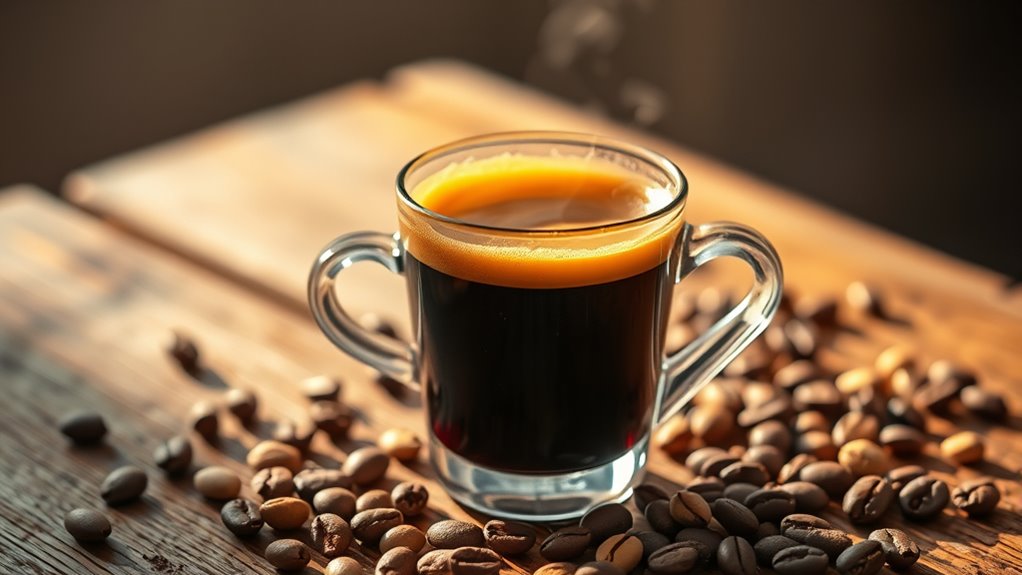
Although it’s called blonde espresso, this brew isn’t weaker than traditional espresso. Instead, it’s made from beans roasted lightly for 8 to 10 minutes, just after the first crack. This roasting approach preserves more caffeine and emphasizes the bean’s natural characteristics.
Blonde espresso is lightly roasted just after the first crack, preserving caffeine and highlighting natural bean flavors.
When you choose blonde espresso, you’re selecting a coffee with a lighter color and a delicate flavor profile. The beans retain floral, fruity, and citrus notes that darker roasts often mask.
You’ll notice its brightness and acidity shine through, making it a popular option if you want a smoother, nuanced espresso experience.
Understanding this roasting method helps you appreciate how blonde espresso stands apart not by strength but by the clarity and subtlety of its flavor. It’s really about enjoying those lighter, fresher notes that come through.
Blonde espresso is typically brewed at a slightly higher temperature and shorter extraction time to highlight its bright, citrusy flavors.
How Blonde Espresso Affects Flavor and Aroma
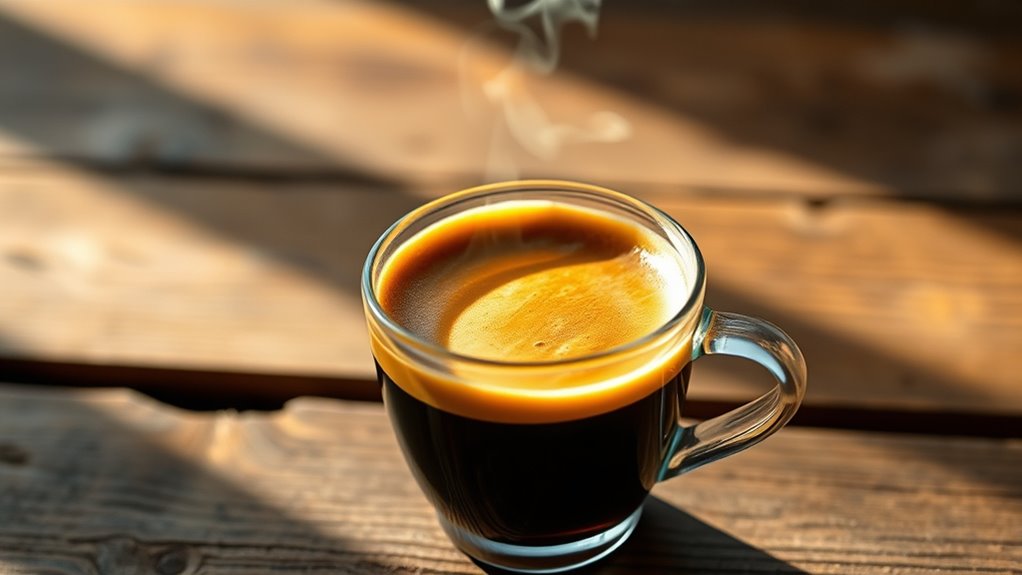
Because blonde espresso undergoes a lighter roast, it preserves the coffee bean’s original fruit and floral characteristics, which directly influences its flavor and aroma. You’ll notice brighter, more vibrant notes, including citrusy and floral hints that often fade in darker roasts.
The shorter roasting time prevents smoky or charred scents from developing, allowing fresh, high-acidity aromas to come forward. This results in a crisp, clean, and lively aroma profile that really brings out the coffee’s origin.
When you sip blonde espresso, expect a subtler, less roasted taste with delicate sweetness and floral undertones. It’s a different vibe compared to what you get from darker roasts. The lighter roast profile also affects the extraction quality, requiring precise pressure and grind size adjustments to optimize flavor and crema.
Why Blonde Espresso Has Different Caffeine Levels
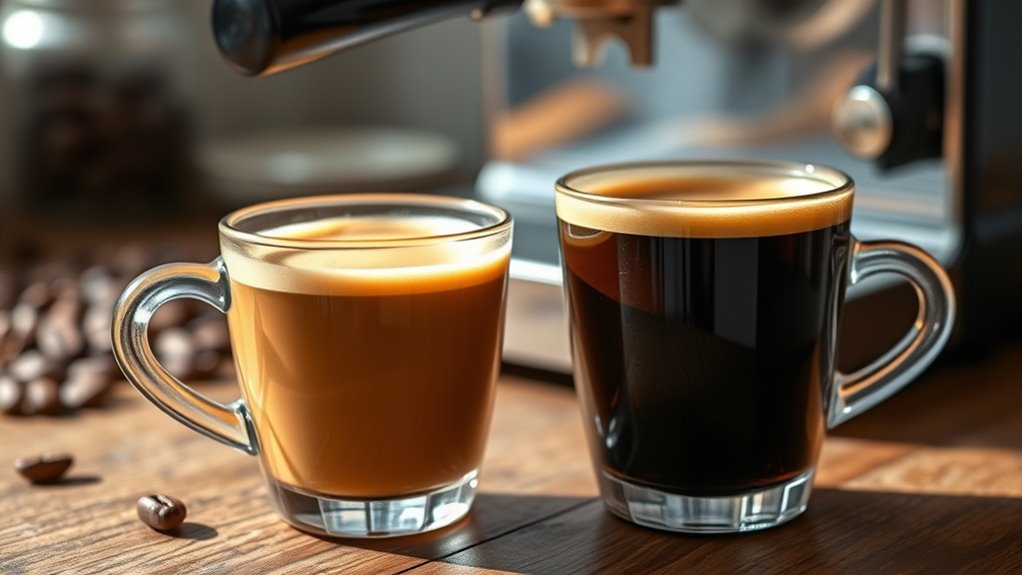
You might’ve noticed that blonde espresso usually has a bit more caffeine in each shot. That’s because roasting doesn’t really change how much caffeine is in the beans.
Since lighter roasts have denser beans, when you measure by volume, they actually contain more caffeine than darker roasts. It all comes down to how caffeine is measured—whether by weight or by volume—which helps explain those small differences in caffeine levels.
Regular maintenance, such as descaling espresso machines, is important to preserve the quality and flavor of espresso shots over time.
Caffeine Stability During Roasting
While roasting transforms coffee beans’ flavor and color, it doesn’t substantially alter their caffeine content. Caffeine is heat-stable, so roasting time and temperature don’t considerably reduce its concentration.
Whether you choose a blonde or darker roast, the caffeine amount by weight remains nearly identical.
However, because lighter roasts like blonde espresso are denser, their beans pack more caffeine per volume. This means if you measure your coffee by scoop rather than weight, blonde espresso might deliver slightly more caffeine.
The common belief that darker roasts contain more caffeine is a misconception rooted in density differences, not actual caffeine loss or gain during roasting.
Understanding caffeine’s stability helps you appreciate why blonde espresso’s caffeine levels differ primarily due to bean density, not roasting effects.
Additionally, factors such as coffee dose, bean type, and extraction process further influence the final caffeine content in your espresso shot.
Density Versus Weight Caffeine
Understanding why blonde espresso contains different caffeine levels requires examining how density and weight affect measurement. Blonde espresso beans are denser and heavier than dark roasted beans. This means caffeine content differs based on whether you measure by volume or weight.
When you measure by weight, blonde espresso has slightly more caffeine due to less caffeine loss in roasting. However, measuring by volume exaggerates this difference because the denser blonde beans pack more caffeine into the same scoop. Maintaining consistent extraction time is also important to ensure the true caffeine content is accurately represented in each shot.
| Measurement Method | Blonde Espresso | Dark Roast Espresso |
|---|---|---|
| Density | Higher | Lower |
| Weight per Bean | Heavier | Lighter |
| Caffeine per Weight | Slightly More | Slightly Less |
| Caffeine per Volume | Noticeably More | Less |
Measuring Caffeine Differences
How does blonde espresso end up with different caffeine levels compared to dark roast? The key lies in how you measure the coffee.
Roasting barely changes caffeine by weight, so both roasts have similar caffeine content if weighed.
However, blonde espresso beans are denser and less porous than darker beans, meaning you get more caffeine per volume.
If you scoop by volume, the lighter roast packs more caffeine into the same space.
This explains why blonde espresso often delivers a slightly higher caffeine dose per shot when measured by scoop rather than weight.
So, the common belief that dark roast has more caffeine is incorrect. Roasting time and temperature don’t greatly alter caffeine content.
It’s density differences that account for the variance you notice in caffeine levels.
Additionally, espresso machines like the Starbucks Mastrena use precise measurement to ensure consistent shot strength regardless of bean type.
How Blonde Espresso Beans Differ From Regular Espresso Beans
You’ll notice blonde espresso beans have a noticeably lighter color because they’re roasted for a shorter time than regular espresso beans.
This lighter roast preserves more of the coffee’s natural fruity and floral acidity.
So, it’s quite different from the darker, oilier beans that bring out those bold, roasted flavors.
Understanding these distinctions really helps you appreciate how the roast level influences both the bean’s appearance and its flavor profile.
Additionally, the caffeine content can vary depending on the roast, with lighter roasts typically retaining more caffeine than darker ones.
Roast Level Differences
Although both blonde and regular espresso beans start as the same green coffee beans, their roasting times and temperatures create distinct differences in appearance, flavor, and brewing requirements.
Blonde espresso beans roast for 8-10 minutes, stopping before the first crack, which results in a lighter, matte brown color and preserves the coffee’s natural fruity and floral notes.
In contrast, regular espresso beans roast longer, 12-16 minutes, reaching the second crack and developing a dark brown to black hue with surface oils. This emphasizes bold, roasted flavors.
Because of their denser structure, blonde beans need a finer grind and higher brewing temperature to extract flavors properly.
Regular beans, on the other hand, are less dense and more oily. These roast level differences influence both your brewing technique and the espresso’s final taste profile.
The extended roasting of regular espresso beans also decreases acidity and increases surface oils, resulting in a smoother, richer flavor experience.
Bean Appearance Contrast
Because roasting profoundly alters coffee beans, you can easily distinguish blonde espresso beans from regular espresso beans by their appearance. Here’s how they differ visually:
Blonde espresso beans are lighter, displaying a tan or light brown color, while regular espresso beans show a deep brown to almost black hue. Blonde beans have a matte, non-reflective surface, contrasting with the shiny, oily finish of regular espresso beans.
The oils visible on regular espresso beans result from extended roasting. Blonde beans retain minimal surface oil due to shorter roasting before the first crack. Blonde espresso beans appear more uniform and less glossy, signaling their lighter roast level compared to the visibly oily and darker regular espresso beans.
This visual contrast helps you quickly identify roast levels before brewing. It’s a handy way to know what you’re getting just by looking at the beans.
For the best espresso flavor and stable foam, it is essential to use freshly brewed espresso made from these beans, as the roast level affects the crema and coffee oils in the final cup.
Flavor And Acidity
Beyond their visual differences, blonde espresso beans offer a distinct flavor profile shaped by their lighter roast. You’ll notice a higher acidity that creates a bright, lively taste with crisp citrus and floral notes. This contrasts sharply with regular espresso beans, which develop deeper, caramelized, and nutty flavors through longer roasting.
Blonde espresso also preserves the coffee’s natural fruit and floral characteristics, giving you a more nuanced and delicate experience. The aroma is lighter and more floral, and the finish is clean and crisp, unlike the robust bitterness common in regular espresso.
Despite its milder flavor, Blonde Espresso contains about 4.7 mg/ml of caffeine, slightly higher than regular espresso, enhancing its appeal for those seeking both flavor and an energizing kick through its caffeine content.
| Aspect | Blonde Espresso |
|---|---|
| Acidity | Higher, bright, lively |
| Flavor Notes | Citrus, floral, fruit-forward |
| Finish | Crisp, clean |
Brewing Tips for the Best Blonde Espresso
When brewing blonde espresso, you’ll want to adjust your grind to a finer setting than you use for darker roasts. The beans are denser and less oily, so this helps extract the delicate flavors effectively.
To perfect your shot, keep these tips in mind:
- Maintain water temperature between 93-95°C (200-203°F) to bring out the highest brightness and complexity.
- Use consistent tamping pressure to guarantee even extraction despite the bean’s density.
- Extend extraction time slightly to 20-25 seconds to balance acidity and sweetness.
- Preheat your espresso machine and portafilter thoroughly to avoid temperature fluctuations that can degrade shot quality.
Following these steps will help you access the nuanced profile of blonde espresso with precision and consistency.
Give it a try and enjoy the bright, complex flavors!
How to Choose Between Blonde and Regular Espresso
If you want a cup that highlights bright, floral, and citrus notes, blonde espresso offers a lighter, more acidic profile than regular dark roast. Choose blonde if you prefer delicate, natural bean flavors with a subtle complexity and slightly higher caffeine content.
Opt for regular espresso when you want a bold, rich cup emphasizing roasted, nutty, and caramel tones. Keep in mind, brewing blonde espresso requires careful grind size and temperature adjustments to maximize its nuanced flavors.
Regular espresso, on the other hand, allows for a more forgiving process.
Ultimately, your choice depends on whether you favor a brighter, milder experience or a robust, intense shot. Understanding these differences helps you tailor your espresso to match your taste and caffeine needs precisely.
Frequently Asked Questions
Can Blonde Espresso Be Used in Iced Coffee Drinks?
Yes, you can use blonde espresso in iced coffee drinks. Its bright, smooth flavor and higher caffeine content give your iced coffee an invigorating, crisp taste and energizing boost.
This is especially true when brewed at slightly hotter temperatures for balance. It really brings out the best in your iced coffee. Give it a try and see how it changes your regular brew!
Is Blonde Espresso Available Year-Round or Seasonal?
Blonde espresso is available year-round at Starbucks, but availability can vary by location. You should check with your local store since some coffee shops may offer it seasonally or as a limited-time option depending on their menu rotation.
Does Blonde Espresso Pair Well With Specific Milk Types?
You’ll find blonde espresso pairs best with creamy, mild milks like whole or oat milk. They complement its floral and citrus notes without overpowering.
Non-dairy options like almond milk also enhance its natural sweetness perfectly. It’s all about balancing those delicate flavors so nothing takes the spotlight.
How Does Blonde Espresso Impact Calorie Count in Drinks?
You’ll find blonde espresso has roughly the same calories as darker roasts. Roast level doesn’t change calorie content much.
Instead, focus on your milk and sweetener choices. They have a much bigger impact on the drink’s total calories. So, that’s where you can really make a difference.
Are There Any Popular Blonde Espresso-Based Starbucks Menu Items?
You’ll love Starbucks’ Blonde Vanilla Latte and Blonde Caramel Macchiato. Both highlight the espresso’s mild, sweet flavor.
The Blonde Espresso Frappuccino blends smooth citrusy notes with creamy textures for a revitalizing twist. It’s a great pick-me-up when you want something refreshing. Give them a try!
Conclusion
Choosing between blonde and regular espresso is like picking the right sunrise for your day. Blonde espresso brings a gentle, bright start with its lighter roast and subtle sweetness. Regular espresso, on the other hand, offers a bold, intense dawn.
Understanding their flavor, caffeine, and bean differences lets you brew your perfect morning ritual. So, trust your taste buds as the sun guides your path. Savor the espresso that best fuels your journey.