You might think coffee and espresso are the same, but they’re actually quite different. Both start with coffee beans, yet espresso uses finely ground dark roast and high pressure to extract a concentrated, bold shot. Regular coffee, on the other hand, uses coarser grounds with gravity for a milder brew.
Espresso delivers a stronger flavor and more caffeine per ounce, even though the servings are smaller. Understanding these differences helps you appreciate each brew’s unique qualities. Plus, it makes choosing your perfect cup a bit easier.
What Is Coffee? Origins and Brewing Methods
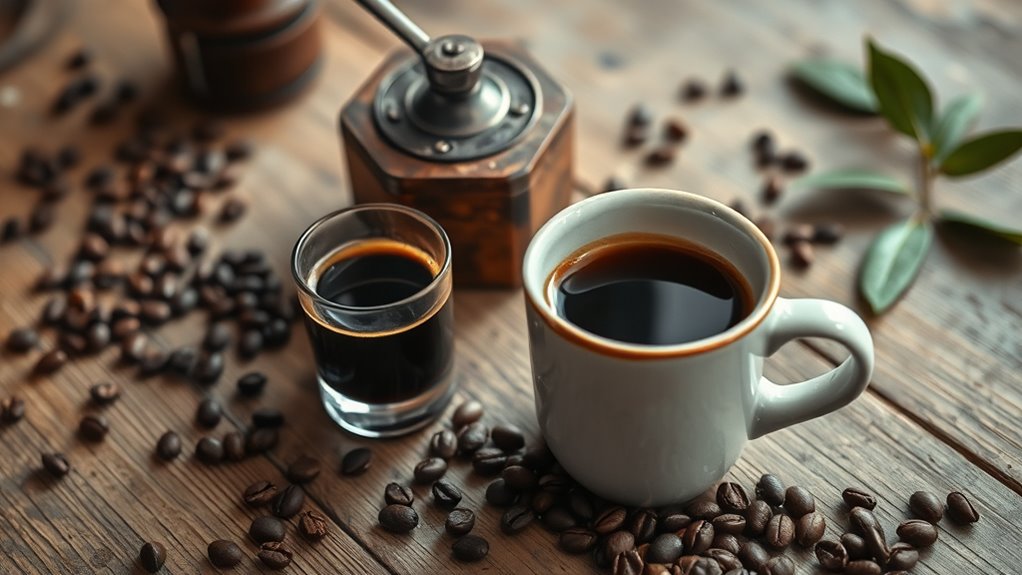
What exactly is coffee, and how did it become such a beloved drink worldwide? Coffee is a brewed beverage made from roasted coffee beans, typically served in 6-8 ounce portions.
Coffee is a brewed drink from roasted beans, cherished globally in 6-8 ounce servings.
Its journey began in Ethiopia, where legend credits a goat herder named Kaldi with discovering the energizing effects of coffee cherries.
Today, coffee is prepared using various methods like auto-drip, pour-over, or French press. Each method influences the flavor and strength in its own way.
You’ll find beans roasted at different levels, from light cinnamon to dark French roast, which changes the aroma, acidity, and taste.
Brewing involves hot water passing through coarsely or medium-ground beans, extracting complex flavors over several minutes.
Whether you enjoy it black or with milk, sugar, or flavorings, coffee remains a global staple.
It’s central to morning routines and social moments alike.
Espresso, a concentrated form of coffee, requires precise control of extraction time to develop its rich flavor and crema.
Espresso vs. Coffee: Key Differences
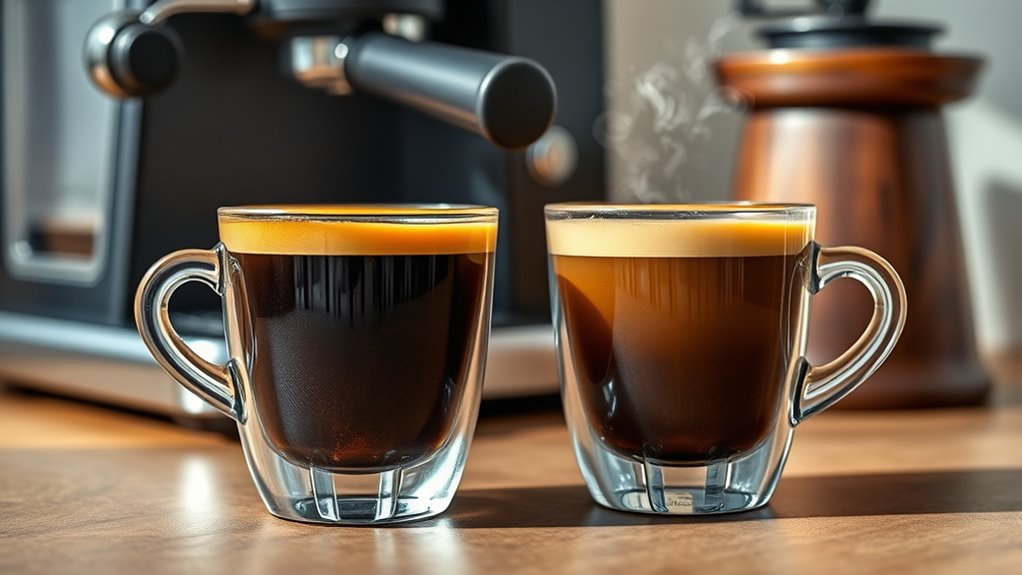
You’ll notice that espresso uses finely ground dark roast beans and a quick, high-pressure brewing method.
On the other hand, regular coffee relies on coarser grounds and gravity, taking several minutes to brew.
Even though an espresso is just a small 1-2 ounce serving, it actually packs much more caffeine per ounce than brewed coffee.
The extraction process for espresso involves forcing hot water through the grounds at approximately 9 bars of pressure, which enhances its rich flavor and crema.
Roast And Grind
Although any coffee bean can be used for both espresso and regular coffee, the key differences lie in the roast level and grind size. Espresso generally calls for dark roasted beans, which bring out bold, caramelized flavors perfect for intense extraction.
In contrast, regular coffee lets you choose anywhere from light to dark roasts, depending on your taste preferences.
Grind size is just as vital: espresso requires a very fine grind to create the pressure needed for its signature crema and concentrated flavor.
Meanwhile, coffee brewing methods usually demand medium to coarse grounds to guarantee proper extraction without bitterness.
These roast and grind choices directly impact aroma, flavor, and extraction, making them fundamental to distinguishing espresso from regular coffee.
The extraction process used in espresso brewing concentrates bold flavors, setting it apart from regular coffee.
Brewing Method Differences
When you brew espresso, the process relies on high pressure, around 9 bars, to force hot water through finely-ground coffee in just 20 to 30 seconds. This produces a concentrated shot topped with a thick crema.
In contrast, regular coffee usually brews via gravity or immersion, like drip or French press methods, which take between 4 to 12 minutes. These methods use medium to coarse grounds and result in a milder, less concentrated cup.
The rapid, pressurized extraction of espresso intensifies flavor, strength, and texture, creating a bold, rich beverage.
Understanding these brewing differences helps you appreciate why espresso and regular coffee taste so distinct, even though they come from the same beans.
The technique you choose directly shapes your coffee experience.
Additionally, espresso is often used as a base in cocktails like the Espresso Martini, which typically contains 20-25% ABV alcohol content, highlighting the beverage’s versatility beyond just a simple drink.
Caffeine And Serving Size
How much caffeine you get from your coffee depends greatly on the type of brew and serving size. A standard 1 oz. shot of espresso packs about 63 mg of caffeine, making it much more concentrated than brewed coffee, which has roughly 12 mg per ounce.
However, an 8 oz. cup of brewed coffee typically delivers around 144 mg of caffeine, more than double that of a single espresso shot. So, even though espresso hits harder per ounce, you usually consume more caffeine overall from a larger coffee serving.
Keep in mind, caffeine content varies with bean type, roast, and brewing method. But understanding these differences helps you tailor your caffeine intake to your preference and needs. The extraction process in espresso machines, which uses high pressure and precise temperature control, plays a key role in determining the caffeine concentration in your shot.
Popular Coffee and Espresso Drinks
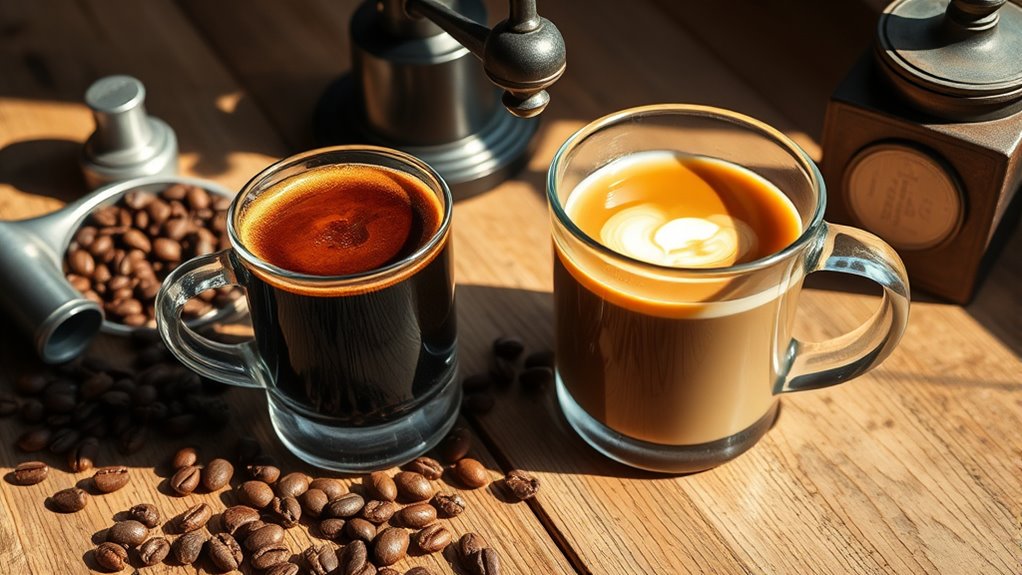
If you enjoy exploring coffee, you’ll find a fascinating variety of popular drinks that highlight either brewed coffee or espresso.
Brewed coffee favorites include iced coffee, brewed hot then chilled, cafe au lait, which blends strong coffee with steamed milk and often cinnamon or syrups, Irish coffee, a warm mix of coffee, Irish whiskey, sugar, and whipped cream, and S’mores Coffee with its sweet, campfire-inspired flavors.
On the espresso side, classics like lattes, cappuccinos, and macchiatos revolve around a shot of espresso combined with milk or flavorings, offering rich, creamy textures.
Each drink showcases unique preparation methods and flavor profiles.
This gives you plenty of options whether you prefer the smooth, robust taste of brewed coffee or the intense, concentrated essence of espresso.
There’s really something for every coffee lover to enjoy.
For the best espresso experience at home, it’s important to properly preheat the espresso machine to ensure a consistent temperature and optimal flavor extraction.
Coffee vs. Espresso: Caffeine Content Compared
Understanding the caffeine content in your favorite coffee drinks can help you make more informed choices about your daily intake.
A 1 oz shot of espresso packs about 63.6 mg of caffeine, while an 8 oz cup of brewed coffee contains roughly 144 mg.
Although espresso has a higher caffeine concentration per ounce, around 31.8 mg compared to coffee’s 12 mg, you usually get more caffeine overall from a larger cup of coffee.
The total caffeine you consume depends on how much you drink, not just the brewing method.
Keep in mind, caffeine levels can vary based on bean type and roast, but espresso generally delivers a stronger caffeine punch per volume.
Espresso yield also affects caffeine concentration, as higher yields dilute caffeine per milliliter while lower yields concentrate it, influencing the strength of your shot espresso yield.
Why Grind Size and Roast Matter for Your Coffee and Espresso
You’ll notice that grind size plays a really important role in how your coffee or espresso extracts. For espresso, you’ll want a much finer grind to get the ideal pressure and flavor.
Roast level also makes a big difference in taste and texture. Darker roasts tend to bring out boldness, which works great for espresso.
On the other hand, lighter roasts highlight brightness, making them perfect for brewed coffee.
Once you understand these factors, you’re set to enjoy the richest, most balanced cup every single time.
Adjusting grind size controls the extraction time and shot quality, ensuring the best flavor balance.
Grind Size Impact
Because grind size directly affects extraction, dialing it in is essential for brewing both coffee and espresso successfully. Espresso demands a very fine grind, which increases surface area and resistance, ensuring proper extraction within its short 25-30 second contact time.
If your grind is too coarse, espresso ends up under-extracted, tasting weak and sour. Conversely, too fine a grind risks over-extraction, bitterness, and even machine clogging.
For drip coffee, a medium to coarse grind allows ideal water flow and extraction.
Remember, the grind size you choose directly influences strength, flavor balance, and crema quality in espresso. Additionally, the roast level and bean density also affect caffeine content and flavor, making roast level a crucial factor in the final espresso profile.
Roast Level Influence
How does roast level shape the flavor and extraction of your coffee or espresso? Darker roasts bring bold, smoky, and bitter notes, making them ideal for espresso’s concentrated intensity.
Lighter roasts, by contrast, highlight brighter acidity and nuanced flavors, often preferred in drip or pour-over methods.
Roast level also changes bean density and oil content. This impacts how finely you can grind and how evenly the extraction happens.
Espresso needs a fine grind to get the most out of that high-pressure extraction, while coarser grinds work better for methods like French press.
Matching the right roast with the right grind size makes a big difference. It helps you pull the best flavors and texture from your beans, whether you’re brewing a rich espresso shot or a balanced cup of coffee.
Best KitchenAid Machines for Brewing Coffee and Espresso
When selecting a KitchenAid machine for brewing coffee and espresso, you’ll find options that blend advanced technology with user-friendly design. Their semi-automatic espresso machines come with built-in burr grinders, giving you precise control over grind size and extraction.
If convenience is your priority, fully automatic models offer touchscreen controls and multiple recipe settings, making customization effortless. KitchenAid machines handle the fine grind essential for authentic espresso, ensuring rich flavor and crema.
Beyond espresso, their coffee makers cover cold brew and drip coffee, catering to your preferred brewing style. Features like temperature sensors, fast-heating systems, and milk frothers enhance every cup’s quality, letting you craft barista-level drinks at home.
Choosing the right KitchenAid machine means tailoring your brewing experience to your taste and lifestyle. It’s all about finding what works best for you and enjoying every sip.
To achieve the best results, it’s important to maintain consistent tamping pressure and monitor extraction time closely.
Frequently Asked Questions
Can Espresso Shots Be Used in Baking Recipes?
Yes, you can use espresso shots in baking to boost flavor. They add a rich, concentrated coffee taste that really enhances chocolate desserts. Just use small amounts so the coffee doesn’t overpower your recipe’s balance.
It’s a simple way to deepen the flavor without making your baked goods taste too bitter. Plus, it gives a nice coffee kick that pairs perfectly with sweets. Give it a try next time you want to add something extra!
How Does Water Temperature Affect Espresso Taste?
Imagine brewing espresso with water either too cold or too hot. Too cold, and it tastes sour and weak. Too hot, and it’s bitter and burnt.
You’ll get the best flavor by keeping water between 190°F and 205°F consistently. This range helps balance all those delicious espresso flavors just right. Just stick to that, and you’re good to go!
Is Espresso Healthier Than Regular Coffee?
Espresso isn’t necessarily healthier than regular coffee; its higher caffeine concentration affects you faster. Both offer antioxidants and benefits, so focus on moderation and avoid excess sugar or cream to keep your drink healthful.
At the end of the day, it’s more about how you enjoy your coffee and what you add to it than which type you choose. Just keep it balanced, and you’re good to go!
What Is the Ideal Pressure for Espresso Extraction?
You want to extract espresso at around 9 bars of pressure, about 130 psi. This guarantees water flows perfectly through the grounds, pulling rich flavors and that signature crema for the best espresso experience.
It’s all about getting that balance right. Too much pressure, and you might end up with bitter coffee. Too little, and the espresso can taste weak or sour. So, sticking close to 9 bars usually does the trick.
Can Decaf Espresso Be Made From Regular Espresso Beans?
You can turn regular espresso beans into decaf gold by removing most caffeine without losing flavor. Just pick your roast, grind finely, and brew. Your espresso’s soul stays intact, minus the caffeine buzz.
Conclusion
Think of coffee and espresso as two distinct melodies from the same instrument. Both are rich, but with unique tones. You now know coffee’s broad origins and brewing styles, how espresso’s intensity sets it apart, and why grind size and roast matter.
Whether you’re savoring a smooth drip or a bold shot, understanding these differences helps you brew your perfect cup. With the right knowledge and tools, your coffee journey hits all the right notes.