If you drink 10 shots of espresso, you’re getting about 630 mg of caffeine, which is well above the recommended daily limit of 400 mg. Keep in mind, caffeine content can vary depending on the beans, roast, and brewing method.
Consuming this much caffeine can cause rapid heartbeat, anxiety, and sleep issues. Understanding how factors like grind and extraction affect caffeine can help you manage intake wisely and enjoy your espresso safely.
How Much Caffeine Is in One Shot of Espresso?
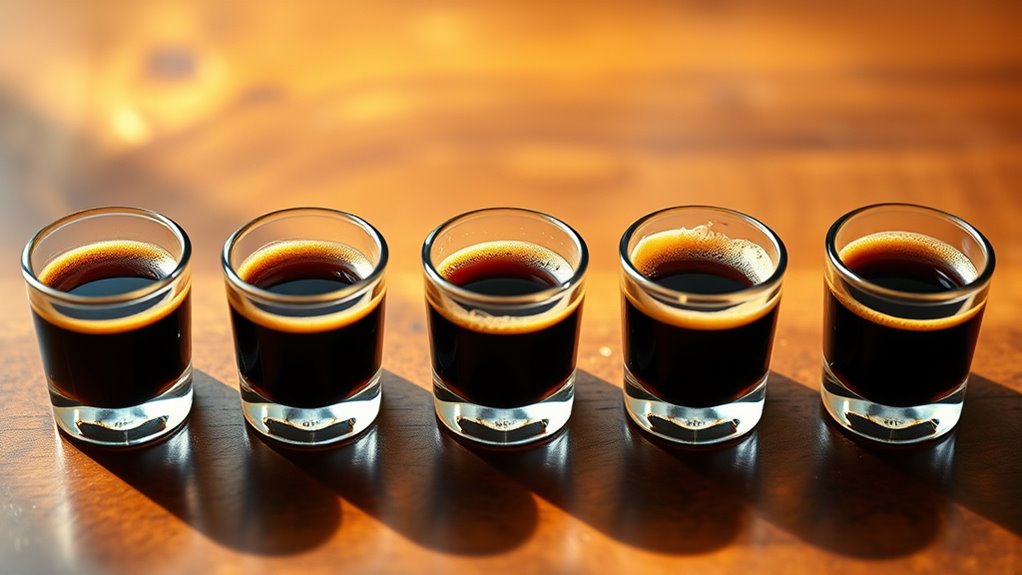
Although the caffeine content in a single shot of espresso can vary, you can generally expect about 63 mg per ounce. This amount depends on factors like the type of coffee bean, roast level, and brewing method.
Typically, a shot ranges between 60 and 75 mg of caffeine.
Because espresso is concentrated and served in a small volume, your body absorbs the caffeine quickly, giving you a fast energy boost.
The caffeine quantity mainly hinges on how much coffee is used and how effectively it’s extracted during brewing.
Factors such as bean type and roast significantly influence the caffeine content in espresso.
What’s the Total Caffeine in 10 Shots of Espresso?
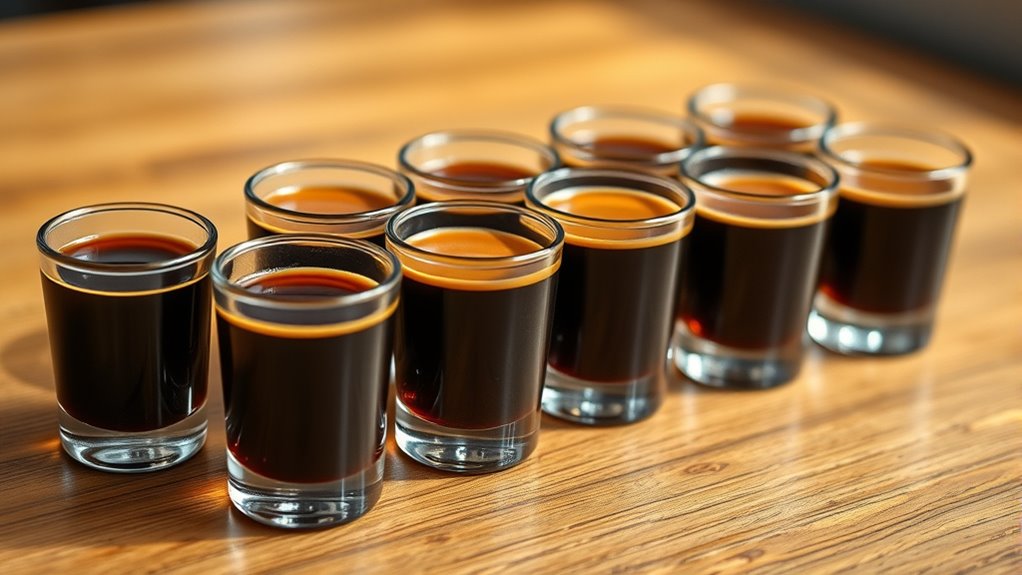
When you drink 10 shots of espresso, you’re consuming roughly 630 mg of caffeine, based on the standard 63 mg per shot. Keep in mind, this amount can vary depending on the bean type, dose, and brewing method. It could range anywhere from 600 to 700 mg.
This total is way above the FDA’s recommended daily limit of 400 mg for most people. Knowing this helps you keep a better handle on your caffeine intake. Consuming such a high amount of caffeine may lead to increased cardiovascular stress and other health risks if not managed properly.
| Shots of Espresso | Approximate Caffeine (mg) |
|---|---|
| 1 | 63 |
| 5 | 315 |
| 8 | 504 |
| 10 | 630 |
| 12 | 756 |
See how quickly the caffeine adds up when you keep adding espresso shots? It’s easy to go overboard without realizing it.
What Are the Health Risks of Consuming 10 Shots of Espresso?
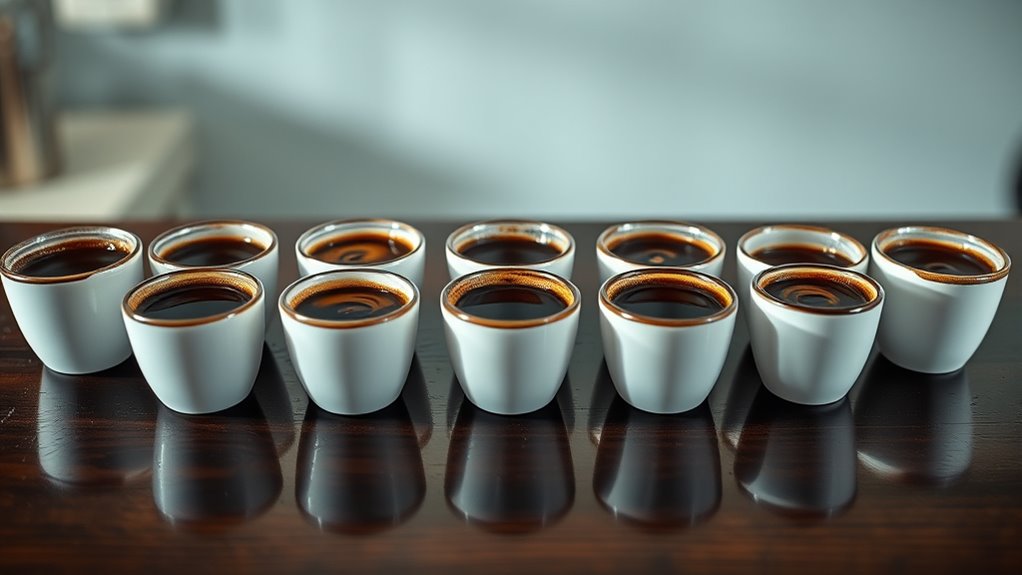
If you consume 10 shots of espresso, you’re taking in about 630 mg of caffeine, which is well above the FDA’s recommended daily limit for most adults. This high intake puts you at risk for several health issues, both immediate and long-term.
You might experience a rapid heartbeat, increased blood pressure, anxiety, and trouble sleeping.
Over time, regularly consuming this much caffeine can lead to dependence and withdrawal symptoms like headaches and fatigue. It’s not something to take lightly.
Key health risks include heart rhythm irregularities and elevated blood pressure. You might also face dehydration and gastrointestinal disturbances.
In severe cases, caffeine toxicity can occur, which may require medical attention.
Proper espresso extraction timing helps control caffeine levels per shot, impacting overall intake.
How Does Espresso Caffeine Compare to Other Coffee Drinks?
When you compare espresso to brewed coffee, the main difference comes down to caffeine concentration versus total volume.
For instance, ten shots of espresso pack about 630 mg of caffeine, which is way more than the 90-120 mg you’d usually find in an 8 oz brewed cup.
So, while espresso is definitely more concentrated per ounce, the total caffeine you get really depends on how many shots you have and the size of your drink.
It’s all about how much you consume in the end!
Increasing the number of espresso shots or the serving size raises your overall caffeine consumption accordingly.
Espresso Versus Brewed
Although espresso packs more caffeine per ounce than brewed coffee, the total caffeine you get depends largely on the serving size.
For example, a single shot of espresso delivers about 63 mg of caffeine, while an 8-ounce brewed coffee provides roughly 96-120 mg.
That means if you drink a larger brewed coffee, you might actually consume more caffeine overall than with multiple espresso shots.
Here’s what you should keep in mind:
- Espresso contains about 63 mg of caffeine per 1-ounce shot, making it highly concentrated.
- Brewed coffee has roughly 12-15 mg per ounce, so larger servings add up fast.
- Ten shots of espresso equal approximately 630 mg caffeine, which can be less or more than brewed coffee depending on size.
Understanding these differences helps you choose your caffeine boost wisely.
Caffeine Concentration Differences
Understanding how espresso’s caffeine concentration stacks up against other coffee drinks helps you make smarter choices about your caffeine intake.
Espresso packs about 60–75 mg of caffeine per ounce, making it much more concentrated than brewed coffee, which typically has less caffeine per ounce.
But the total caffeine you consume depends on the number of shots. So, ten shots of espresso deliver roughly 630 mg of caffeine.
Whether you drink those shots straight or mixed into larger drinks like Americanos or lattes, the caffeine content stays the same. It’s determined by the shot count, not the beverage size.
Caffeine content can vary widely based on the bean type and roast, influencing the strength of your espresso.
Why Does Espresso Caffeine Content Vary So Much?
Because espresso involves multiple variables, its caffeine content can swing quite a bit from one shot to another. You can’t just assume every espresso shot packs the same punch. Factors like the coffee bean type, roast level, and brewing technique all influence caffeine levels.
For example, Robusta beans contain nearly twice the caffeine of Arabica beans. But even grind size and extraction time affect how much caffeine ends up in your cup. Plus, different cafés and baristas use varying coffee doses, so what you get at one place might differ drastically from another.
Here’s what causes the biggest variations:
- Bean type and roast level
- Grind size, extraction time, and pressure
- Coffee dose and barista’s preparation method
Understanding these helps you appreciate why espresso caffeine content isn’t a fixed number. The pressure and extraction under approximately 9 bars play a crucial role in determining the caffeine concentration in each shot.
How Your Coffee Dose and Bean Type Change Espresso Caffeine
Your espresso’s caffeine level mostly depends on how much coffee you use and the type of beans you pick.
For example, Robusta beans have almost twice the caffeine of Arabica, so switching beans can really double the kick in your shot.
Now, while grind size and extraction time do play a role in the flavor, they don’t really change the caffeine content much compared to the dose and bean type.
Additionally, the roast level can slightly affect caffeine content, as darker roasts may have a bit less caffeine by weight due to bean expansion during roasting.
Coffee Dose Impact
While many factors influence espresso’s caffeine content, the amount of coffee you use plays the biggest role. When you increase the coffee dose in your espresso shot, you directly boost its caffeine level. This means that even small changes in dose considerably impact how much caffeine ends up in your cup.
Keep in mind, other variables like grind size and extraction time also affect caffeine yield, but dose remains the primary driver.
Here’s what to think about regarding coffee dose impact:
- Higher coffee dose = more caffeine per shot
- Standard espresso (~18-20g coffee) delivers about 63 mg caffeine per 30 mL shot
- Adjusting dose lets you tailor both espresso strength and caffeine content
Understanding dose impact helps you control your caffeine intake precisely. It’s pretty handy to know when you want just the right kick from your espresso. The extraction time also plays a crucial role in determining the final caffeine content of your espresso shot.
Bean Type Differences
Adjusting the coffee dose certainly influences your espresso’s caffeine punch, but the type of bean you choose plays an equally important role. Robusta beans pack nearly twice the caffeine of Arabica, so opting for Robusta or blends rich in Robusta can noticeably boost your espresso’s caffeine content.
For example, a traditional Arabica shot contains about 63 mg of caffeine, but adding Robusta can increase that by 50% or more. Here’s a quick comparison:
| Bean Type | Caffeine Content (%) | Approx. Caffeine per Shot (mg) |
|---|---|---|
| 100% Arabica | 1.2% | 63 |
| Robusta | 2.2% | 110 |
| Arabica Blend (with Robusta) | ~1.8% | 95 |
Choosing your bean type wisely allows you to tailor caffeine strength precisely. It’s a simple way to get the kick you want from your espresso, especially when combined with the proper espresso preparation methods to maximize flavor and caffeine extraction.
Extraction And Variability
Because caffeine extraction depends on multiple factors, understanding how your coffee dose and bean type interact is key to mastering espresso strength. The amount of coffee you use directly influences caffeine levels. More grounds mean more caffeine.
Additionally, choosing Robusta beans nearly doubles caffeine compared to Arabica for the same weight. But extraction isn’t just about dose and bean type. Grind size, brew time, pressure, and temperature all shape how much caffeine ends up in your shot.
Consider these key points:
- Increasing coffee dose intensifies caffeine concentration per shot.
- Robusta beans pack almost twice the caffeine of Arabica.
- Extraction variables like grind and brew time affect caffeine yield.
How Grind Size and Extraction Affect Espresso Caffeine Levels
If you want to maximize caffeine content in your espresso, understanding how grind size and extraction influence the brew is vital. Finer grinds increase the surface area of coffee particles, allowing caffeine to extract more quickly and efficiently. This can boost caffeine levels per shot but requires careful control to avoid over-extraction, which leads to bitterness.
On the other hand, coarser grinds reduce extraction efficiency and lower caffeine yield. Extraction time and pressure also matter. If the extraction is too short, caffeine remains under-extracted. If it’s too long, bitterness rises alongside caffeine.
Since grind size variations cause caffeine fluctuations even under similar conditions, maintaining a consistent grind and precise brewing parameters ensures predictable caffeine content.
Mastering these factors lets you tailor your espresso for maximum caffeine without sacrificing flavor. Using a flat-burr grinder helps achieve the consistent grind size necessary for optimal extraction and caffeine levels.
How Espresso Caffeine Varies by Café, Capsule, and Home Machines
While espresso shots might look similar, the caffeine content you get can vary widely depending on where and how your coffee is made.
In cafés, caffeine ranges from 60 to 75 mg per shot due to differences in bean type, dose, and brewing style.
Capsule espresso systems offer more consistency, typically delivering 60-70 mg per shot, though brand and formulation still influence the amount.
At home, your machine’s settings and coffee quantity create variability, sometimes producing stronger or weaker shots than commercial options.
Key factors influencing caffeine content include the coffee bean type (Robusta has about twice the caffeine of Arabica), extraction variables like grind size and pressure, and fixed versus adjustable coffee doses in capsules and machines.
Understanding these helps you gauge the caffeine in your espresso better.
How to Accurately Estimate Your Espresso Caffeine Intake
To accurately estimate your espresso caffeine intake, start by counting the number of shots you consume. Each shot averages about 63 mg of caffeine, so that’s a good baseline.
Keep in mind, though, that factors like the type of bean, the roast, and the brewing method can cause some variations. So, it’s worth considering those too.
Instead of focusing on the size of your cup, pay attention to how many shots you’re actually drinking. That way, you get a clearer picture of your real caffeine consumption.
Counting Espresso Shots
Because caffeine content varies between espresso shots, counting the number of shots is the most accurate way to estimate your intake. Each shot typically contains about 63 mg of caffeine, so knowing exactly how many shots you consume helps you calculate your total caffeine.
Don’t rely on cup size or volume, as these can be misleading due to varying espresso strength.
To guarantee precision, keep these tips in mind:
Always confirm the shot count with your barista.
Remember, 10 shots can deliver roughly 630 mg of caffeine, well above the FDA’s daily recommendation.
Use shot count over volume to track your caffeine accurately.
Factors Affecting Caffeine
Even though a standard espresso shot averages about 63 mg of caffeine, the actual amount can fluctuate due to several variables. The coffee dose, bean type, and brewing method all play vital roles in caffeine content.
For example, Arabica beans generally contain less caffeine than Robusta, and darker roasts tend to have slightly less caffeine than lighter ones.
Extraction time also affects how much caffeine ends up in your shot. Longer pulls can increase caffeine levels.
While counting shots and multiplying by 63 mg provides a solid estimate, it’s important to factor in these variables for accuracy.
To precisely gauge your caffeine intake, consider the specifics of each espresso you consume, including the bean species, roast level, and brewing technique.
That way, you’ll have a better idea of what you’re really drinking.
Tips to Enjoy Espresso Without Too Much Caffeine
Although espresso packs a strong caffeine punch, you can still savor its rich flavor without overloading your system by limiting yourself to 3-4 shots daily. This keeps your caffeine intake between 189-252 mg, a safer range for most people.
To enjoy espresso without too much caffeine, consider these tips:
- Choose decaffeinated or half-caff espresso to reduce caffeine while maintaining taste.
- Keep track of shots in espresso-based drinks, since each contains about 63 mg of caffeine.
- Balance your caffeine with herbal teas or water, and time your espresso earlier in the day to avoid sleep issues.
Frequently Asked Questions
Can Caffeine Tolerance Reduce the Effects of 10 Shots of Espresso?
Yes, your caffeine tolerance can reduce how strongly you feel 10 shots’ effects. You might not feel as alert, but the caffeine still impacts your body. It can cause an increased heart rate or anxiety even if you’re less sensitive.
How Long Does Caffeine From Espresso Stay in Your System?
Caffeine from espresso can stick to you like a shadow for 12 to 24 hours. You’ll feel its peak buzz within an hour, but your body takes several hours to clear half of it, depending on your metabolism.
It’s pretty wild how long it hangs around, right? So, if you’re sensitive to caffeine, it’s good to keep that in mind when you’re planning your espresso shots.
Are There Benefits to Drinking Espresso Despite High Caffeine?
Yes, you get cognitive boosts, improved focus, and antioxidants from espresso. Just don’t overdo it. Moderate intake protects your heart and metabolism.
Too much caffeine can cause anxiety or disrupt your sleep. So, it’s all about balance!
What Are Safer Alternatives to Consuming Large Espresso Doses?
Don’t put all your caffeine eggs in one basket; spread smaller espresso shots throughout the day.
You can also opt for brewed coffee or tea, or try decaf options.
And remember, listen to your body to keep caffeine intake safe and enjoyable.
Does Decaffeinated Espresso Contain Any Caffeine?
Yes, decaffeinated espresso still contains a small amount of caffeine, usually about 1 to 5 milligrams per shot. So, even decaf isn’t completely caffeine-free.
You should check labels or ask your barista if you want to be sure. It’s always good to know what you’re drinking!
Conclusion
So, you’re thinking about downing 10 shots of espresso? That’s like inviting a jittery, hyperactive squirrel to your bloodstream party. While the caffeine punch is impressive, around 600 mg, you might want to reconsider before your heart starts doing its own espresso-fueled dance.
Remember, espresso’s caffeine isn’t just about quantity. It’s about how your body handles the buzz. Sip smart, or you might just become the very definition of “buzzkill.”