To get a creamy espresso, start with fresh, medium-roast Arabica beans, adding some Robusta for extra crema. Grind your coffee just before brewing with a fine, consistent grind and dose precisely. Use firm, even tamping and keep water between 92–96°C at about 9 bars pressure.
Aim for a 20-30 second extraction to balance flavor and crema thickness. Follow these key steps closely, and you’ll uncover more expert techniques to perfect every shot. It’s all about paying attention to the details and tweaking as you go. You’ll get there with a little practice!
What Is Crema And Why It Matters
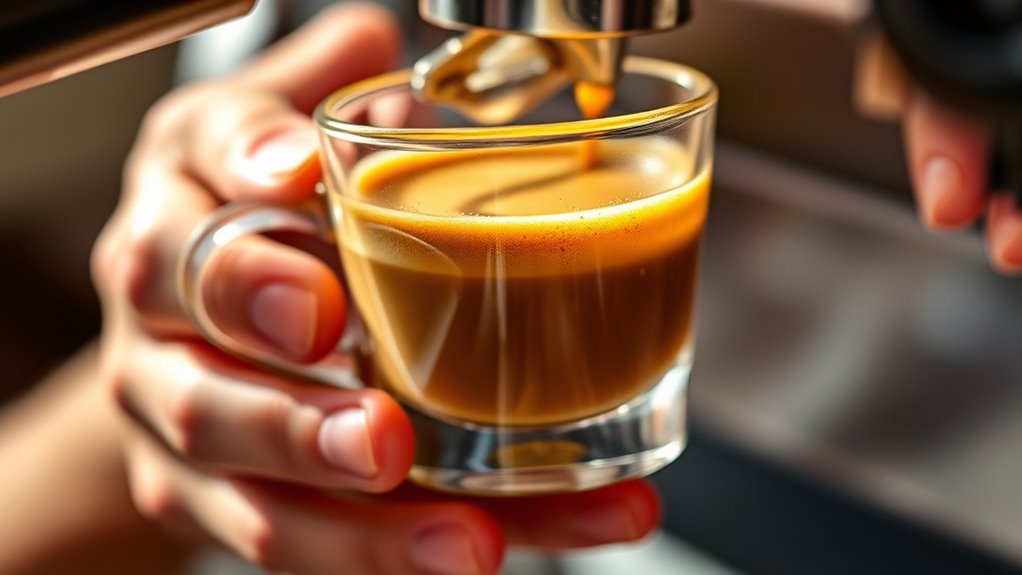
What exactly is crema, and why should you care about it when making espresso? Crema is the golden-brown foam that forms on top of your espresso. It’s made of tiny air bubbles and soluble oils emulsified by hot water under high pressure.
It’s not just decoration. It signals fresh, well-extracted espresso. When you see a rich, persistent crema, you know the beans are fresh, the extraction is ideal, and the brewing technique is spot on.
Crema acts as a flavor carrier, trapping aromatic compounds that heighten the coffee’s aroma and taste. Appreciating crema helps you dial in your espresso process, ensuring every shot delivers the sensory experience you’re after. Full-bodied, aromatic, and utterly satisfying.
Crema isn’t optional; it’s essential to mastering espresso. So next time you pull a shot, pay attention to that golden foam—it really matters. A thick, persistent crema also adds a velvety texture and subtle sweetness, balancing bitterness and acidity in your espresso for a more enjoyable mouthfeel.
Choose Coffee Beans That Produce Rich Crema
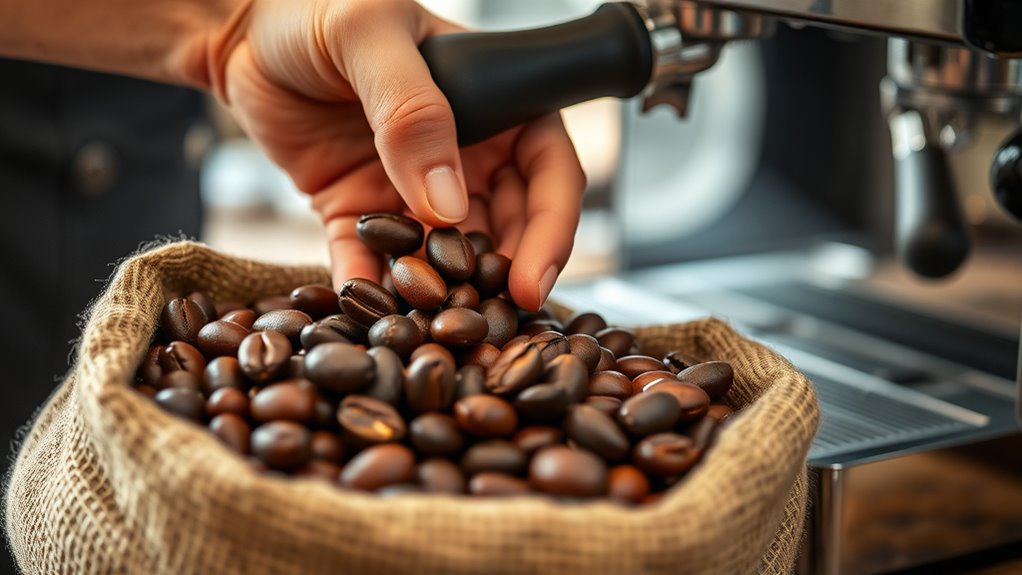
Because the foundation of a great crema lies in your coffee beans, choosing the right ones is crucial to achieving that luscious, golden layer atop your espresso. Opt for freshly roasted Arabica beans with a medium roast to maximize surface oils essential for crema development.
Try incorporating about 25% Robusta into your blend. Its higher density and richness really boost crema thickness and stability. Just avoid stale or overly dark roasted beans since they lack the necessary oils and sugars.
Also, select beans processed naturally or honey-pulped. These methods preserve sugars and oils that enhance crema quality.
Finally, source your beans from reputable roasters who detail crema characteristics. That way, you’re sure to get coffee designed to deliver a rich, stable, and vibrant crema every single time.
Additionally, understanding how bean density influences crema can help you select blends that produce a thicker, longer-lasting crema.
Store Coffee Properly To Preserve Freshness
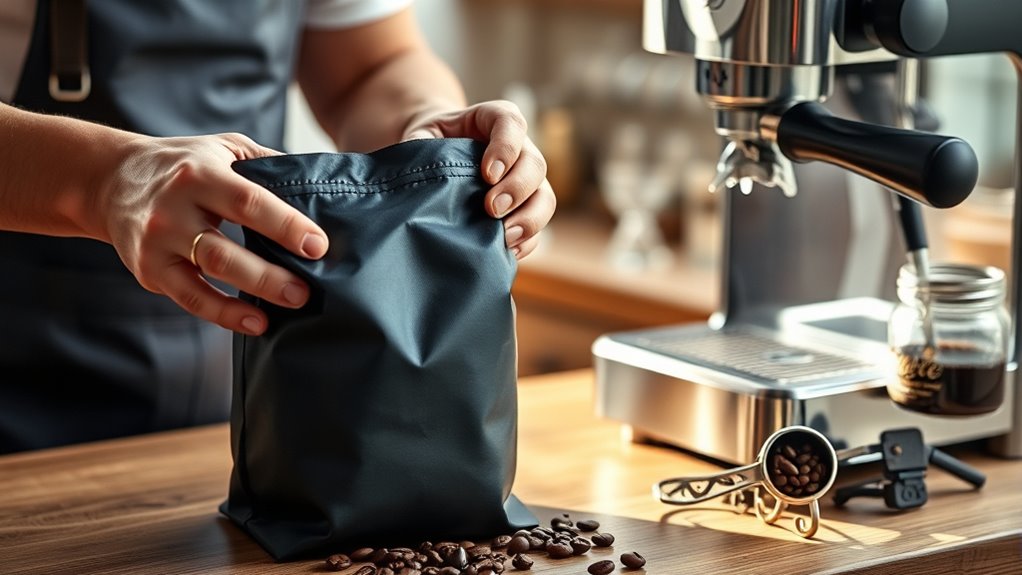
Selecting the right beans sets the stage, but how you store them makes all the difference in preserving their freshness and the crema they produce. Keep your coffee in an airtight, opaque container away from heat, light, and moisture.
Avoid the fridge because it introduces unwanted moisture and odors. Choose containers with valves to let gases escape without letting air in. Store coffee in a cool, dark place like a a pantry or cupboard.
Also, steer clear of strong-smelling foods nearby. Coffee absorbs odors easily, which can spoil its flavor and crema.
Proper storage helps maintain the coffee’s aroma and flavor complexity, essential for a rich espresso experience.
| Storage Tip | Why It Matters |
|---|---|
| Airtight container | Prevents oxidation |
| Cool, dark location | Preserves essential oils |
| Avoid fridge | Prevents moisture and odor absorption |
| Opaque container with valve | Allows gas release, keeps freshness |
Grind Coffee Just Before Brewing For Maximum Crema
When you grind your coffee just before brewing, you lock in the freshness and preserve the volatile oils that create a rich, velvety crema. Freshly ground coffee contains higher gas content, which plays a vital role in forming a stable crema during extraction.
If coffee grounds sit exposed to air for more than 30 minutes, they lose essential oils and gases, weakening crema quality. To maximize this effect, use a high-quality burr grinder with consistent, fine settings right before brewing.
Always store your whole beans in airtight containers away from light and moisture, so they stay fresh until grinding. Additionally, maintaining consistent timing during extraction helps ensure that the freshness locked in by grinding just before brewing translates into a balanced and flavorful espresso shot.
Master The Perfect Grind Size For Crema
You’ll want to use a fine, consistent grind—think powdered sugar—to really bring out the oils that create that rich crema.
Grinding your beans just before brewing helps lock in those essential flavors.
If your extraction time isn’t quite hitting that sweet 25-30 second window, don’t hesitate to adjust the grind size a bit.
It’s all about finding that perfect balance between too coarse and too fine.
Get that right, and you’ll enjoy a velvety, lasting crema every time.
Consistent, uniform particle size prevents channeling, ensuring even extraction and a richer flavor.
Grind Size Impact
Because grind size directly controls the extraction process, dialing in a fine, consistent grind is essential for achieving a thick, velvety crema. A finer grind increases the coffee’s surface area, extracting more oils that form that luscious crema you crave.
If your grind’s too coarse, water rushes through, producing thin or no crema.
But beware, overly fine grounds can clog your machine, causing over-extraction, bitter flavors, and patchy crema. Adjust your grind size in small steps, aiming for a balanced resistance that keeps extraction steady between 25 and 30 seconds.
This balance creates the pressure needed for a rich, creamy foam.
Mastering this grind size impact transforms your espresso, letting you craft that perfect, indulgent crema every time.
Remember to maintain water temperature between 195°F and 205°F, as optimal water temperature is crucial for proper extraction and crema quality.
Timing Of Grinding
Fine-tuning your grind size is only part of the equation; timing your grinding plays a key role in preserving the oils that create crema.
Grinding your coffee just before brewing prevents oxidation and locks in those rich oils essential for a luscious crema.
To master this, focus on grinding immediately before extraction to keep freshness intact. Use a medium-fine to fine grind that offers ideal resistance for stable extraction.
Try testing short shots to find the sweet spot between under-extraction’s thin crema and over-extraction’s harsh bitterness.
It’s all about balance and timing.
For best results, measure your grounds precisely with a digital scale to ensure consistent dosing and flavor.
Adjusting Grind Fineness
When dialing in your grind fineness, remember that even slight adjustments can dramatically affect crema quality. A finer grind boosts resistance during extraction, encouraging essential oil and gas release that forms the luscious crema you desire. But be careful, not too fine or you risk over-extraction and clogging, which smothers crema and slows flow.
Conversely, a coarser grind lets water rush through, causing under-extraction and thin crema. Adjust your grind size incrementally, aiming for a steady pour that lasts 25-30 seconds.
Using a high-quality burr grinder ensures your grind is uniform and precise, giving you consistent results.
Mastering this balance transforms your espresso, revealing rich crema and complex flavors every shot you pull. It’s all about finding that sweet spot that works for your beans and machine. Keep tweaking little by little, and you’ll nail it in no time.
Remember, the extraction time of around 25 seconds is crucial for achieving the perfect balance of flavor and crema quality.
Dose And Tamp Coffee Correctly For Optimal Extraction
To achieve a creamy espresso, you need to dose and tamp your coffee with precision. Start by measuring the right amount: 7-10 grams for a single shot or 14-18 grams for a double, depending on your basket size.
Next, distribute the grounds evenly to avoid uneven extraction.
Then, tamp firmly with about 30 pounds (13.6 kg) of pressure, applying consistent force to create a uniform coffee bed.
Remember these essentials:
- Dose accurately to control strength and balance.
- Tamp evenly to prevent channeling and ensure smooth water flow.
- Avoid tamping too lightly or too forcefully to prevent under or over-extraction.
Mastering dosing and tamping sets the foundation for rich, velvety crema every time you brew. It’s all about getting those basics right, and you’ll be sipping on great espresso in no time. Additionally, adjusting grind size when changing your dose helps maintain an ideal extraction time and flavor balance.
Keep Water Temperature And Pressure Just Right For Crema
Once you’ve nailed dosing and tamping, the next step is dialing in the water temperature and pressure. Keep the water between 92°C and 96°C (198°F to 205°F) to extract rich flavors and produce thick crema. Your machine’s boiler must be stable, ideally with PID control, to avoid temperature fluctuations.
Maintain pressure around 9 bars (130 psi). Too low yields thin crema, too high risks over-extraction and bitterness.
Consistent temperature within ±1°F is critical for achieving optimal extraction balance and crema quality.
| Parameter | Ideal Range |
|---|---|
| Water Temperature | 92°C – 96°C (198°F – 205°F) |
| Minimum Temperature | 88°C (190°F) |
| Maximum Temperature | 94°C (201°F) |
| Pressure | ~9 bars (130 psi) |
| Boiler Stability | Essential |
Master these to perfect your espresso’s crema every time.
Control Extraction Time For Balanced Flavor And Crema
Although dialing in grind size and tamping pressure can feel like an art, you must control extraction time carefully to achieve balanced flavor and a luscious crema. Aim for 20-30 seconds. This window ensures ideal extraction and that rich, velvety crema you crave.
Master extraction time between 20-30 seconds for balanced flavor and that perfect, velvety crema.
If your extraction is too fast, under 20 seconds, your crema becomes thin and sour. But if it goes over 30 seconds, it turns bitter and over-extracted. So, timing really makes all the difference here.
To master extraction time:
- Use a timer to precisely gauge each pull.
- Adjust grind size finer to slow extraction, or coarser to speed it up.
- Modify tamping pressure to control flow rate without stalling.
Just keep tweaking these factors until you hit that perfect balance.
Troubleshoot Common Crema Issues And Fixes
Getting your extraction time just right is a big step toward that perfect crema, but sometimes even with good timing, issues can pop up. To troubleshoot, focus on bean freshness, roast level, tamping, grind size, and machine cleanliness. Each factor directly influences the crema’s texture and stability.
| Issue | Quick Fix |
|---|---|
| Stale beans | Use fresh beans, store properly |
| Overly dark roast | Opt for medium roast |
| Inconsistent tamping | Apply firm, even pressure |
| Incorrect grind size | Adjust grind to medium-fine |
Maintaining your machine and using freshly ground, well-tamped coffee guarantees rich, velvety crema every time. Just keep an eye on these common pitfalls and address them with precision. Doing so will really elevate your espresso game.
Frequently Asked Questions
Can Milk Frothing Affect the Crema Quality?
Yes, milk frothing can affect crema quality. You’ll want to steam milk carefully, avoiding over-frothing or overheating. This way, you don’t disrupt the crema’s delicate surface.
Keeping that smooth, velvety espresso experience is key. So, take your time with the milk and pay attention to how it feels and looks while frothing. It really makes a difference!
Does Water Mineral Content Influence Crema Formation?
Yes, water mineral content directly influences crema formation. You’ll want water with balanced minerals like calcium and magnesium. Too soft or too hard water disrupts extraction and emulsification, resulting in weak or unstable crema on your espresso.
How Does Altitude Impact Espresso Crema?
Altitude steals crema like a thief in the night. You’ll face lower pressure and boiling points, which makes oils emulsify weaker.
Can Espresso Machine Cleanliness Affect Crema?
Yes, your espresso machine’s cleanliness directly impacts crema quality. Dirty parts clog water flow and cause uneven extraction, reducing crema’s richness and stability.
Keep your machine spotless to maintain ideal pressure and temperature for perfect crema every time. It really makes a difference in the taste and texture of your espresso.
Does Using Decaf Coffee Change Crema Characteristics?
Of course, decaf espresso magically produces the same rich crema as regular coffee, if only! You’ll notice it’s thinner and less stable because decaf loses essential oils.
But smart roasting and technique can still deliver a decent crema. It just takes a bit more care and know-how to get there.
Conclusion
Getting that perfect crema is like painting your espresso with a golden crown. It’s the mark of mastery and freshness.
By choosing the right beans, grinding just before brewing, and dialing in your dose, tamp, temperature, and pressure, you’ll release a rich, velvety crema every time.
Remember, practice sharpens your skills, so keep experimenting. With patience and precision, you’ll turn each cup into a creamy masterpiece that truly sings.