A shot of espresso is a small, intense coffee brewed by forcing hot water through finely ground beans at high pressure. You’ll get about 25-30 ml of rich, concentrated coffee topped with a thick, golden crema that locks in aroma and flavor.
The process demands precise grind size, tamping, and temperature, around 200°F, to extract bold taste and balanced complexity. If you want to understand how this quick brew compares to regular coffee and creates your favorite drinks, keep exploring.
What Is a Shot of Espresso and How Is It Made
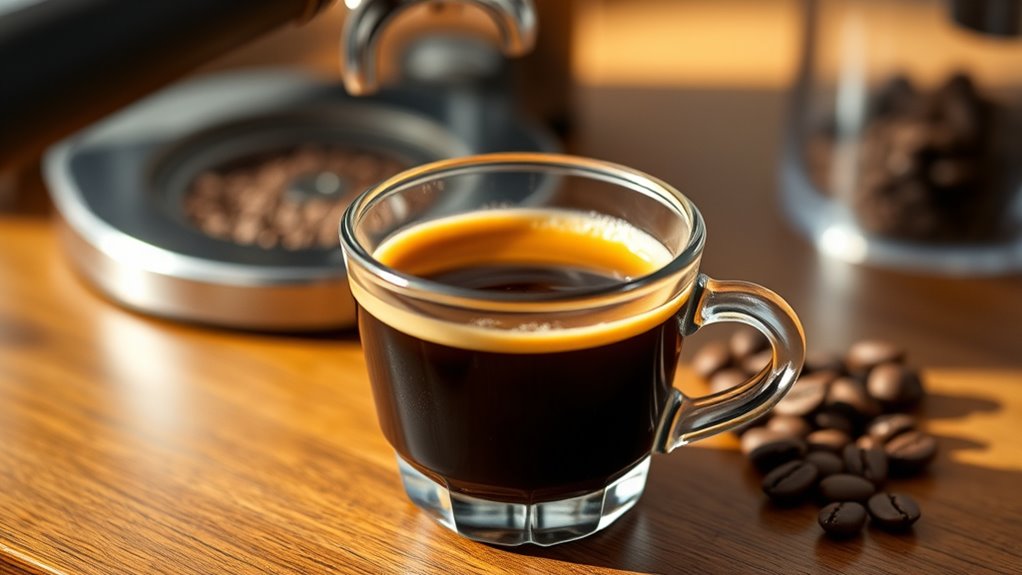
What makes a shot of espresso so unique? It’s a small, concentrated coffee crafted by forcing hot water through finely ground coffee at about 9 bars of pressure for 25-30 seconds.
You start by dosing 16-20 grams of finely ground coffee into the portafilter, then tamp it evenly to create a firm puck.
When you activate the espresso machine, it pushes hot water through this puck, extracting rich flavors swiftly and efficiently.
The final shot, roughly 25-30 ml, is crowned with a golden-brown crema, a delicate foam that enhances aroma and taste.
Every detail like grind size, tamping pressure, water temperature, and extraction time plays a critical role.
Including a brief pre-infusion phase before full extraction helps ensure even saturation and flavor balance.
Espresso vs. Regular Coffee: What’s the Difference?
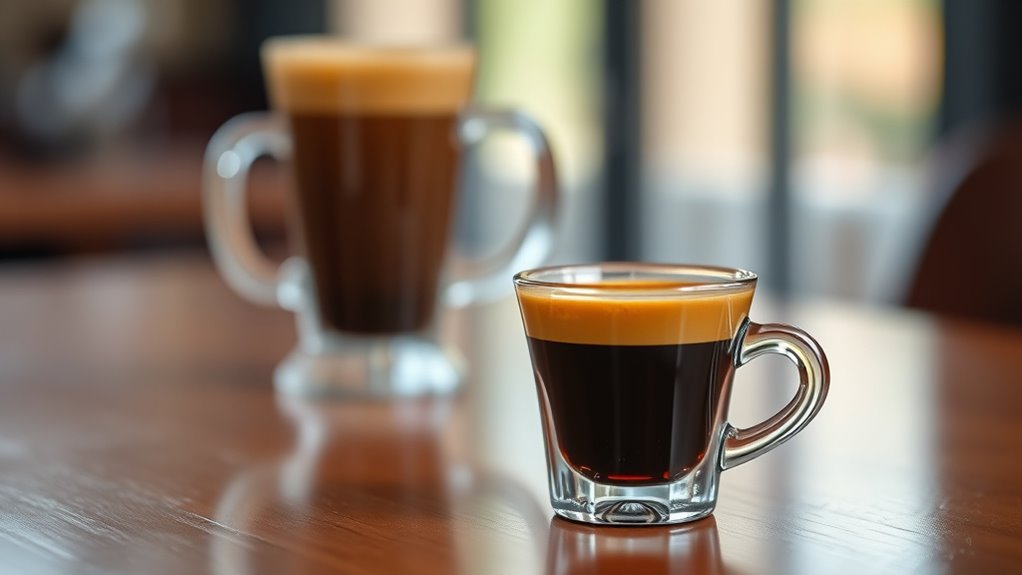
Now that you understand how a shot of espresso is crafted, it’s important to recognize how it stands apart from regular coffee. Espresso is a concentrated, intense brew made by forcing hot water through finely ground coffee under high pressure. Regular coffee, on the other hand, relies on slower dripping or filtering methods.
Espresso is a bold, concentrated brew brewed under high pressure, unlike the slower drip method of regular coffee.
Here’s how they differ:
- Brewing method and time: Espresso uses about 9 bars of pressure over 25 to 30 seconds. Regular coffee takes several minutes and doesn’t use pressure.
- Grind size and concentration: Espresso uses a finer grind, producing a small, dense shot that’s rich in flavor and caffeine per ounce.
- Flavor profile: Espresso offers a bold, robust taste with pronounced bitterness and aromatic oils. Regular coffee tastes milder and more diluted.
Understanding these differences helps you appreciate the unique artistry behind every espresso shot. It’s pretty cool how much technique goes into that tiny cup! Additionally, the extraction under high pressure enhances the aroma and richness, making espresso distinctively intense.
Why Crema Matters in Your Espresso Shot
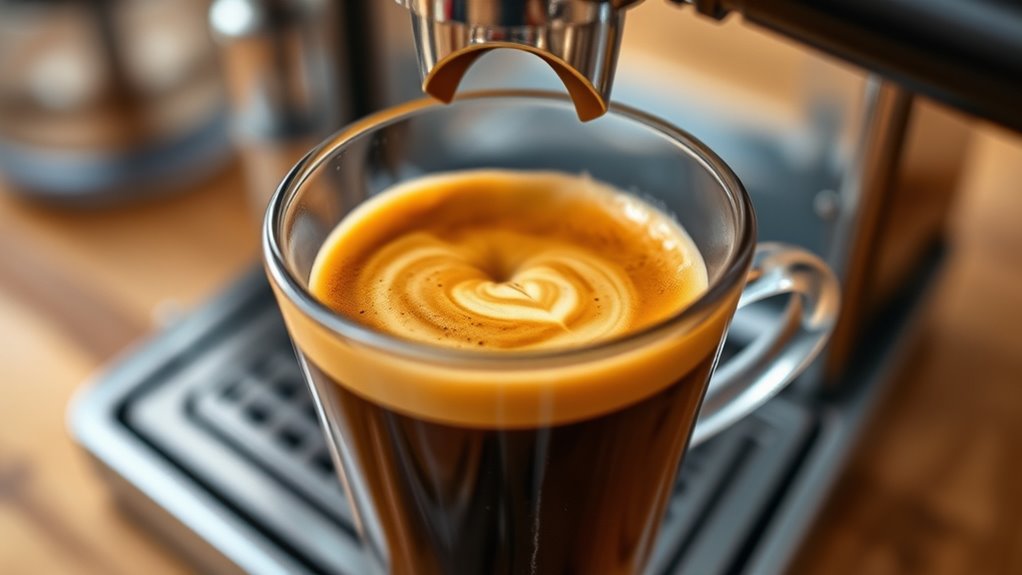
Although it may seem like just a simple foam topping, crema plays a crucial role in defining the quality of your espresso shot. This thick, golden-brown layer forms from emulsified oils and carbon dioxide released during high-pressure brewing, signaling proper extraction and freshness.
When you see a persistent, velvety crema, you know your espresso’s texture will be rich and smooth. Crema acts as a protective barrier, locking in the espresso’s aromatic compounds and oils, preserving its complex flavors and aftertaste.
For you, this means a fuller sensory experience with every sip. Plus, the thickness and color of the crema give you an immediate visual cue to assess the shot’s quality and the freshness of your beans, helping you enjoy espresso at its best.
Achieving and maintaining a rich crema requires precise control of extraction time to balance flavor and texture perfectly.
How to Taste Espresso Like a Pro
When you want to truly appreciate espresso, you need to engage all your senses and approach tasting with intention. Start by observing the espresso’s body. Swirl it gently in the cup and notice its viscosity and how it coats the spoon or glass.
Engage your senses fully—observe the espresso’s body and its rich, velvety texture as it swirls.
Then, inhale deeply to catch the aroma. Listen for nutty, fruity, floral, or chocolatey notes that hint at the beans’ quality.
Finally, take a small sip and hold it on your palate to evaluate the balance of bitterness, acidity, and sweetness, along with the aftertaste.
Look for a thick, golden crema that lasts at least 30 seconds. This signals freshness and proper extraction.
Assess the texture and mouthfeel. Smooth, velvety, or syrupy textures reveal extraction quality.
Note the espresso’s complex flavor profile and how it evolves on your palate.
Keep in mind that espresso delivers a highly concentrated dose of caffeine, which can influence how you perceive its flavor and effects.
Popular Espresso Drinks You Should Try
You’ll find that classic espresso-based drinks like lattes, cappuccinos, and macchiatos each highlight espresso’s rich flavors in unique ways.
Whether you like your coffee hot or iced, these options give you plenty of versatility without losing that bold espresso taste.
So, let’s dive into some popular choices you should try to really appreciate the craft behind each cup.
Trust me, once you get a taste, you’ll see why these drinks have such a loyal following!
Understanding how variables like grind size and tamping affect espresso extraction can help you better appreciate the nuances in each drink.
Classic Espresso-Based Beverages
Curious about which espresso drinks you should try next? Classic espresso-based beverages offer a range of flavors, from bold to creamy. Each highlights the rich essence of a shot of espresso in unique ways.
Here are three timeless options to explore:
- Cappuccino: Combines a shot of espresso with equal parts steamed milk and milk foam, delivering a balanced, velvety texture.
- Macchiato: Features a shot of espresso “stained” with just a touch of milk or foam, letting the espresso’s intensity shine.
- Latte: Mixes a shot of espresso with a larger amount of steamed milk, producing a milder, creamier taste.
These drinks showcase espresso’s versatility, whether you prefer a strong, concentrated sip or a smooth, milky blend.
To keep enjoying these beverages at their best, it’s important to maintain your machine by regularly descaling to remove mineral buildup.
Give them a try to deepen your coffee appreciation.
Hot And Iced Options
How do you enjoy espresso when the temperature rises or when you crave a comforting warmth? Hot espresso drinks like cappuccinos and flat whites deliver rich flavor and creamy texture. They’re served immediately after brewing to preserve the delicate crema.
When you want something invigorating, iced espresso options really shine. Drinks like iced lattes and caramel macchiatos use double shots mixed with cold milk and flavored syrups. This keeps espresso’s intense flavor even when chilled.
Cold espresso shots also form the base for iced coffee beverages. They offer a concentrated taste that holds up well over ice.
Whether you prefer the warm embrace of a freshly pulled shot or a cool, revitalizing sip, espresso adapts beautifully to your mood and the season. A double shot of espresso typically contains around 126 mg of caffeine, providing a strong and quick energy boost.
Make Espresso at Home Without a Machine
You don’t need an espresso machine to enjoy a rich, concentrated shot right at home. Believe it or not, tools like a French press, AeroPress, or a stovetop moka pot can help you craft bold, espresso-like coffee. It’s all about getting the grind size and brewing time just right.
So, let’s dive into the essential accessories and techniques that make this possible—without having to spend a fortune on fancy equipment.
You’ll be surprised how good your homemade espresso can taste! Using a moka pot on medium-low heat ensures optimal extraction and safety during brewing.
DIY Espresso Methods
Although traditional espresso machines deliver the most authentic shot, you don’t need one to enjoy concentrated, espresso-style coffee at home. Several DIY methods let you craft a bold, rich brew with crema-like foam, offering that satisfying espresso intensity.
Try these effective techniques:
- French press: Use finely ground coffee with minimal water, then press to extract a thick, rich concentrate.
- AeroPress: Steep finely ground coffee in hot water, then force it through a filter with pressure for 2-3 minutes to mimic espresso extraction.
- Moka pot: Heat water to steam pressure, pushing it through coffee grounds to create a strong, espresso-inspired shot.
Each method delivers a potent, flavorful cup, empowering you to enjoy espresso-style coffee without expensive equipment. Pay close attention to grind size and extraction to maximize flavor and caffeine content in these alternative methods.
Essential Home Accessories
When crafting espresso at home without a machine, selecting the right accessories becomes essential to achieving that rich, concentrated flavor you crave. A French press, when used with a fine grind and a short brew time, can deliver a bold, espresso-like shot.
The AeroPress excels by combining fine grounds with controlled pressure to mimic espresso’s intensity.
A stovetop moka pot brews a robust, intense coffee close to true espresso in flavor and texture.
For more control, a manual espresso maker or lever press allows precise pressure and extraction adjustments.
Whatever method you choose, tamping the grounds firmly and using water near 200°F (93°C) guarantees you extract that signature espresso strength and complexity right in your kitchen.
Using freshly roasted beans with the proper grind size further enhances the quality and flavor of your homemade espresso substitutes.
Why Double Shots Are a Favorite in Espresso Drinks
Because double shots pack about 120 mg of caffeine, twice that of a single shot, they deliver a powerful energy boost that many coffee lovers crave. When you choose a double shot, you’re not just getting more caffeine; you’re enhancing the entire espresso experience.
Double shots deepen flavor complexity and richness, especially in milk-based drinks like lattes and cappuccinos. Baristas favor double shots for their vibrant crema and visually appealing presentation.
Here’s why double shots stand out:
- Provide a more balanced, robust taste, perfect for larger drinks
- Allow for greater customization and stronger caffeine content
- Create a richer, crema-filled espresso base that elevates your drink
Embracing double shots means embracing a bold, dynamic espresso experience every time. It’s a great way to get more from your coffee without sacrificing flavor.
Frequently Asked Questions
How Long Does a Shot of Espresso Stay Fresh After Brewing?
You should drink your espresso within 1-2 minutes after brewing to enjoy its peak freshness. After 3-5 minutes, oxidation dulls the flavor. By 5 minutes, the crema and aroma start to fade considerably.
Can Espresso Shots Be Decaffeinated Completely?
You can’t decaffeinate espresso shots completely; they still contain about 2-5 mg of caffeine per 30 ml. Even the best processes leave tiny traces, so your decaf espresso won’t be entirely caffeine-free.
It’s just how it is with coffee. So, if you’re really sensitive to caffeine, keep that in mind when choosing decaf espresso. But for most people, the amount is pretty minimal.
What’s the Ideal Water Temperature for Pulling an Espresso Shot?
You want to pull your espresso shot with water heated between 90°C and 96°C (194°F to 205°F). Staying within this range guarantees balanced extraction, rich flavor, and that perfect, velvety crema you’re aiming for.
It’s all about hitting that sweet spot. Too hot, and you risk burning the coffee; too cool, and the shot might taste sour or weak. Keeping your water temperature just right makes all the difference in your cup.
How Does Grind Size Affect Espresso Shot Quality?
Think of grind size as the gatekeeper of flavor. If you go too fine, bitterness floods in. Too coarse, and the shot feels weak.
You’ll find the perfect balance by dialing grind size to reveal rich, balanced espresso. It’s all about tweaking until it tastes just right.
Are Espresso Shots Safe for Pregnant Women?
Espresso shots can be risky during pregnancy because they have a lot of caffeine. It’s important to limit your intake to stay within 200 mg of caffeine daily.
Before drinking espresso, it’s a good idea to talk with your healthcare provider. They can help make sure it’s safe for you and your baby. Taking these steps helps protect your baby’s health.
Conclusion
Now that you know what a shot of espresso is and how to make it, you’re ready to elevate your coffee game. A single shot packs a flavor explosion that’s like a tiny rocket blasting your taste buds awake. Whether you savor it solo, explore crema’s magic, or craft double shots, espresso offers endless possibilities.
So go ahead, brew with confidence and savor every intense, aromatic drop like the coffee pro you are!