To clean your DeLonghi espresso machine, first unplug it and remove all detachable parts like the water tank, drip tray, and brewing unit. Rinse these parts daily with fresh water, soaking stubborn areas if needed. Use Eco MultiClean for milk frothing components and wipe the exterior gently with a damp cloth.
Descale regularly with EcoDecalk, following exact dilution and flush instructions. Replace water filters properly to maintain taste. Keep these routines up, and you’ll guarantee peak performance and longevity.
More detailed steps can further enhance your care. Just stick to these basics, and your machine will reward you with great coffee every time.
Preparing Your DeLonghi Espresso Machine for Cleaning
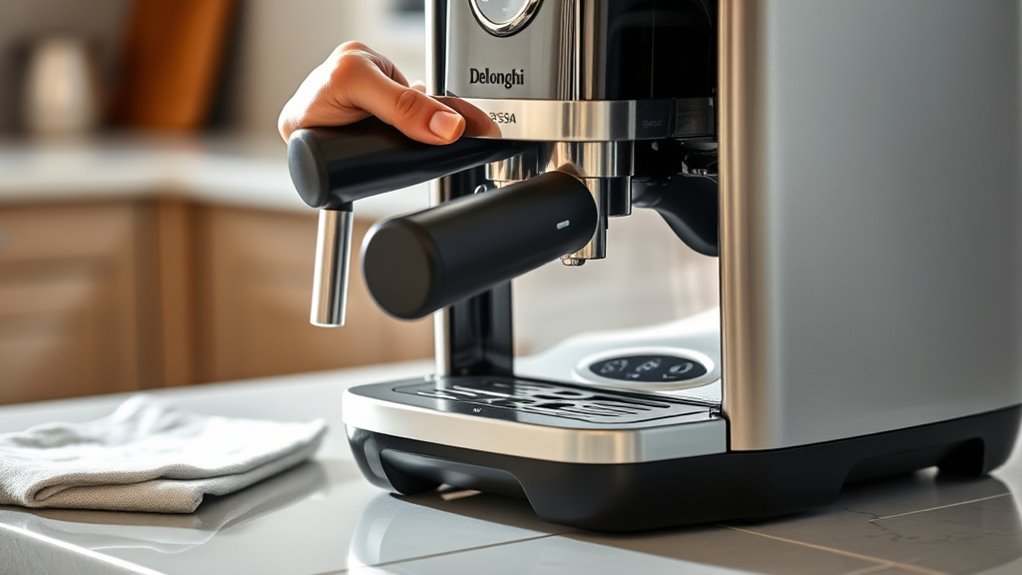
Before you begin cleaning your DeLonghi espresso machine, make sure it’s turned off and unplugged to guarantee safety.
Always turn off and unplug your DeLonghi espresso machine before starting any cleaning process for safety.
Start by removing all detachable parts: the drip tray, water tank, and brewing unit should be taken out for separate cleaning.
Empty the water tank completely, then rinse it thoroughly to prevent mineral buildup, which can affect performance.
Clear out any residual coffee grounds and used filters from their compartments to avoid clogging and maintain hygiene.
Finally, wipe the exterior of the machine with a damp cloth to remove surface dust and coffee residues.
Just be careful to ensure no moisture enters electrical components.
Performing these daily quick cleaning tasks helps maintain optimal performance and prevents costly repairs by avoiding mineral deposits buildup.
How to Clean the Brewing Unit
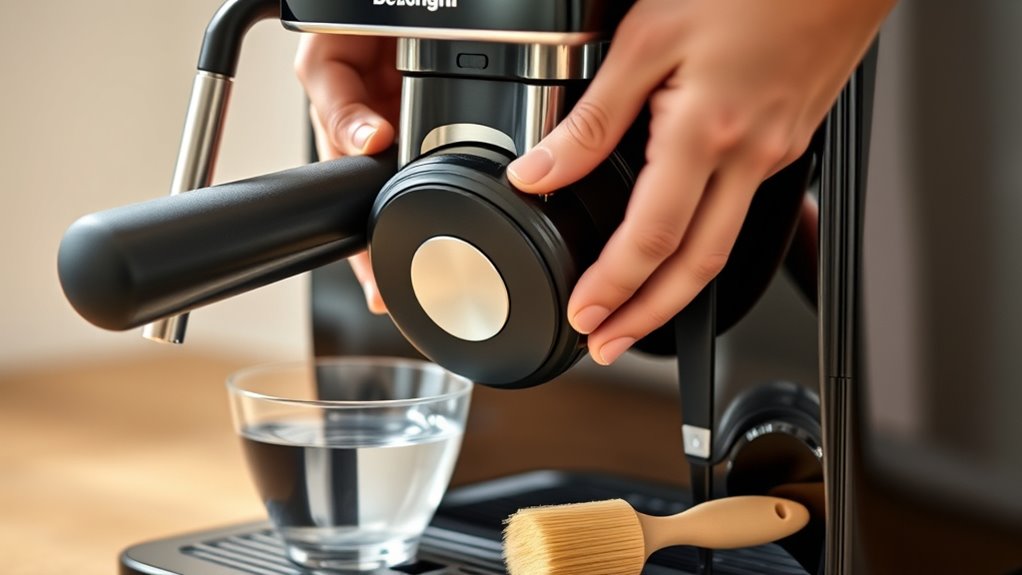
How do you guarantee your DeLonghi espresso machine consistently produces high-quality coffee? Start by properly cleaning the brewing unit. First, turn off the machine and allow it to cool completely.
Then, carefully remove the brewing unit from the machine. Rinse it under lukewarm water to eliminate loose coffee residues and oils. If buildup persists, soak the unit in water for several minutes to loosen stubborn deposits.
Use a soft brush or cloth to gently clean all surfaces, avoiding abrasive tools that could damage the unit. After cleaning, thoroughly dry the brewing unit to prevent mold growth and ensure it functions correctly.
Once dry, reinsert the brewing unit into the machine, securing it properly for efficient brewing performance and longevity. Taking these steps will help keep your espresso machine running smoothly and your coffee tasting great. Regular cleaning and maintenance prevent bacterial growth and help preserve machine efficiency.
How to Clean Milk Frothing Parts With Eco Multiclean
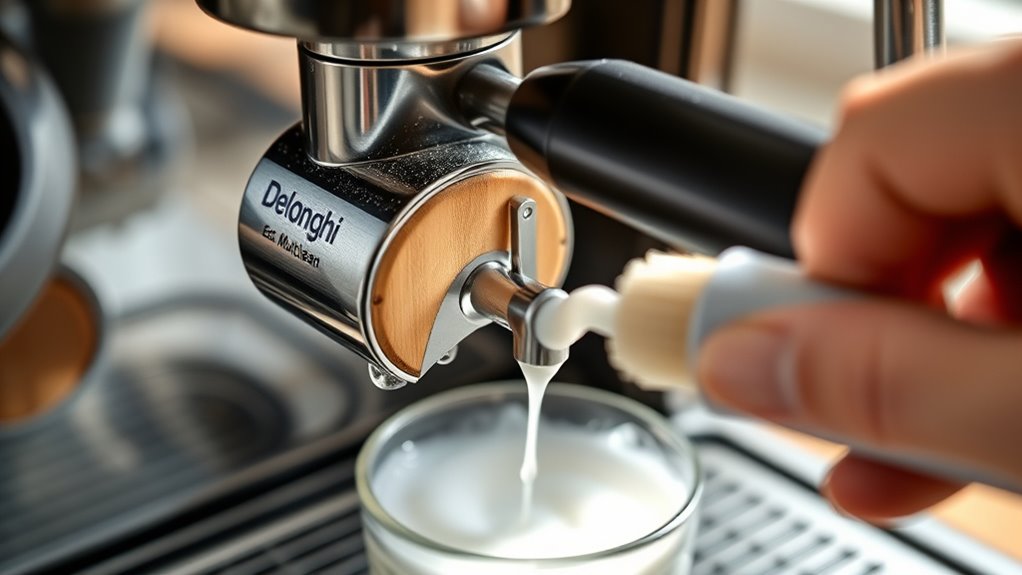
Maintaining the milk frothing components is just as important as cleaning the brewing unit to guarantee your DeLonghi espresso machine performs at its best.
Start by removing the milk frothing wand and any detachable parts. Rinse these components thoroughly with warm water to eliminate residual milk.
Begin by detaching the milk frothing wand and rinsing all parts with warm water to remove milk residue.
Next, prepare Eco MultiClean solution per the manufacturer’s instructions and soak the frothing parts for an effective deep clean.
Use a soft brush or cloth to meticulously clean both the interior and exterior surfaces of the wand, making sure all milk deposits are removed.
After soaking and scrubbing, rinse all parts thoroughly with clean water to remove any cleaning solution residue.
Finally, reassemble the frothing components into your machine. This will ensure ideal hygiene and functionality for consistent milk frothing performance.
Regular cleaning prevents milk residue buildup, which can affect steam quality and machine efficiency.
How to Clean Your DeLonghi Machine’s Exterior
Start by wiping your DeLonghi machine’s exterior with a soft, damp cloth to get rid of any surface dust and stains.
When you move on to the control panel and buttons, use a damp cloth as well, but be gentle. You want to clean away any coffee oils and residue without letting moisture sneak inside.
Just a heads up—avoid using abrasive materials.
And once you’re done, make sure to dry the surface thoroughly to prevent any damage or water spots.
Regular maintenance, including attention to factors like machine pressure, helps ensure your DeLonghi espresso machine continues to deliver high-quality coffee.
Wiping Exterior Surfaces
While ensuring your DeLonghi espresso machine is unplugged, use a soft, damp cloth to carefully wipe its exterior surfaces. This helps remove dust, fingerprints, and coffee oils without damaging the finish. Avoid abrasive cleaners or harsh chemicals because they can deteriorate plastic parts and the machine’s coating.
For stubborn spots, slightly moisten the cloth with a mild soap-water solution, then gently clean the affected area. After that, immediately follow with a dry, soft towel to prevent moisture from seeping into vents or electrical components.
Regularly wiping down the exterior prevents buildup of residues that could affect both appearance and operation. Just remember to keep the moisture on the cloth controlled to avoid water getting inside.
Maintaining proper water quality in your espresso machine also supports consistent extraction and prevents scale buildup.
This way, your DeLonghi stays pristine and functional.
Cleaning Control Panel
How should you approach cleaning the control panel of your DeLonghi espresso machine to avoid damage? First, always disconnect the machine from power to guarantee safety. Use a soft, damp cloth with minimal moisture to gently wipe the panel. This helps prevent liquid from getting into the electronic components.
If you come across stubborn dirt or fingerprints, lightly moisten the cloth with a mild soap solution. Just be sure never to apply soap directly to the panel. Avoid abrasive cleaners, solvents, or scrubbers because they can scratch or degrade the surface.
After cleaning, thoroughly dry the control panel with a soft, dry cloth to eliminate streaks and water spots. This careful method preserves both functionality and appearance. It helps keep your machine’s control panel responsive and looking great over time. Regular maintenance, including cleaning and descaling, is essential for optimal espresso machine performance and longevity, as it ensures consistent extraction quality.
Daily Rinsing Tips for Your DeLonghi Espresso Machine
Although daily rinsing might seem routine, it plays an essential role in maintaining your DeLonghi espresso machine’s performance and longevity. By following a consistent rinsing routine, you prevent mineral buildup, coffee residue accumulation, and guarantee ideal hygiene.
Here’s how you can efficiently handle daily rinsing:
- Rinse the water tank thoroughly with fresh water to avoid mineral deposits and maintain clean brewing water quality.
- Run a short rinse cycle immediately after each use to flush out residual coffee oils and sediments within the machine.
- Remove and clean the brew group or portafilter, drip tray, and coffee grounds container daily to prevent clogging and preserve machine functionality.
These precise daily steps will keep your DeLonghi espresso machine operating smoothly and prolong its lifespan.
Just a little daily care goes a long way! Regularly monitoring your water hardness with water hardness test strips helps adjust your maintenance schedule to prevent scale buildup.
Why You Should Descale Your DeLonghi Machine Regularly
If you want to maintain consistent coffee temperature and extraction quality, you must descale your DeLonghi espresso machine regularly. Limescale buildup from hard water deposits impairs water flow and reduces heating element efficiency. This causes temperature fluctuations that negatively affect extraction.
Over time, calcium deposits accelerate wear on internal components, which can lead to costly repairs or even premature machine failure. By following a strict descaling schedule, you prevent these deposits from accumulating.
This ensures peak brewing performance and preserves your machine’s lifespan. Regular descaling safeguards the precise thermal stability and hydraulic function necessary for making high-quality espresso. It also helps maintain the intended flavor profile.
Neglecting this maintenance step compromises both machine durability and coffee quality. So, if you want to enjoy great espresso and keep your DeLonghi running smoothly, descaling is an essential practice. Maintaining water temperature stability between 93–96°C is crucial for balanced, rich espresso extraction.
How to Use EcoDecalk for Effective Descaling
You’ll want to use EcoDecalk because its 100% lactic acid formula safely and effectively removes limescale without damaging your DeLonghi machine.
Just start by diluting the solution with water according to the instructions. Then, run your machine’s descaling program to make sure all the scale is completely broken down.
After that, it’s important to flush the system with clean water through several cycles. This helps get rid of any leftover descaler and keeps your machine performing at its best.
Regular descaling also ensures optimal extraction of the natural oils and proteins in espresso, preserving its low-calorie content and rich flavor.
Benefits of EcoDecalk
Why choose EcoDecalk for descaling your DeLonghi espresso machine? EcoDecalk offers a precise, safe, and eco-conscious solution. It contains 100% lactic acid, which dissolves limescale effectively without harming internal components.
Here’s why it stands out:
- Machine Longevity: By eliminating limescale buildup, EcoDecalk prolongs your machine’s lifespan and maintains heating efficiency.
- Optimal Performance: Regular use ensures consistent water flow and stable brewing temperature, preserving coffee quality.
- Environmental Safety: Being biodegradable and free from harsh chemicals like citric or tartaric acids, it minimizes ecological impact.
You simply dilute EcoDecalk per instructions and run the descaling cycle through your machine. This targeted approach safeguards your DeLonghi while delivering reliable, long-term maintenance benefits. Additionally, maintaining proper machine care helps preserve the brewing parameters that influence caffeine extraction and espresso quality.
EcoDecalk Usage Tips
Although descaling may seem straightforward, using EcoDecalk correctly is key to maintaining your DeLonghi espresso machine’s ideal function. Always choose EcoDecalk formulated specifically for DeLonghi to guarantee safety and effectiveness.
Measure the EcoDecalk amount precisely according to your local water hardness, as indicated in the manufacturer’s guidelines.
Mix it with water at the recommended ratio, typically one full bottle per descaling cycle, to maximize limescale dissolution.
Then, initiate the machine’s descaling program, allowing the solution to circulate through all internal circuits thoroughly.
After the cycle completes, flush the machine with fresh water to eliminate any residual EcoDecalk and prevent flavor contamination.
Following these steps guarantees efficient descaling, prolongs your machine’s lifespan, and keeps your espresso tasting its best.
How to Replace Water Filters for Better Coffee
Since maintaining ideal water quality directly impacts the taste and longevity of your Delonghi espresso machine, replacing the water filter regularly is essential.
Start by carefully removing the old filter from the water tank.
Then, prepare the new filter by rinsing it under cold running water for 1 to 2 minutes to get rid of any manufacturing residues.
After that, soak it in cold water for about 5 minutes to activate the filtration media.
Follow these steps exactly:
- Insert the new filter into the designated slot in the water tank, making sure it’s securely seated.
- Fill the tank with fresh water.
- Run a descaling cycle or brew several cups to flush out air and debris.
Doing this ensures effective filtration, helps prevent scale buildup, and consistently improves the flavor of your coffee.
It’s a simple step that really makes a difference!
Common Cleaning Mistakes to Avoid With Your Delonghi
Replacing the water filter plays a significant role in maintaining your Delonghi espresso machine’s performance, but proper cleaning routines are just as important to keep it running smoothly.
Avoid using harsh abrasives or metal tools, as they can scratch or damage both internal and external surfaces.
Never neglect regular cleaning of the drip tray and water reservoir to prevent mold and bacterial buildup.
Also, avoid overusing descaling agents or vinegar since improper rinsing can corrode internal components.
Be cautious with water near electrical parts and the control panel to prevent damage.
And finally, don’t skip the recommended weekly cleaning of the brewing unit. Failing to do so leads to clogging and impaired coffee extraction.
Following these guidelines ensures your machine remains reliable and efficient.
Just a little care goes a long way!
Simple Tips to Extend Your DeLonghi’s Lifespan
To extend your DeLonghi espresso machine’s lifespan, you should incorporate regular maintenance practices that target both internal and external components. Follow these precise steps:
- Descale regularly: Use EcoDecalk or approved descaling solutions to prevent limescale buildup, which can impair heating elements and internal components. Avoid DIY methods like vinegar to prevent corrosion and residue.
- Clean the brewing unit weekly: Rinse with water and ensure it’s thoroughly dry before reinserting. This maintains ideal extraction and prevents mold or mechanical wear.
- Use filtered water: Minimizing mineral deposits reduces descaling frequency and protects internal parts from damage.
Additionally, perform routine external cleaning with recommended accessories to keep your machine’s appearance and function intact.
Consistent adherence to these steps guarantees longevity and peak performance.
Frequently Asked Questions
Can I Use Regular Dish Soap to Clean My Delonghi Machine?
You shouldn’t use regular dish soap to clean your DeLonghi machine because it can leave residues, damage internal parts, and affect coffee taste.
Instead, use manufacturer-recommended cleaners like EcoDecalk. These products guarantee safe, effective maintenance and help preserve your warranty. It’s worth sticking to what the experts suggest!
How Often Should I Replace the Coffee Beans in the Grinder?
Think of coffee beans as fleeting stars. Replace them every 1 to 2 weeks to keep your grinder performing at its best. Stale beans disrupt grind consistency and aroma.
Is It Safe to Leave Water in the Machine Overnight?
It’s not safe to leave water in your machine overnight. Stagnant water promotes bacterial growth and causes unpleasant odors. It can also encourage mineral buildup.
Can I Use Vinegar Instead of Ecodecalk for Descaling?
You shouldn’t use vinegar instead of EcoDecalk. Vinegar can cause up to 30% faster corrosion in De’Longhi machines.
EcoDecalk’s lactic acid formula safely removes limescale without damaging internal components or voiding your warranty. So, it’s really the better choice for keeping your machine in good shape.
What Should I Do if My Machine Stops Brewing Mid-Cycle?
If your machine stops brewing mid-cycle, first check that the water tank is properly seated and filled. Make sure it’s not in descaling mode, as that can interrupt brewing.
Next, clear any coffee clogs that might be causing a blockage. Try resetting the machine by unplugging it for a moment.
Also, give the brewing unit and filters a thorough cleaning. That usually helps get things back on track.
Conclusion
By regularly cleaning your DeLonghi espresso machine, you guarantee peak performance and flavor. Did you know that neglecting descaling can reduce your machine’s efficiency by up to 25%? Following precise steps, from brewing unit maintenance to using EcoDecalk, prevents buildup and extends your machine’s lifespan.
Remember, consistent care not only preserves taste but also protects internal components. This can save you from costly repairs down the line. Keep your espresso machine in top condition with these detailed cleaning routines for the best coffee experience.