You can safely drink about 3 to 5 espresso shots daily without exceeding the recommended 400 mg caffeine limit. Space your shots at least 1 to 2 hours apart to avoid jitters or sleep disruption. Also, keep in mind your body weight, health, and caffeine sensitivity.
Try to avoid late-day consumption to protect your sleep. If you want to understand how factors like bean type, health conditions, and timing affect your safe espresso intake, there’s more to explore on this topic.
How Much Caffeine Is in a Single Espresso Shot
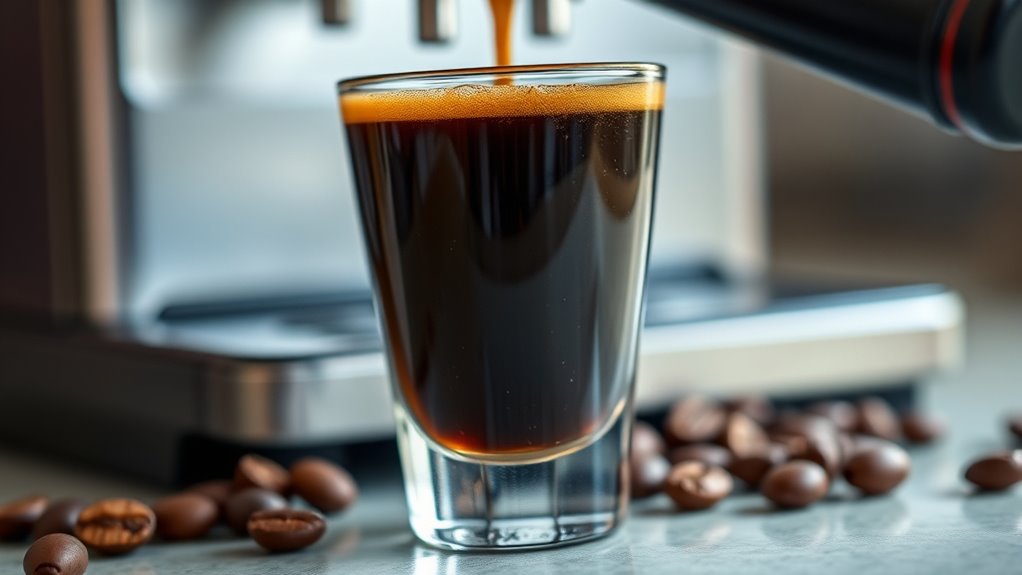
A single espresso shot typically contains between 63 and 75 milligrams of caffeine, though this amount can vary based on several factors. Generally, a standard shot is about 1 ounce (30 milliliters) and delivers this caffeine range.
If you opt for Robusta beans, expect higher caffeine levels, sometimes up to twice as much compared to Arabica beans.
Specialty or double shots usually contain between 125 and 150 milligrams of caffeine, depending on how they’re prepared. Since extraction methods and shot strength vary, caffeine content can range from around 60 to 100 milligrams per shot.
Understanding these figures helps you gauge your caffeine intake more accurately when enjoying espresso throughout the day.
The roast level of the coffee beans also affects caffeine content, with light roasts generally containing more caffeine than dark roasts.
What Affects the Caffeine Content in Your Espresso
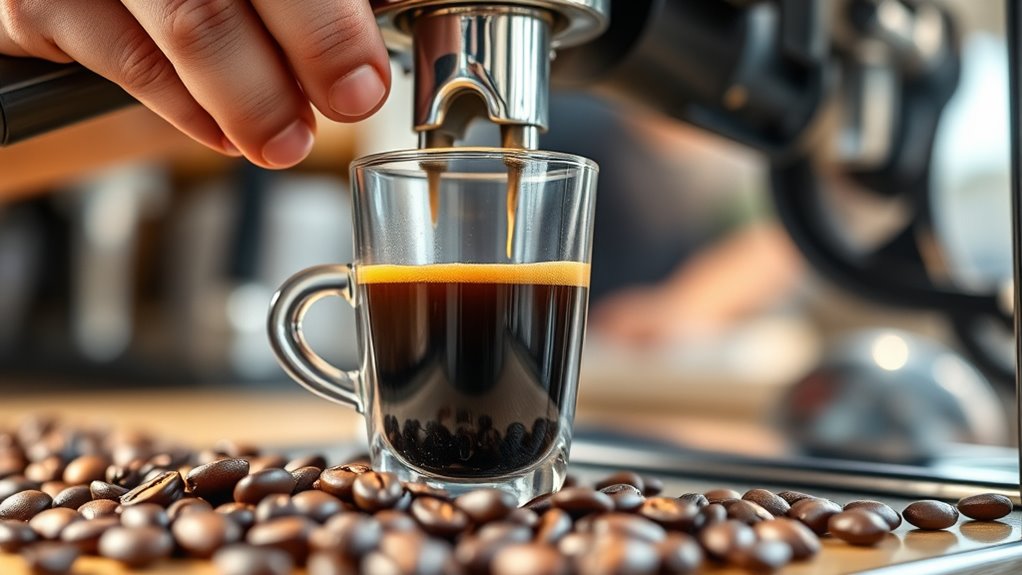
Because caffeine levels can vary widely, understanding what affects the caffeine content in your espresso helps you control your intake better.
First, the type of coffee beans matters. Robusta beans pack nearly twice the caffeine of Arabica beans.
Next, roast level plays a role. Darker roasts tend to have slightly less caffeine than lighter ones.
The brewing process also impacts caffeine extraction. Factors like pressure and extraction time influence how much caffeine your shot contains.
Additionally, the size of your espresso shot, typically 25-30 ml, determines total caffeine. Larger shots naturally have more.
Specialty espresso variations like ristretto or lungo change caffeine levels too because of differences in shot volume and extraction time.
Knowing these factors lets you better manage your daily caffeine intake from espresso.
It’s also important to note that extraction time significantly affects caffeine levels, with longer extraction generally increasing the amount of caffeine in your shot.
How Many Espresso Shots Are Safe to Drink Daily
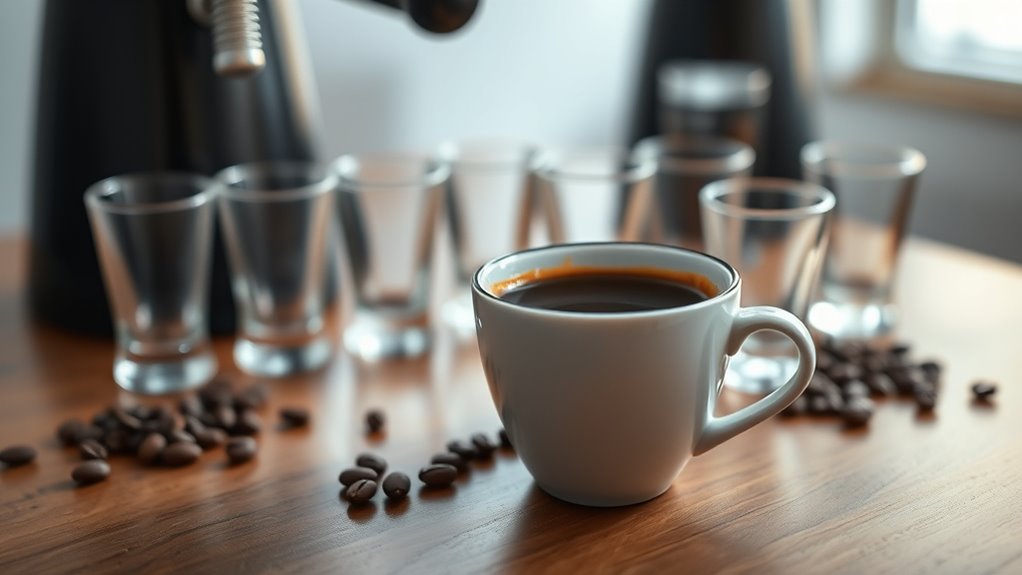
You can safely enjoy between three and five espresso shots daily without exceeding the recommended caffeine limit of 400 mg for most healthy adults. Each shot contains about 75 mg of caffeine, so staying within this range helps prevent health risks like jitteriness or sleep problems.
To optimize your espresso intake, limit yourself to 4-5 shots per day to remain within safe caffeine levels. Also, try to space out your espresso shots instead of drinking them back-to-back.
Keep an eye on how your body responds and adjust if you start feeling anxious or restless.
And definitely avoid going over six shots daily, since that surpasses the advised caffeine limit and increases risks.
Maintaining consistent timing in espresso extraction can also enhance the quality of each shot you consume.
How Espresso Shots Compare to Other Caffeinated Drinks
You might be surprised to learn that a single espresso shot contains about 75 mg of caffeine. That’s actually less than what you’d find in an 8 oz cup of drip coffee or many energy drinks.
Serving sizes really make a difference here because larger drinks, like cold brews, can have caffeine equal to several espresso shots. The caffeine concentration in espresso is significantly higher than in drip coffee, making it a more concentrated source of caffeine per milliliter (caffeine concentration).
Caffeine Content Comparison
How does the caffeine content of an espresso shot stack up against other popular caffeinated drinks? A standard espresso shot has about 75 mg of caffeine, but this can range from 60 to 100 mg.
Here’s how it compares:
An 8 oz cup of drip coffee usually contains 95-165 mg, often more than one espresso shot.
Cold brew coffee, served in larger 12 oz sizes, packs 150-250 mg, exceeding multiple espresso shots.
Energy drinks vary widely, with 8 oz cans offering 70-200 mg, roughly equivalent to 1-2 espresso shots.
Factors like bean type, roast, and brewing time influence caffeine levels, so these numbers can fluctuate.
Understanding these comparisons helps you gauge your total caffeine intake better.
Despite espresso’s higher caffeine concentration per ounce, its smaller serving size means total caffeine intake depends largely on serving size and volume.
Serving Size Differences
While comparing caffeine content across beverages offers valuable insights, it’s equally important to take into account serving sizes when evaluating how espresso shots measure up against other caffeinated drinks.
An espresso shot typically contains 60 to 100 mg of caffeine and is much smaller in volume than an 8 oz cup of drip coffee.
Drip coffee usually has 80 to 140 mg of caffeine, which is roughly equivalent to one to two espresso shots.
Cold brew, served in larger 12 oz portions, can pack 150 to 250 mg, surpassing multiple espresso shots.
Energy drinks vary widely, with 8 oz cans containing 70 to 200 mg, or about one to three espresso shots.
Despite its concentrated caffeine, a single espresso shot contains only 1 to 3 calories, making it a low-calorie choice among caffeinated beverages.
How to Space Your Espresso Shots Safely
If you want to space your espresso shots safely, try to leave at least 1 to 2 hours between each one. This gives your body some time to lower the caffeine levels.
Also, it’s a good idea to avoid drinking espresso too late in the day since it might mess with your sleep.
Keep an eye on how your body responds, too. Everyone’s different, so you might need to adjust the timing based on what feels right for you.
That way, you can enjoy your espresso without any unwanted side effects.
Remember, the caffeine effects typically fade within 3 to 4 hours, which can help guide your timing between shots.
Optimal Time Intervals
Since caffeine has a half-life of about five hours, you should space your espresso shots at least 3 to 4 hours apart to allow your body to metabolize the caffeine effectively. This timing helps prevent excessive buildup and reduces side effects like jitteriness or increased heart rate.
To optimize your espresso consumption:
- Limit yourself to 2-3 shots per day spaced evenly.
- Wait at least 3-4 hours between each shot.
- Pay attention to how your body reacts after each shot.
- Adjust timing based on tolerance, avoiding consecutive shots too close together.
Following these intervals helps maintain steady caffeine levels and minimizes risks. This way, you can enjoy espresso safely throughout the day. Proper maintenance, such as regular descaling of your espresso machine, ensures consistent coffee quality that supports your caffeine intake routine.
Avoid Late Consumption
Spacing your espresso shots appropriately not only maintains steady caffeine levels but also helps prevent sleep disturbances. To avoid interfering with your sleep, limit yourself to two or three shots in the morning and steer clear of espresso after 2 p.m.
Spacing shots at least 3-4 hours apart allows your body to metabolize caffeine efficiently, reducing risks like anxiety and heart palpitations. Incorporating caffeine-free periods in the late afternoon and evening supports your natural circadian rhythm, promoting better rest. Using freshly brewed espresso rich in crema for stable foam ensures a better drinking experience while managing your consumption.
Monitor Personal Response
Although caffeine affects everyone differently, paying close attention to how your body reacts after each espresso shot is essential for safe consumption. Your individual response will guide how you space your shots and how many you can handle comfortably.
To manage your espresso intake effectively, space shots at least 2-3 hours apart to let your body metabolize caffeine and avoid overstimulation. Limit yourself to 2-3 shots within any 4-hour period to stay within safe caffeine levels.
Monitor symptoms like jitters, increased heart rate, or anxiety to adjust your intake accordingly.
Also, consider your body weight and sensitivity; if you’re more sensitive, it’s a good idea to extend the intervals between shots.
Keep in mind that a standard espresso shot contains roughly 60 mg of caffeine, which can help you calculate your total daily intake.
How Your Body Weight and Tolerance Affect Your Espresso Limit
Your body weight and caffeine tolerance play crucial roles in determining how many espresso shots you can safely consume each day.
If you have a lower body weight, you’ll likely feel stronger effects from fewer shots because caffeine metabolism tends to be slower, increasing sensitivity.
On the other hand, if you regularly drink caffeine, your tolerance builds up. That means you might need more espresso to achieve the same alertness without adverse effects.
But tolerance varies widely due to genetics and lifestyle, so your safe limit is personal.
Remember, these factors influence not just how many shots you can handle but also how quickly your body processes caffeine.
Paying attention to your individual response helps you find the right balance for safe espresso consumption.
Health Conditions and Medications That Affect Your Safe Espresso Limit
Because certain health conditions and medications influence how your body processes caffeine, they can profoundly affect the number of espresso shots you can safely consume. For example, anxiety disorders, heart arrhythmias, and hypertension may lower your caffeine tolerance, making even small amounts risky.
Medications like stimulants, some antibiotics, and antidepressants can slow caffeine metabolism or increase its effects.
Pregnant and breastfeeding women should limit intake to under 200 mg daily, about two espresso shots, to protect fetal and infant health.
Additionally, liver or kidney issues may reduce caffeine clearance, heightening sensitivity. So, it’s important to keep these factors in mind when deciding how much espresso to enjoy.
Here are key points to contemplate:
- Health conditions can lower your safe caffeine limit.
- Some medications may amplify caffeine’s effects.
- Pregnancy and breastfeeding require stricter limits.
- Consult your healthcare provider for personalized advice.
Signs You’ve Had Too Much Espresso and Should Cut Back
When you consume more than 4-5 espresso shots in a day, your body often signals that it’s time to cut back. You might feel jittery, experience a rapid heartbeat, or notice increased anxiety.
Difficulty sleeping, restlessness, and headaches are common signs that your caffeine intake is too high.
Difficulty sleeping, restlessness, and headaches often signal that you’ve consumed too much caffeine.
You may also feel shaky, irritable, or have stomach upset. Heightened nervousness, dizziness, and trouble concentrating are clear indicators you’ve had too much espresso.
Recognizing these symptoms early helps you prevent more serious health effects and adjust your consumption accordingly.
Paying attention to how your body reacts assures you stay within a safe limit and maintain your well-being while enjoying espresso.
Tips to Enjoy Espresso Without Exceeding Safe Limits
Experiencing signs like jitters or restlessness means it’s time to adjust your espresso intake. To enjoy espresso safely, keep these tips in mind:
Limit yourself to 3-4 shots daily, staying within the 400 mg caffeine guideline. Spread shots throughout the day to avoid caffeine spikes and minimize side effects.
Remember, each shot has about 75 mg of caffeine, so track your intake carefully.
Also, consider your body weight, health conditions, and sensitivity to caffeine when deciding your limit.
Frequently Asked Questions
Can Espresso Shots Help Improve Athletic Performance?
Yes, espresso shots can boost your athletic performance by increasing adrenaline and focus. Drinking 1-2 shots before exercise enhances endurance and strength.
Just be careful not to overdo it. Too much caffeine can lead to dehydration and heart rate issues.
How Does Espresso Consumption Affect Mental Focus and Productivity?
Want a sharper mind? Espresso blocks tiredness by targeting adenosine receptors, boosting dopamine to enhance your focus and memory.
Just don’t overdo it. Too much caffeine can spark anxiety and hurt your productivity instead. So, enjoy your espresso, but keep it balanced.
Are There Differences in Espresso Safety for Pregnant Women?
Yes, you should limit espresso during pregnancy to about 2 shots daily. Excess caffeine crosses the placenta, which can affect fetal development. It also raises the risk of miscarriage and preterm birth.
Can Drinking Espresso Shots Impact Hydration Levels?
Like balancing fire and water, your espresso shots can mildly increase urine output, but they also hydrate you.
If you drink enough water alongside, your hydration won’t suffer, even with several shots daily.
What Are the Environmental Impacts of Espresso Production?
You should know espresso production uses lots of water, causes deforestation, and relies on pesticides harming ecosystems. Its roasting and brewing emit greenhouse gases, but choosing shade-grown, organic beans helps reduce these environmental impacts effectively.
It’s pretty clear that making your espresso has a bigger footprint than you might think. But the good news is, by picking more sustainable options, you can enjoy your coffee while being kinder to the planet.
Conclusion
You can safely enjoy up to 400 mg of caffeine daily, which equals about four standard espresso shots. Keep in mind, factors like your weight, tolerance, and medications can change this limit.
Spacing your shots and watching for signs of overconsumption helps you stay within a healthy range. Remember, moderation is key. Too much caffeine can lead to jitters or sleep issues.
Stick to these guidelines to savor your espresso without risk. It’s all about enjoying your coffee while keeping it safe and comfortable for your body.