You’ll notice blonde espresso beans are roasted shorter, giving you a lighter, denser, and dry matte bean with bright, fruity, and floral flavors. Regular espresso beans roast longer, producing darker, oilier beans that yield bolder, richer, and more caramelized shots.
Blonde espresso also contains slightly more caffeine and requires a finer grind and higher brewing temperature. Understanding these technical differences helps you tailor extraction and flavor or explore the unique qualities each roast offers.
What Is Blonde Espresso?
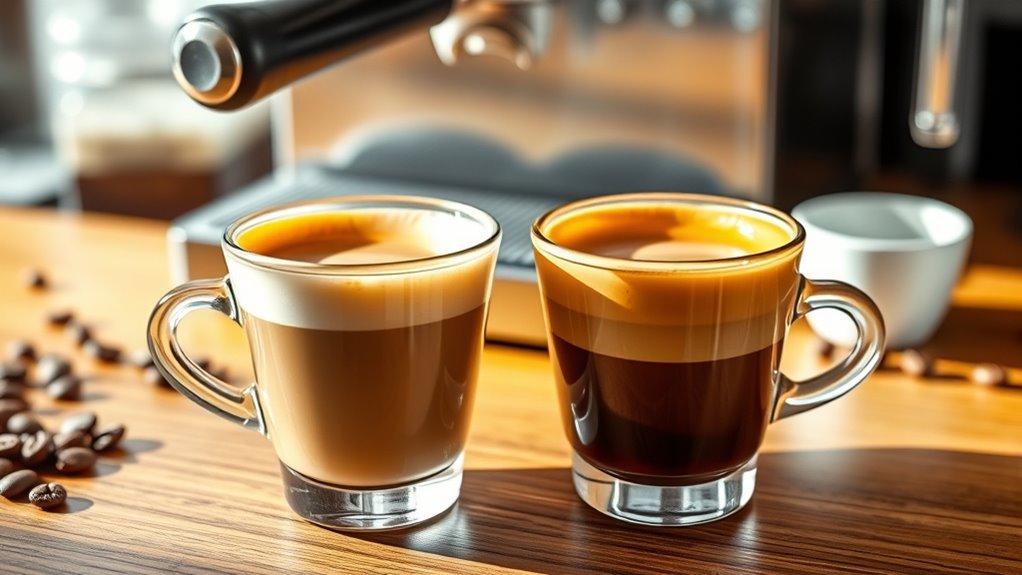
Although you might be accustomed to the rich, dark hues of traditional espresso, blonde espresso offers a lighter alternative made from coffee beans roasted for only 8-10 minutes, just before the first crack. These beans appear lighter, matte, and resemble cinnamon bark with minimal surface oils.
Because the roasting is shorter, blonde espresso retains more of the coffee’s natural acidity along with distinct floral and fruity notes. To extract these delicate flavors effectively, you’ll want to brew blonde espresso at a higher temperature, around 93-95°C.
This method results in a smoother, brighter cup with less bitterness compared to darker roasts. Understanding these technical aspects helps you appreciate how roasting duration and brewing temperature influence the espresso’s flavor profile and overall experience. Blonde espresso also contains slightly more caffeine due to the lighter roast preserving more caffeine molecules.
What Is Regular Espresso?
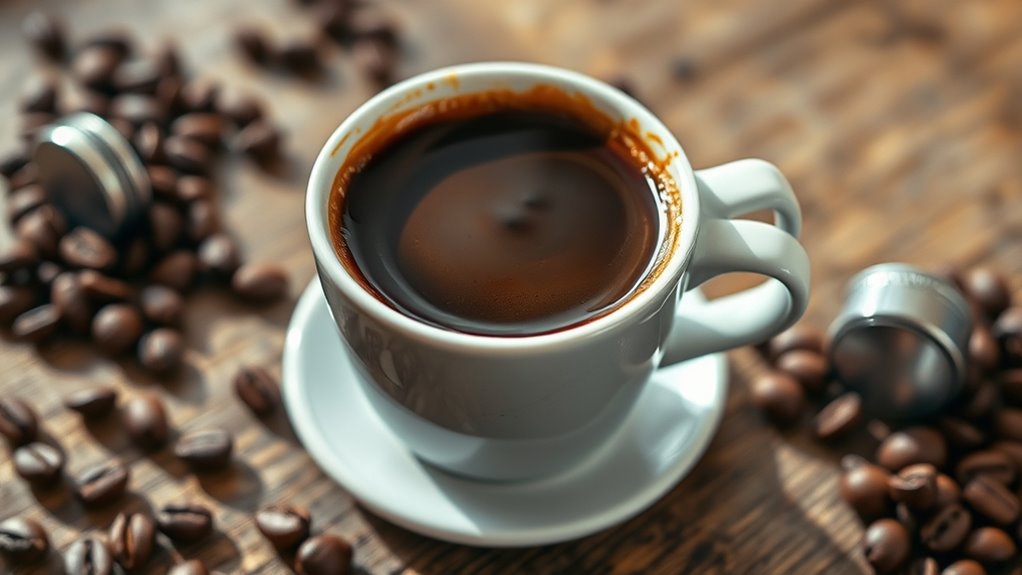
You’ll find that regular espresso uses medium-dark to dark roasted beans, roasted between 425–455°F. This roasting process gives the beans a shiny, oily surface.
When brewed, it produces a concentrated shot with bold flavors like chocolate, nuts, and caramel.
Plus, it’s balanced by a thick crema on top.
Knowing these roasting and brewing details really helps you appreciate its robust, full-bodied profile.
For the best flavor extraction, it’s important to use fresh, finely ground coffee and properly tamp it before brewing.
Dark Roast Characteristics
When you choose regular espresso, you’re selecting coffee made from beans roasted to a medium-dark or dark level, typically between 425–455°F for 12 to 16 minutes. This extended roasting develops a deep brown to black color with an oily surface caused by the migration of natural oils.
The prolonged heat exposure reduces acidity and enhances bold, roasted flavors such as chocolate, nuts, and caramel. These beans are finely ground, then brewed by forcing hot water at around 88°C through them under 9 bars of pressure, extracting a concentrated shot topped with rich crema.
The resulting espresso offers a robust, full-bodied experience, balancing bitterness and sweetness. This profile defines the classic regular espresso’s dark roast characteristics, underpinning many espresso-based beverages.
It’s what gives your espresso that signature punch you love. Medium to dark roasts are preferred for espresso, offering balanced body, rich flavor, and crema known as dark roast profiles.
Flavor Profile Overview
How does regular espresso achieve its distinctive flavor? It starts with medium-dark to dark roasted beans, roasted 12-16 minutes until they develop oily surfaces and a deep brown to black hue. This roasting creates bold, roasted flavors and a thicker, more robust body.
When you extract regular espresso, it delivers classic notes of chocolate, nuts, caramel, and roasted sweetness, forming a fuller, more intense taste. The shot produces a thick, hazel to dark-brown crema, which enhances its complex flavor profile.
Compared to lighter roasts, regular espresso is less acidic and exhibits more bitterness, making it ideal for traditional espresso-based drinks. This balanced bitterness and richness define what you experience in every sip of regular espresso.
The high-pressure brewing process at approximately 9 bars ensures optimal extraction and the development of espresso’s signature crema and richness.
Brewing Considerations
Although regular espresso relies on medium-dark to dark roasted beans, its preparation demands strict control over brewing parameters to achieve the characteristic rich flavor and thick crema.
You need to use beans roasted between 425-455°F to develop oils and deep color. Then, grind the coffee finely and tamp it evenly to create uniform resistance.
Brew by forcing water at about 88°C (190°F) through the grounds under 9 bars of pressure for around 25 seconds. This precise extraction reduces acidity, amplifies roasted, smoky notes, and produces a bold shot with chocolate, nut, and caramel flavors.
Maintaining consistent grind size, tamp pressure, and timing is essential for balancing body and crema quality. If you stray from these parameters, you risk under- or over-extraction, which can compromise the flavor and crema integrity.
Consistent shot timing within the 25-30 second window ensures reproducible extraction and optimal flavor balance.
How Blonde and Regular Espresso Beans Differ
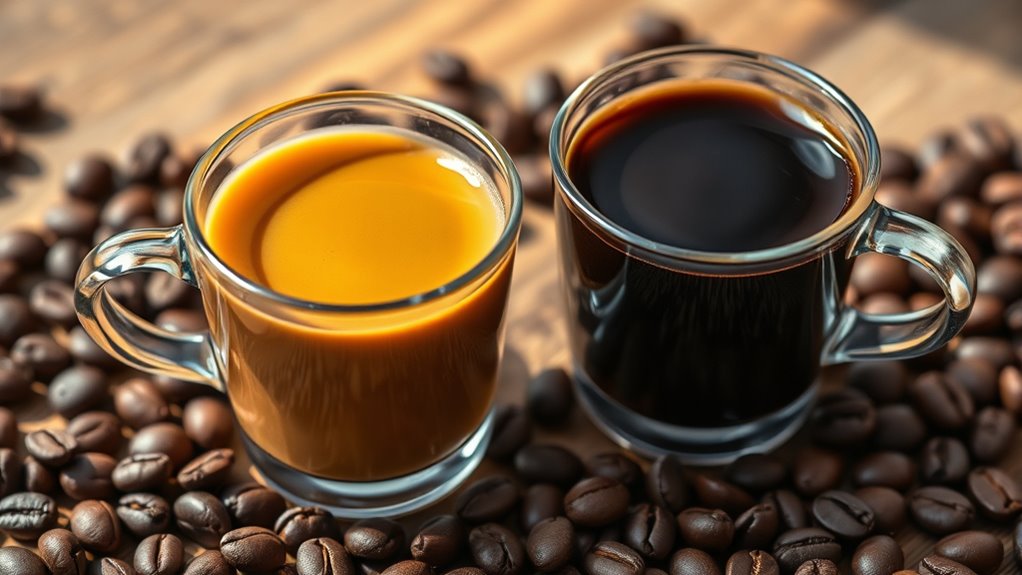
You’ll notice blonde espresso beans are roasted lighter, stopping before the first crack. This gives them a matte, light brown color.
On the other hand, regular espresso beans roast longer and develop a dark, oily surface.
This difference in roast level really changes their flavor profiles. Blonde beans bring out fruity and floral notes, while regular beans lean more towards bold, roasted, and chocolatey flavors.
Plus, blonde beans tend to be denser, which affects how they extract compared to the less dense, oilier regular beans.
Despite the roast differences, the caffeine content remains relatively stable between blonde and regular espresso beans.
Bean Roast Levels
Because roast level directly influences flavor and appearance, understanding the differences between blonde and regular espresso beans is essential.
Blonde espresso beans roast for about 8-10 minutes at lower temperatures (355-400°F), just before the first crack. This preserves their natural fruity and floral notes.
Regular espresso beans roast longer, 12-16 minutes, at higher temperatures (425-455°F), reaching the second crack and developing bold, caramelized flavors.
Consider these key differences:
- Blonde roasts highlight subtle acidity and brightness, appealing if you prefer delicate flavors.
- Regular roasts offer a fuller body with intense, roasted characteristics.
- The roast duration and temperature directly affect the beans’ chemical composition, altering taste complexity.
Getting to know these factors helps you pick espresso beans that match your flavor preference. Additionally, the development of oils during roasting enhances the flavor concentration and crema quality of regular espresso beans.
Visual Bean Differences
The roast level not only shapes the flavor but also distinctly changes the appearance of espresso beans. You’ll notice blonde espresso beans appear light brown with a matte finish, lacking the oily surface typical of darker roasts.
In contrast, regular espresso beans are dark brown to black and glossy. This shine comes from the oils released during extended roasting past the second crack.
| Feature | Blonde Espresso Beans | Regular Espresso Beans |
|---|---|---|
| Color | Light brown (cinnamon bark) | Dark brown to black |
| Surface Finish | Matte, non-oily | Shiny, oily |
| Roast Stage | Before first crack | Beyond second crack |
| Visual Texture | Dry, smooth | Oily, slightly rough |
These visual cues help you quickly tell the difference between the two bean types. It’s pretty handy when you’re choosing your espresso beans! For those using Keurig machines, understanding the roast level influence on flavor is key to selecting pods that best mimic espresso-style coffee.
Flavor Profile Variations
Although both blonde and regular espresso beans come from the same coffee cherries, their flavor profiles diverge markedly due to roasting time and temperature. Blonde espresso is roasted for less time, preserving higher acidity and floral, citrus notes.
In contrast, regular espresso undergoes longer roasting, developing bolder, roasted flavors with chocolate, caramel, and nutty undertones.
You’ll notice these key differences:
- Blonde espresso offers a brighter, smoother taste with fresh, fruity aromas.
- Regular espresso delivers a richer, more robust flavor with smoky, deep roasted scents.
- The lighter roast of blonde beans preserves origin characteristics, while regular roast emphasizes caramelization and Maillard reactions.
Understanding these distinctions helps you choose an espresso that matches your flavor preference precisely. Additionally, the roast level significantly impacts the balance of bitterness, acidity, and sweetness, shaping the overall espresso experience.
Flavor Differences: Blonde vs Regular Espresso
How does the flavor of blonde espresso differ from regular espresso? Blonde espresso features a lighter, brighter profile with citrus, floral, and fruity notes. Its lighter roast preserves more natural acidity and delicate aromas, producing a crisper, less bitter taste. You’ll notice subtle nuances and a pronounced natural sweetness, emphasizing the coffee’s origin characteristics.
In contrast, regular espresso, roasted darker, delivers richer, deeper flavors like chocolate, nuts, and caramel. This roasting imparts a smoky, roasted flavor with fuller body and bolder intensity. The caramelized notes dominate, masking some origin-specific traits.
Basically, blonde espresso highlights brightness and floral qualities, while regular espresso emphasizes traditional roasted complexity and robustness. They offer two distinct sensory experiences shaped primarily by their roasting levels. The caffeine content can also vary between these roasts due to differences in roast level and bean type, influencing both flavor and stimulant effect.
Caffeine Content Compared: Blonde and Regular Espresso
Why does blonde espresso often feel more stimulating than regular espresso? It’s mainly due to caffeine content and flavor perception.
Blonde espresso contains about 85 mg of caffeine per shot, slightly more than the 75 mg in regular espresso. This difference arises because lighter roasts retain more caffeine by weight, thanks to higher bean density.
However, when measured by weight, caffeine levels are nearly identical, as roasting minimally alters caffeine.
Consider these points: Blonde espresso’s brighter flavor enhances perceived stimulation. The caffeine difference per shot is minor but measurable. Both roasts deliver comparable caffeine strength, depending on volume.
Understanding this helps you gauge the subtle caffeine impact between blonde and regular espresso.
Brewing Tips for Blonde and Regular Espresso
Since blonde espresso beans are denser and less porous because of their lighter roast, you’ll want to tweak your grind size and brewing temperature to get the best extraction. Use a finer grind and bump up the water temperature to 93-95°C for blonde espresso. Aim for a shot time of 20-25 seconds with a 20-gram dose.
For regular espresso, a slightly coarser grind and water temperature around 90°C work best to achieve a balanced extraction.
| Parameter | Blonde Espresso | Regular Espresso |
|---|---|---|
| Grind Size | Finer | Slightly coarser |
| Water Temperature | 93-95°C | ~90°C |
| Shot Time | 20-25 seconds | Standard |
Make sure to consistently calibrate your grinder and machine settings. This helps you adapt to differences in bean density and roast.
How Grind Settings Affect Blonde vs Regular Espresso
Although both blonde and regular espresso require careful grind adjustments, the denser structure of blonde espresso beans demands a finer grind setting to achieve ideal extraction. Using the same grind for both can cause channeling in blonde beans, leading to sour, under-extracted shots. You must adjust grind size precisely to balance resistance and flow.
Consider these points when dialing in your grind:
- Blonde espresso needs a finer grind to overcome its higher density and guarantee even water flow.
- A grind too coarse yields weak, sour shots; too fine causes bitterness from over-extraction.
- Consistency in grind settings when switching types is vital to maintain balanced extraction and flavor.
Mastering these grind adjustments lets you reveal the full potential of both blonde and regular espresso. It’s all about finding that sweet spot to bring out the best flavors in each.
Choosing Between Blonde and Regular Espresso: Taste & Caffeine
Adjusting your grind settings is only part of tailoring your espresso experience. Understanding how blonde and regular espresso differ in taste and caffeine content helps you make an informed choice.
Blonde espresso, with its lighter roast, preserves more caffeine per shot, about 4.7 mg/ml versus regular espresso’s 4.2 mg/ml, because of higher bean density. This means you get a slightly higher caffeine concentration per volume, even though caffeine content by weight is similar.
Taste-wise, blonde espresso offers brighter, citrusy, floral, and fruity notes. Regular espresso delivers a bolder, chocolatey, and nutty profile.
You might find blonde espresso stronger because its vibrant, less bitter flavors highlight its caffeine impact.
Choosing between them depends on whether you want a lively, nuanced cup or a rich, classic espresso experience. It’s all about what suits your mood and taste preferences.
Common Myths About Blonde and Regular Espresso
When exploring blonde and regular espresso, you might encounter several misconceptions that cloud your understanding of their true characteristics. It’s crucial to separate fact from myth to appreciate these espresso types fully.
Consider these common myths:
- Blonde espresso is weaker or less caffeinated. In reality, it contains slightly more caffeine per volume due to its lighter roast.
- Dark roast espresso is inherently stronger. However, caffeine content remains similar by weight regardless of roast level.
- Blonde espresso is flavored or infused. Actually, it’s simply a lighter roast that preserves the beans’ natural fruity and floral notes without additives.
Understanding these points helps you recognize that both espresso types offer unique, nuanced profiles rather than a hierarchy of strength or authenticity.
Frequently Asked Questions
Can Blonde Espresso Be Used in Iced Coffee Recipes?
Yes, you can use blonde espresso in iced coffee recipes. It provides a smoother, brighter flavor with higher acidity. Just keep in mind that it requires some grind adjustments to avoid sourness.
Blonde espresso offers a vibrant, energizing base that pairs well with milk or syrups. It’s a great way to switch up your usual iced coffee routine and add a little extra brightness to your drink. Give it a try and see how you like the flavor!
Does Blonde Espresso Have a Shorter Shelf Life Than Regular?
Think of blonde espresso as a delicate flower. It has a shorter shelf life than regular espresso.
You’ll want to use it within 2-3 weeks. Store it airtight and cool to preserve its subtle, volatile flavors.
Are Blonde Espresso Beans More Expensive Than Regular Beans?
Yes, you’ll usually pay more for blonde espresso beans because they require precise roasting. They often come from specialty farms and have unique flavor profiles.
Their limited roasting window and higher quality standards drive up production and retail costs. So, while they might cost more, many people think the flavor is worth it.
Can Blonde Espresso Cause Acid Reflux More Than Regular Espresso?
Yes, blonde espresso can cause acid reflux more than regular espresso because its lighter roast retains higher acidity, increasing stomach acid production.
You should consider darker roasts if you’re sensitive to acid reflux symptoms. They tend to be less acidic and might be easier on your stomach.
Is Blonde Espresso Suitable for Latte Art Compared to Regular Espresso?
Blonde espresso can be suitable for latte art, but you’ll need a finer grind and precise tamping because its lighter crema is less stable. This means it takes a bit more skill to work with compared to regular espresso.
Since the crema doesn’t hold as well, creating intricate and lasting designs can be a bit tricky. But with practice, you can definitely pull off beautiful latte art using blonde espresso. It’s all about adjusting your technique a little to match the lighter crema.
Conclusion
Choosing between blonde and regular espresso really comes down to your taste and caffeine cravings. Blonde brews offer a brighter, bolder balance with lighter beans and slightly higher caffeine. Regular espresso, on the other hand, delivers a darker, deeper, and more robust richness with classic roast complexity.
Keep in mind that grind and brewing precision have a huge impact on your perfect pour. Don’t fall for common myths—blend your knowledge and brew better. Mastering espresso means combining method with careful attention for those magnificent morning moments.