Espresso coffee is a concentrated shot made by forcing hot water at high pressure through finely ground beans. You’ll get a rich, full-bodied flavor topped with a golden crema. This creamy foam locks in aroma and taste.
This quick, intense brew differs from regular coffee by its boldness and crema presence. Mastering the grind, pressure, and timing guarantees the perfect shot.
Keep exploring to uncover how espresso shapes your favorite drinks and brewing secrets. It’s pretty fascinating once you dive in!
What Is Espresso and How It’s Made
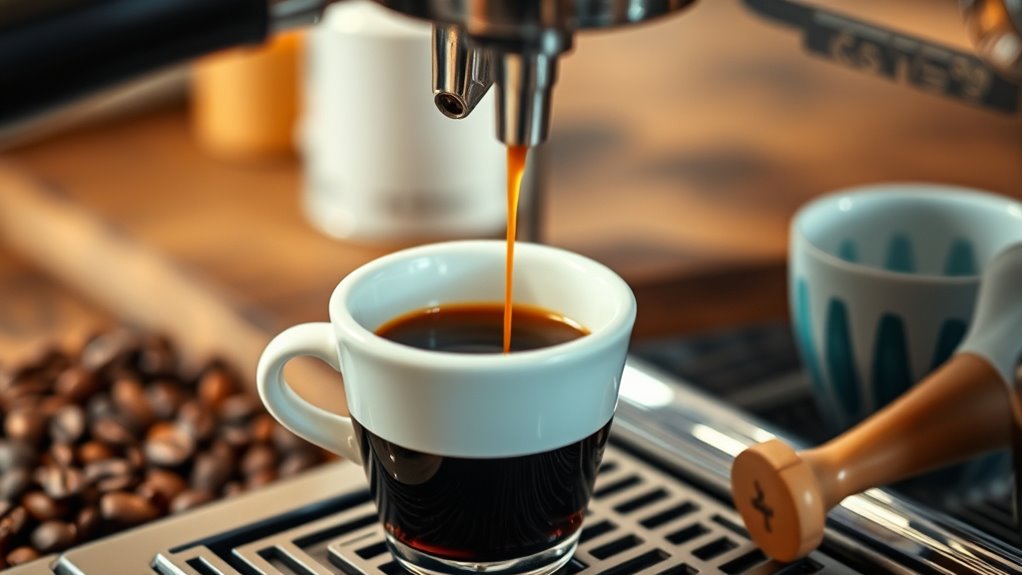
How exactly do you get that rich, intense shot of espresso you love? It starts by forcing hot water at about 9 bars of pressure through finely ground coffee beans. You use roughly 16 to 20 grams of coffee, ground very fine, then tamp it evenly with around 30 pounds of pressure in the portafilter.
Once secured into the espresso machine, hot water flows through for 25 to 30 seconds, extracting a concentrated 25 to 30 ml shot. This high-pressure process emulsifies oils and solids, creating a full-bodied espresso crowned with a golden layer of crema.
Every step, from grind size to tamping pressure and timing, is essential to access those complex aromas and bold flavors you crave in every perfect shot. It’s all about balance and precision to get that perfect cup every time. Including a brief pre-infusion phase before full extraction helps promote even saturation and improve flavor consistency.
How Espresso Differs From Regular Coffee
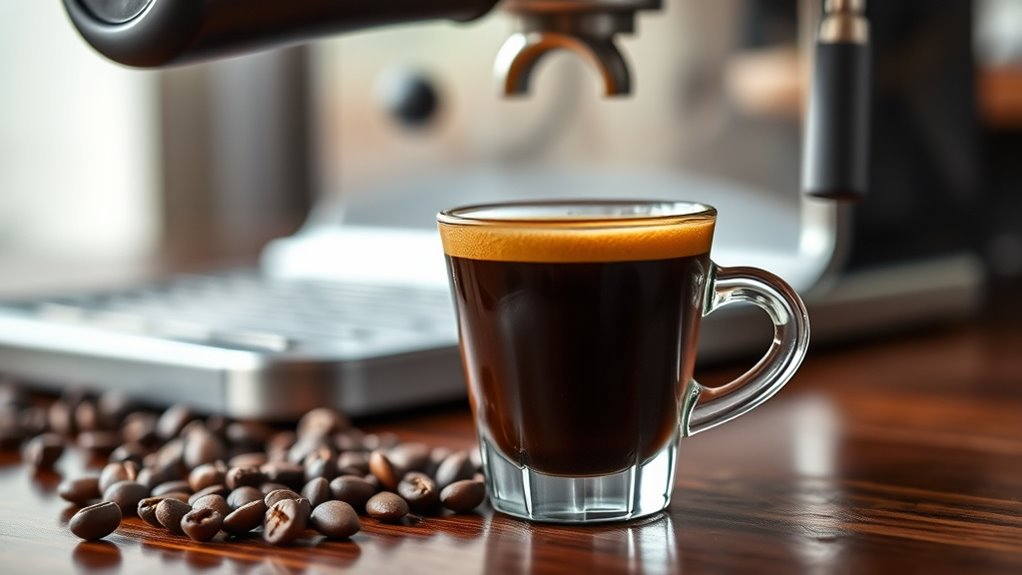
The intense, concentrated shot you get from an espresso machine sets it apart sharply from regular coffee brewing methods. You force hot water under high pressure through finely ground coffee, extracting a rich, intense flavor in just 20-30 seconds.
Regular coffee, by contrast, uses coarser grounds steeped or dripped over several minutes, producing a milder, less concentrated brew.
Espresso serves about 1 ounce, much smaller than the typical 8-ounce cup of regular coffee.
This compact size packs a higher concentration of solids and flavors. Additionally, espresso features a golden crema, a layer of emulsified oils and CO2, which you won’t find in regular coffee.
These differences make espresso a bold, flavorful experience, distinct from the smoother, gentler profile you get with standard coffee brewing.
The extraction under high pressure enhances both the aroma and richness unique to espresso.
Why Crema Matters in Espresso Coffee
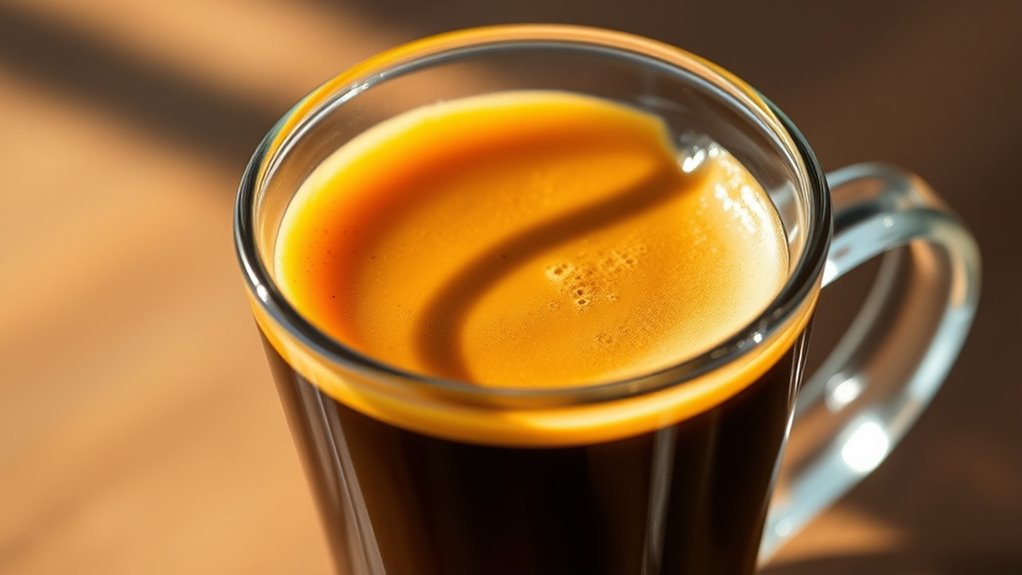
Why does crema matter so much in your espresso experience? That golden-brown foam on top signals freshness and proper extraction, showing your shot was brewed under ideal conditions. Crema forms from emulsified oils and carbon dioxide released during high-pressure brewing, which enhances both aroma and texture.
When you see a thick, persistent crema, it means the grind size, tamping pressure, and machine temperature were spot on. This creates a richer, more complex flavor.
Beyond aesthetics, crema acts as a protective barrier, preserving the espresso’s volatile aromatic compounds so the vibrant aroma lasts until your last sip.
For you and baristas alike, crema is a key visual cue, an immediate quality check that tells you your espresso shot is truly exceptional. It’s one of those little things that makes a big difference in your coffee experience.
Its quality and stability are influenced by factors such as bean freshness, roast level, and brewing pressure, which all contribute to the crema’s texture and flavor.
Essential Equipment and Brewing Techniques
You’ll need the right espresso machine—whether it’s manual, semi-automatic, or fully automatic—to really control the brewing process. It makes a big difference when you can manage each step precisely.
Now, understanding what happens from grinding the beans to tamping the coffee and finally pulling the shot is key. Each stage plays a part in the flavor and the crema quality you get.
The machine’s pump plays a crucial role by generating the high pressure needed to extract the concentrated flavors and create the signature crema.
Espresso Machine Types
Although espresso machines come in various styles, understanding their differences is essential to mastering your brewing technique. You’ll find manual, semi-automatic, automatic, and super-automatic machines, each offering distinct levels of control and convenience.
Manual machines let you pull the lever yourself, giving full command but demanding skill.
Semi-automatic models use an electric pump, balancing control and ease.
Fully automatic and super-automatic machines handle grinding, tamping, and brewing for consistency with little effort.
When choosing your machine, consider the thrill of mastering manual pressure. Also think about the balance of control in semi-automatic models and the convenience of fully automated brewing.
Don’t forget to consider how boiler type and pressure stability shape flavor.
Knowing these types helps you pick the perfect match for your espresso passion.
Advanced machines often include PID temperature control to maintain consistent brewing temperature for optimal espresso extraction.
Brewing Process Steps
Mastering your espresso machine’s type is just the start. Achieving the perfect shot depends on following exact brewing steps with the right equipment and techniques.
Begin by weighing and grinding high-quality beans to a salt-like consistency. This is essential for ideal extraction.
Next, evenly tamp the grounds in the portafilter with about 30 pounds of pressure. This creates a uniform puck.
Preheat your machine, then force hot water at around 200°F through the coffee at 9 bars of pressure for 25 to 30 seconds.
This precise process emulsifies oils and dissolves solids, producing a rich shot topped with a golden crema.
You’ve got to control grind size, tamping pressure, water temperature, and pressure stability carefully. Doing this guarantees every espresso shot is consistently exceptional and full of flavor.
Adjusting grind size controls extraction time and shot quality, ensuring balanced flavor and crema.
Spotting a Great Espresso Shot Every Time
You’ll know a great espresso shot by its thick, golden crema and full, syrupy body with balanced flavors.
Just keep an eye on the extraction time and consistency—that way, you can avoid common issues like channeling or bitterness.
When you get the hang of these signs, pulling a flawless shot every time becomes a breeze.
Observing the crema and aroma before sipping helps gauge the quality and depth of the espresso.
Key Espresso Quality Indicators
When you pull an espresso shot, several key indicators reveal its quality at a glance and in every sip. You’ll want to look for a thick, golden crema that lingers for at least 30 seconds. This signals freshness and proper extraction.
The body should feel full and velvety, not thin or watery. That tells you there’s the right balance of solubles and oils. Aromas will greet you with complex notes like nutty, chocolatey, fruity, or floral flavors. These showcase flavor development.
Most importantly, the taste must be balanced, harmonizing bitterness, acidity, and sweetness with a lasting finish.
- A rich crema that invites you in
- A velvety, satisfying mouthfeel
- Complex aromas that stir your senses
- A perfectly balanced, lingering flavor
These signs guarantee you’re savoring a truly exceptional espresso. Proper extraction time and a consistent, steady flow are essential for achieving this quality, as they ensure the optimal crema development and flavor balance.
Common Espresso Extraction Flaws
Recognizing the hallmarks of a great espresso shot sets the stage for identifying common extraction flaws that can undermine your brew. When water finds gaps in the coffee puck, a problem known as channeling, you’ll notice a pale, thin crema and uneven flavor.
Over-extraction, caused by too fine a grind or excessive brewing time, yields a bitter, harsh taste and a thick, dark crema. On the other hand, under-extraction presents as a sour, weak shot with a light, frothy crema.
This often happens because of a coarse grind or short brewing time.
To avoid these issues, maintain consistent pressure around 9 bars, use the correct grind size, and tamp precisely. Mastering these variables ensures a balanced taste, thick crema, and honey-like viscosity. That way, you get a flawless espresso shot every time. Understanding the role of pre-infusion can further enhance extraction by reducing channeling and improving flavor clarity.
Popular Espresso Drinks and How They’re Made
Although espresso serves as the bold foundation, the magic of popular drinks like cappuccinos, lattes, and macchiatos lies in how they blend espresso with steamed milk and foam in distinct proportions. Each drink offers a unique experience by balancing texture and flavor.
You’ll find a cappuccino delights with equal parts espresso, steamed milk, and thick foam, delivering a rich, velvety bite. Lattes charm with a double espresso shot and more steamed milk, finished with a light foam layer for creamy smoothness.
Meanwhile, macchiatos highlight pure espresso “stained” with just a touch of frothy milk, intensifying the robust coffee taste.
Explore these blends:
- Cappuccino: balanced, airy, and bold
- Latte: creamy, smooth, comforting
- Macchiato: intense, sharp, refined
- Americano: diluted espresso, mellow and deep
Discover how milk’s dance with espresso transforms your coffee ritual. For a unique twist, espresso can also be used as the base in cocktails like the Espresso Martini, which combines coffee flavor with spirits for a sophisticated drink.
Frequently Asked Questions
Can Espresso Be Made With Alternative Milk Options?
Yes, you can make espresso with alternative milks like oat, soy, or almond. They froth differently, so you’ll want to adjust steaming techniques for the best texture and flavor.
This is especially true if you prefer creamy, stable foam. Just play around with the temperature and frothing time to find what works best for each type of milk. It can make a big difference in your cup!
How Does Water Quality Affect Espresso Taste?
Ever wonder why your espresso tastes off? Water quality directly shapes flavor by affecting extraction. Using mineral-balanced, filtered water prevents bitterness or flatness, ensuring your espresso bursts with clarity, balance, and rich aroma every single time.
It’s all about how the minerals in water interact with the coffee grounds. Too many or too few can throw off the taste. So, paying attention to water quality is a simple way to make your espresso taste amazing every time.
What Are the Health Benefits of Drinking Espresso?
You’ll boost your mental focus, protect your cells with antioxidants, and support your metabolism by drinking espresso moderately. It also provides essential vitamins and minerals, reducing risks of neurodegenerative diseases while enhancing your overall health.
Espresso is a simple way to give your brain a little extra edge. Plus, those antioxidants help keep your cells in good shape. And it’s not just about the brain — your metabolism gets a nice little boost too.
How Should Espresso Be Stored After Brewing?
You absolutely must stash your espresso immediately in an airtight container to save its precious aroma!
Drink it fresh within 15-20 minutes, or refrigerate it sealed and reheat gently to keep that bold flavor alive.
That way, you won’t miss out on the rich taste you love. Just remember, the sooner you enjoy it, the better!
Is Espresso Suitable for Cold Coffee Drinks?
Yes, you can absolutely use espresso for cold coffee drinks. Its bold flavor and rich crema hold up well with ice or milk. This gives your iced lattes or frappés a delicious, balanced, and intense coffee experience.
Espresso really shines when chilled. So go ahead and enjoy that strong coffee kick in your favorite cold brew recipes!
Conclusion
Now that you understand espresso’s rich process and distinct qualities, you’ll appreciate each shot more deeply. Imagine a barista in Rome, carefully dialing in grind size and pressure to craft the perfect crema. A small tweak can transform bitterness into velvety sweetness.
With the right equipment and technique, you too can master espresso. It’s all about turning daily coffee into an art form that’s bold, balanced, and bursting with flavor. Keep experimenting, and savor every sip.