You should descale your espresso machine every 3 to 6 months, adjusting based on water hardness and usage. Hard water or heavy daily use means you might need to descale every 1 to 2 months to prevent mineral buildup that hinders performance and damages components.
Soft or filtered water allows longer intervals, up to 4 months. Regular descaling keeps water flow consistent, preserves espresso quality, and extends your machine’s lifespan.
Keep following to uncover detailed steps and tips for effective descaling.
How Often Should You Descale Your Espresso Machine?
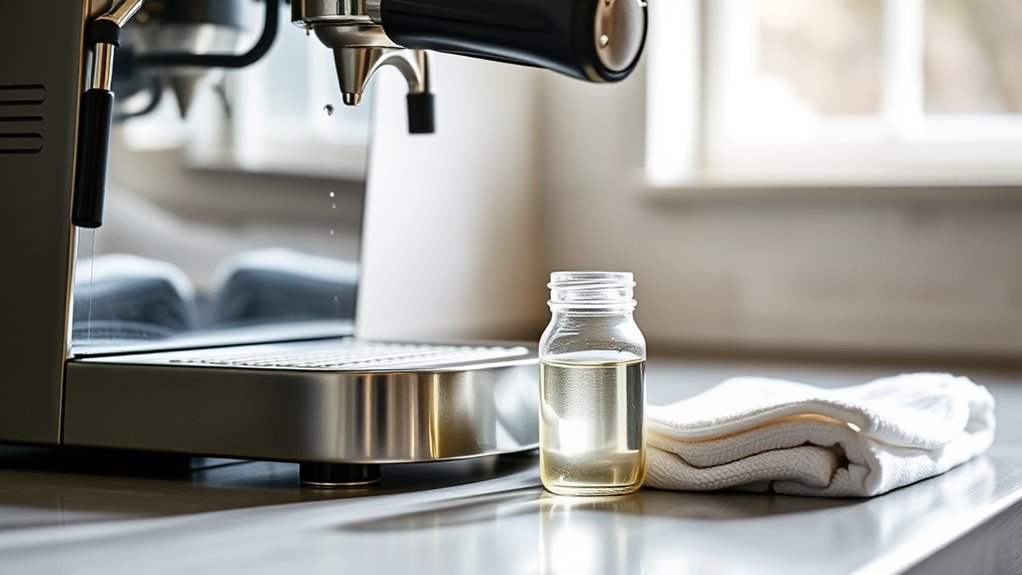
You should descale your espresso machine every 3 to 6 months to maintain ideal performance and prevent mineral buildup. This schedule suits most home users with moderate machine usage and average water quality.
If your machine operates in a commercial setting or experiences heavy use, you’ll need to descale more often, often monthly, to avoid scale accumulation that impairs function.
While water hardness influences descaling frequency, this topic will be covered separately. For now, focus on following a routine descaling schedule based on your usage level.
Regular descaling ensures consistent water flow, perfect temperature, and prolongs the machine’s lifespan. Keep track of your machine’s output quality and pressure; any decline signals that descaling is due, even if it falls outside the standard 3 to 6 months interval. Maintaining steady machine pressure is essential for balanced extraction and flavor consistency, which can be impacted by scale buildup.
How Water Hardness and Machine Usage Affect Descaling Schedule
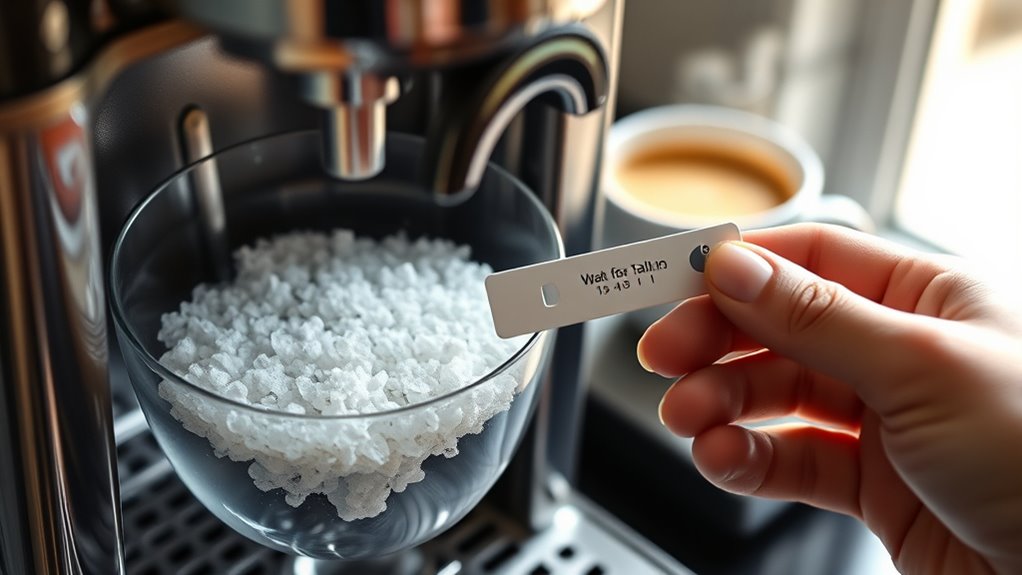
Because mineral content and usage intensity directly impact scale buildup, adjusting your descaling routine according to water hardness and machine workload is vital.
If you use hard water, rich in minerals, scale accumulates rapidly, so you’ll need to descale every 1-2 months. In regions with very hard water, it’s best to descale at least every 4-6 weeks to prevent clogging.
On the other hand, if you rely on soft or filtered water, the lower mineral content means you can extend your descaling intervals to 3-4 months.
Keep in mind that heavy daily use speeds up scale formation regardless of water hardness. So, if you use your machine a lot, monthly descaling is a smart move.
To get it right, use water hardness test strips to accurately check mineral content and adjust your descaling schedule accordingly. This way, you’ll keep your machine running smoothly and avoid maintenance problems caused by scale buildup.
Regular descaling also ensures consistent water temperature and pressure for better coffee quality and machine longevity.
Why You Should Never Skip Descaling Your Espresso Machine

When mineral deposits build up unchecked, they clog water lines and slow down your espresso machine. This reduces its efficiency and can lead to costly repairs.
Skipping descaling causes scale to accumulate, which insulates the heating elements. That means your machine takes longer to heat up and struggles to keep a consistent brewing temperature.
Over time, neglecting descaling speeds up internal damage like cracked boilers and burnt components. This shortens the overall lifespan of your machine.
Mineral deposits can also harbor bacteria and mold, which puts your coffee’s safety and flavor at risk. Without regular descaling, water flow weakens and steam production drops, messing with the espresso’s taste and texture.
- Clogged water lines reduce pressure and flow
- Insulated heating elements cause inconsistent temperature
- Accelerated wear leads to expensive repairs
- Bacterial growth compromises hygiene and flavor
- Poor steam quality affects milk frothing and texture
Additionally, variations in brewing temperature caused by scale buildup can significantly alter the caffeine extraction and ultimately impact your espresso’s strength and flavor.
Choosing the Right Descaling Solution for Your Espresso Machine
Selecting the right descaling solution plays a crucial role in maintaining your espresso machine’s performance and longevity. Always choose manufacturer-approved descalers to prevent damage and guarantee effective scale removal. Most commercial descalers contain citric or lactic acid, which safely dissolve mineral buildup when used according to guidelines.
Choosing manufacturer-approved descalers with citric or lactic acid ensures safe, effective removal of mineral buildup.
Avoid vinegar unless your machine’s manual explicitly recommends it. That’s because vinegar can leave harmful residues and corrode internal components, which you definitely want to avoid. It’s better to stick with products made for your machine.
Also, take a moment to assess your water hardness. Then, pick a descaler that’s compatible with both your espresso machine’s specifications and the quality of your local water.
Finally, carefully follow the product label instructions for dilution ratios and application steps. Doing this helps optimize descaling efficiency and protects your machine.
Proper selection ensures thorough cleaning without compromising your espresso machine’s delicate parts. Regular descaling every 3 to 6 months, especially when using hard water, helps maintain optimal function and prevent mineral buildup.
Step-by-Step Guide to Descaling Your Espresso Machine
Although descaling procedures vary by model, you should always follow the manufacturer’s instructions closely to protect your espresso machine and guarantee effective cleaning. Typically, the process involves preparing and running a descaling solution through your machine, letting it dissolve mineral deposits, and thoroughly rinsing afterward.
Follow these steps to descale your espresso machine effectively:
- Empty the water tank and add the recommended descaling solution diluted as instructed.
- Run the solution through the brew cycle to circulate it inside the machine.
- Let the solution sit for 15 to 20 minutes to break down scale buildup.
- Rinse the system by running several cycles with clean water to remove all residues.
- Clean removable parts and wipe down surfaces before the final rinse cycle.
This method ensures peak performance and longevity of your espresso machine. Just take your time with each step, and your machine will thank you for it! Regularly adjusting your descaling schedule based on water hardness will help maintain optimal machine efficiency and durability.
Maintaining Your Espresso Machine After Descaling
Once you’ve completed descaling, focus on thoroughly rinsing the water tank and internal components to eliminate any remaining descaling solution. Run multiple cycles of clean water through the machine to flush out all descaler residues completely.
Also, remove and clean parts like the drip tray, portafilter, and steam wand. This helps prevent mineral buildup and keeps everything hygienic.
Perform a steam purge and a blank shot to clear internal lines and restore ideal espresso extraction and steam performance.
Finally, keep a detailed maintenance log documenting the descaling date and water hardness level. This record helps you track your machine’s condition and schedule future descaling accurately.
Doing this will ensure consistent operation and keep your espresso machine running smoothly for a long time. Regular descaling every 1-3 months is recommended to prevent scale buildup and maintain optimal performance.
Troubleshooting Common Descaling Issues
You’ll want to avoid using the wrong descaling solution concentration because it can damage seals and internal parts. So, always double-check the instructions before you start.
Also, make sure you run the rinse cycle thoroughly afterward to prevent any residue buildup that might affect the taste and performance.
And one more thing—be careful not to run the descaling solution through parts like the steam wand by mistake. Doing that can lead to ineffective cleaning or even cause damage.
Just take it step by step, and you’ll keep everything working smoothly!
Regular descaling every 3 to 6 months is recommended to maintain optimal machine performance and longevity by removing mineral deposits.
Descaling Cycle Problems
If you encounter issues during the descaling cycle, it often stems from incorrect use of the descaling solution or improper procedure. To troubleshoot effectively, focus on these critical points:
Using too much or too little descaling solution can cause clogs or incomplete scale removal, which disrupts the cycle. Also, running the solution through the wrong parts, like the steam wand instead of the brew group, risks blockages and damage.
Descaling too frequently or infrequently allows mineral buildup, which can lead to leaks or malfunction during the cycle. Not following manufacturer instructions can result in improper cleaning and internal component damage.
And don’t skip thorough rinses after descaling. Skipping rinses may affect water flow and cause operational errors. So, make sure to rinse carefully for the best results.
Regular maintenance, including backflushing frequency, helps prevent such issues by ensuring internal components remain clean and functional.
Residue And Rinse Issues
Although descaling removes mineral buildup, failing to rinse thoroughly afterward often leaves residue that causes bitter flavors and clogs water lines. When you don’t run enough clean water cycles, descaling solution remnants remain, risking damage to internal components and taste contamination.
Using too little water during rinsing allows mineral deposits to redeposit, which speeds up scale formation and hurts machine performance. To avoid these problems, flush your espresso machine with multiple full water cycles right after descaling.
This practice ensures complete removal of descaling agents and dissolved minerals. Skipping proper rinsing can lead to persistent clogging, malfunction, and a bitter brew. Proper rinsing techniques are essential because espresso extraction relies on high-pressure brewing to achieve optimal flavor and machine longevity.
Frequently Asked Questions
Can I Descale My Espresso Machine With Vinegar?
You can descale your espresso machine with diluted vinegar, but it risks damaging components and affecting taste. Use a 1:1 or 1:2 ratio, and make sure to rinse it thoroughly afterward.
Honestly, commercial descalers are generally safer and more effective. They’re designed specifically for espresso machines, so you don’t have to worry as much about any damage or weird flavors.
If you do decide to use vinegar, just be careful and don’t skip the rinsing step. It really makes a difference in keeping your machine running smoothly.
How Long Does a Descaling Process Usually Take?
The descaling process usually takes 30 to 45 minutes. The cycle itself runs 10 to 20 minutes, with rinsing adding 10 to 15 minutes.
If your machine is heavily scaled, it might need longer soaking and flushing times. So, be prepared for the process to take a bit more time in those cases.
Does Descaling Affect the Taste of Espresso Immediately?
Imagine sharp, chemical notes lingering if you don’t rinse thoroughly. You might notice immediate taste changes after descaling. But if you flush well, descaling actually restores ideal flavor by removing mineral buildup and ensuring proper water flow.
Can Descaling Remove Coffee Oil Buildup?
Descaling won’t remove coffee oil buildup because it targets mineral deposits. You’ll need specialized cleaning solutions and backflushing to effectively eliminate oils.
Regular cleaning prevents residue better than descaling alone. It’s the best way to keep your machine running at its peak. So, make sure you clean it often to avoid any buildup!
Is It Safe to Use Homemade Descaling Solutions?
Using homemade descaling solutions can be safe if you treat them like a delicate key. Dilute properly and follow your espresso machine’s guidelines carefully.
Otherwise, residue or damage can lock your machine’s performance. So, proceed with caution.
Conclusion
You might think descaling takes too much time, but skipping it risks damaging your espresso machine and ruining your coffee’s taste. By following a regular descaling schedule based on your water hardness and usage, you’ll keep your machine running efficiently and extend its lifespan.
Use the right solution and a clear step-by-step process to make descaling quick and effective. Stay consistent, and your espresso will always taste its best.