Start by filling the bottom chamber with pre-heated water just below the safety valve. Add medium-fine coffee grounds evenly into the filter basket without tamping. Assemble the pot tightly, making sure the gasket is well-placed.
Brew on medium-low heat with the lid open, keeping an eye out for a steady coffee stream. Once brewed, remove from heat promptly. Then, serve immediately to preserve the flavor.
Let the pot cool before cleaning it thoroughly to keep it in top shape. These simple steps help you balance taste and technique perfectly. Give it a try and enjoy your espresso!
Fill the Espresso Pot’s Bottom Chamber With Pre-Heated Water
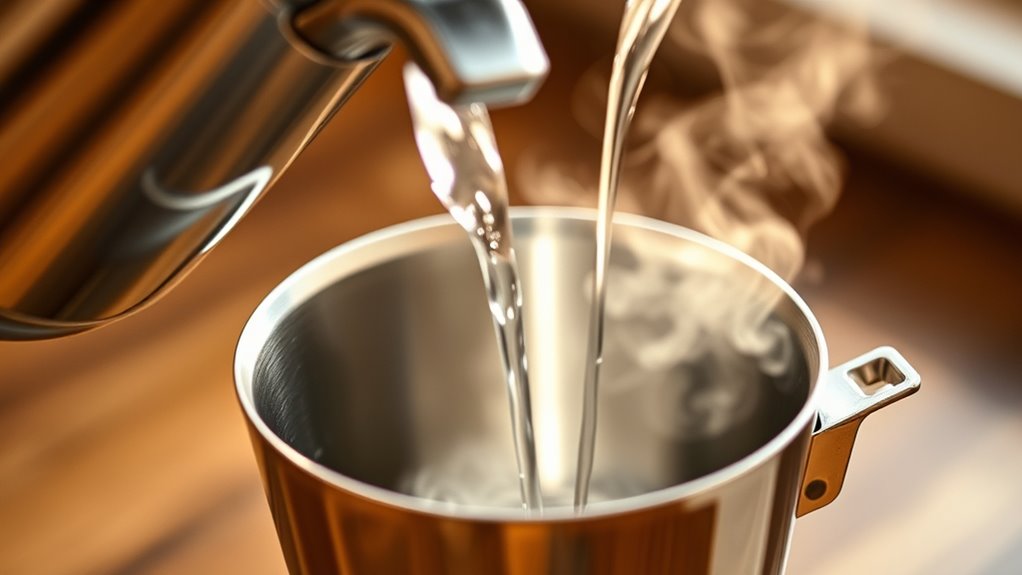
Start by filling the espresso pot’s bottom chamber with fresh, cold water. Then pre-heat it on the stove until it reaches just below boiling, between 195 and 205°F.
Using pre-heated water shortens brewing time and prevents your espresso from tasting burnt or over-extracted.
Pre-heated water speeds up brewing and keeps your espresso smooth, avoiding burnt or bitter flavors.
Pour the water carefully until it’s just below the safety valve, making sure not to cover or block it. This step is vital because the valve maintains pressure and safety during brewing.
Pre-heating the water also helps maintain the ideal extraction temperature.
That means you’ll get a richer, more flavorful espresso.
Always start with fresh water to guarantee consistency in every brew.
This simple preparation sets the foundation for a perfect espresso shot.
Maintaining the proper water temperature is crucial to optimizing extraction and flavor balance.
Add Medium-Fine Coffee Grounds to the Filter Basket
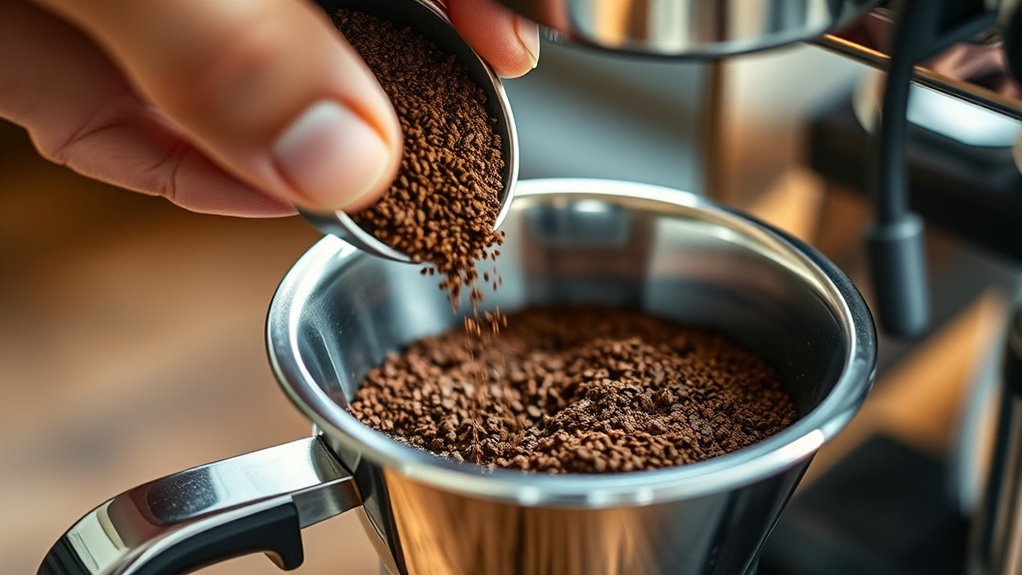
When adding coffee grounds to the filter basket, use medium-fine grounds with a texture similar to table salt to guarantee proper extraction. Measure about a heaping tablespoon (7-8 grams) per standard 3-cup espresso pot.
Fill the basket evenly without pressing or tamping the grounds; instead, gently level them with your finger to create a smooth surface.
This even distribution helps ensure consistent water flow during brewing. It avoids gaps that could cause uneven extraction.
Before moving on, carefully clean any loose grounds from the basket’s rim to prevent sealing issues once you assemble the espresso pot.
Following these steps precisely will help you extract the best flavor and aroma from your coffee grounds every time you brew with your espresso pot.
It’s a simple process, but it makes a big difference in your cup.
Adjusting grind size within the 200-400 micron range is key to achieving balanced extraction and optimal flavor.
Assemble Your Espresso Pot Securely
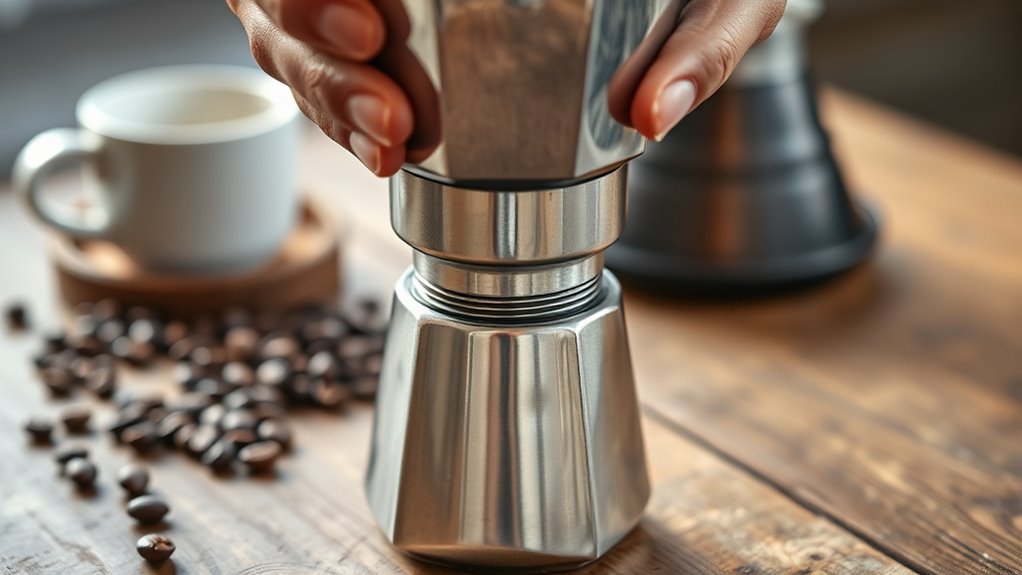
Before you screw the espresso pot together, make sure the rubber gasket is in good shape and sitting properly to avoid any leaks. It’s important to check this first because a worn or misplaced gasket can cause trouble.
Next, tighten the chambers by hand. Take your time and align the threads carefully so everything fits snugly. Doing this right helps create a secure, airtight seal.
When everything’s sealed up properly, you’re all set to brew your espresso safely and efficiently every time. It’s a simple step that makes a big difference!
Remember, maintaining the espresso pot’s proper pressure is crucial for extracting the rich, concentrated flavor that espresso is known for.
Ensuring Tight Seal
How exactly do you guarantee your espresso pot is sealed tightly for the perfect brew? Start by properly aligning the filter basket and top chamber. This alignment is essential to ensure a secure fit.
Next, twist the top and bottom parts clockwise until fully tightened, taking care to avoid cross-threading. Make sure the rubber gasket sits correctly without cracks or debris, since this prevents leaks.
Tighten firmly but don’t overdo it. Excessive force can damage threads or the gasket.
Once assembled, gently press the top chamber to test the seal’s security.
Confirming this tight seal before heating the pot ensures your espresso brews without escaping steam or leaks. That way, you get a flawless extraction every time.
Proper sealing is crucial because the gasket ensures a tight seal for high-pressure water flow during brewing.
Checking Gasket Condition
Why does the gasket’s condition matter so much for your espresso pot? It guarantees a tight seal, maintaining pressure and preventing leaks during brewing.
Always inspect the gasket for cracks, brittleness, or deformation. Replace it if you find any damage. Make sure it sits properly in its groove and is evenly seated before assembly.
Clean it with warm water to remove residue that could compromise sealing. Test its flexibility by pressing gently. It should be pliable and return to shape without cracking.
Regular maintenance, similar to descaling procedures, ensures optimal performance and longevity of your espresso equipment.
| Inspection Step | What to Look For | Action Required |
|---|---|---|
| Visual Check | Cracks, brittleness, deformation | Replace if damaged |
| Seating Check | Proper groove placement | Adjust for even seating |
| Cleanliness | Residue or buildup | Clean with warm water |
| Flexibility Test | Pliability and shape return | Replace if stiff or cracked |
Brew Coffee on Medium-Low Heat With Lid Open
When you brew espresso on medium-low heat with the lid open, you get better control over the extraction process and can prevent bitterness. Medium-low heat makes sure the extraction is slow and even. This lets the water gradually build pressure, resulting in a richer, smoother espresso.
Keeping the lid open while brewing lets you watch the coffee’s flow closely. This helps avoid pressure buildup that might cause sputtering or splashing. You’ll see the coffee stream steadily, which is a good sign that the extraction is just right.
Leaving the lid open until the coffee is fully extracted also helps prevent over-agitation. Over-agitation can make the flavors harsh, so this step really matters. Controlling the heat and pressure during extraction is essential to balance the acids, sugars, and oils dissolved for optimal flavor.
Remove From Heat and Serve Immediately
Once your espresso finishes brewing, take the pot off the heat right away to avoid overheating and bitterness.
Give it a few seconds for the pressure to settle before you open the lid.
Then, go ahead and transfer the coffee immediately to keep that fresh flavor and beautiful crema.
Handling the pot carefully like this means you’ll serve a perfect, burn-free espresso every single time.
For the best results, use freshly roasted beans ground just before brewing to preserve aroma and freshness.
Serve Coffee Fresh
Although it’s tempting to let your espresso pot sit, you should remove it from heat immediately after brewing to prevent over-extraction and bitterness. Serving coffee fresh preserves its rich aroma and flavor, providing the best espresso experience.
Before pouring, let the pot cool slightly to avoid burns from hot parts. Then, pour the espresso promptly to maintain the crema and vibrant taste.
To serve coffee fresh, keep these tips in mind:
- Remove the pot from heat as soon as brewing ends to lock in ideal flavor.
- Pour immediately to prevent the coffee from turning dull or bitter.
- Handle carefully after a brief cool-down to avoid burns while serving.
Freshly served espresso maximizes enjoyment and highlights the quality of your brew. Controlling the extraction time carefully is essential to ensure optimal caffeine levels and flavor balance in your espresso.
Avoid Overheating Pot
To preserve the rich flavor of your espresso, you should remove the pot from heat immediately after brewing finishes. Leaving it on the stove risks over-extraction, which brings out bitter, burnt notes that spoil the coffee’s taste.
Quick removal also prevents overheating the pot’s metal, which can alter the flavor profile and reduce quality.
Once off the heat, let the pot cool just enough to avoid burns when pouring. Serving your espresso promptly guarantees it retains its ideal aroma, temperature, and freshness.
By acting swiftly, you maintain the integrity of both your coffee and your espresso pot.
This way, you deliver a balanced, enjoyable cup every time without unwanted bitterness or scorching. Avoid overheating. It’s key to a perfect espresso experience.
Proper extraction time is crucial because it preserves delicate aromatic compounds that contribute to espresso’s complex flavor.
Use Immediate Transfer
Removing your espresso pot from the heat right after brewing isn’t just about preventing bitterness. It’s also about serving your coffee at its peak. Once brewing finishes, immediately remove the pot to stop over-extraction, which can ruin the flavor.
Then, transfer the coffee straight into your cup to preserve its vibrant aroma and rich crema.
Here’s why immediate transfer matters:
- It prevents over-extraction and bitterness by halting heat exposure promptly.
- It maintains aromatic freshness and the crema’s texture.
- It avoids dull taste caused by cooling or sitting in residual heat.
For optimal flavor, it’s important to use freshly roasted beans stored in an airtight, cool environment to preserve the coffee’s oils and aroma.
Cool and Clean Your Espresso Pot After Brewing
Once your espresso pot has cooled completely, you can safely take it apart to clean each piece thoroughly. Start by separating the filter, gasket, and all other parts while they’re at room temperature. This makes cleaning so much easier.
Rinse each part right away with warm water to get rid of coffee residues and stop buildup that might mess with the taste. Try to avoid abrasive cleaners or scrubbers because they can scratch the metal and damage the seals. Instead, go for a soft cloth or a gentle rinse.
After washing, make sure every component is completely dry. You can use a soft cloth or just let them air dry. This helps prevent rust and keeps your pot lasting longer.
Following this simple cooling and cleaning routine will keep your espresso pot in great shape, ready for your next perfect brew.
Clean and Maintain Your Espresso Pot for Best Results
Although cleaning your espresso pot after every use is essential, maintaining it regularly guarantees consistent performance and longevity. You want to keep your espresso pot free from oil buildup and damage while ensuring safety features work perfectly.
Follow these steps to maintain your pot:
- Rinse all parts with warm water right after brewing. Skip soap or abrasive cleaners, especially on aluminum models, to avoid harming the pot’s surface.
- Periodically disassemble the pot to clean gaskets, filters, and the safety valve. Use a soft brush to remove stubborn residues and check the valve for blockages.
- Thoroughly dry every component before reassembling to prevent corrosion and mold, particularly if you live in humid conditions.
Consistent upkeep keeps your espresso pot brewing great coffee for years. So, make it a habit and enjoy your perfect cup every time!
Frequently Asked Questions
Can I Use Cold Water Instead of Pre-Heated Water?
You can use cold water, but it slows brewing, risks uneven extraction, and dulls flavor.
To get richer, faster espresso and protect your pot, you should pre-heat the water before brewing every time.
Trust me, it makes a noticeable difference! Pre-heating helps bring out the best taste and keeps your equipment in good shape.
What Grind Size Is Too Fine or Too Coarse for an Espresso Pot?
You shouldn’t use grind finer than table salt. It clogs your espresso pot and causes bitterness and pressure issues.
If your grind is coarser than that, your coffee’ll be weak and watery. So, aim for medium-fine for the best extraction and taste.
How Do I Know if My Espresso Pot Is Authentic or Counterfeit?
Check your espresso pot’s engraving for clarity and consistency. Feel its weight and material. Authentic ones use durable metals.
You can also verify the serial number or logo on the bottom with the manufacturer’s site to confirm it’s genuine.
It’s an easy way to make sure you’ve got the real deal and not a fake. Just take a few moments to check these details!
Can I Use Flavored Coffee Grounds in My Espresso Pot?
You can use flavored coffee grounds, but they might clog your espresso pot and alter the taste. To keep your espresso pure and your pot clean, it’s best to stick with unflavored, high-quality grounds instead.
Flavored grounds can sometimes leave residues that are tough to clean. Plus, the added flavors might mix in ways you don’t expect, changing the espresso’s original character.
If you’re after a flavored coffee experience, try adding syrups or spices after brewing. That way, you protect your espresso pot and still enjoy your favorite tastes.
Is It Safe to Leave the Espresso Pot on the Stove Unattended?
Leaving your espresso pot unattended is like playing with fire. You really shouldn’t do it. Always stay close and keep an eye on the brewing process.
Make sure to turn off the heat promptly once your espresso is ready. This helps avoid any safety risks. Plus, it protects your pot from getting damaged.
Conclusion
Now that you know how to use your espresso pot step by step, you’re ready to enjoy rich, homemade espresso anytime. Imagine waking up to the aroma of freshly brewed coffee from your stove. It’s just like Maria, who cut down on expensive café trips and now perfects her morning ritual daily.
With proper cleaning and care, your espresso pot will reward you with bold flavors for years to come. Give it a try. You’ll love the results!