To use your Gevi Espresso Machine, start by assembling and filling the water reservoir. Then power it on and prime the system.
Grind 18-20 grams of fresh coffee finely and tamp it evenly with firm pressure. After that, attach the portafilter.
Brew your shot for 25-30 seconds. Next, steam the milk by heating the wand and frothing it with the proper technique.
Make sure to clean the machine after use to keep it performing well. Follow these basics, and you’ll soon be ready to master more advanced steps and troubleshooting tips.
Get Your Gevi Espresso Machine Ready To Use
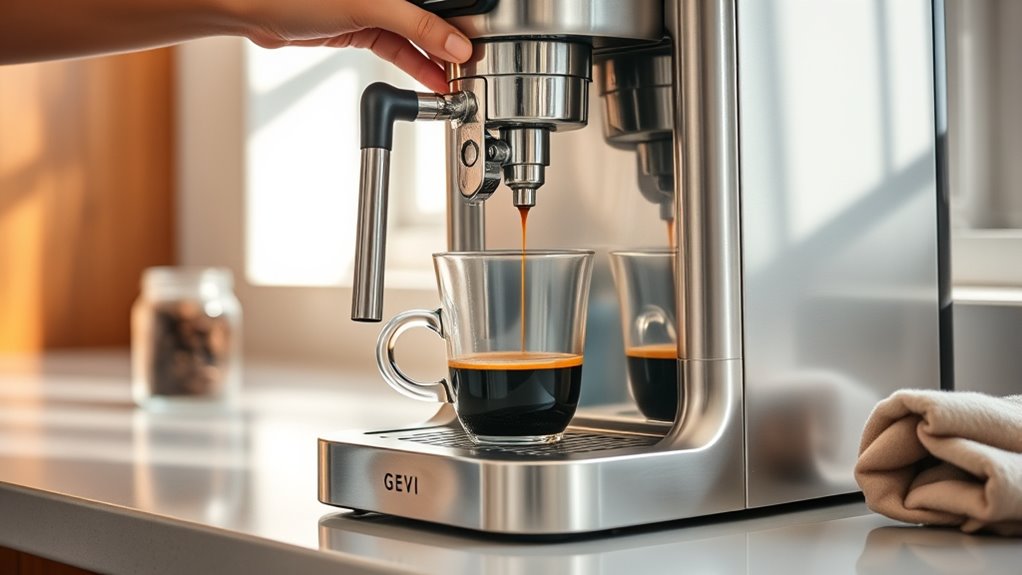
Before you start brewing, unbox your Gevi espresso machine and carefully assemble all components, including the water tank and portafilter.
Next, fill the water reservoir with fresh, clean water and securely attach it to the machine.
Power it on and wait for the indicator lights or display to signal readiness.
To prime the system, run a blank shot or hot water through the portafilter. This flushes out impurities and warms internal parts, ensuring peak performance.
Finally, verify that the steam wand and any included accessories operate correctly.
Checking these elements now prevents interruptions later, letting you brew or froth milk smoothly.
Following these steps precisely sets a solid foundation for your espresso-making process with the Gevi machine.
For optimal extraction, make sure to maintain the water temperature between 195°F and 205°F for balanced flavor and shot quality.
Grind And Tamp Coffee For Your Gevi Espresso Machine

When you grind and tamp coffee for your Gevi espresso machine, using a high-quality burr grinder is essential to get a consistent grind size that’s somewhere between fine and espresso powder.
Measure about 18-20 grams of coffee for a double shot, but feel free to adjust that depending on your machine’s specs.
Use 18-20 grams of coffee for a double shot, adjusting as needed for your machine.
Fill the portafilter evenly with the ground coffee, then tamp it firmly with about 30 pounds of pressure using a tamper.
Make sure the grounds are level and compact to avoid channeling, which can lead to uneven extraction.
Also, don’t forget to regularly clean your portafilter and tamping tools. This helps maintain consistent pressure and keeps old residues from messing with your flavor.
Following these steps will help you get the best extraction and a balanced espresso shot every time.
Proper extraction time is crucial for optimal flavor and crema quality when brewing espresso.
Brew Espresso With Your Gevi Machine

How do you brew the perfect shot with your Gevi espresso machine? Start by filling the water reservoir and turning the machine on. Wait until the indicator light stays steady to signal it’s heated.
Next, grind your fresh coffee beans finely and tamp them firmly with about 30 pounds of pressure in the portafilter. Attach it securely to the brew head.
Place your cup beneath the spout, then use the control panel to select either a single or double shot. Press the brew button and extract your espresso for 25 to 30 seconds, making sure the flow is balanced.
Once done, carefully remove your cup. Now, your espresso is ready to enjoy or to be combined with frothed milk if you want.
Remember, timing your shot from pump activation, including pre-infusion, helps ensure consistent flavor and crema development.
Froth Milk Using The Gevi Espresso Machine Steam Wand
After pulling a perfect shot of espresso, you’ll want to froth your milk using the Gevi espresso machine’s steam wand to create creamy microfoam. First, turn the knob to the steam icon and wait about 30 seconds for the wand to heat up.
Then, follow these steps for ideal frothing: Hold a stainless steel pitcher at a 12 o’clock angle under the wand, submerging the tip just 2mm into the milk. Open the steam valve and swirl the milk, lowering the pitcher as it expands until it’s too hot to touch for 3 seconds.
Turn off the steam, then immediately wipe the wand clean to prevent residue buildup. This technique guarantees smooth, textured milk perfect for lattes or cappuccinos. Keep in mind that controlling your caffeine intake is important, as espresso roast beans used in espresso shots generally contain higher caffeine concentrations than regular coffee.
Keep Your Gevi Espresso Machine Clean And Running Smoothly
To keep your Gevi espresso machine running smoothly, you’ll want to descale it every 100 cycles to stop mineral buildup in its tracks.
After each use, just rinse the brew group, steam wand, and drip tray with warm water—this helps prevent any coffee residue from clogging things up.
And don’t forget to wipe down the exterior and clean the portafilter regularly.
Following the manufacturer’s guidelines will make sure your machine keeps performing at its best.
Maintaining stable brew temperature also helps reduce scale buildup and extends the life of your machine.
Regular Descaling Routine
Although it might seem like a chore, descaling your Gevi espresso machine every 100 cycles is essential to prevent mineral buildup that can impair performance. This routine preserves pressure, temperature stability, and extends your machine’s lifespan.
Follow these steps for effective descaling:
Turn off the machine, empty the water tank, and add a descaling solution or a 1:1 mix of water and white vinegar. Run a brewing cycle without coffee to flush the internal components.
Then, thoroughly rinse by running several cycles with clean water to remove any residual solution.
Regular descaling ensures your espresso machine operates smoothly and delivers consistent quality. Skipping this step can lead to clogs and diminished performance, so make it part of your maintenance schedule.
It’s worth the effort to keep your coffee tasting great! For best results, use approved descaling solutions designed to protect your machine’s seals and components.
Daily Cleaning Tips
While regular deep maintenance like descaling is essential, daily cleaning plays an equally important role in keeping your Gevi espresso machine functioning at its best. Wipe down the exterior with a damp cloth every day to prevent dust and coffee residue buildup.
After each use, clean the steam wand by wiping it and purging steam to avoid milk residue clogging. Backflush the brew head regularly, following the manufacturer’s instructions, to maintain ideal pressure and extraction quality.
Weekly, remove and clean the drip tray and water reservoir to prevent mold growth and guarantee proper water flow. These daily cleaning steps will keep your machine running smoothly, preserving both its performance and your espresso’s quality. Regular maintenance also helps in early detection of potential issues, saving costs and extending the machine’s lifespan through consistent cleaning practices.
Troubleshoot Common Gevi Espresso Machine Issues
Whenever your Gevi espresso machine starts showing signs of trouble, such as blinking lights or weak extraction, you can often resolve these issues by following targeted troubleshooting steps.
First, blinking lights often signal descaling needs, overheating, or steam wand complications. Consult the manual for precise guidance.
Second, weak or inconsistent extraction usually calls for adjusting the grind to a finer setting and applying firm tamping to optimize pressure and flow.
Third, persistent steam wand problems like no steam or poor frothing require thorough cleaning and checking for blockages or mineral buildup.
To troubleshoot effectively, check power connections and switches if the machine won’t turn on.
Descale every 100 cycles and clean components regularly.
Clear steam wand blockages promptly to maintain performance.
Additionally, using freshly ground beans just before brewing is essential to maximize extraction quality and flavor in your espresso.
Frequently Asked Questions
Can I Use Pre-Ground Coffee With the Gevi Espresso Machine?
You generally can’t use pre-ground coffee directly in the Gevi espresso machine since it’s designed for whole beans. However, if your model has a bypass option, you can add grounds manually.
Check your manual to be sure. That way, you’ll know for sure if your machine can handle pre-ground coffee or not.
What Is the Warranty Period for the Gevi Espresso Machine?
The Gevi espresso machine comes with a 1-year warranty covering defects.
You can also get a 3-month extension if you register within 60 days. Plus, there’s a 30-day replacement period if it’s defective early on.
Does the Gevi Machine Come With a Built-In Grinder?
About 40% of Gevi models, like the Dual Boiler, come with a built-in burr grinder. You’ll enjoy fresh, customizable grounds for richer espresso.
Other models, however, require pre-ground coffee for brewing. So, it really depends on which Gevi machine you choose.
Can I Use Flavored Syrups With the Gevi Espresso Machine?
Yes, you can use flavored syrups with your Gevi espresso machine. Add them after brewing to keep the flavor intact and enhance milk drinks.
Make sure to choose high-quality syrups to control sweetness and maintain a balanced texture in your coffee. This way, you get the best taste without overpowering your espresso.
Is the Gevi Espresso Machine Compatible With Pods or Capsules?
Pods or capsules? They’re like square pegs in round holes for Gevi machines. You won’t find compatibility here because Gevi focuses on ground coffee, ensuring you brew traditional espresso with precision and rich flavor every time.
Conclusion
Now that you’ve mastered your Gevi espresso machine, brewing café-quality espresso at home is a breeze. With precise grinding, tamping, and steaming, each cup will taste like a liquid masterpiece. Keep your machine spotless to guarantee it runs smoothly.
Never skip troubleshooting when needed. Your mornings will never be the same. Each shot of espresso will feel like a tiny rocket launch of flavor, energizing you for the day ahead.