You’ll typically pay between $0.29 and $0.37 for a standard espresso shot, which is about 1 ounce of rich, precisely extracted coffee using 7-9 grams of grounds. Price varies with bean origin, roast, and café practices like dosing and tamping.
Double shots cost a bit more but provide better value. Factors like grind size, extraction time, and machine calibration also impact quality and cost.
Explore these details to understand how pricing and flavor come together. It’s pretty interesting once you dig into it!
What’s a Standard Espresso Shot Size?
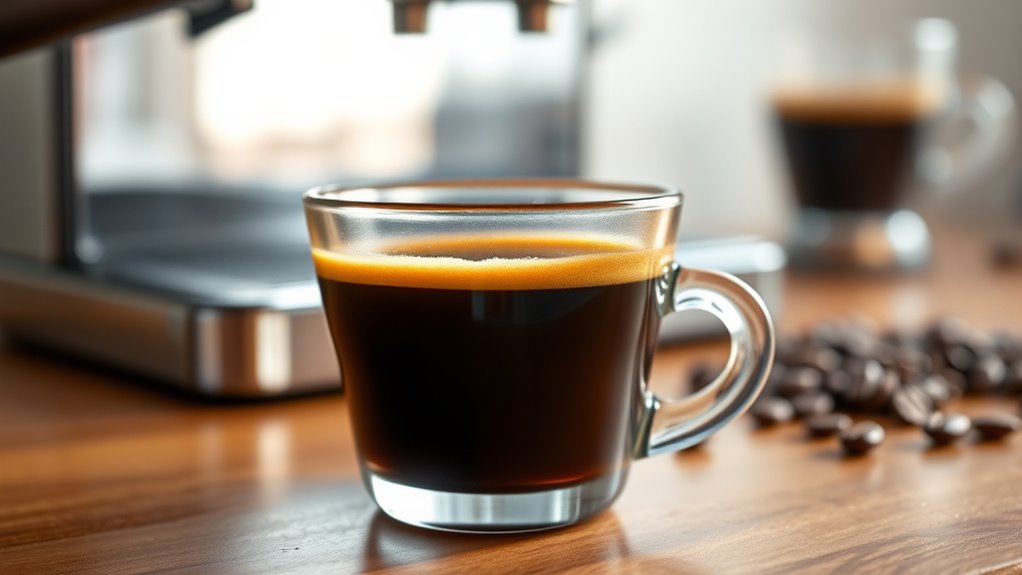
While espresso shot sizes can vary slightly between cafes, a standard single shot typically measures 1 fluid ounce (30 milliliters) and uses 7 to 9 grams of finely ground coffee. This size has become the industry norm, providing a balanced extraction of flavors and strength.
You’ll also find that double shots are common, usually consisting of 2 fluid ounces (60 milliliters) with 14 to 18 grams of coffee, doubling both volume and intensity.
Additionally, specialty shots like ristretto and lungo adjust the volume. Ristretto is about 0.5 ounces for a more concentrated flavor, and lungo is around 1.5 ounces for a milder taste.
Understanding these standard sizes helps you appreciate how espresso is crafted and sets the stage for comparing prices across different cafés.
The use of finely ground coffee and precise extraction parameters at 9-12 bars of pressure are key to achieving the signature crema and flavor of an espresso shot.
Why Espresso Shot Sizes Vary Across Cafés
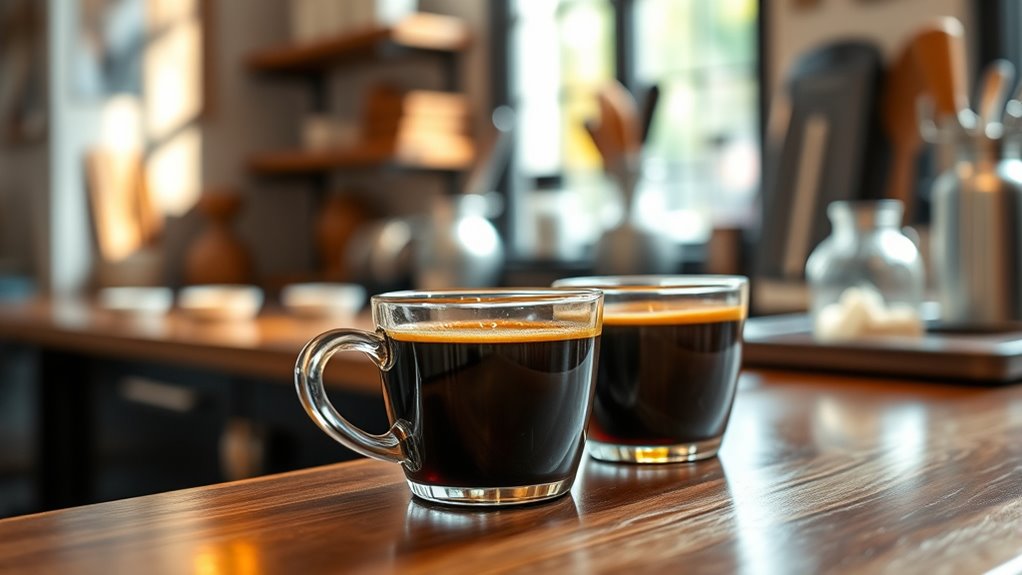
Espresso shot sizes don’t follow a universal standard, and you’ll notice variations when visiting different cafés. These differences arise because each café tailors its shot size based on several factors to deliver their unique coffee experience. You might find a shot as small as 0.5 oz (ristretto) or as large as 2 oz (double shot), depending on the place.
Consider these reasons for variation: Regional preferences influence whether shots lean toward smaller, concentrated pours or larger, milder ones. Baristas calibrate espresso machines differently, affecting the volume extracted per shot.
Some cafés prioritize measuring by weight rather than volume, impacting the final shot size.
Understanding these nuances helps you appreciate why your espresso might differ from café to café. It’s all part of what makes each coffee stop unique and interesting. Proper dosing of 18-21 grams of grounds is essential to ensure a balanced and consistent extraction.
How Double Shots Compare in Size and Cost
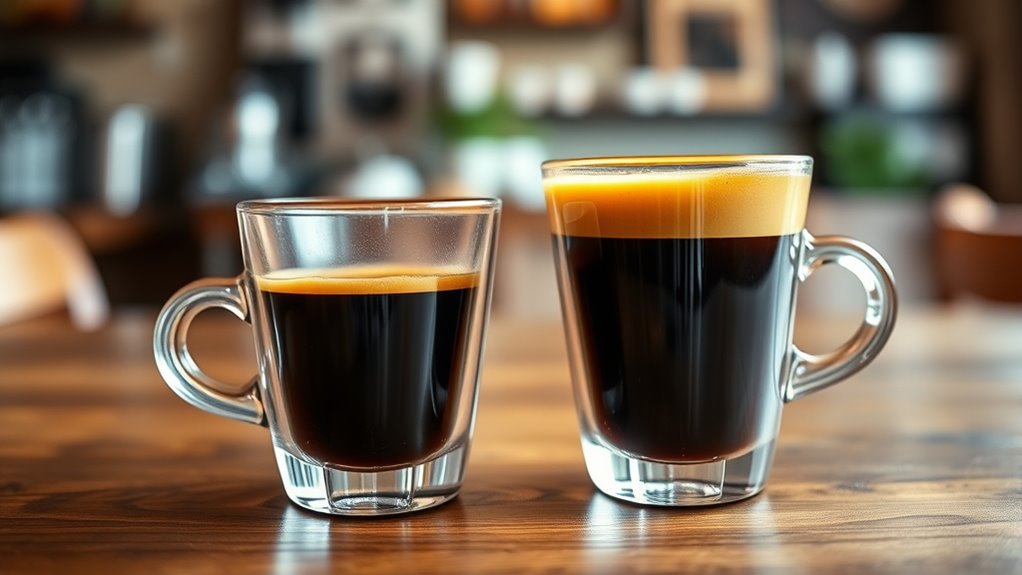
How much more espresso do you get with a double shot, and is it worth the cost? A double shot delivers about 2 fluid ounces, using 14 to 18 grams of coffee grounds, which is twice the amount of a single shot.
Despite containing double the espresso, the price usually ranges from just $0.29 to $0.37, making it a cost-effective choice.
Most coffee shops price double shots similarly to singles, so you get more volume and flavor without doubling the price.
This consistent size of 2 ounces doesn’t vary with bean origin or extraction method, so you know exactly what you’re paying for.
Choosing a double shot not only boosts strength but is also standard in espresso-based drinks like lattes and cappuccinos.
It gives you richer, more satisfying flavors every time.
The 25-30 second rule for extraction time applies equally to both single and double shots to maintain optimal flavor and crema.
How Coffee Beans Affect Espresso Shot Cost and Flavor
Because coffee beans vary widely in origin and variety, they play a crucial role in shaping both the flavor and cost of your espresso shot. The beans you choose influence the espresso’s strength, richness, and price.
Coffee bean variety and origin significantly shape your espresso’s flavor profile and overall cost.
For example, fuller-bodied beans like Sumatran or Kenyan deliver a richer, more intense shot by adding more dissolved solids.
Arabica beans offer smooth, nuanced flavors, while blending with Robusta boosts caffeine and crema.
Additionally, bean density and roast level affect how much espresso volume you perceive in a standard shot.
Keep these variations in mind:
- Sumatran beans for a bold, dense flavor
- Arabica for smooth, refined taste
- Robusta blends to increase caffeine kick and crema
Choosing quality beans directly impacts both your espresso’s character and its cost. To ensure the best extraction and flavor, it is important to grind beans just before brewing with a burr grinder for consistent, fine grounds.
Calculating Espresso Shot Cost: Ingredients and Waste
To accurately calculate your espresso shot cost, start by breaking down the price of coffee beans per gram.
Then, make sure to factor in any waste that happens during grinding and dosing.
Even small losses in preparation can actually raise your real cost per shot.
So, using precise measurements not only helps you keep quality consistent but also keeps your expenses in check.
It’s all about paying attention to the little details!
Adjusting the espresso dose carefully also ensures optimal flavor and minimizes waste.
Ingredient Price Breakdown
When you break down the cost of a single espresso shot, the price of coffee beans plays the biggest role. Typically, one pound of beans costs around $12.80 and yields about 64 shots, putting the base cost per shot near $0.20.
But quality and sourcing influence this considerably. Premium beans cost more, pushing your shot price higher.
Consider these key factors: a standard shot uses roughly 7 grams of coffee, defining your raw material cost. Precise dosing and grind calibration reduce waste and keep costs down. Variations in bean quality and roast impact both flavor and price per shot. Proper machine maintenance, including regular descaling procedures, helps ensure consistent extraction and can indirectly affect the cost efficiency of each shot.
Accounting For Coffee Waste
Although the weight of coffee grounds used per shot, typically between 7 and 9 grams, sets a baseline for cost, you’ll find that accounting for coffee waste is essential to understanding the true expense of an espresso. Waste includes grounds left unused in the basket and any spillage during brewing.
These factors can push the effective cost per shot beyond the initial coffee weight calculation.
To get an accurate price, you need to factor in this waste, which can raise costs to approximately $0.29 to $0.37 per shot.
By mastering proper dosing and tamping techniques, you can minimize waste and reduce your overall expenses.
Adjusting grind size and ensuring consistent particle size can also help reduce waste and improve extraction efficiency, optimizing the espresso shot cost.
Brewing Techniques That Impact Espresso Shot Cost
You’ll find that grind size directly influences extraction time and shot quality. And that, in turn, affects waste and cost.
Keeping your dose consistent means each shot uses just the right amount of coffee, so you avoid unnecessary expense.
Mastering these brewing techniques helps you control both flavor and price with precision.
Maintaining a stable brew temperature within the ideal range is essential for consistent extraction and optimizing shot quality.
Grind Size Effects
Since grind size directly affects extraction resistance, it plays a crucial role in determining both the quality and cost of your espresso shots. When your grind is too fine, water struggles to pass through, leading to over-extraction, wasted coffee, and potential machine clogs that raise maintenance costs.
On the other hand, coarser grinds speed up water flow, causing under-extraction and weaker flavor. This can reduce the perceived value of each shot.
Getting the grind size just right optimizes extraction time and controls ingredient waste, helping you manage costs effectively.
Imagine this: fine grinds create a dense puck, slowing water flow. Coarse grounds let water rush through too easily. The perfect grind balances resistance and flow for rich flavor.
Mastering grind size keeps your espresso exceptional and cost-efficient. It’s definitely worth the effort! Measuring espresso yield by weight rather than volume supports precise grind adjustments and consistent shot quality.
Extraction Time Importance
How long should your espresso shot take to extract? Ideally, you want it between 20 to 30 seconds. Extraction time directly influences flavor and shot quality.
If you let it run past 30 seconds, you risk over-extraction, which causes bitter flavors and wastes coffee. That means higher costs.
On the other hand, pulling a shot under 20 seconds leads to underdeveloped, weak flavors that might force you to rebrew. That just adds more waste and expenses.
By consistently hitting that sweet spot, you guarantee each shot tastes great and avoid unnecessary coffee usage. Precise control over extraction time helps you optimize flavor while minimizing waste.
This keeps your ingredient costs predictable and your profits intact. Mastering this timing is key to balancing quality and cost in every espresso shot.
Additionally, factors like grind size and tamping pressure must be precisely adjusted to maintain that ideal extraction window and ensure consistent flavor.
Dose Consistency
Controlling extraction time sets the foundation for a great espresso shot, but dialing in dose consistency secures that quality while keeping costs manageable. When you measure your coffee dose precisely, 7-9 grams for a single shot or 14-18 grams for a double, you ensure each shot extracts uniformly, avoiding waste.
Consistent tamping pressure, around 30 pounds, further stabilizes shot quality and maximizes ingredient use. Using a calibrated scale minimizes variability, maintaining potency and cost efficiency every time.
To keep your dose consistent, focus on:
- Accurate dosing with a calibrated scale
- Proper tamping pressure to avoid channeling
- Maintaining grind size for ideal extraction
These steps help you control shot quality and cost effectively.
Key Factors That Influence Espresso Shot Price
Although the price of a single espresso shot might seem straightforward, several key factors come into play that directly impact its cost. The coffee beans’ origin and quality heavily influence the base price, while equipment expenses and maintenance add to overhead.
The precise amount of coffee used per shot affects costs, as does wastage from overfilling or inconsistent dosing. Additionally, regional demand and brand positioning can push prices higher, especially in specialty cafes.
| Factor | Impact on Price |
|---|---|
| Coffee Beans | Quality, origin, and sourcing determine cost |
| Equipment | Machines and grinders require investment |
| Coffee Dose | Amount used per shot affects bean consumption |
| Market & Branding | Location and cafe reputation influence pricing |
Understanding these factors helps you grasp why espresso prices vary. It’s not just about the coffee itself but everything that goes into making that perfect shot.
Setting Menu Prices Using Espresso Shot Costs
When you know the exact cost of a single espresso shot, typically between $0.29 and $0.37, you can confidently set menu prices that balance profitability and competitiveness.
By calculating the average shot cost, you make sure each drink covers ingredient expenses while keeping your desired profit margin.
Think about these key points when pricing:
Standard shots use about 7 grams of coffee, which is roughly 50 shots per pound. This directly impacts the shot cost.
Also, factor in operational costs alongside ingredient pricing so you don’t undervalue your drinks.
Competitive pricing helps attract customers without hurting your bottom line.
This precise understanding lets you price lattes, cappuccinos, and other espresso-based drinks effectively.
It keeps your menu both appealing and profitable.
Setting prices with accuracy gives your business a better chance to thrive in a competitive market.
How to Save on Extra Espresso Shots
If you want to enjoy extra espresso shots without overspending, savvy customization and smart ordering choices can save you money. For example, ordering a standard iced vanilla latte through the Starbucks app and adding an extra shot this way often costs less than requesting it directly.
Opting for a grande iced shaken espresso, which includes three shots, usually runs about 50 cents cheaper than adding an extra shot to a regular drink. Many coffee shops serve double shots as the standard, making it more economical to order that size rather than paying for single shots separately.
Additionally, flavored syrup pumps can boost caffeine content without substantially increasing the price. By strategically choosing your drink and customizing thoughtfully, you’ll get more espresso for less.
Frequently Asked Questions
Can I Get a Discount on Espresso Shots With a Loyalty Card?
Yes, you can often get discounts on espresso shots using loyalty cards. Just check your coffee shop’s program. After certain purchases or points, you’ll gain rewards, exclusive offers, or free shots.
These perks can save you money over time. It’s a great way to enjoy your favorite espresso without spending too much. So, definitely keep an eye on your loyalty card benefits!
How Long Does It Take to Pull a Perfect Espresso Shot?
You’ll want to pull a perfect espresso shot in about 25 to 30 seconds. Timing is essential. Too fast makes it sour, and too slow turns it bitter.
Use a timer to nail that sweet spot every time. It really helps keep things consistent. Just a little attention to timing makes a big difference.
Are Espresso Shots Available Decaffeinated at Most Cafés?
Yes, you’ll find decaffeinated espresso shots at most cafés, especially major chains. While prices usually match regular shots, some specialty spots might charge a bit more due to extra processing involved in decaffeination.
It really depends on the café, but decaf espresso has become pretty common. So if you’re avoiding caffeine but still want that espresso fix, you’re in luck! Just ask your barista, and they’ll let you know what’s available.
What’s the Difference Between Ristretto and Standard Espresso Shots?
Think of ristretto as a concentrated poem. It uses less water but the same amount of coffee, delivering a richer, sweeter essence in half the time.
You’ll taste bold intensity without bitterness. This is different from a balanced, standard espresso, which has a broader, smoother narrative.
Do Espresso Shot Prices Include Taxes or Service Charges?
No, espresso shot prices usually don’t include taxes or service charges. You’ll typically pay those separately at checkout.
Conclusion
Now that you know what affects espresso shot prices, you might worry that quality means paying too much. But remember, understanding shot size, bean choice, and brewing techniques helps you spot fair prices and get the best value.
You don’t have to sacrifice flavor for cost. Just be smart about where and how you buy.
With these insights, you can enjoy your espresso without breaking the bank or compromising taste.
Pingback: What Do The 3 Beans In An Espresso Martini Mean – Meaning