You can make espresso without a machine using simple methods like the AeroPress, Moka pot, or French press for rich, concentrated coffee. Just grind your favorite beans finely, heat water between 175°F and 200°F, then steep or press accordingly.
Portable espresso makers also let you brew high-pressure shots anywhere. Choosing fresh, well-roasted beans is key to maximizing flavor.
If you want to master these easy techniques, you’ll find plenty of tips and tricks to perfect your espresso-style brew. Give them a try and see how great your coffee can taste!
Make a Quick, Intense Espresso With AeroPress
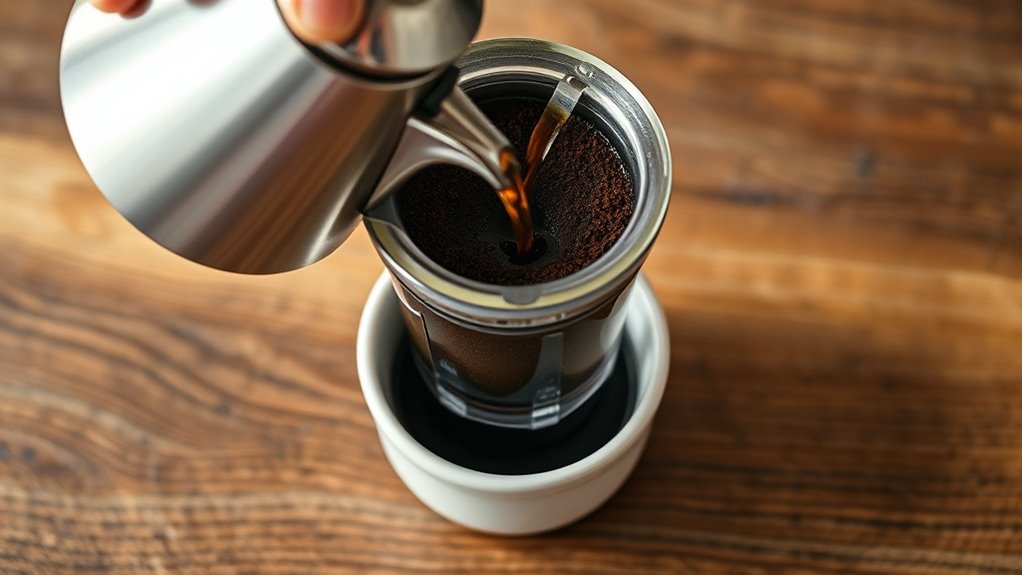
Although you mightn’t have an espresso machine on hand, you can still craft a quick, intense shot using an AeroPress. Start by grinding about 2 tablespoons of coffee to a fine, salt-like consistency.
No espresso machine? No problem—brew a bold, intense shot with just an AeroPress and finely ground coffee.
Heat your water to roughly 175°F to 200°F. It’s hot enough to extract flavor without bitterness.
Add the grounds to the AeroPress, pour in the water, and stir thoroughly. Let it steep for 1 to 2 minutes to develop rich flavors.
Next, press the plunger down steadily and firmly, forcing water through the coffee to create a concentrated espresso-like shot.
For best results, use freshly roasted, high-quality beans and make sure you have a tight seal during pressing.
Serve immediately in a small cup to enjoy its full intensity and aroma. Easy, right?
Remember, controlling grind size and extraction time is crucial to maximize flavor and caffeine content in alternative espresso methods.
Brew Espresso-Like Coffee With a Moka Pot
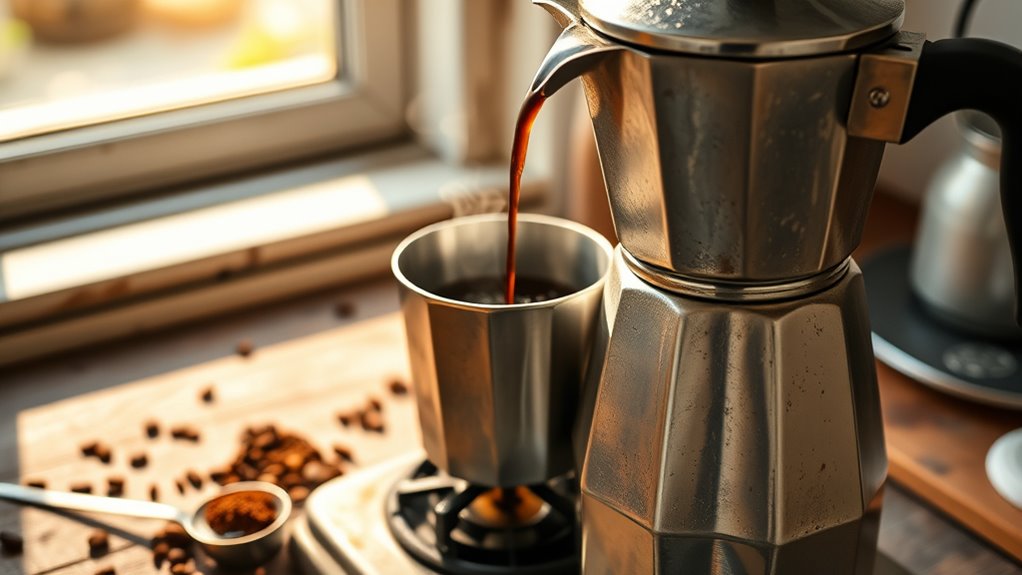
If you enjoyed making espresso-like coffee with the AeroPress, the Moka pot offers another excellent way to achieve a rich, concentrated brew without a machine.
Start by filling the bottom chamber with 3.5 oz of hot water, just below the safety valve to keep the pressure right.
Use 20-22 grams (about 2 tablespoons) of finely ground coffee, filling the filter basket without tamping. This helps make sure the extraction is even.
Screw the top chamber on tightly to secure a seal, then place the pot on medium heat.
As the water heats, steam pressure pushes hot water through the grounds, producing a bold, espresso-like coffee in the upper chamber.
When you hear a gurgling sound, it’s time to remove the pot.
Then, pour and enjoy your concentrated brew.
Keep in mind that controlling extraction time is key to balancing flavor and avoiding bitterness in your espresso-like coffee.
Use a French Press for Rich, Concentrated Coffee
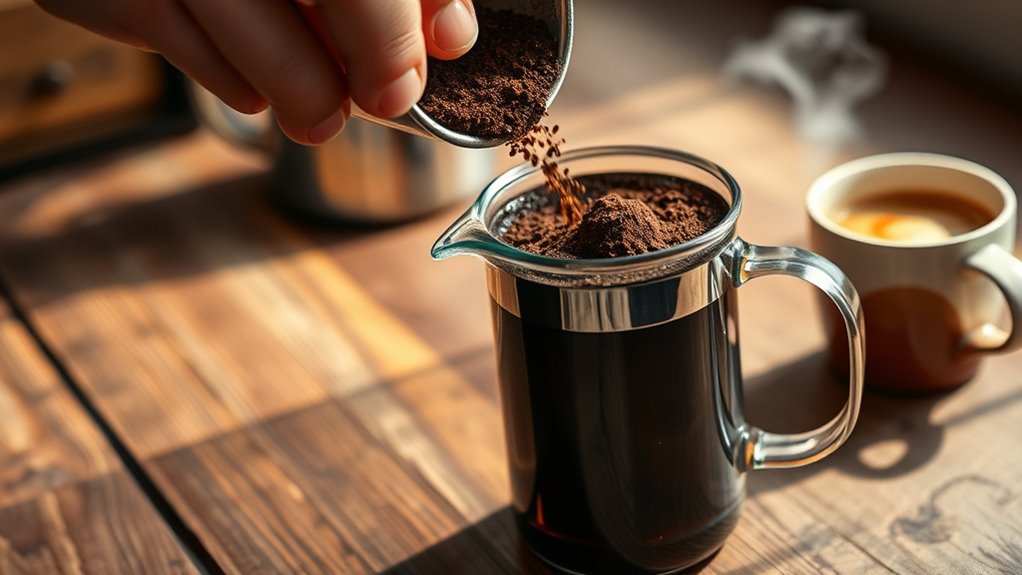
When you want a rich, concentrated coffee without an espresso machine, a French Press can deliver surprisingly bold results. Start by preheating your French Press with hot water, then discard it to maintain temperature.
Use a medium-fine grind, about the texture of table salt, for best extraction.
Add 2 tablespoons of coffee grounds, then pour just-boiled water (around 200°F) over them. Give the mixture a gentle stir to fully saturate the grounds.
Let it steep for about 4 minutes with the plunger up, allowing the flavors to intensify.
Slowly press down the plunger to separate the grounds from the liquid. Serve immediately to enjoy a rich, intense coffee reminiscent of espresso, all without needing specialized equipment.
It’s a simple way to get great flavor without any fuss. Adjusting the grind size to achieve the optimal extraction time can significantly enhance the coffee’s flavor balance.
Brew Espresso Anywhere With a Portable Maker
You can enjoy authentic espresso anywhere by using a portable espresso maker designed to generate the 9 bars of pressure essential for proper extraction. These compact devices use manual pumping, spring-loaded mechanisms, or compressed air to achieve that pressure, ensuring rich, concentrated coffee on the go.
Typically, they feature separate chambers for water and coffee, making setup straightforward. To brew, grind high-quality coffee beans finely and add hot water heated between 175°F and 200°F, following the manufacturer’s guidelines. This temperature range extracts flavor without scorching the grounds.
After brewing, make sure to clean your portable maker thoroughly to maintain its performance and taste. With this method, you can enjoy fresh, espresso-style coffee anytime, no machine required. It’s pretty great to have espresso wherever you are! Understanding the importance of grind size and pressure control is key to replicating a quality espresso shot with a portable device.
Select Coffee Beans and Grind for Machine-Free Espresso
Although brewing espresso without a machine demands some adjustments, selecting the right coffee beans and grind is vital to achieving that rich, concentrated flavor. Start with freshly roasted, high-quality beans. Espresso or dark roast works best.
Brewing espresso without a machine starts with choosing fresh, high-quality beans and the perfect fine grind for bold flavor.
Use a burr grinder to achieve a very fine grind, resembling salt or powdered sugar, ensuring even extraction. Avoid blade grinders, as they produce inconsistent particle sizes.
Measure about 18-20 grams of coffee for a double shot or 7-9 grams for a single shot to maintain proper strength.
Store your beans in an airtight container in a cool, dark place to preserve freshness and prevent staling. These steps are essential for replicating espresso’s bold profile without a traditional machine.
Grinding beans just before brewing preserves the oils and maximizes freshness and aroma.
Just keep these tips in mind, and you’ll be sipping great espresso in no time!
Frequently Asked Questions
Can I Use Pre-Ground Coffee for Espresso Without a Machine?
Yes, you can use pre-ground coffee for espresso without a machine. Just make sure it’s finely ground and fresh.
Try using methods like AeroPress or Moka Pot to get the right extraction and pressure. This way, you’ll get a rich, espresso-like brew without any fancy equipment.
How Do Water Temperature Variations Affect Espresso Extraction?
They say, “Too many cooks spoil the broth.” When your water’s too hot or cold, you risk bitter or weak espresso.
You’ll want to keep it steady between 195°F and 200°F for balanced, rich extraction. It really makes all the difference in the flavor you get. Just a small change can throw things off.
What’s the Difference Between Espresso and Ristretto Without a Machine?
You’ll notice ristretto uses less water and a shorter extraction time, creating a thicker, sweeter shot than espresso. It’s more concentrated, highlighting rich flavors.
Espresso offers a fuller, slightly more bitter profile. So, while both are delicious, they bring different vibes to your cup. It’s all about what kind of taste experience you’re after!
How Long Can Homemade Espresso Be Stored Before Flavor Degrades?
You can store homemade espresso up to 24 hours in an airtight container in the fridge.
But for the best flavor, it’s really best to drink it within 30 minutes. Reheating it will degrade the taste and crema. That makes it bitter and flat.
Are There Any Health Benefits to Espresso Made Without a Machine?
You’re sipping liquid sunshine. Espresso made without a machine boosts antioxidants and polyphenols, which support heart health and reduce inflammation.
You’ll also enjoy gentler caffeine effects that help keep you alert without the jitters or crashes. It’s a smooth way to get your energy fix.
Conclusion
You don’t need a fancy espresso machine to enjoy a bold, invigorating cup. With these clever methods, you’re gently embracing alternative brewing paths that bring out the rich essence of your coffee beans. Whether you’re using an AeroPress, Moka pot, or French press, each technique offers a charming twist on traditional espresso.
This way, you can savor that perfect shot anytime, anywhere. So, go ahead, brew confidently and delight in your handcrafted coffee moment.