You get about 1.2 to 2 milligrams of caffeine per espresso bean, depending on the bean variety, size, and roast level. Arabica beans usually contain around 2 mg, though darker roasts might have slightly less due to roasting expansion.
Keep in mind, chocolate-covered beans add extra caffeine and affect absorption speed. If you want to understand how these factors influence your caffeine intake and the beans’ health benefits, more detailed insights await you.
What Is an Espresso Bean?
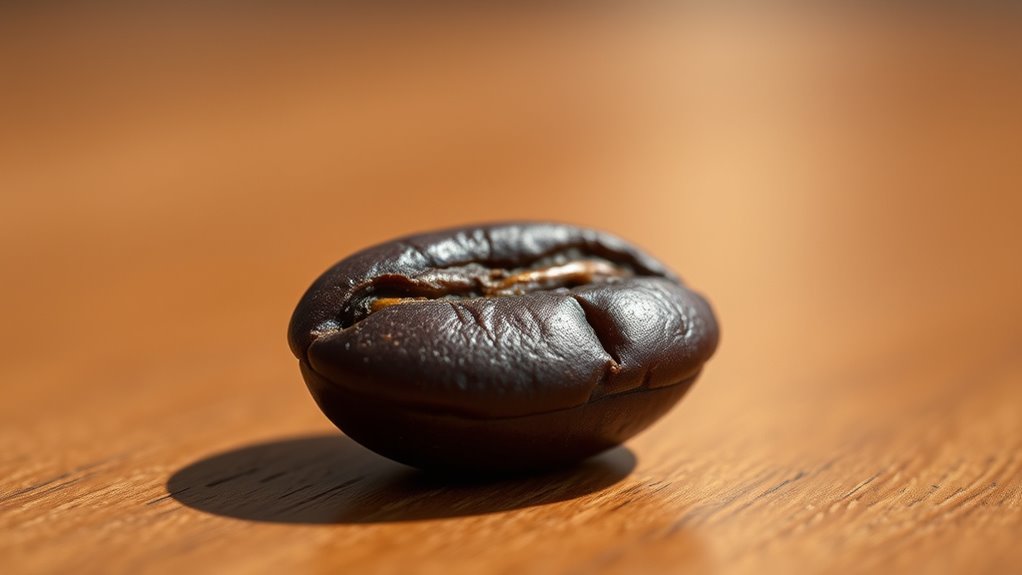
Although you might hear the term “espresso bean,” it doesn’t refer to a unique coffee variety. Instead, espresso beans are simply roasted coffee beans, typically Arabica or Robusta, prepared specifically for espresso brewing.
These beans undergo a dark roasting process to develop a rich, bold flavor profile that suits the concentrated extraction method of espresso.
The roasting level enhances the beans’ intensity and balances acidity, producing the signature taste espresso is known for.
Despite their name, espresso beans aren’t distinct biologically but are distinguished by their roast and intended use.
Also, their strong coffee flavor makes them popular in products like chocolate-covered espresso beans, where that intense taste is really desirable.
Understanding this helps clear up any misconceptions about what an espresso bean truly is.
For the best espresso experience, using freshly ground beans immediately before brewing is essential to preserve aroma and crema.
How Much Caffeine Is in One Espresso Bean?
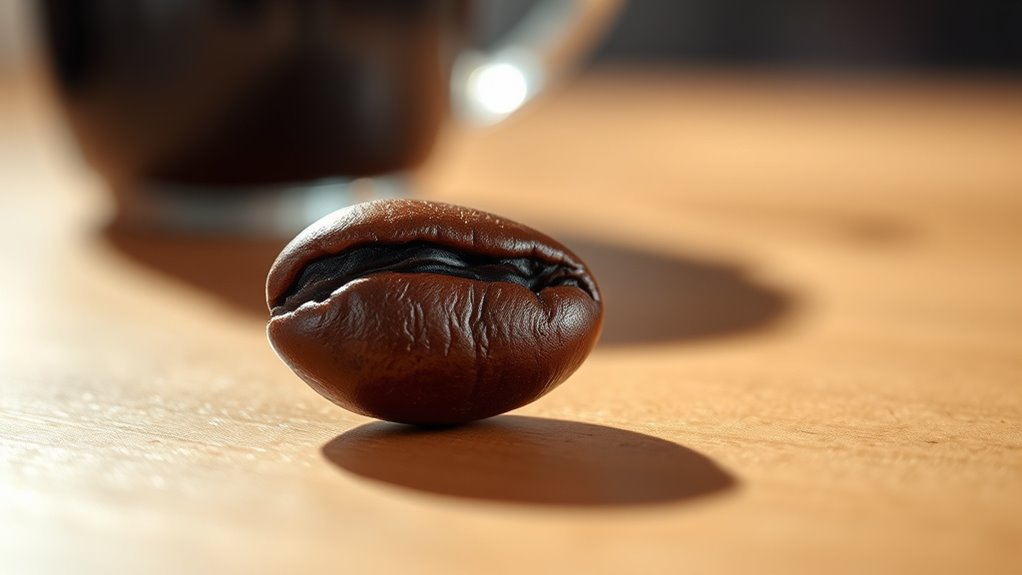
When you consider the caffeine content of a single espresso bean, you’ll find it typically contains between 1.2 and 2 milligrams of caffeine. This depends on factors like the bean variety and roast level.
Arabica beans generally have about 2 milligrams per bean, though this can vary a bit with the coffee blend and roasting process.
Arabica beans typically contain around 2 milligrams of caffeine each, varying with blend and roast.
Darker roasts might’ve slightly less caffeine by weight because the beans expand during roasting. Bean size also plays a role in caffeine concentration.
So, it’s good to know that caffeine content isn’t the same across all espresso beans.
Understanding these variables helps explain why. This range lets you estimate your caffeine intake more accurately when you eat espresso beans directly or use them to brew espresso shots.
Additionally, the roast level influences not only caffeine content but also how quickly caffeine and other compounds are extracted during brewing, affecting the final espresso flavor and strength.
How Many Chocolate-Covered Espresso Beans Equal One Cup of Coffee?
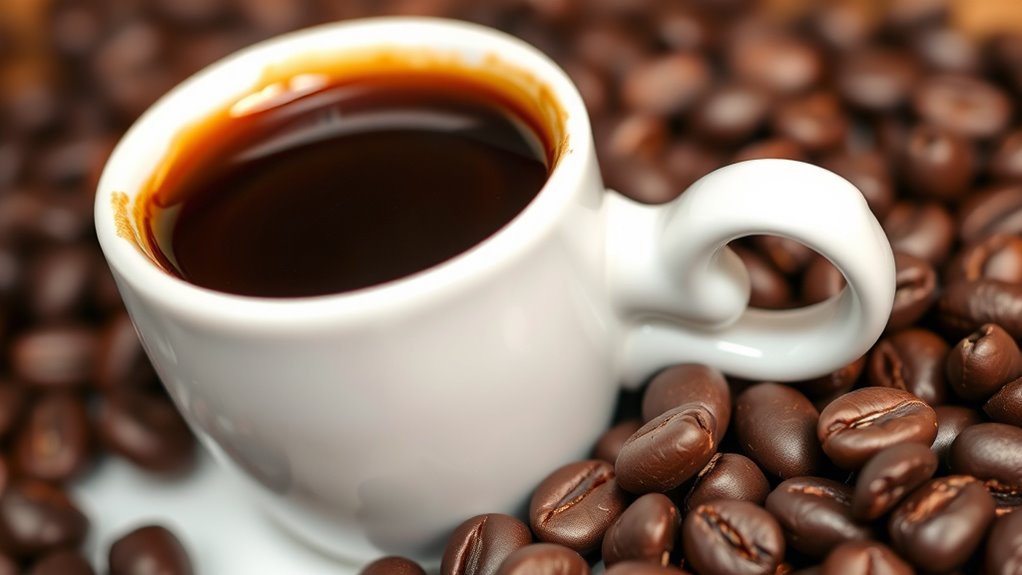
You’ll find that about 10 to 15 chocolate-covered espresso beans deliver roughly the same caffeine as an 8 oz cup of coffee.
Pretty interesting, right?
This comparison helps you get a better idea of how much caffeine you’re actually taking in.
Keep in mind that total caffeine intake depends primarily on serving volume rather than concentration.
Beans Versus Coffee
Since caffeine content varies between espresso beans and brewed coffee, it’s important to understand how many chocolate-covered espresso beans equal one cup of coffee. On average, about 10 chocolate-covered espresso beans provide roughly 95 mg of caffeine, matching a standard cup of coffee. This estimate accounts for the chocolate coating, which slightly reduces caffeine concentration compared to uncoated beans.
Each espresso bean contains approximately 2 mg of caffeine, so consuming around 50 plain beans equals the caffeine in one cup. However, the exact number fluctuates based on bean size, roast level, and chocolate thickness.
Significantly, eating 11 chocolate-covered beans supplies caffeine equivalent to two cups of coffee, illustrating how concentrated caffeine is in these beans compared to brewed coffee. Understanding these differences helps you manage caffeine intake precisely. It is also important to note that roast level affects both caffeine content and flavor extraction, influencing how much caffeine you get from each bean.
Caffeine Comparison Metrics
Although caffeine content varies among chocolate-covered espresso beans, you can estimate how many beans match the caffeine in one cup of coffee by considering several factors. Each bean contains about 2 mg of caffeine, so consuming 15 to 20 beans roughly equals the 95 mg typically found in an 8 oz cup of coffee.
For a stronger caffeine intake, 30 beans provide approximately 60 mg, comparable to a strong mug of coffee. Keep in mind, individual caffeine levels can differ due to bean size, roast, and chocolate coating variations.
For example, 11 beans deliver caffeine similar to two cups of coffee, but variability means these numbers serve as approximate guidelines rather than exact equivalencies.
The caffeine extraction process can also be influenced by grind size and brewing time, affecting the overall caffeine content in espresso-based drinks.
Energy Equivalency Explained
Understanding how the caffeine content in chocolate-covered espresso beans compares to a cup of coffee requires examining the energy equivalency in detail.
Each espresso bean contains about 2 mg of caffeine. When you eat the beans whole, you consume their full caffeine content, unlike brewed coffee, which extracts only about 10% of the caffeine from the beans.
A standard 8 oz cup of coffee delivers roughly 95 mg of caffeine. So, you’d need about 40 to 50 chocolate-covered espresso beans to match that caffeine level.
Eating around eleven beans provides a caffeine boost comparable to two cups of coffee, approximately 20-24 mg.
Consuming 30 beans will equal the caffeine in a strong mug of coffee, near 120 mg.
This precise comparison helps you gauge caffeine intake effectively. It’s a neat way to understand how much caffeine you’re getting, whether you’re snacking on beans or sipping coffee.
For those preparing espresso, ensuring proper extraction and flavor balance is key to maximizing the caffeine and taste from each bean.
How Does Chocolate Coating Affect Caffeine in Espresso Beans?
When you enjoy espresso beans coated in chocolate, you’re not just tasting a blend of flavors. You’re also consuming a slightly higher amount of caffeine. Dark chocolate contains about 12 mg of caffeine per ounce, which adds to the caffeine naturally present in the espresso bean.
The thickness of the chocolate layer can affect the total caffeine slightly, but it mainly increases sugar, fat, and calorie content. Also, chocolate’s caffeine combines with that in the espresso bean, giving you a modest caffeine boost compared to uncoated beans.
The chocolate coating slows caffeine absorption, leading to a more gradual energy release. So, while chocolate-coated espresso beans offer a richer flavor and a bit more caffeine, their main impact is in how the caffeine is absorbed and the extra calories you get.
Because espresso is brewed under high pressure extracting more caffeine efficiently, the beans themselves are naturally concentrated sources of caffeine.
Health and Energy Benefits of Espresso Bean Caffeine
Beyond flavor and caffeine content, espresso beans offer some pretty impressive health and energy benefits. Each bean packs about 2 milligrams of caffeine, giving you a quick energy boost. If you eat around eleven beans, that’s like having two cups of coffee.
This helps enhance your alertness, reduce fatigue, and even improve how well your brain works. Plus, dark chocolate-coated espresso beans come with antioxidants that help protect your immune system. They also neutralize harmful free radicals.
When you enjoy espresso beans in moderation, their caffeine and antioxidant combo can really promote mental focus and overall well-being. This mix supports your brain’s performance and energy levels in a natural, practical way. The caffeine content in espresso beans is comparable to that found in a double shot of espresso, providing a strong yet balanced boost.
How to Enjoy Chocolate-Covered Espresso Beans Safely
Although chocolate-covered espresso beans offer a convenient caffeine boost, you should limit your intake to 5-10 beans per serving to avoid excessive caffeine consumption. Each bean contains roughly 5-10 mg of caffeine, so consuming more increases your total intake rapidly.
Limit chocolate-covered espresso beans to 5-10 per serving to manage caffeine intake safely.
Enjoy these treats earlier in the day, preferably morning or early afternoon, to prevent sleep disturbances.
Consider your total daily caffeine from all sources, like coffee, energy drinks, or tea, and balance accordingly to stay within safe limits.
Pay close attention to your body’s responses. If you notice jitteriness, anxiety, or other adverse effects, stop consuming them immediately.
For a smoother and more nuanced coffee experience, try incorporating espresso powder into your recipes as a subtle alternative to whole beans.
Frequently Asked Questions
Can Espresso Beans Cause Caffeine Addiction?
Yes, you can develop caffeine addiction from espresso beans if you consume them regularly and exceed daily caffeine limits. Your body adapts, leading to dependence and withdrawal symptoms like headaches and fatigue when you stop abruptly.
It’s pretty common actually. When you drink espresso often, your system gets used to the caffeine. So, cutting back suddenly can feel rough.
Do Espresso Beans Have More Caffeine Than Regular Coffee Beans?
Don’t be fooled by the dark cloak; espresso beans don’t have more caffeine than regular coffee beans. Their caffeine content per bean is about the same, varying slightly with roast level and bean type, but generally comparable.
How Long Does Caffeine From Espresso Beans Stay in Your System?
Caffeine from espresso beans typically stays in your system for 8 to 14 hours, with a half-life of 3 to 5 hours.
How long it lasts can depend on things like your metabolism, age, and overall health. So, some people might process it faster or slower than others.
It’s pretty normal for caffeine to hang around for several hours after you enjoy your espresso. Just something to keep in mind if you’re sensitive to caffeine or drinking it later in the day.
Are There Any Side Effects of Eating Espresso Beans?
Like a Victorian clock striking too fast, eating espresso beans can cause jitteriness, anxiety, and an increased heart rate.
You’ll also risk insomnia, stomach upset, and dental issues if you consume them excessively or have caffeine sensitivity.
Can Espresso Beans Be Used in Recipes Besides Chocolate Coating?
Yes, you can use espresso beans in recipes beyond chocolate coating. Try grinding them into baked goods, or add crushed beans to trail mixes or yogurt.
You can even incorporate whole beans in ice cream. Another cool idea is using ground beans as a meat rub to boost the flavor. There are plenty of tasty ways to get creative with espresso beans!
Conclusion
Now that you know the caffeine content in each espresso bean, you can confidently count your chocolate-covered choices. Remember, moderation matters. Munching multiple beans might multiply your caffeine intake more than a single cup.
The chocolate coating slightly softens the stimulant surge but doesn’t stop it. So, savor these savory, stimulating snacks smartly to spark your energy without overstepping safe limits.
Stay sharp, stay safe, and sip sensibly.