You’ll find about 85 mg of caffeine in a shot of blonde espresso, which is slightly more than what’s in a regular dark roast shot. This happens because lighter roasts keep beans denser, packing more caffeine by volume. Even though caffeine content by weight stays nearly the same across roast levels.
The brighter, sweeter flavor also makes it a unique choice. If you’re curious about how roast and brewing methods influence caffeine and taste, there’s plenty to explore. It’s pretty interesting once you start digging into it!
What Is Blonde Espresso and How Is It Made
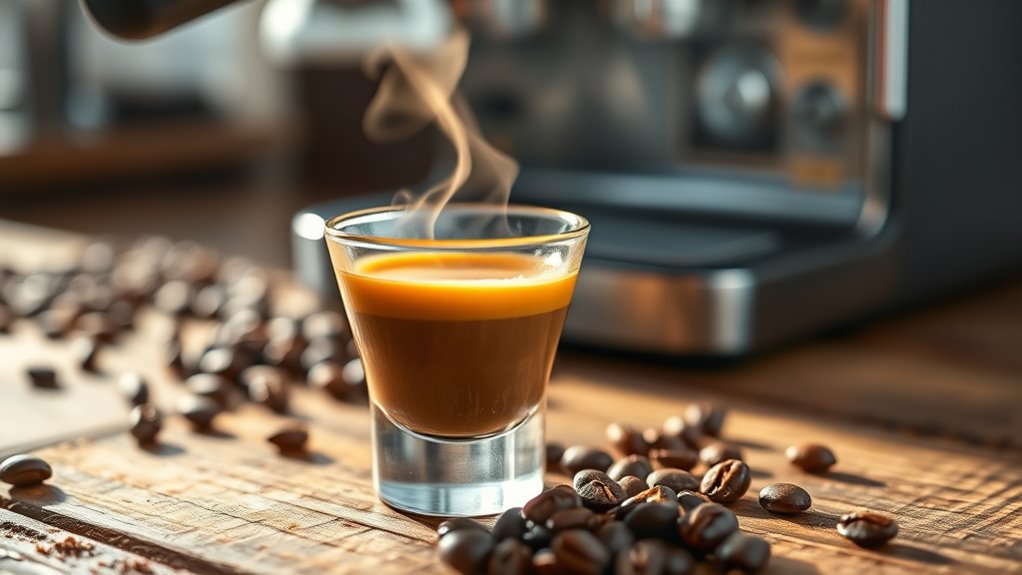
Although it might surprise you, blonde espresso is crafted from light-roast coffee beans roasted for a shorter time, usually stopping at a light to medium level on the Agtron scale. You’ll find these beans often come from single origins like Ethiopian Yirgacheffe or Colombian, typically washed to emphasize their natural brightness.
Blonde espresso uses lightly roasted, single-origin beans to highlight bright, natural flavors and vibrant acidity.
When brewed under 9-bar pressure as an espresso shot, this method preserves more natural sugars and moisture, giving you a brighter, more floral flavor profile.
The light roasting keeps acidity, citrus, and floral notes intact, resulting in a sweet, vibrant cup with a thinner, golden crema.
While Starbucks trademarks the term “Blonde,” other roasters offer similar light roast espressos under different names like Nordic roast. It’s a nice twist if you’re used to darker, bolder espresso but want something a bit lighter and more delicate.
Blonde espresso beans are roasted before the first crack at temperatures between 355-400°F, which helps preserve more natural characteristics and caffeine content.
How Much Caffeine Is in a Shot of Blonde Espresso?
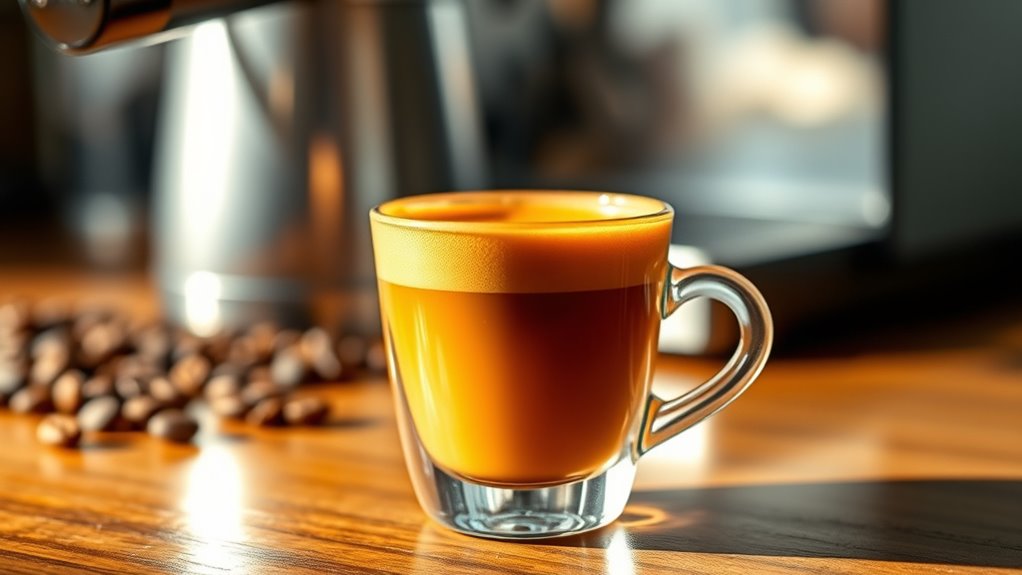
Now that you know how blonde espresso is made and what sets it apart in flavor, it’s worth understanding how its caffeine content compares to traditional espresso shots.
A shot of blonde espresso usually contains about 85 milligrams of caffeine, which is slightly more than the 75 milligrams in a standard dark roast shot.
Here’s a quick breakdown: Blonde espresso packs roughly 85 mg of caffeine per shot. Dark roast espresso averages around 75 mg per shot. The caffeine difference is minor because roasting doesn’t substantially change caffeine by weight.
Also, brewing methods and dose influence overall caffeine more than roast level.
Precise grinding and dosing techniques play a key role in determining the final caffeine content and flavor of an espresso shot.
Why Blonde Espresso Has More Caffeine Than Dark Roasts
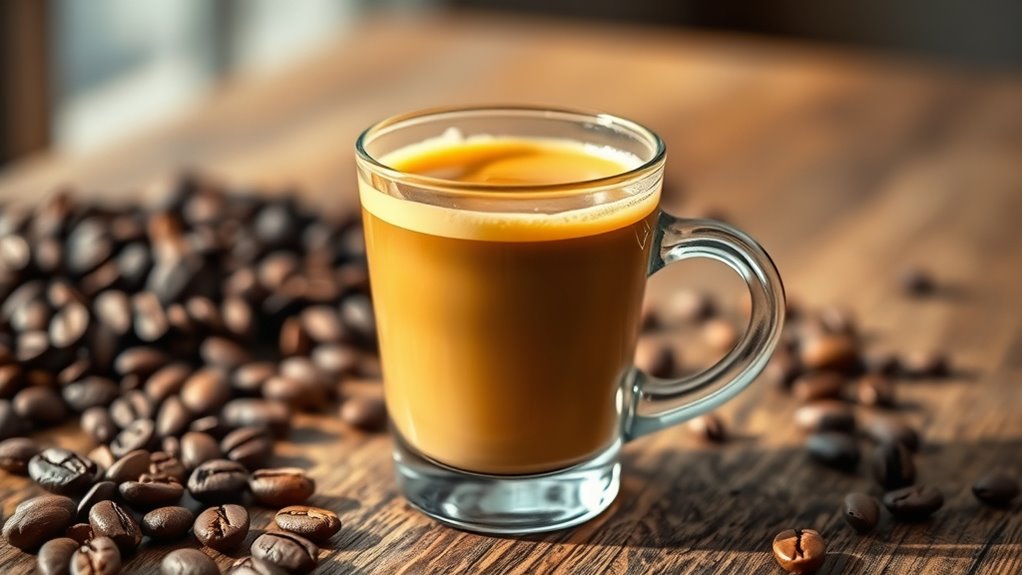
Because blonde espresso uses lighter roasted beans, it tends to have slightly more caffeine per volume than dark roasts. You’ll find this difference mainly comes from the density and roasting time. Blonde beans roast for a shorter period, preserving more caffeine.
They’re denser, so more caffeine fits into the same volume compared to the expanded dark roast beans. However, if you measure by weight, caffeine content is almost the same.
It’s also important to note that shot timing and extraction factors impact the final caffeine concentration, so maintaining consistent extraction time is key for reliable caffeine levels.
| Factor | Blonde Espresso | Dark Roast Espresso |
|---|---|---|
| Roasting Time | Shorter, preserves caffeine | Longer, slight caffeine loss |
| Bean Density | Higher, more caffeine per volume | Lower, less caffeine per volume |
| Caffeine by Weight | Nearly identical | Nearly identical |
| Caffeine by Volume | Slightly higher | Slightly lower |
That’s why you end up feeling like blonde espresso shots pack more caffeine.
How Roast Level Affects Blonde Espresso’s Caffeine and Flavor
You’ll notice the roast level really plays a key role in both the caffeine content and the flavor of blonde espresso. Lighter roasts tend to preserve more caffeine and bring out bright, fruity notes.
On the other hand, darker roasts develop those deeper, caramelized flavors we often love. Plus, the way you brew it also shapes the final taste, so every shot ends up being a unique experience.
However, it’s important to note that roast level does not significantly affect caffeine content, as caffeine remains chemically stable unless exposed to extremely high temperatures.
Roast Level And Caffeine
Although roasting slightly changes coffee’s flavor and density, it doesn’t really affect the caffeine content much. So, blonde espresso made from light-roast beans usually has as much or even a bit more caffeine than darker roasts. Here’s why:
Light-roast beans keep more of their natural moisture and sugars because they’re roasted at lower temperatures. They also stay denser than dark roasts, meaning you get more caffeine per scoop by volume.
Plus, the roasting process doesn’t break down caffeine molecules much, so caffeine levels stay pretty stable.
Another thing to keep in mind is how you measure your coffee. If you measure by weight, the caffeine content is almost the same between light and dark roasts. But if you measure by volume, light roasts pack a little more caffeine in each scoop. Makes sense, right?
Additionally, espresso’s concentrated shot delivers caffeine rapidly, making the slight differences in caffeine content more noticeable in a quick energy boost.
Flavor Profiles By Roast
When you choose blonde espresso, you’re opting for a coffee that highlights brightness and complexity thanks to its light roasting level. Blonde espresso beans roast between City and City+ on the Agtron scale, preserving natural sugars and acidity.
This results in a flavor profile that’s noticeably floral, citrusy, and vibrant, with aromatic oils still intact.
Because lighter roasts don’t spend as long in the roaster, they retain more caffeine per volume compared to darker roasts.
In contrast, darker roasts develop bold, bitter flavors but lose much of the brightness and subtle nuances you find in blonde espresso.
Brewing Impact On Taste
The way you brew blonde espresso directly influences both its flavor and caffeine content. Since blonde espresso uses light-roast beans, you’ll notice a brighter, more acidic cup with citrus and floral notes.
Here’s how the roast level shapes your brew: Light roasts preserve natural sugars and oils, which enhances brightness and subtle sweetness. You get a nuanced flavor with less bitterness compared to darker roasts.
The caffeine content stays fairly consistent but can be slightly higher per volume due to bean density.
Does Brewing Method Affect Blonde Espresso’s Caffeine?
Since brewing methods dictate extraction time, temperature, and pressure, they play an essential role in determining how much caffeine ends up in your blonde espresso.
For example, espresso machines with precise pressure and temperature controls maximize caffeine extraction from blonde roast beans, giving you a stronger shot.
On the other hand, brewing techniques like Aeropress or French press involve longer extraction times, which can increase caffeine content in blonde espresso-like brews.
If you use a coarser grind or under-extract, you’ll end up with less caffeine in your cup.
Cold brew also produces a concentrated, caffeine-rich beverage by steeping grounds over extended periods.
So, the brewing method often influences caffeine levels more than the roast itself.
Choosing your method carefully lets you control how much caffeine you get.
Regular maintenance, including proper descaling procedures, ensures your espresso machine functions optimally, which can also affect caffeine extraction efficiency.
How Blonde Espresso Tastes Different From Regular Espresso
Although both types of espresso start with the same beans, the lighter roasting process in blonde espresso brings out brighter, sweeter flavors that you won’t find in regular dark espresso.
You’ll notice that blonde espresso preserves natural sugars and acidity, giving it a floral and citrusy profile. It tastes sweeter and less bitter due to the lighter roast.
It also offers delicate, fruity, and tea-like notes rather than smoky richness. Plus, it feels smoother on your palate with reduced intense bitterness.
This difference comes down to roasting level. Blonde espresso highlights subtle, vibrant flavors, while regular espresso delivers a bolder, richer, and more robust taste.
When you sip blonde espresso, expect an invigorating, nuanced experience that contrasts with the traditional espresso’s intensity.
Because caffeine content can vary with roast level, blonde espresso typically contains slightly more caffeine than darker roasts due to less caffeine being burned off during the lighter roasting process, making it an energizing choice for those sensitive to caffeine content.
Best Drinks to Enjoy With Blonde Espresso
When you want to highlight the bright, floral notes of blonde espresso, pairing it with milk-based drinks like lattes and flat whites is an excellent choice. These drinks bring out its citrus and sweet, juice-like flavors without overpowering them.
Blonde espresso also shines in iced beverages such as vanilla lattes and cold brews, where its lighter taste complements the chill and subtle sweetness.
If you enjoy flavored syrups or add-ins, blonde espresso works beautifully, balancing the flavors with its mild bitterness.
For more concentrated options, try a macchiato or cortado. These preserve the espresso’s nuanced character.
You can even experiment by mixing it into tea-like drinks, where its delicate profile adds a lively, invigorating twist to your cup.
To elevate your experience, consider using freshly brewed espresso with rich crema to enhance texture and flavor.
Brewing Tips for Maximum Caffeine and Flavor at Home
Enjoying blonde espresso in a variety of drinks is rewarding. But you’ll get the most out of its unique flavor and caffeine by focusing on your brewing technique at home.
To maximize both, pay attention to these key steps:
- Use a fine grind with a high-quality burr grinder to extract maximum caffeine and flavor.
- Set your water temperature to 94-96°C (201-205°F) to boost extraction without bitterness.
- Extend pre-infusion time to evenly saturate grounds, enhancing bright flavor notes.
- Apply about 30 pounds of tamping pressure and aim for a 1 to 1.5-ounce shot volume to balance caffeine content and flavor.
Paying attention to the roast level can also impact the caffeine content and overall flavor profile of your blonde espresso.
Following these tips guarantees you get a vibrant, potent blonde espresso shot every time.
Give it a try and enjoy your perfect cup!
Common Myths About Blonde Espresso and Caffeine Explained
You might think blonde espresso packs way more caffeine than a dark roast, but the difference is actually pretty small. Its lighter roast changes the flavor, making it taste brighter—not necessarily stronger in caffeine. In fact, caffeine content varies based on factors like roast level and brewing method, so a blonde espresso shot generally contains a similar amount of caffeine as a dark roast shot, typically around 60-75 mg per shot.
Caffeine Content Clarified
How much caffeine does a shot of blonde espresso really pack? You might expect a big difference, but it’s actually quite close to regular espresso. Here’s the caffeine content clarified:
- A shot of blonde espresso contains about 85 mg of caffeine, slightly more than dark roast.
- When measured by weight, caffeine levels between blonde and regular espresso are nearly identical.
- The lighter flavor of blonde espresso doesn’t mean it’s stronger in caffeine; it’s mostly taste perception.
- Blonde espresso uses denser, light-roast beans, which can cause a small caffeine increase per volume.
Roast Level Misconceptions
Understanding the caffeine content in blonde espresso is just the beginning. Many people mistakenly believe that roast level drastically changes caffeine strength. But in reality, caffeine remains pretty stable across roast levels.
So, blonde espresso doesn’t pack a lot more caffeine than a dark roast when you measure by weight.
This myth often comes from the fact that lighter roasts have denser beans. That means you might get more caffeine if you measure by volume. However, baristas usually measure doses by weight, which keeps caffeine levels pretty consistent.
Also, caffeine doesn’t really break down much during roasting. So both light and dark roasts deliver similar caffeine per shot.
The lighter color of blonde espresso doesn’t mean it’s stronger. It mainly affects flavor and appearance, not caffeine content.
Knowing this can help you pick your espresso based on taste without getting confused about caffeine.
Flavor Versus Strength
Although blonde espresso’s lighter roast might suggest a weaker coffee, its bright, citrusy flavor profile often leads people to misjudge its strength. The truth is, caffeine content stays fairly consistent across roast levels, so don’t let flavor fool you. Here’s what you need to know:
Blonde espresso’s citrus and floral notes create a perception of mildness, not less caffeine. It typically contains the same or slightly more caffeine per shot than darker roasts.
Darker roasts taste bolder and more bitter, which people often confuse with higher caffeine.
Also, factors like shot size and extraction methods influence strength more than roast color or flavor profile. So, next time you’re choosing your espresso, remember it’s not just about how it tastes but how it’s made.
Frequently Asked Questions
Is Blonde Espresso Better for Sensitive Stomachs?
Blonde espresso can be better for your sensitive stomach since it has fewer bitter compounds. But its higher acidity might still cause discomfort.
Can Blonde Espresso Be Used in Iced Coffee Drinks?
Absolutely, you can use blonde espresso in iced coffee drinks. Its bright, fruity notes really shine through when it’s cold. This gives your beverage a smooth, invigorating taste while delivering a stronger caffeine kick.
Just brew it carefully over ice! You’ll love how refreshing it tastes, especially on a warm day. Give it a try and see how it changes your iced coffee game.
How Long Does Caffeine From Blonde Espresso Stay in Your System?
Caffeine from blonde espresso typically stays in your system for 3 to 7 hours, depending on your metabolism. You’ll feel its effects for about 4 to 6 hours, but traces can linger up to 24 hours.
Are There Decaf Options Available for Blonde Espresso?
Decaf blonde espresso options do exist, like rare gems hidden in a vast mine. You can find them at select coffee shops or by special request. They offer a delicate, low-caffeine alternative without sacrificing that bright, floral flavor.
It’s kind of like having your cake and eating it too, but with coffee. So if you’re looking to cut back on caffeine but still want that unique taste, these options are definitely worth seeking out.
Does Blonde Espresso Affect Sleep Differently Than Regular Espresso?
Yes, blonde espresso can affect your sleep differently since it has more caffeine than regular espresso. You might feel more alert, so avoid drinking it late to prevent trouble falling asleep or disrupted sleep quality.
It’s a good idea to be mindful of when you drink blonde espresso. Having it earlier in the day can help you enjoy the boost without messing up your night’s rest. Just listen to your body and adjust accordingly!
Conclusion
So, you’ve learned Blonde Espresso packs more caffeine than its darker cousins. Surprise! It’s lighter, yet stronger in buzz, proving roast color doesn’t always dictate kick.
You might’ve expected dark roasts to dominate your energy needs, but Blonde Espresso flips that notion. Now, armed with this caffeine secret, you can confidently order or brew your shot.
You’re getting a bright, bold jolt even if it looks like a gentle wake-up call.