A single shot of espresso has about 1 calorie, mostly from tiny amounts of fats and proteins naturally present in the beans. Whether you use Arabica or Robusta, or a light or dark roast, the calorie count stays nearly the same. A double shot doubles that to around 2 calories.
Adding milk, sugar, or syrups raises calories considerably. So, if you’re watching your intake, those additions really make a difference.
If you want to understand how your espresso fits into your diet or how other coffee drinks compare, keep exploring these details. It’s pretty interesting once you start looking!
Calorie Count of a Single Shot of Espresso
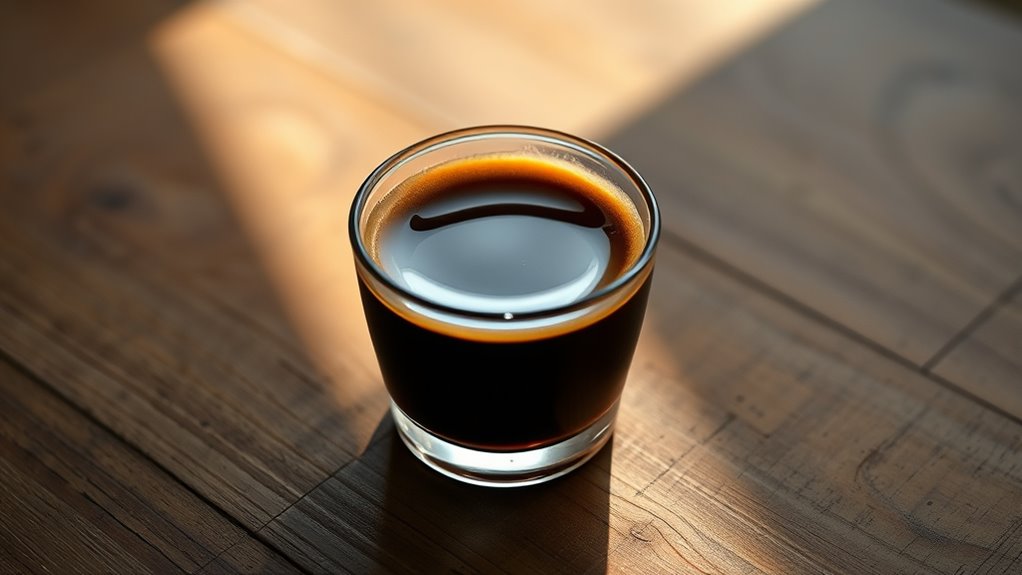
A single shot of espresso contains about 1 calorie, making it an extremely low-calorie choice for coffee lovers. This tiny calorie count mainly comes from trace amounts of fats and proteins found in the natural oils of the coffee beans.
Since unsweetened espresso has almost no carbohydrates, it adds barely anything to its calorie total.
Whether you choose light or dark roast, Arabica or Robusta beans, the calorie count stays consistent as long as you skip cream, sugar, or other additives.
Your body quickly burns most of these calories during digestion, so espresso won’t considerably impact your daily calorie intake.
If you want a quick, low-calorie caffeine boost, a single shot of espresso is an ideal option you can enjoy guilt-free. It’s simple, effective, and won’t weigh you down.
Espresso’s rich flavor and aroma are enhanced by the presence of crema, which also contributes to the overall sensory experience.
What Contributes to Espresso Calories?
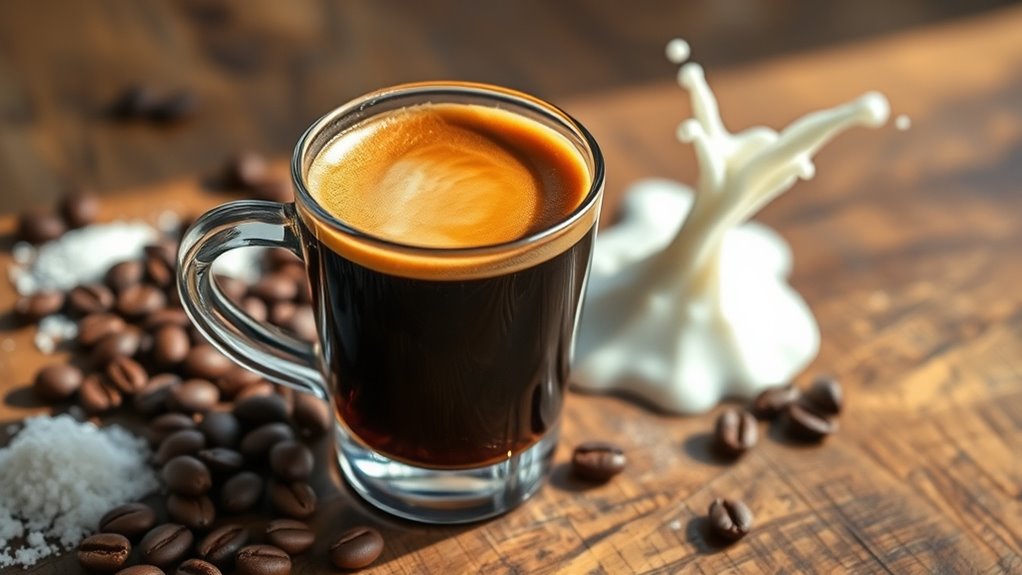
When you take a sip of espresso, the calories you’re getting mostly come from small amounts of coffee oils, proteins, and fats that are naturally found in the beans.
These oils can change depending on how the beans are roasted and how fresh they are.
The amount of calories can also vary slightly based on brew ratios and extraction time, which influence how many oils and proteins are extracted into your shot.
Coffee Oils Impact
How much do coffee oils really add to the calorie count of your espresso? These oils contribute a tiny amount of fat, about 0.1 grams per 1-ounce shot. While they do release during brewing, especially with darker roasts, their impact on calories remains minimal.
Factors like bean quality and storage can slightly influence oil content. So, it’s good to keep those in mind.
Here’s what you should know:
- Coffee oils add roughly 1 calorie per shot.
- Darker roasts tend to release more oils.
- Stale or over-roasted beans may alter oil composition.
- Variations depend on roast level and storage conditions.
The roast profile can be adjusted to optimize flavor and oil release, subtly affecting the calorie content of your espresso.
Protein And Fat
Although espresso contains only trace amounts of protein and fat, these components contribute to its modest calorie content. The fats come mainly from coffee oils naturally present in the beans, totaling about 0.1 grams per shot, which adds roughly 1 calorie.
Protein content is minimal, around 0.3 grams, contributing about 1-2 calories. Both macronutrients are present in such small amounts that they have a negligible effect on your daily calorie intake.
Darker roasts or stale beans may slightly increase fat content due to oil rancidity, but overall, these elements keep espresso very low in calories.
It is also important to regularly maintain your espresso machine, including descaling frequency, to ensure optimal taste and performance, which can indirectly influence the quality of your espresso shot.
| Component | Approximate Amount per Shot |
|---|---|
| Fat | 0.1 grams (≈1 calorie) |
| Protein | 0.3 grams (1-2 calories) |
| Total | ~2-3 calories |
How Bean Type and Roast Affect Espresso Calories
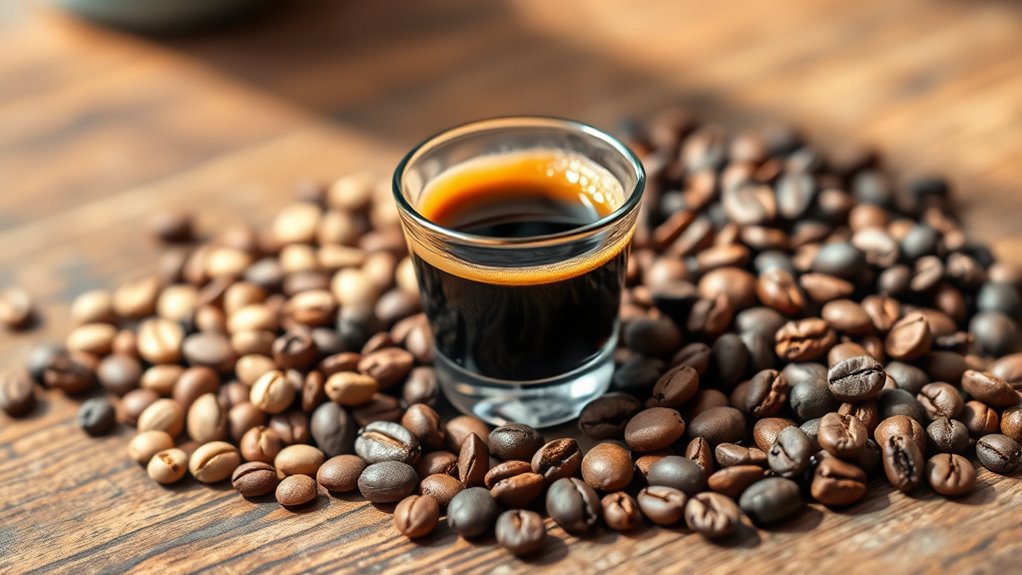
Since you choose different beans and roast levels for your espresso, you might wonder how these factors affect its calorie content. The truth is, the impact is very small, but here’s what you should know:
Robusta beans have more caffeine and slightly more oils than Arabica, which leads to a marginal calorie increase.
Dark roast beans develop more surface oils through roasting, and that can slightly raise calories.
Roasting also causes water and volatile compound loss, subtly changing the beans’ weight and calorie density.
Although darker roasts may contain more oils, the actual calorie difference per shot remains under one calorie.
How a Double Espresso (Doppio) Changes Your Calorie Intake
If you’re used to enjoying a single shot of espresso, you might be curious about how doubling up affects your calorie intake.
A double espresso, or Doppio, contains about 2 calories—double the 1 calorie found in a single shot. This increase is proportional to the number of shots, so two shots roughly add up to 2 calories.
Despite this doubling, the calorie content remains negligible and won’t markedly impact your daily calorie intake. Since each shot has approximately 1 calorie, drinking a Doppio is still considered very low in calories.
Even doubled, espresso’s calories stay minimal, keeping your daily intake largely unaffected.
If you consume it black, a double espresso remains one of the lightest coffee options available, making it a great choice if you want a stronger coffee without worrying about extra calories.
Because espresso is brewed by forcing hot water through finely ground coffee under pressure, it results in a concentrated shot with a rich layer of crema that adds to its unique taste and texture.
How Milk, Sugar, and Syrups Increase Espresso Calories
When you add milk to your espresso, you’re looking at about 20 extra calories per ounce, though that can vary depending on the type of milk you pick.
And if you decide to stir in some sugar, that will add roughly 16 calories per teaspoon.
Then, if you go for flavored syrups, those can add anywhere from 50 to over 100 calories per shot.
Using freshly ground beans just before brewing can also impact the overall flavor intensity and perception of your espresso’s calorie content, as freshness significantly impacts flavor.
Milk’s Calorie Impact
Although a shot of espresso on its own is low in calories, adding milk, sugar, or flavored syrups can quickly increase its calorie content.
Milk, in particular, has a notable impact depending on the type and quantity you use. Here’s what you should consider:
Adding 1 ounce of whole milk adds about 18 calories, mostly from fat and protein. Using skim milk instead cuts that down to roughly 10 calories per ounce.
Flavored syrups like vanilla or caramel can add 20-50 calories per pump or tablespoon.
Even a teaspoon of sugar adds around 16 calories, varying by type.
Choosing your milk and additives wisely helps you control the total calories in your espresso-based drinks.
Sugar’s Added Calories
Because espresso starts with almost zero calories, adding sugar, milk, and flavored syrups quickly boosts its calorie count.
Just one tablespoon of sugar adds about 16 calories, making a noticeable difference if you like your espresso sweetened.
Adding a standard 1-ounce shot of whole milk contributes roughly 9 calories, though this varies with fat content.
Flavored syrups, like caramel or vanilla, pack even more calories, typically between 20 to 50 per pump.
This can significantly increase your espresso’s total.
Keep in mind, cream or whipped toppings can add another 50 to 100 calories depending on how much you use.
By mixing these ingredients, you can easily raise your espresso’s calories from nearly zero to over 100.
Measuring espresso yield by weight in grams rather than volume helps ensure consistency in the base espresso before adding extras.
Syrups And Sweeteners
If you want to keep your espresso low in calories, you’ll need to watch what you add. Milk, sugar, and syrups can quickly turn a nearly calorie-free shot into a higher-calorie beverage.
Here’s how these additions affect your espresso’s calorie count:
A tablespoon of sugar adds about 16 calories.
A standard 1 oz shot of flavored syrup can add between 20 and 50 calories.
A splash (1 oz) of whole milk contributes roughly 9 calories.
Sweetened condensed milk or flavored creamer can increase calories by 50 or more per shot.
How Espresso Calories Compare to Other Coffee Drinks
When you compare espresso to other coffee drinks, its calorie count stands out for being exceptionally low. It’s just about 1 calorie per shot. Brewed coffee has slightly more calories because of its larger volume, typically ranging from 2 to 9 calories per cup.
Drinks like lattes and cappuccinos jump higher because of milk and sugar additions, not the coffee itself. Remember, the calories mainly come from extras, not the espresso shots. Also, the number of shots and serving size influence the total calorie intake.
| Coffee Drink | Typical Calories (per serving) | Main Calorie Source |
|---|---|---|
| Espresso | 1 | Coffee |
| Brewed Coffee | 2-9 | Coffee volume |
| Latte | 120-190 | Milk, sugar |
| Cappuccino | 80-120 | Milk, foam |
| Americano | 5-15 | Espresso + water |
Should You Track Espresso Calories in Your Diet?
Espresso’s minimal calorie content means you usually don’t need to track it closely in your diet. A single shot contains just 1 to 5 calories, so its impact on your daily intake is negligible.
However, you should pay attention if you add anything to your espresso. Consider tracking calories if you add milk, sugar, or flavored syrups, which increase calories considerably.
Also, if you consume multiple shots, calories add up with quantity.
You might want to track calories if you follow a very strict calorie-counting regimen requiring precise measurements. Or if you want to monitor ingredients beyond espresso itself, such as cream or sweeteners.
For most people, black espresso doesn’t require tracking. So, you can enjoy your coffee without worrying about calorie concerns.
Additionally, the presence of crema on your espresso can enrich the flavor without adding calories, making your drink more satisfying.
Frequently Asked Questions
Does Espresso Caffeine Content Affect Calorie Metabolism?
Yes, espresso’s caffeine can temporarily boost your metabolism by stimulating your nervous system. This can slightly increase calorie burn.
However, this effect is pretty minimal and short-lived. So, it won’t really change your overall daily calorie expenditure in a big way.
How Does Espresso Impact Blood Sugar Levels?
Espresso alone barely affects your blood sugar since it has almost no carbs. However, caffeine can temporarily raise glucose by triggering adrenaline.
Adding sugar or milk will increase its impact, so stick to black for minimal effects. It’s really the extras that change things, not the espresso itself.
Can Espresso Calories Vary by Brewing Temperature?
Yes, espresso calories can vary slightly by brewing temperature. Higher temperatures extract more oils and trace fats, which adds minimal calories.
That said, these differences are very small and won’t notably change your espresso’s calorie count. So, no need to stress too much about the exact brewing temp when counting calories.
Are Decaf Espresso Shots Lower in Calories?
No, decaf espresso shots aren’t markedly lower in calories. You’ll find about 1 to 3 calories per shot, similar to regular espresso.
That’s because decaffeination doesn’t change the calorie content much at all. So, if you’re watching calories, decaf won’t make a big difference. It’s mostly the same in that regard.
Does Espresso Consumption Influence Weight Loss Efforts?
Espresso can help your weight loss efforts by slightly boosting metabolism, but it won’t magically burn fat alone. Keep it unsweetened to avoid extra calories, and use it as a low-calorie, metabolism-friendly choice.
Just remember, it’s not a magic fix. Pair it with a good diet and exercise for the best results.
Conclusion
When you sip a single shot of espresso, you’re enjoying a low-calorie boost that’s like a spark lighting your day. It barely adds to your intake. But remember, milk, sugar, and syrups can quickly turn that spark into a flame of extra calories.
Knowing how different factors affect your espresso’s calories helps you make smarter choices. So, keep an eye on what you add. Your espresso can stay a guilt-free pick-me-up in your diet.

Pingback: How Many Calories In Espresso – Full Breakdown