Yes, espresso martinis do have caffeine because they contain a shot of espresso, which delivers about 60-65 mg of caffeine. Coffee liqueurs add a small amount, typically 2-10 mg per ounce, so the total caffeine mainly comes from the espresso.
Using decaffeinated espresso or caffeine-free liqueurs can eliminate caffeine entirely. Understanding how ingredient choices and preparation methods impact caffeine can help you enjoy the cocktail responsibly while managing its stimulant effects alongside alcohol.
What Is an Espresso Martini Made Of?
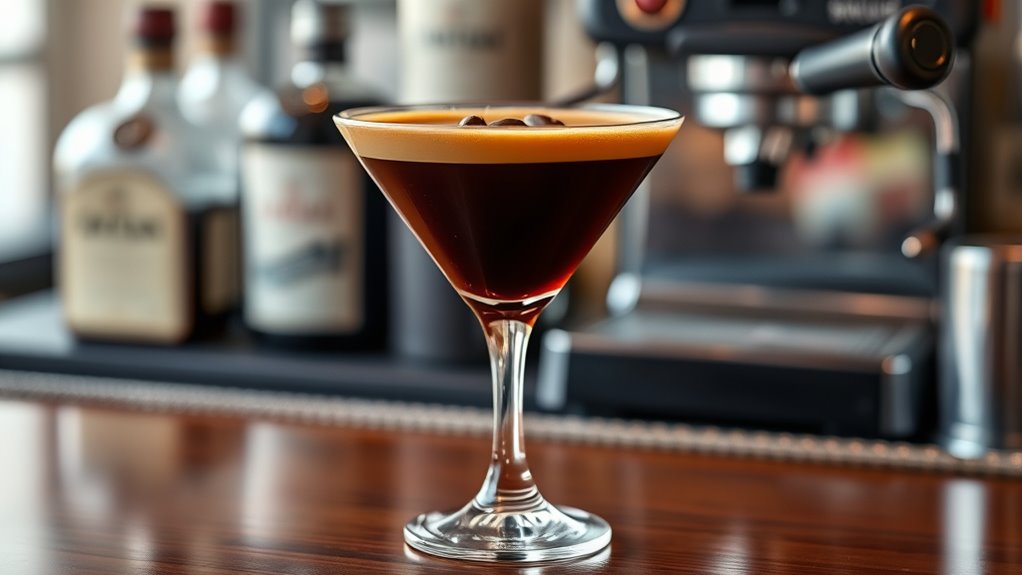
Although you might associate it primarily with its caffeine kick, an espresso martini is precisely crafted from vodka, coffee liqueur, and about one ounce of freshly brewed espresso or cold brew coffee.
The vodka serves as the primary alcoholic base, providing a neutral spirit profile. Coffee liqueurs, such as Kahlúa or Lyre’s Coffee Originale, contribute both flavor complexity and additional caffeine content, enhancing the coffee characteristic.
The espresso component, measured typically at one ounce, delivers the cocktail’s signature rich and robust coffee essence.
Some variations introduce simple syrup or sugar to balance bitterness, but these are supplementary.
The resulting mixture, when shaken vigorously, achieves a frothy texture that integrates caffeine and alcohol, creating a distinct sensory experience emphasizing both stimulant and depressant effects.
Using freshly ground, finely ground espresso beans within the ideal grind size range ensures optimal extraction and flavor clarity in the espresso used for the cocktail.
How Much Caffeine Is in a Typical Espresso Martini?
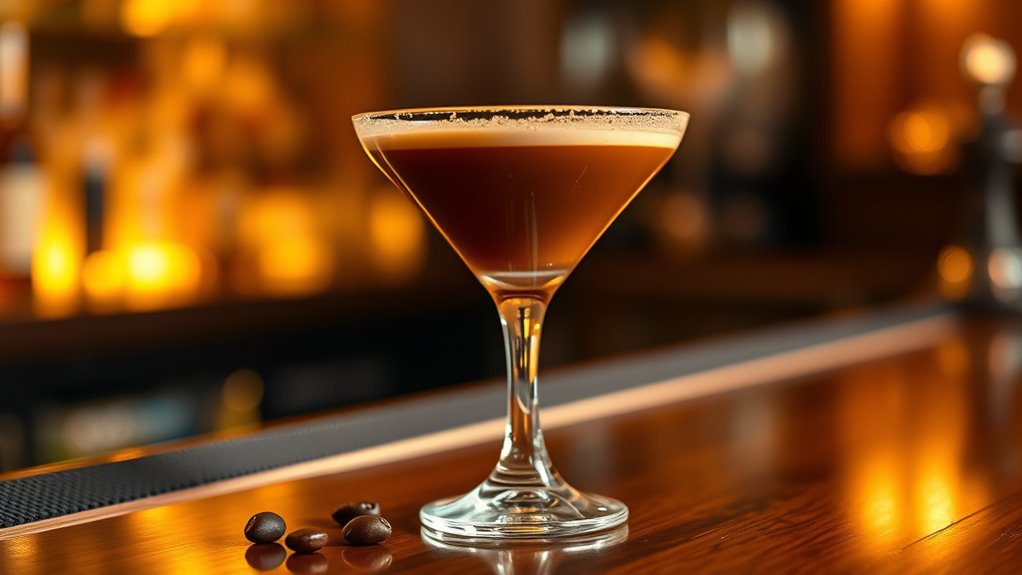
You’ll find that the main caffeine kick in a typical espresso martini comes from the single shot of espresso, which packs about 60-65 mg of caffeine. Of course, this can vary a bit depending on the type of coffee beans, how they’re roasted, and the brewing method used.
And while coffee liqueurs are part of the mix, they only add a tiny bit of caffeine, so overall, the total caffeine content stays pretty close to what you’d get from just a standard espresso.
The caffeine content in espresso can vary due to factors like bean type and extraction time, which influence the final caffeine levels in your drink.
Caffeine Sources Explained
When measuring the caffeine content in an espresso martini, you’ll find it mainly comes from the espresso shot and coffee liqueur. The espresso shot typically delivers about 63 mg of caffeine, serving as the primary caffeine source.
Coffee liqueur contributes additional caffeine, though in smaller amounts.
The total caffeine varies depending on the espresso’s strength and the coffee liqueur’s concentration. Pre-made or canned versions differ widely in caffeine content based on their formulation. So, it really depends on what exactly goes into your drink.
Key caffeine sources to take into account:
- Espresso shot: ~63 mg caffeine per standard shot
- Coffee liqueur: variable caffeine content
- Cold brew coffee (occasionally used)
- Volume and concentration of ingredients
- Manufacturer variations in pre-made products
Understanding these factors helps you anticipate caffeine intake accurately. It’s a handy way to know what you’re getting before you sip. The extraction time of the espresso shot can influence its strength and thus the caffeine content in your espresso martini.
Typical Caffeine Amount
The caffeine content in an espresso martini primarily comes from the espresso shot, which usually provides about 60 to 65 mg of caffeine per serving. That’s roughly half the caffeine you’d find in an 8-ounce brewed coffee or a single espresso shot.
Coffee liqueurs like Kahlúa add only a small amount of caffeine, usually just a few milligrams. So, their contribution is pretty negligible compared to the espresso.
When you order a classic espresso martini, you can expect around 60 mg of caffeine if the ingredients are standard.
This number helps you keep track of your caffeine intake pretty accurately. But really, if you focus just on the typical recipe, the espresso is what dominates the caffeine content.
Knowing this makes it easier to understand how much of a stimulant effect the cocktail will have. The caffeine amount can vary depending on factors like the coffee bean type, roast, and extraction process, which influence the caffeine content in espresso.
Variations Affecting Caffeine
Although a standard espresso martini typically contains about 60-65 mg of caffeine from a single espresso shot, variations in ingredients and preparation methods substantially affect this amount. When you order or prepare an espresso martini, the caffeine content can shift based on your choices.
Consider these factors:
Using cold brew or coffee liqueurs may increase or decrease caffeine levels depending on their strength. Substituting decaffeinated espresso or caffeine-free liqueurs eliminates caffeine entirely. Increasing the volume or concentration of espresso can push caffeine content above 100 mg.
Different coffee extraction methods and bean varieties affect caffeine concentration. The cocktail’s final caffeine depends on the interplay between espresso strength and additional coffee-based ingredients.
You should analyze these variables to accurately estimate caffeine intake from your espresso martini. Additionally, the pressure and extraction used in brewing espresso play a critical role in determining the caffeine concentration in the shot used for the cocktail.
Which Espresso Martini Ingredients Contain Caffeine?
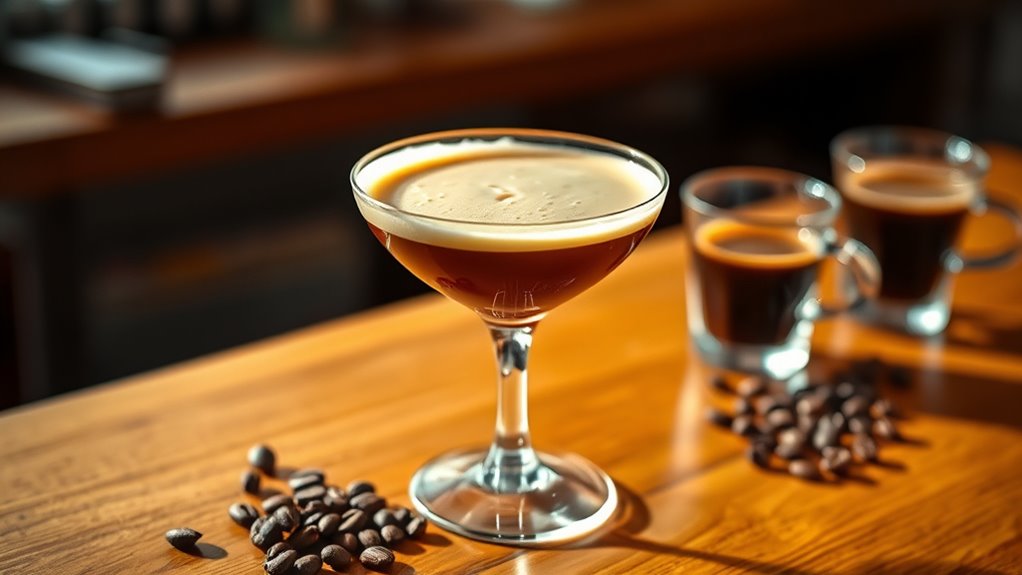
You’ll find caffeine in two main espresso martini ingredients: the espresso shot and the coffee liqueur. Espresso provides the bulk of caffeine, averaging around 63 mg per shot.
Coffee liqueurs, on the other hand, contribute only a small amount. Knowing this helps you see how changing the ingredients can affect the total caffeine in your cocktail. Using a dark roast coffee for the espresso shot can enhance both the flavor and caffeine extraction in your martini.
Caffeine Sources Explained
Since understanding caffeine content hinges on ingredient specifics, it’s important to identify which components in an espresso martini contribute caffeine.
The primary caffeine sources are the espresso shot and coffee liqueur. A standard espresso shot delivers about 63 mg of caffeine, making it the main contributor.
Coffee liqueur, such as Kahlúa, adds only a minor amount, typically a few milligrams. Variations with cold brew or caffeine-free espresso alter caffeine levels considerably.
So, the total caffeine depends on ingredient choice and quantity.
Key caffeine sources include:
- Espresso shot (~63 mg caffeine)
- Coffee liqueur (few mg caffeine)
- Cold brew (variable caffeine)
- Caffeine-free espresso (0 mg caffeine)
- Ingredient proportions affecting total caffeine amount
Understanding these lets you gauge caffeine intake accurately. The espresso yield also influences caffeine concentration by changing the volume and strength of the espresso shot used.
Espresso’s Caffeine Role
What ingredients in an espresso martini actually contain caffeine? The primary source is the espresso shot itself, delivering the bulk of caffeine. It’s typically around 60 to 65 mg in a standard serving, depending on the espresso’s strength and volume.
While coffee liqueurs like Kahlúa also contain caffeine, their contribution is comparatively minor. The exact caffeine content varies based on both the espresso and coffee liqueur quantities used.
If you opt for decaffeinated espresso or caffeine-free liqueurs, you can considerably reduce or even eliminate caffeine from your cocktail.
Understanding the caffeine content means looking at the specific espresso and liqueur components in your recipe. Their types and proportions directly influence the final caffeine level in the espresso martini you enjoy.
Proper water temperature during espresso extraction is key to achieving the desired strength and flavor, which in turn affects the caffeine concentration in your drink through extraction temperature control.
Coffee Liqueur Contribution
Several coffee liqueurs, such as Kahlúa, contain caffeine, though their contribution is considerably lower than that of the espresso shot in an espresso martini.
When evaluating caffeine sources within the cocktail, coffee liqueurs add only a minor fraction.
Key points to take into account include:
- Caffeine content varies by brand and formulation.
- Typical caffeine ranges from 2 to 10 mg per ounce.
- Some liqueurs use decaffeinated coffee, contributing negligible caffeine.
- The espresso shot delivers significantly more caffeine than coffee liqueur.
- Overall caffeine from liqueur is minimal compared to espresso.
So, while coffee liqueurs do contain caffeine, their role in the total caffeine profile of an espresso martini is limited.
You should primarily focus on the espresso shot for caffeine intake analysis.
The caffeine content in espresso depends on several factors including bean type and roast level, which significantly influence the strength of the cocktail.
How Does Espresso Martini Caffeine Compare to Coffee and Energy Drinks?
Although an espresso martini delivers about 60 mg of caffeine, that’s roughly the same as a single shot of espresso or 6 ounces of black coffee.
Its caffeine content is generally lower than what you find in most energy drinks, which usually range from 80 to 200 mg per serving.
The caffeine in an espresso martini mainly comes from the espresso shot and coffee liqueur, so it closely mirrors the caffeine profile of brewed coffee.
You’ll often see energy drinks with higher caffeine levels, and they usually come with added sugars and artificial ingredients.
That said, some canned espresso martinis use cold brew or concentrated coffee, which can bump up the caffeine beyond traditional recipes.
When you compare these drinks, espresso martinis offer a moderate caffeine boost with fewer additives.
Meanwhile, energy drinks pack a stronger caffeine punch but often include less desirable extras.
Because espresso has a higher caffeine concentration per ounce than brewed coffee, even small volumes can deliver a significant stimulant effect.
Are There Caffeine-Free Espresso Martini Options?
If you want to enjoy the flavor of an espresso martini without caffeine, you can easily swap the traditional ingredients for caffeine-free alternatives. By using decaffeinated or caffeine-free components, you keep the cocktail’s essence while cutting out the stimulant effects.
Key substitutions include caffeine-free espresso or coffee concentrate instead of regular espresso. You can also try caffeine-free coffee liqueurs, like Lyre’s Coffee Originale. Decaffeinated coffee works great as a base ingredient too.
Try caffeine-free espresso, coffee concentrate, or liqueurs like Lyre’s Coffee Originale for a smooth, stimulant-free twist.
The best part is you can keep the standard preparation method without any changes. Plus, you can customize the drink to suit your caffeine sensitivity or if you just want to avoid stimulants.
These options mean your espresso martini ends up with little to no caffeine. So, you get to enjoy that classic taste without compromising your dietary preferences or health concerns. The preparation stays simple and true to the traditional recipe.
How Much Alcohol Is Usually in an Espresso Martini?
You’ll usually find that an espresso martini contains about 2 ounces of vodka at 40% ABV, along with coffee liqueurs that are around 20% ABV.
So, when you put it all together, the total alcohol strength generally falls between 1.5 to 2.5 standard drinks.
Of course, this can change depending on the recipe and how much is poured.
Knowing these details helps make sense of why the cocktail’s strength can vary from one version to another.
Standard Alcohol Content
How much alcohol does an espresso martini usually contain? Typically, it holds about 2 ounces of vodka at roughly 40% ABV, plus around 0.5 ounces of coffee liqueur with 20 to 24% ABV. The total pure alcohol content ranges from approximately 0.6 to 1 ounce.
This quantity aligns with a standard drink’s alcohol level. So, it’s pretty comparable to a shot of whiskey or a small glass of wine. Just keep in mind that the exact amount can vary depending on the brand you use and how you measure your ingredients.
Here are the key points to take into account:
- Vodka volume: about 2 ounces (40% ABV)
- Coffee liqueur volume: about 0.5 ounces (20 to 24% ABV)
- Total pure alcohol: 0.6 to 1 ounce
- Comparable to a shot of whiskey or small wine glass
- Variability due to brand and exact measurements
Understanding this standard alcohol content helps you gauge the cocktail’s potency accurately. It’s always good to know what you’re drinking!
Typical Spirit Measurements
Although recipes can vary, a typical espresso martini contains about 2 ounces of vodka, which is the same as one standard shot. It also includes roughly 0.5 ounces of coffee liqueur, adding both flavor and extra alcohol.
This combination usually results in an overall alcohol volume between 1.5 and 2.5 ounces per serving. The vodka used generally has an alcohol by volume (ABV) of around 40%, and that mostly determines how strong the cocktail is.
Coffee liqueurs vary, but they usually have a lower ABV, which slightly changes the total alcohol concentration.
Ready-to-drink espresso martinis follow similar measurements, keeping alcohol volumes close to 1.5 to 2 ounces per serving.
Knowing these spirit measurements helps you get a good idea of the alcohol content, without needing to factor in dilution from ice or other ingredients.
Alcohol Strength Variations
Since espresso martinis blend vodka and coffee liqueur in varying proportions, their alcohol strength typically ranges between 20% and 30% ABV. You’ll find that the exact strength depends on the spirits’ type and quantity used.
Typically, a standard espresso martini includes about 2 ounces of vodka at 40% ABV, aligning its potency with a regular shot of liquor.
Consider these key points about alcohol strength variations:
- Vodka quantity fluctuates between 1.5 to 2.5 ounces.
- Coffee liqueur contributes minor alcohol content.
- Substituting vodka with rum alters strength.
- Most cocktails equate to 1–2 standard drinks.
- Alcohol concentration balances flavor and potency.
Is It Safe to Drink an Espresso Martini Given Its Caffeine and Alcohol Mix?
When you consume an espresso martini, you ingest roughly 60 mg of caffeine alongside about 2 ounces of vodka. This combination demands careful consideration because of how it affects your body. The caffeine can mask alcohol’s sedative impact, which might increase the risk of drinking too much and making poor decisions.
While moderate intake is generally safe, people who are sensitive to caffeine or have certain health conditions should be cautious.
| Factor | Effect/Consideration |
|---|---|
| Caffeine (60 mg) | Similar to half a cup of coffee; stimulant |
| Alcohol (2 oz vodka) | Impairs coordination and judgment |
| Combined intake | May mask intoxication signs, raising safety risks |
Canned Espresso Martinis: Caffeine and Alcohol Content
If you’re choosing a canned espresso martini, you’ll find that caffeine content varies widely, typically ranging from 30 mg to over 150 mg per can. This variation depends largely on the brewing method and brand-specific formulations.
Typically, these drinks contain the caffeine equivalent of about 6 ounces of black coffee or 1.25 ounces of espresso.
Despite the caffeine, their alcohol content remains consistent with traditional espresso martinis, usually around 30-40% ABV.
When evaluating a canned espresso martini, consider these factors:
- Caffeine source: cold brew, espresso concentrate, or brewed coffee
- Total caffeine per can (30-150+ mg)
- Alcohol by volume (30-40% ABV)
- Intended balance between caffeine and alcohol
- Brand-specific formulation and serving size
This way, you’ll understand both stimulant and intoxicant levels precisely.
How Does Caffeine Affect Your Perception of Intoxication?
Although caffeine stimulates alertness, it can distort your perception of intoxication by masking how impaired you truly are. When you consume caffeine alongside alcohol, the stimulant effects temporarily suppress your subjective feelings of drunkenness. This makes you feel less impaired than your blood alcohol concentration indicates.
This altered perception can lead you to underestimate your level of cognitive and motor impairment. Caffeine doesn’t reduce alcohol’s physiological effects but interferes with your brain’s natural intoxication cues. Because of this, you mightn’t recognize when you’ve had too much.
As a result, you may engage in riskier behaviors due to this false sense of sobriety. Research shows that while caffeine increases alertness, it doesn’t lessen alcohol-induced impairment.
This combo raises the chances of accidents and poor judgment when you mix the two substances.
How to Enjoy Espresso Martinis Without Overdoing Caffeine or Alcohol
Understanding how caffeine can mask intoxication highlights why it’s important to manage both caffeine and alcohol intake in espresso martinis. To enjoy these cocktails responsibly, you want to balance flavor with how they affect your body.
Caffeine can mask intoxication, so balancing both caffeine and alcohol in espresso martinis is key for responsible enjoyment.
Think about using decaffeinated espresso or coffee liqueurs to cut down on caffeine without losing that rich taste. Also, try limiting your serving size to half or even smaller portions—this helps keep both caffeine and alcohol in check.
You might want to choose lower-alcohol versions or dilute your drink with cold brew to reduce the alcohol concentration. It’s a good idea to sip water or other non-caffeinated drinks alongside your cocktail to stay hydrated and soften the stimulant effects.
Keep an eye on how sensitive you’re to caffeine, and try not to have espresso martinis too late in the day so you don’t mess with your sleep.
Putting these tips into practice lets you enjoy espresso martinis without going overboard on caffeine or alcohol.
Frequently Asked Questions
Can Pregnant Women Safely Consume Espresso Martinis?
You shouldn’t consume espresso martinis during pregnancy because of alcohol’s risks to the baby and the limits on caffeine intake.
Even moderate caffeine doesn’t make up for the harm alcohol can cause, so it’s safest to avoid this combo altogether.
If you’re unsure, always check with your healthcare provider first. They can help guide you on what’s safe during pregnancy.
Do Espresso Martinis Affect Anxiety Levels?
Yes, espresso martinis can increase your anxiety levels because they have caffeine and alcohol mixed together. This combo might make you feel more nervous and restless than usual.
If you’re sensitive to caffeine or drink a lot of them, the effects can be even stronger. So, it’s good to be mindful about how many you have. Just a heads up—these drinks might not be the best choice if you’re already feeling anxious.
What Is the Best Time of Day to Drink an Espresso Martini?
You should drink an espresso martini in the late evening or night to optimize caffeine’s energizing effects while minimizing sleep disruption. This timing balances social enhancement and individual caffeine tolerance effectively.
It’s a great way to enjoy a boost without keeping you up too late. Just keep in mind how sensitive you are to caffeine. That way, you can have fun and still get a good night’s rest.
Are There Specific Espresso Beans Recommended for Espresso Martinis?
You should use high-quality, freshly roasted Arabica beans, preferably light to medium roast for higher caffeine. Single-origin beans with balanced acidity and body, finely ground, create a strong, flavorful espresso ideal for your martini.
It really makes a difference in the taste. Freshness is key here, so try to use beans roasted recently. Trust me, your espresso martini will thank you!
How Should Espresso Martinis Be Stored to Maintain Flavor?
You should store espresso martinis in airtight containers in the refrigerator. Try to consume them within 24-48 hours to enjoy the best flavor. Keeping them chilled consistently helps preserve that lovely foam on top.
Avoid freezing your espresso martinis because it can cause the ingredients to separate and mess with the taste. Also, keep them away from strong odors in the fridge, so they don’t pick up unwanted flavors. This way, your drink stays fresh and delicious!
Conclusion
In essence, your espresso martini offers a delicate dance between caffeine’s stimulating embrace and alcohol’s mellowing effect. While it won’t jolt you awake like a double shot, it does carry enough pep to influence your alertness and intoxication perception.
If you want to savor this cocktail without tipping the scales, consider mindful moderation or caffeine-free alternatives. That way, you’ll enjoy the buzz without waking the wired side of your senses.