You get a strong, crema-topped coffee from Nespresso, but it’s not true espresso by strict standards. Nespresso machines don’t maintain the consistent 9 bars of pressure, precise grind, and tamping needed for authentic extraction.
Instead, they rely on capsules and spinning or infusion methods that produce foam resembling crema but lack its depth and aroma. You’ll enjoy convenience and speed, though the flavor won’t match traditional espresso’s complexity.
Understanding these differences can help you decide what suits your taste and lifestyle best.
Does Nespresso Make True Espresso?
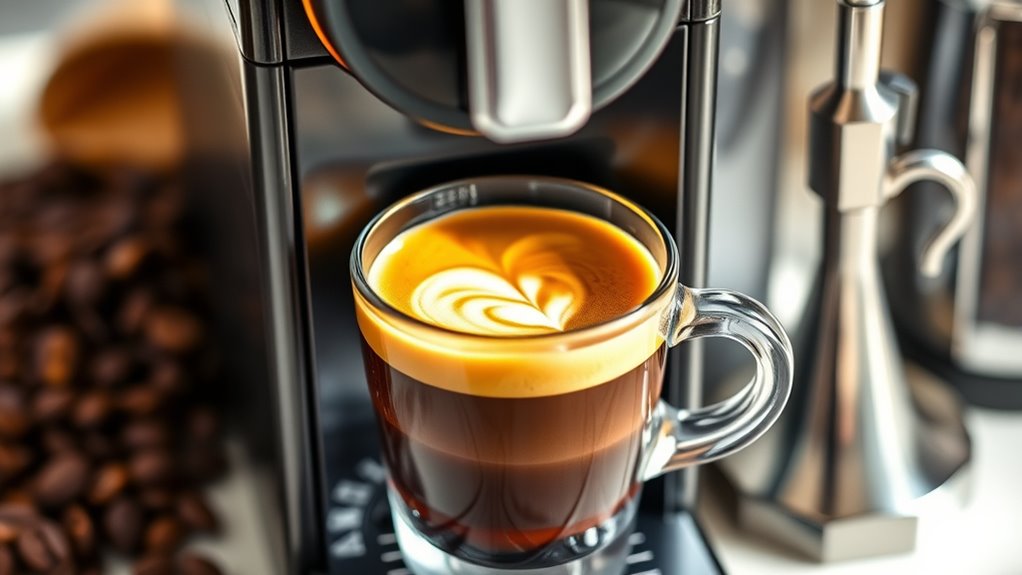
How closely does Nespresso replicate true espresso? You should know that most Nespresso machines, especially Vertuo models, don’t produce authentic espresso because they lack the high-pressure extraction, around 9 bars, that’s essential for true espresso.
While some capsules create a crema resembling espresso, it’s often machine-generated rather than from pressure-based emulsification. True espresso demands precise variables like grind size, tamping, and consistent hot water pressure, which Nespresso systems can’t fully replicate.
Some crema in Nespresso is machine-made, lacking true espresso’s essential pressure and precise brewing variables.
Although some original line machines approach espresso quality, they still fall short of official standards due to different extraction methods. So, while Nespresso delivers a strong, concentrated coffee with crema, it doesn’t meet strict espresso criteria.
That means you’re getting a close but not genuine espresso experience. This difference is largely due to Nespresso’s brewing method, which uses capsule puncturing and spinning techniques instead of traditional high-pressure extraction.
What Is Espresso And How Is It Made?
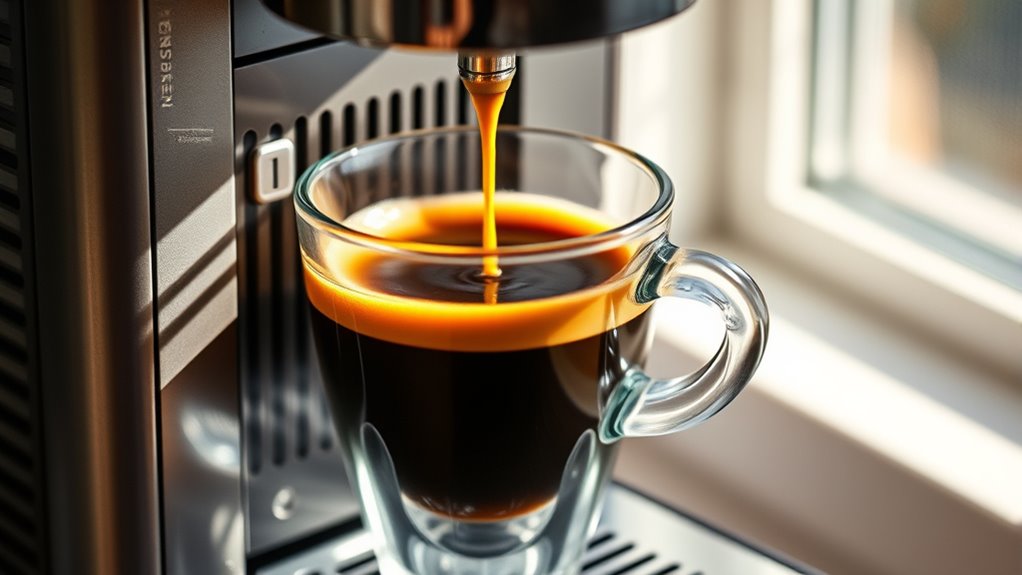
What sets espresso apart from other coffee beverages is its unique brewing method that forces hot water through finely-ground coffee under high pressure.
You create espresso by tamping the coffee grounds firmly into a portafilter and extracting the coffee at around 9 bars of pressure. This process produces a concentrated shot distinguished by its rich crema, the golden foam that forms on top.
To make authentic espresso, you need to control key variables precisely: grind size, water temperature, pressure, and extraction time.
Specialized espresso machines maintain consistent high pressure and ideal brewing conditions, ensuring quality and flavor.
Each factor plays a critical role in producing the bold, complex taste and texture that true espresso delivers.
The quality of espresso also significantly influences the flavor profile and balance in cocktails like the Espresso Martini.
How Nespresso Machines Brew Coffee Differently From Espresso Machines
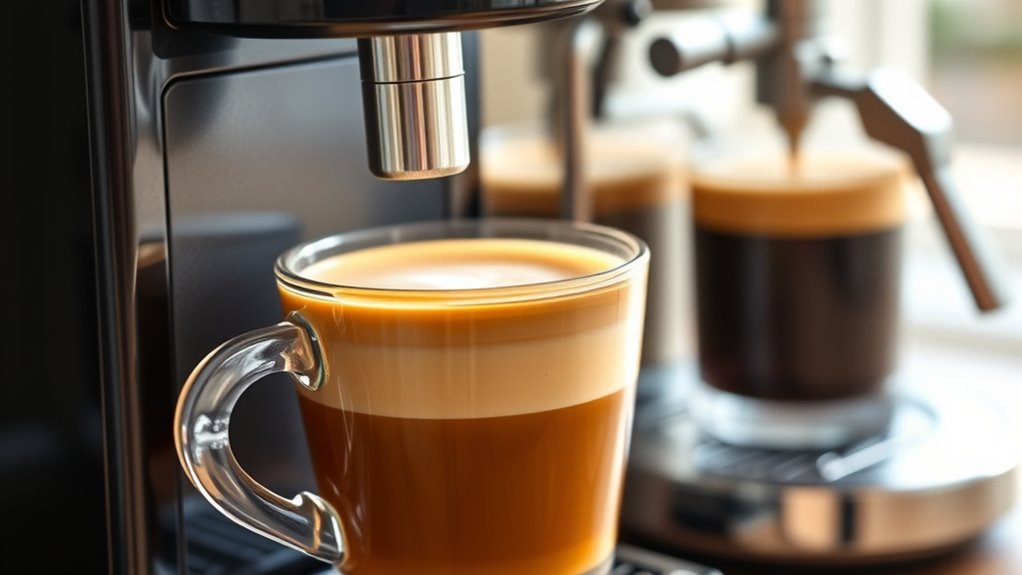
While traditional espresso machines rely on forcing hot water through tightly packed coffee grounds at around 9 bars of pressure, Nespresso machines take a different approach to brewing. You’ll notice some key differences in how they work.
First, Nespresso uses high pressure but combines it with spinning or infusion methods rather than full-immersion extraction. Also, capsules replace loose coffee grounds, which limits your control over grind size and tamping.
The brewing creates a crema-like foam, but it doesn’t have the complete extraction typical of espresso.
And even though Nespresso machines operate at similar or slightly higher pressures, their technique doesn’t replicate traditional espresso’s precise extraction mechanics.
Because Nespresso capsules contain pre-ground coffee, users cannot adjust the grind size, which is crucial for optimal espresso extraction.
How Nespresso’s Pressure Affects Espresso Quality
You might’ve noticed that Nespresso machines run at higher nominal pressures compared to traditional espresso machines. But here’s the thing — that doesn’t always mean you get a consistent extraction force.
And that inconsistency can really affect the crema quality.
See, true high-pressure emulsification is key to getting that rich texture and flavor in your crema. Without it, the flavor extraction in Nespresso shots often doesn’t quite reach the depth and complexity you’d expect from a genuine espresso.
Maintaining steady machine pressure is essential for balanced extraction and a full-bodied shot.
Pressure Differences Explained
Although Nespresso machines, particularly the Vertuo line, claim to operate at pressures comparable to traditional espresso machines, the actual pressure they exert can vary markedly. Traditional espresso requires a consistent 9 bars to extract rich oils and develop authentic crema.
Nespresso’s pressure range, from 7 to 19 bars, lacks consistency and precise control over essential variables like grind size and tamping. This affects extraction quality considerably.
Consider these points:
- Traditional espresso maintains steady 9-bar pressure for ideal flavor extraction.
- Nespresso pressure often fluctuates, causing inconsistent results.
- High pressure alone doesn’t guarantee quality without proper grind and tamping.
- Some capsules reach 15 bars but miss key espresso elements due to lack of control.
Understanding these differences clarifies why Nespresso’s pressure isn’t always enough for true espresso. Unlike traditional espresso machines, Nespresso machines do not allow users to adjust important factors such as grind size or tamping pressure, which are critical for optimal extraction and flavor.
Impact On Crema Quality
The way Nespresso machines generate crema considerably differs from traditional espresso machines, despite their ability to reach high pressure levels. Authentic espresso crema forms through high-pressure extraction, around 9 bars, that emulsifies oils and carbon dioxide in coffee grounds.
Nespresso, especially in Vertuo models, relies more on spinning and infusion.
Although these machines can hit pressures near 19 bars, this pressure doesn’t produce the same emulsification effect. Instead, the crema you see is a foam created by machine design and centrifugal force.
This makes it less velvety and rich than traditional espresso crema. Additionally, the caffeine content in Nespresso espresso shots can vary but generally aligns with the typical range for espresso, contributing to its caffeine concentration per shot.
Flavor Extraction Limitations
Even though Nespresso machines operate at pressures around 19 bars, this doesn’t guarantee authentic espresso flavor extraction. The high pressure alone isn’t enough because Nespresso uses infusion or spinning methods, not true pressure-based extraction.
This limits the emulsification of oils and CO₂, which are key for rich flavor and crema.
When you use a Nespresso, consider these flavor extraction limitations:
- Lack of full emulsification reduces complexity and depth.
- Brewing variables like tamping, grind size, and extraction time are fixed, restricting flavor development.
- Pressure consistency doesn’t equate to authentic espresso extraction.
- The resulting coffee lacks the richness and body found in traditional espresso.
Understanding these factors helps you see why Nespresso’s pressure doesn’t fully replicate espresso quality. It’s not just about pressure; it’s about how that pressure is applied and controlled. Additionally, the grind size and extraction play a critical role in achieving the optimal espresso flavor that Nespresso machines cannot fully adjust.
Comparing The Taste: Nespresso Vs. Traditional Espresso
When you compare Nespresso to traditional espresso, you’ll notice some key differences in flavor and crema. Nespresso tends to have a milder taste, and the crema it produces is more artificial.
On the other hand, traditional espresso offers a richer, more complex flavor with crema that forms naturally.
Knowing these differences makes it easier to see why many experts prefer traditional espresso when it comes to taste quality. It’s all about that deeper flavor and authentic crema that really sets it apart.
Additionally, traditional espresso typically contains around 63 mg of caffeine per shot, contributing to its stronger and more potent profile compared to many coffee alternatives, including Nespresso. This caffeine content in espresso plays a significant role in the overall experience.
Flavor Profile Differences
Although Nespresso machines offer convenience, you’ll notice a clear difference in flavor compared to traditional espresso. Traditional espresso delivers a rich, intense taste with complex notes shaped by precise grind size, pressure, and extraction time.
Nespresso, however, produces a milder, smoother flavor lacking that depth.
When comparing the two, consider these key flavor profile differences:
- Traditional espresso extracts more oils and solubles, resulting in a bolder, concentrated taste.
- Nespresso capsules yield a more uniform but less nuanced flavor.
- The aroma of true espresso is more complex and layered.
- Traditional espresso leaves a longer, more satisfying aftertaste.
Understanding these points helps you appreciate why Nespresso and traditional espresso offer distinctly different flavor experiences. It’s pretty interesting how the method changes the taste so much, right? Additionally, factors like grind size and extraction variables significantly influence the espresso’s final flavor complexity and body.
Crema Authenticity Comparison
Beyond flavor, the texture and quality of crema play a big role in what makes an espresso experience authentic. Genuine espresso crema forms through high-pressure extraction, which emulsifies natural oils and CO₂ into a delicate, velvety foam.
Nespresso, on the other hand, uses spinning and infusion techniques instead of true pressure extraction. This creates a frothy layer that looks like crema but doesn’t have the same authentic makeup. That artificial foam doesn’t contain the emulsified oils or the aromatic depth you find in traditional espresso crema.
It’s also important to remember that just having crema doesn’t automatically mean the espresso is authentic. It really comes down to specific extraction details like pressure, grind size, and tamping. Using an espresso machine with high pressure around 9 bars is essential for creating the rich crema characteristic of traditional espresso.
Perceived Taste Quality
Since taste is the ultimate measure for many espresso drinkers, comparing Nespresso to traditional espresso reveals clear distinctions in flavor quality. When you taste Nespresso, you’ll notice it tends to be milder and less intense, lacking the bold complexity of traditional espresso.
This difference arises because traditional espresso uses high-pressure extraction, creating nuanced aromas and a fuller body.
Nespresso’s flavor is more uniform and convenient but less rich and deep. The crema on traditional espresso is velvety and authentic, enhancing the flavor, unlike Nespresso’s lighter crema.
Taste tests consistently favor traditional espresso for its robust and complex profile.
If you prioritize depth and richness, traditional espresso delivers a superior sensory experience compared to Nespresso’s milder brew. It simply offers more of that bold, layered taste many espresso lovers crave.
Nespresso Vs. Espresso Machines: Customization Options
When you compare Nespresso machines to traditional espresso machines, you’ll notice a big difference in customization options. Nespresso mainly limits you to shot volume and capsule choice. It doesn’t give you control over grind size, tamping, water pressure, temperature, or extraction time.
Traditional machines, on the other hand, let you fine-tune all these variables. This means you can really tailor the flavor profiles to your liking.
| Customization Aspect | Nespresso Machines |
|---|---|
| Grind Size | Fixed (pre-ground capsules) |
| Brewing Parameters | Limited (shot length on some models) |
| Control Over Extraction | None |
With traditional espresso machines, you get to control every variable, offering unmatched flexibility. Nespresso focuses more on convenience than on customization.
Cost Differences Between Nespresso And Espresso Setups
Although Nespresso machines come with a lower upfront cost, typically ranging from £50 to £200, you should expect to pay markedly more over time due to the price of pods, which can vary from 15p to £1 per cup.
In contrast, traditional espresso setups require a higher initial investment but offer lower ongoing costs. Consider the following:
- High-end espresso machines and accessories can cost upwards of £1,000.
- Espresso beans cost about £5 to £15 per kilogram, cheaper per cup than pods.
- Reusable Nespresso capsules reduce pod expenses but still generally exceed bean costs.
- Frequent use of Nespresso pods leads to cumulative costs surpassing traditional setups.
Ultimately, the initial affordability of Nespresso contrasts sharply with its higher long-term expense compared to espresso machines. It’s something to keep in mind when choosing what’s best for you.
When Convenience Beats Authentic Espresso Flavor
You’ll find that Nespresso machines put convenience first instead of traditional espresso craftsmanship. They deliver a coffee experience in under a minute with very little effort.
Now, the flavor mightn’t quite match that of authentic espresso, but the quick and consistent results usually do the trick for your daily caffeine fix.
Convenience Over Craftsmanship
While Nespresso machines don’t replicate the manual craftsmanship of traditional espresso, they deliver a quick, visually satisfying coffee experience that many find appealing. You won’t need to grind beans, tamp grounds, or control extraction time. Instead, Nespresso leverages automated processes to provide consistency and speed.
Its capsule system creates a crema-like foam through infusion, not high-pressure extraction, so the flavor profile differs from authentic espresso. When you prioritize convenience over artisanal technique, Nespresso offers distinct benefits:
- Eliminates complex preparation steps
- Guarantees consistent taste and crema appearance
- Delivers coffee rapidly with minimal effort
- Satisfies daily caffeine needs efficiently
For many, this convenience trumps the intricate flavor nuances found in traditional espresso crafting. It’s all about getting your coffee fix without the fuss.
Quick Coffee Solutions
How quickly can you get a satisfying coffee without the fuss of traditional espresso-making? Nespresso machines deliver a consistent, foam-topped coffee in under a minute with a simple button press. They use capsules to streamline the process, eliminating the need for grinding, tamping, or skillful pressure control.
While the crema-like foam on Nespresso coffee resembles authentic espresso crema, it’s an illusion. True crema requires high-pressure extraction that these machines don’t provide.
If speed and ease are your priorities, Nespresso offers a convenient and affordable alternative to traditional espresso brewing.
It’s ideal for busy mornings or casual coffee drinkers who want a quick caffeine fix without complexity. However, you should recognize that this convenience comes at the expense of the full flavor and texture of genuine espresso.
Who Should Choose Nespresso Machines?
Although Nespresso machines don’t offer the same level of customization or authentic espresso quality as traditional machines, they’re an excellent choice for beginners who want quick, consistent coffee without having to master barista skills.
You should consider a Nespresso machine if you prioritize ease of use and reliable results over adjusting brewing variables. Or if you want a cost-effective daily coffee solution without investing in expensive equipment.
Maybe you have limited kitchen space and need a compact machine. Or you simply value speed and simplicity more than the traditional espresso-making process.
These machines fit well if you’re after convenience and consistency without needing barista expertise or the nuances of traditional espresso craftsmanship. They provide straightforward functionality, making them perfect for everyday coffee drinkers who prefer simplicity.
Is Nespresso A Good Starting Point For Espresso Lovers?
If you’re an espresso lover considering where to start, Nespresso machines offer an accessible entry point that balances convenience with consistent results. They deliver quick coffee with a crema-like foam, requiring minimal skill and making them ideal for beginners exploring espresso-style drinks at home.
However, Nespresso falls short of replicating the full flavor complexity and authentic pressure extraction of traditional espresso. You’ll find limited control over brewing variables, which true espresso enthusiasts often seek.
While Nespresso’s affordability and ease of use are attractive, it may restrict your appreciation of espresso’s craft and nuance. Ultimately, it’s a practical starting point but might discourage deeper pursuit if you aim to master genuine espresso-making techniques.
Frequently Asked Questions
How Long Do Nespresso Capsules Stay Fresh After Opening?
You should use Nespresso capsules within a few days after opening to enjoy the best flavor and aroma. Exposure to air and moisture quickly degrades freshness, so keep them sealed tightly and stored properly to maintain quality.
It’s really all about preserving that rich taste you love. So try not to leave them open for too long. Just a little care goes a long way in keeping your coffee tasting great!
Can Nespresso Machines Make Milk-Based Espresso Drinks?
Yes, you can craft creamy, comforting milk-based espresso drinks with Nespresso machines by pairing strong shots with properly steamed or frothed milk.
Using compatible frothers makes it even easier, ensuring consistent café-style creations right in your kitchen.
It’s a great way to enjoy your favorite coffeehouse drinks without stepping out.
Are Nespresso Capsules Recyclable or Environmentally Friendly?
Yes, Nespresso capsules are recyclable since they’re made from aluminum, which you can recycle repeatedly. You should use their global recycling program to return used capsules. This helps reduce waste and supports sustainable coffee consumption.
It’s pretty easy to get involved, and every little bit helps when it comes to protecting the environment. So, if you’re a coffee lover, recycling your capsules is definitely a smart move!
What Maintenance Is Required for a Nespresso Machine?
You should descale your Nespresso machine every 3-6 months to prevent mineral buildup. It’s a key step to keep your coffee tasting great and the machine working smoothly.
Also, make sure to clean the capsule container and drip tray regularly. Running hot water rinses now and then helps too.
Don’t forget to check the coffee outlet from time to time. These simple habits will keep your machine in top shape and your coffee delicious.
Do Nespresso Machines Work With Third-Party Coffee Capsules?
Yes, your Nespresso machine can work with some third-party capsules, but compatibility depends on your specific model.
Be cautious though. Using non-official capsules might affect performance and flavor. It could also void your machine’s warranty.
Conclusion
When you sip a Nespresso, you’re not just tasting coffee. You’re experiencing a quick snapshot of espresso’s rich world. While it can’t fully replicate the crafted depth of traditional espresso, Nespresso offers a convenient and consistent alternative that fits your fast-paced life.
Think of it as a bridge. It won’t replace the artistry of a barista, but it’s a solid starting point. It brings espresso’s essence to your cup with ease and speed.