You can use ground coffee in an espresso machine, but it needs to be finely and uniformly ground like traditional espresso grounds. Regular ground coffee is usually too coarse, causing quick water flow, under-extraction, and weak, sour shots with little crema.
To get rich, balanced espresso, your coffee should resemble powdered sugar in texture and be tamped evenly. Proper grind size and freshness are key for ideal flavor and machine performance.
Want to improve your espresso experience? Explore how grind adjustments and techniques can make a big difference.
What Exactly Is Ground Coffee Vs. Espresso Grind?
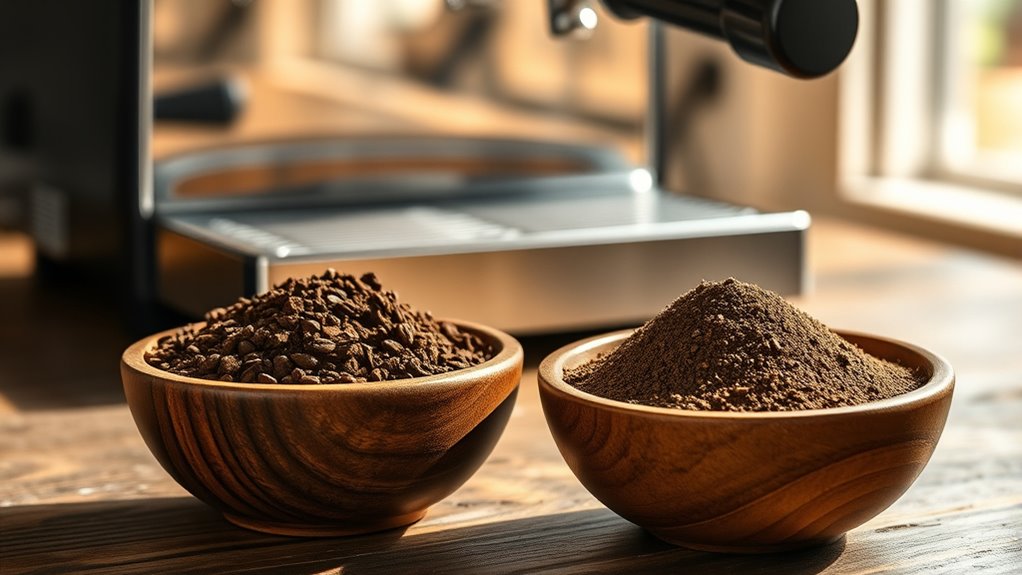
While ground coffee simply refers to any coffee beans broken down into smaller particles, espresso grind is a specific, finely powdered consistency designed for high-pressure extraction. You’ll notice ground coffee varies widely, from coarse chunks for French press to medium particles for drip brewing.
Espresso grind, however, is much finer, resembling powdered sugar, to guarantee water passes through evenly under pressure. This fine grind is essential for extracting rich flavors and that signature crema.
If the grind is too coarse, your espresso will taste weak and sour. Conversely, grounds that are too fine risk clogging your machine and disrupting flow. Understanding this distinction helps you appreciate why espresso demands precision in grind size to reveal its full flavor potential.
Achieving the ideal grind size, typically between 200-400 microns, is crucial for balanced extraction and optimal flavor.
Can You Use Regular Ground Coffee in an Espresso Machine?
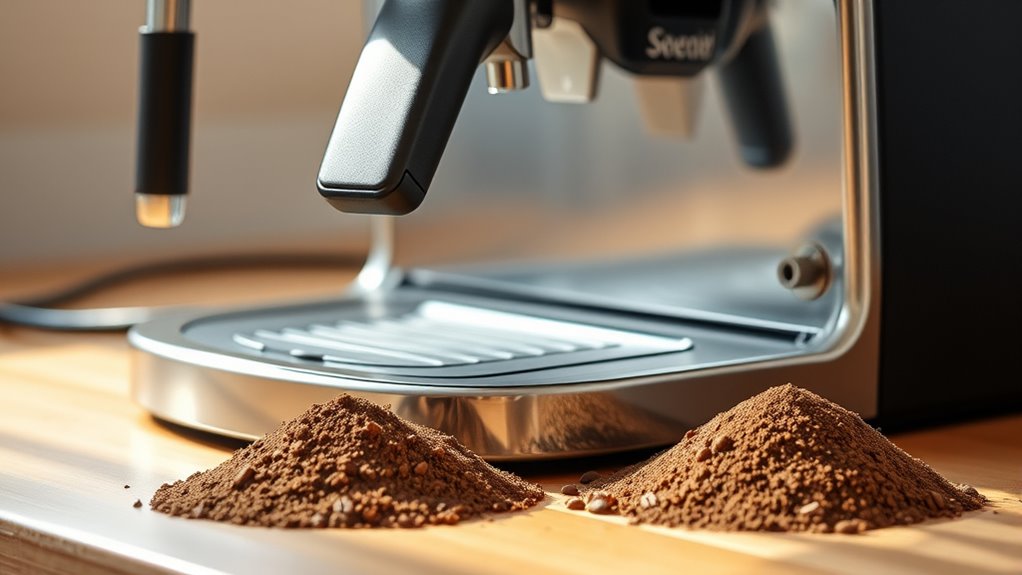
You can definitely use regular ground coffee in your espresso machine, but the grind size really makes a big difference in how your shot turns out.
If you use coarser grounds like those from drip coffee, the water tends to flow through too quickly, which can leave you with a weak, under-extracted flavor.
So, if you want that rich, balanced taste we all love in espresso, it’s best to go for a fine, consistent grind.
This helps create the right resistance during extraction, giving you a much better shot.
For a lighter, smoother profile with bright citrus and floral notes, consider using Blonde Espresso beans.
Grind Size Importance
Because espresso machines demand a very fine and consistent grind, using regular ground coffee designed for drip brewing often leads to disappointing results. The grind size directly affects extraction, pressure, and shot quality. Regular grounds are too coarse, causing water to flow too quickly and produce sour, under-extracted espresso.
Here’s why grind size matters:
- Fine grounds create resistance, ensuring proper extraction.
- Consistency in grind size prevents channeling and uneven flow.
- A fine grind enables crema formation, essential for espresso’s texture.
- Coarser grounds increase clog risk and weaken flavor intensity.
To get the best espresso, you need a fine, uniform grind, usually from a burr grinder, tailored specifically for espresso machines, not regular drip coffee grounds.
It really makes all the difference when you want that perfect shot. Regular recalibration of your grinder when switching beans or roast levels helps maintain the precise grind size consistency needed for optimal espresso extraction.
Flavor Impact Differences
How does using regular ground coffee affect the flavor when brewed in an espresso machine?
Since regular grounds are coarser and designed for drip brewing, they lead to under-extraction in your espresso machine. This results in a watery shot with less crema and a sour, unbalanced taste.
You’ll notice the espresso lacks the rich, full-bodied flavor and complexity you expect. The crema, that signature golden layer, will be thin or missing altogether, diminishing both aroma and visual appeal.
Because espresso requires a very fine grind to extract oils and flavors properly, using regular grounds markedly reduces the intensity and depth of your shot.
Ultimately, the flavor impact is clear: your espresso won’t deliver the richness and robustness that fine espresso grounds provide.
This happens because grind size acts as a gatekeeper controlling water flow, making it crucial to use the appropriate grind for consistent extraction and flavor.
Extraction Challenges
Why does using regular ground coffee in an espresso machine pose extraction challenges? Regular pre-ground coffee is typically too coarse for espresso. This causes water to rush through and leads to under-extraction. The result? Weak, sour, or flat espresso shots that disappoint your palate.
Coarser grounds also prevent proper pressure buildup. That ruins the crema and consistency.
Here’s what you’ll face:
- Water passes too quickly, extracting insufficient flavor.
- Inconsistent pressure disrupts the espresso’s texture.
- Poor crema formation affects aroma and taste.
- Risk of machine clogging or watery espresso increases.
To overcome this, you’ll need to re-grind coffee finer and adjust tamping pressure. This helps achieve a balanced extraction. Maintaining a fine grind size is essential to ensure consistent water flow and proper extraction times for quality espresso.
How Ground Coffee Grind Size Affects Espresso Shots
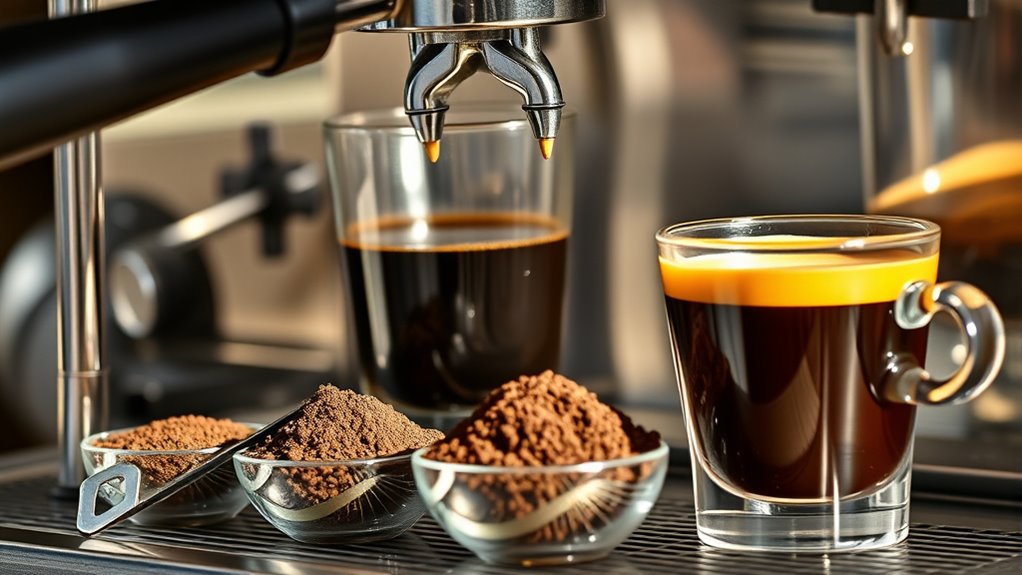
You’ll want a very fine grind—kind of like powdered sugar—to get the right resistance and extraction in your espresso machine.
If the grind’s too coarse, your shot will end up tasting weak and sour.
On the other hand, if it’s too fine, you might get bitter flavors and even clog your machine.
Maintaining consistent tamping pressure around 30 pounds helps ensure balanced extraction and flavor.
Grind Size Importance
Because espresso extraction relies on high pressure, the grind size plays an important role in determining the quality of your shot. Getting it right means controlling water flow and extraction consistency.
If your grind is too coarse, water rushes through, leaving you with sour, weak espresso.
Too fine, and you risk excessive resistance, but it’s crucial for that rich crema and full-bodied texture. Uneven grinds cause channeling, letting water bypass some grounds and ruining your shot.
To nail your espresso grind size:
- Aim for a fine, powdered sugar texture.
- Use a burr grinder for uniformity.
- Avoid coarse grounds to prevent under-extraction.
- Ensure consistency to stop channeling and uneven extraction.
Mastering grind size is key to perfect espresso every time. It really makes all the difference! Understanding how grind size impacts extraction stages can help you dial in your shot more precisely.
Extraction And Flavor
When you adjust your grind size, you directly control how water interacts with the coffee grounds during extraction. This shapes the flavor profile of your espresso shot.
A very fine grind, similar to powdered sugar, creates the right resistance and enables ideal extraction under high pressure.
If your grind’s too coarse, water flows too quickly, causing under-extraction and a weak, sour taste.
On the other hand, an overly fine grind can lead to over-extraction, resulting in bitterness and possibly clogging your machine’s filter.
So, keeping your grind size uniform is key.
This helps avoid channeling, which is when water bypasses some grounds and leads to uneven extraction and off-flavors.
Dialing in the grind properly lets you pull a balanced, flavorful shot in about 20 to 30 seconds.
That timing is just right to enjoy rich, nuanced espresso.
Maintaining approximately 9 bars of pressure is essential for proper extraction and crema development.
Why Pre-Ground Coffee Doesn’t Work Well for Espresso
Although pre-ground coffee offers convenience, it falls short for espresso due to its coarser grind size and inconsistent particle distribution. When you use pre-ground coffee, you risk under-extraction, weak shots, and uneven flavors because espresso demands a very fine, uniform grind.
Plus, pre-ground coffee often loses freshness and doesn’t create the resistance needed for proper pressure during brewing.
Here’s why pre-ground coffee doesn’t work well for espresso:
- Coarser grind leads to under-extraction and watery espresso.
- Inconsistent particle sizes cause uneven extraction and poor crema.
- Stale pre-ground coffee compromises flavor and aroma.
- Lack of fine grind prevents ideal pressure and extraction.
To get a rich, balanced espresso, freshly ground coffee tailored for espresso is essential. Trust me, it makes all the difference. The extraction process in espresso brewing concentrates bold flavors and requires precise grind size for optimal results.
How to Adjust Regular Coffee Grounds for Better Espresso
If you want to get better espresso from regular coffee grounds, start by adjusting the grind size to something fine and consistent. It helps to sift out any larger particles, too.
Then, when you’re tamping, apply firm and even pressure—about 30 pounds is a good rule of thumb—but feel free to tweak it depending on how coarse or fine your grind is.
Lastly, keep an eye on your brewing time; controlling it carefully will help balance the extraction and bring out those rich, full flavors.
Give it a try and see how your espresso improves!
Remember that extraction time plays a key role in caffeine levels and flavor intensity, so precise timing is essential for the best results.
Grind Size Adjustment
Since grind size directly affects extraction, adjusting regular coffee grounds to a finer, more consistent texture is essential for better espresso. You can’t just use any grind; it needs to be as fine as powdered sugar to get that rich, balanced shot.
Here’s how to improve your grind size:
- Regrind coarser coffee multiple times until it reaches a fine, uniform texture.
- Use a burr grinder for precise control and consistent particle size.
- Sift out larger particles to avoid uneven extraction.
- Aim for a smooth, powdery grind that mimics traditional espresso grounds.
These steps sharpen extraction, boost flavor, and help your espresso machine perform at its best even with regular coffee grounds.
Give it a try, and you’ll notice the difference!
Tamping Pressure Tips
When you’re working with regular coffee grounds in your espresso machine, adjusting your tamping pressure becomes essential for achieving a balanced extraction. Apply around 30 pounds of pressure to create an even, resistance-filled puck. This helps water flow uniformly through the coffee.
If your grounds are coarser, increase tamp pressure slightly to improve extraction. But avoid pressing too hard as it can cause over-extraction and bitterness. Consistency is key. Use a firm, level tamp to prevent channeling, where water bypasses the grounds and weakens flavor.
Pay attention to how your machine responds. Tweaking tamp pressure based on grind fineness can enhance shot quality and produce a richer crema. Mastering this technique will elevate your espresso, even when using regular grounds.
Brewing Time Control
Although using regular coffee grounds presents challenges, controlling your brewing time can considerably improve your espresso quality. To get the best shot, you need to fine-tune a few key factors.
First, adjust your grind size to be as fine as powdered sugar for better extraction and resistance. You can also regrind coarser grounds multiple times to ensure an even particle size, which helps stabilize brewing time.
Tamp consistently with about 30 pounds of pressure to regulate water flow and extraction speed.
Experiment with grind size and tamp pressure to hit that ideal 20-30 second brew window. Using a pressurized portafilter or lowering your dose can also help balance irregular grinds and maintain proper brewing time.
This precise control transforms regular grounds into a satisfying espresso experience.
Tips for Tamping With Regular Coffee Grounds
Even if you’re using regular coffee grounds instead of espresso-specific ones, tamping with consistent pressure is essential to getting a good shot. Aim for about 30 pounds of firm, even pressure to compress the grounds evenly in the portafilter.
Before you tamp, distribute the coffee evenly in the basket. This prevents channeling and uneven extraction.
Make sure your grounds are finely ground, resembling powdered sugar, to create proper resistance. When you tamp, focus on creating a smooth, flat surface to ensure water flows properly through the puck.
Avoid over-tamping; pressing too hard can clog the basket and restrict water flow, resulting in a weak, under-extracted espresso.
Precision in tamping sets the foundation for a balanced shot, even with regular grounds. So take your time and tamp just right to get the best flavor possible.
What Happens Inside Your Espresso Machine With Different Coffee Grounds
If your coffee grounds aren’t the right size or consistency, your espresso machine won’t work as intended. The particle size directly affects pressure, flow, and flavor extraction inside your machine. Here’s what happens with different grounds:
Fine espresso grounds create resistance, allowing pressure to build and extract rich oils and crema. Coarser or uneven grounds cause channeling, where water rushes through weak spots, leading to uneven extraction.
Fine grounds build pressure for rich crema, while coarse grounds cause uneven water flow and extraction.
Too fine grounds can clog the portafilter, increasing pressure and risking leaks or damage. Improperly ground coffee lets water flow too fast, resulting in weak, under-extracted espresso.
Understanding this helps you choose the right grind for a perfect shot every time, ensuring your espresso machine performs at its best.
Common Problems Using Regular Coffee in Espresso Machines
Choosing the right grind size directly impacts how your espresso machine extracts flavor, but using regular coffee grounds designed for drip brewing often causes issues.
Those coarser grounds let water flow too fast, leading to under-extracted, weak, or sour shots with little to no crema. You might also face inconsistent extraction because drip coffee grounds vary in size, clogging the portafilter or causing uneven pressure.
Over time, this can build up residue, forcing you to clean your machine more frequently. Plus, regular grounds tend to produce a flat or overly acidic flavor profile when subjected to espresso’s high pressure.
These common problems highlight why using drip coffee grounds in your espresso machine can hinder performance and taste. It’s definitely better to stick with the right grind for espresso to get the best results.
Benefits of Using Espresso-Specific Beans and Grounds
Because espresso machines operate under high pressure, using espresso-specific beans and grounds can dramatically improve your shot’s quality. These beans are roasted darker and ground finer to handle extraction, yielding richer crema and concentrated flavors.
When you opt for espresso-specific grounds, you get a perfectly balanced flavor profile with ideal oils that enhance every sip. You also get the perfect resistance and flow rate, which helps prevent channeling or under-extraction.
Plus, you enjoy consistent freshness that locks in the velvety texture espresso lovers crave. And don’t forget the complex aromas and flavor depth, thanks to specialized roasting profiles.
It all adds up to a much better espresso experience.
Choosing the Right Espresso Ground Coffee for Your Machine
How do you guarantee your espresso machine delivers the perfect shot every time? It starts with choosing the right espresso ground coffee. You want a fine, sand-like grind, similar to powdered sugar, to ensure proper extraction under pressure.
Freshly roasted and ground beans are best since pre-ground coffee can lose flavor and consistency. Uniform grind size is critical because uneven grounds cause channeling, which ruins your shot. Avoid coarser grinds that under-extract and taste sour, and overly fine grinds that clog your machine and over-extract.
| Grind Size | Effect |
|---|---|
| Too Coarse | Sour, under-extracted |
| Ideal Fine | Balanced, rich, creamy |
| Too Fine | Bitter, over-extracted |
| Uneven | Channeling, weak shots |
Frequently Asked Questions
How Long Can You Store Ground Coffee for Espresso Use?
You can store ground coffee for espresso up to 1-2 weeks after opening for peak freshness.
If you freeze it properly, you can extend that to 1-5 months. Just make sure to avoid thawing it repeatedly to keep the quality intact.
Can Flavored Ground Coffee Be Used in Espresso Machines?
Sure, you can use flavored ground coffee in your espresso machine, but expect more than just coffee. It might clog your machine and alter the taste a bit.
You’ll need extra cleaning afterward, so be ready for a flavorful, slightly messy experience. Just keep that in mind before you start brewing!
Does Water Temperature Affect Espresso Extraction With Different Grounds?
Yes, water temperature impacts espresso extraction with different grounds. You’ll want to adjust between 195°F and 205°F. Hotter water over-extracts finer grounds, while cooler water prevents under-extraction.
This helps ensure balanced, flavorful espresso every time. It’s all about finding that sweet spot for your specific grind size and taste preference. So, don’t be afraid to experiment a little!
How Does Grind Freshness Impact Espresso Crema Quality?
Imagine painting with fresh, vibrant colors. Your crema blooms rich and velvety when your grind’s fresh.
If it’s stale, the hues fade, leaving a pale, thin layer. You want freshness to capture that perfect crema.
Are There Health Differences Using Espresso Grind Versus Regular Ground Coffee?
You won’t notice major health differences between espresso grind and regular ground coffee. But espresso’s finer grind and darker roast can boost caffeine and antioxidants slightly.
Just watch out for over-extraction. It might add bitterness that can affect digestion if you overdo it. So, enjoy your coffee, but don’t go too far!
Conclusion
So, you *could* toss regular ground coffee into your espresso machine and cross your fingers. But if you’re after that rich, bold shot that wakes you up instead of a bitter, watery disappointment, you’re better off sticking to espresso-specific grounds.
Ironically, trying to shortcut the grind often means more time fixing mistakes than enjoying coffee. Trust the process. Your taste buds will thank you, and your espresso machine won’t file a complaint.