You might assume blonde espresso is weaker due to its lighter roast and milder flavor, but it actually delivers slightly more caffeine per volume than regular espresso. Its shorter roasting preserves caffeine and bright, acidic flavor notes, making it feel smoother yet more energizing.
The perceived strength comes from flavor brightness and caffeine density, not bitterness. If you want to understand how its roast level influences caffeine content, extraction, and taste, there’s more detail ahead.
What Is Blonde Espresso and How Is It Made?
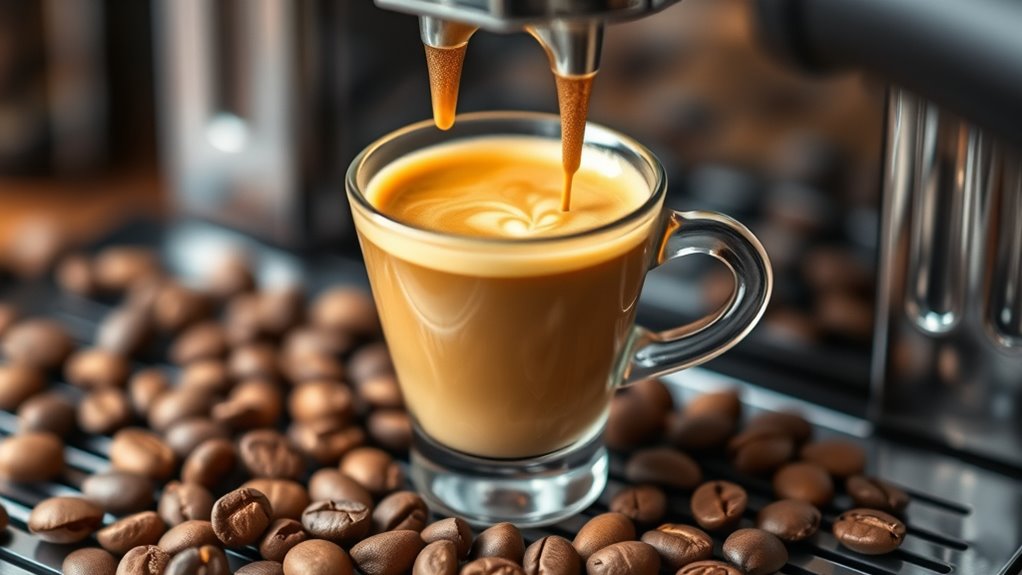
Although it might seem similar to traditional espresso, blonde espresso differs quite a bit in its roasting and flavor profile. You’ll notice it’s made from lightly roasted beans, roasted for just 8-10 minutes, stopping right before the first crack. This shorter roasting preserves more natural flavors and acidity, producing a pale, golden color.
Blonde espresso is made from lightly roasted beans, preserving bright flavors and a pale, golden hue.
When you brew blonde espresso, you use finely ground beans and a high-pressure espresso machine. This process extracts a bright, floral, and citrusy shot.
It really brings out origin-specific notes like floral and fruity hints, while keeping things smooth and subtly sweet.
This technical precision in roasting and extraction is what gives blonde espresso its unique character. It’s what makes it stand apart from darker roasts that tend to develop more bitterness and deeper caramelization. Blonde espresso also typically contains slightly more caffeine due to the lighter roast preserving caffeine content.
Does Blonde Espresso Have More Caffeine Than Regular Espresso?
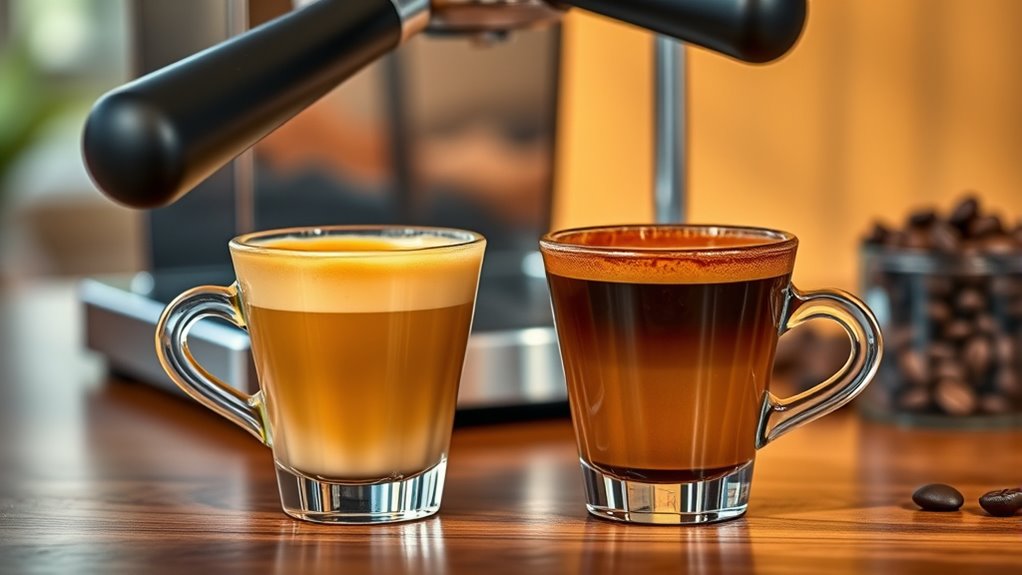
The lighter roast and preserved natural compounds in blonde espresso influence not only its flavor but also its caffeine content. Blonde espresso typically contains slightly more caffeine per shot than regular espresso, averaging about 4.7 mg of caffeine per milliliter compared to 4.2 mg/ml in regular espresso.
This difference arises because lighter roasts maintain a higher bean density and retain more caffeine, as roasting reduces caffeine content marginally.
However, caffeine levels depend primarily on coffee quantity rather than roast degree, making the increase in blonde espresso’s caffeine content minor. While you might notice a small caffeine boost with blonde espresso, it’s not markedly stronger than regular espresso in terms of caffeine concentration. Understanding the extraction of espresso is important since it affects flavor without significantly altering strength.
Why Blonde Espresso Tastes Milder but Packs a Stronger Caffeine Punch
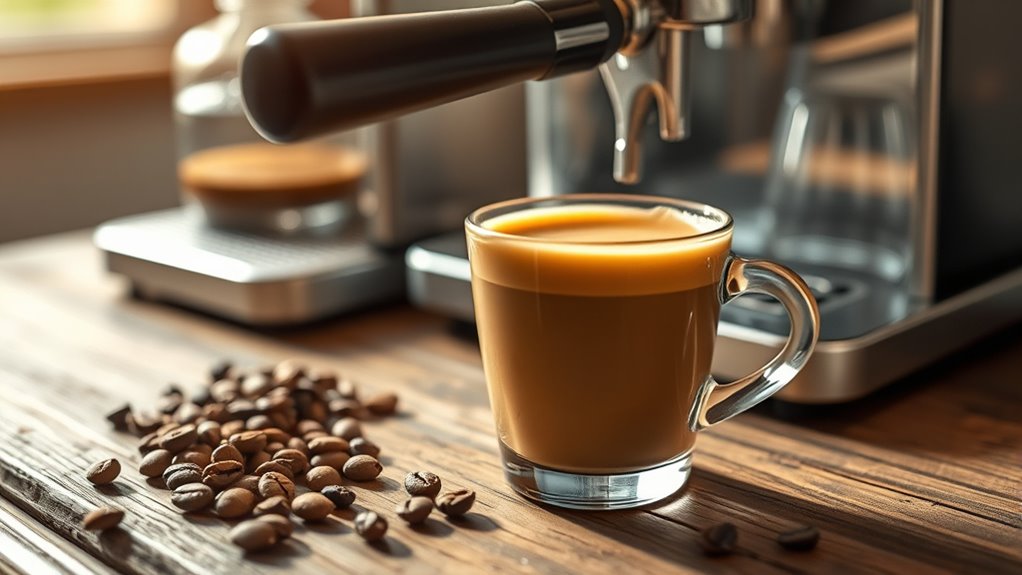
Because blonde espresso undergoes a lighter roasting process, it preserves more of the coffee bean’s original compounds. This results in a milder, less bitter flavor profile with floral and fruity notes.
The lighter roast also retains higher caffeine content per bean since caffeine doesn’t break down much during roasting.
You’ll notice blonde espresso beans are denser and less porous. That means they pack caffeine slightly more by volume compared to darker roasts.
The flavor is bright and vibrant, with a complex acidity that makes it really interesting to taste.
The strength you notice is more about the flavor than the caffeine itself. But because these beans are denser, when you pull a shot, it delivers a stronger caffeine punch.
Measuring caffeine by weight shows that blonde and darker espresso have similar caffeine levels, making dose size and brewing method key factors in caffeine content.
How Blonde Espresso’s Roast Level Affects Its Caffeine and Flavor
You’ll notice that blonde espresso’s lighter roast level directly influences both its caffeine concentration and flavor complexity. Because it’s roasted for a shorter time, it actually keeps more of its caffeine compared to darker roasts.
Plus, the beans stay denser, which helps with that.
This all adds up to a brighter, more acidic flavor profile. It’s quite different from the deeper, roasted notes you usually find in traditional espresso.
Adjusting grind size to suit the denser beans is essential for optimal extraction and balanced flavor.
Roast Level Impact
Although roasting time minimally alters caffeine content, the lighter roast level of blonde espresso considerably influences both its flavor profile and caffeine concentration. Blonde espresso beans, roasted for 8-10 minutes before the first crack, retain more natural flavors and caffeine per bean due to less density.
This results in a brighter, more acidic shot with floral and citrus notes, contrasting the bitterness of darker roasts. You’ll notice a milder flavor but slightly higher caffeine volume in blonde espresso. The extraction under high pressure enhances these bright flavors, creating a unique experience compared to darker roasts.
| Aspect | Blonde Espresso |
|---|---|
| Roast Duration | 8-10 minutes (light roast) |
| Flavor Profile | Bright, floral, citrus, acidic |
| Bitterness Level | Lower |
| Caffeine per Bean | Slightly higher |
| Bean Density | Less dense |
Caffeine Content Comparison
When comparing caffeine content, blonde espresso generally delivers slightly more caffeine per volume than darker roasts because its lighter roast preserves more of the bean’s natural caffeine.
You should know that caffeine levels stay pretty stable through roasting, so differences by weight are minimal. However, since blonde espresso beans are less dense, a scoop of them contains a bit more caffeine.
This means a shot pulled from the same volume of blonde roast can have a little higher caffeine than a darker roast shot.
Here are some points to consider:
- Blonde roast preserves more caffeine per bean by avoiding extensive roasting degradation.
- Caffeine content per weight is nearly the same across roast levels.
- Lower bean density means more caffeine per volume in blonde espresso.
- The actual caffeine difference per shot is minimal and often hard to notice.
- What feels stronger is mostly about flavor, not caffeine amount.
To ensure the best flavor balance and extraction, it’s important to maintain consistent espresso extraction time regardless of roast level.
Flavor Profile Differences
Since blonde espresso undergoes a lighter roast, it preserves more of the bean’s natural flavors and caffeine content. This results in a brighter, more floral, and citrusy profile compared to darker roasts.
Because the roast is lighter, it also retains higher caffeine levels due to reduced thermal degradation during shorter roasting times.
You’ll notice less bitterness and a more delicate taste that really emphasizes acidity and fruity notes. The flavor differences come straight from the roast level.
Lighter roasts bring out origin-specific nuances, while darker roasts develop deeper, caramelized, and smoky flavors.
Even though blonde espresso tastes milder, its higher acidity and caffeine concentration can give it a perceived kick that’s different from traditional espresso.
Knowing these differences helps you appreciate how the roast level affects both the taste and chemical makeup of your espresso shot.
Blonde espresso beans are denser and heavier, which means measuring by volume results in a higher caffeine content per shot, enhancing its energizing effect and flavor profile. caffeine per volume
Flavor Differences Between Blonde and Dark Espresso
Because the roasting process directly influences espresso’s flavor compounds, blonde and dark espressos present distinctly different taste profiles. When you compare them, you’ll notice blonde espresso offers a lighter, brighter experience, while dark espresso delivers a deeper, more intense profile.
The roasting process shapes espresso’s flavor, making blonde lighter and brighter, and dark deeper and more intense.
Key distinctions include:
- Blonde espresso retains higher acidity, highlighting citrus, floral, and fruity notes.
- Dark espresso develops stronger bitterness and caramelized, chocolatey flavors.
- Blonde roast occurs just after the first crack, preserving origin-specific nuances.
- Dark roast extends beyond the second crack, emphasizing robustness and boldness.
- Blonde espresso presents a cleaner, subtly sweet taste; dark espresso is richer and more intense.
Understanding these differences helps you appreciate how roasting impacts your espresso’s sensory complexity and flavor dynamics. It’s pretty cool to see how just a change in roasting can transform your coffee experience. The darker roast’s caramelization process extensively lowers acidity and increases sweetness, contributing to its bold flavor.
Brewing Tips to Maximize Blonde Espresso’s Strength and Taste
Blonde espresso’s lighter roast profile demands specific brewing adjustments to reveal its full potential in strength and flavor. Use a fine grind and extract for 20-25 seconds to optimize solubles. Slightly increasing your dose, for example to 22 grams, enhances intensity without overpowering brightness. Maintain water temperature between 195-205°F (90-96°C) to maximize extraction efficiency. Stop the shot as the flow lightens to avoid bitterness and preserve clarity. Thoroughly preheat your machine and portafilter to stabilize temperature and pressure for consistent results. This step really helps keep things steady every time you brew. Using freshly ground coffee beans is essential to preserve essential oils and crema that contribute to a rich and balanced espresso.
| Parameter | Recommendation | Effect |
|---|---|---|
| Grind Size | Fine | Maximizes extraction |
| Dose | 22 grams (vs. 20 grams) | Increases intensity |
| Extraction Time | 20-25 seconds | Balances strength & taste |
Common Misconceptions About Blonde Espresso’s Caffeine and Flavor
Although many assume lighter roasts deliver a weaker espresso, the truth is that blonde espresso presents a brighter, more nuanced flavor without sacrificing strength.
You might think its milder taste means less caffeine, but blonde espresso generally contains slightly more caffeine per volume than darker roasts. This is because its lighter roast preserves more caffeine molecules.
The key misconceptions include: Blonde espresso is weaker in flavor; it’s actually more complex and bright. It contains less caffeine; it often has equal or slightly higher caffeine content. And milder bitterness doesn’t mean less strength—flavor intensity and caffeine are actually different things.
Some also think roast level drastically changes caffeine, but the differences between blonde and regular espresso are pretty minor. People might feel it’s weaker because it’s smoother, but that’s about perception, not actual potency.
Understanding these points helps clear up what blonde espresso is really like. It’s all about appreciating the real profile behind the taste and caffeine content.
Additionally, factors such as grind size and extraction time also influence how much caffeine is delivered in each shot of blonde espresso.
Who Should Choose Blonde Espresso for Their Coffee Needs?
If you’re looking for a caffeine boost but want less bitterness, blonde espresso is a great choice. Because it’s roasted lighter, it actually has a higher caffeine concentration.
Plus, if you enjoy bright, floral, and citrusy flavors, you’ll really appreciate the nuanced, origin-specific notes that come through.
So, whether you’re after more caffeine or you’re curious about exploring smoother, more complex flavor profiles, blonde espresso hits the spot.
It’s perfect for both caffeine seekers and flavor adventurers alike.
Ideal For Caffeine Seekers
When you prioritize a caffeine boost without the heavy bitterness of darker roasts, choosing a lighter roast like blonde espresso makes sense. Blonde espresso retains more natural caffeine due to lighter roasting, offering a slightly higher caffeine content per shot. Its bright acidity and smooth taste provide an energizing yet less harsh experience.
You’ll find it ideal if you want alertness without intense bitterness.
Consider blonde espresso if you:
- Seek a higher caffeine dose with less roasted bitterness
- Prefer a smooth, bright flavor profile
- Need a more tolerable option for caffeine sensitivity
- Want a stimulating, crisp coffee experience
- Value caffeine’s effect enhanced by acidity rather than roast heaviness
This precision makes blonde espresso technically suited for caffeine seekers who want potency paired with subtlety.
Best For Flavor Explorers
Because blonde espresso preserves bright acidity and complex flavor notes, it suits flavor explorers seeking to uncover coffee’s nuanced profiles. You’ll appreciate its floral, citrusy characteristics that highlight the coffee’s origin, offering a sophisticated sensory experience.
Its lighter roast maintains natural acidity and reduces bitterness, enabling you to detect subtle flavor compounds such as caramel, vanilla, and fruity undertones.
This clarity in flavor complexity makes blonde espresso an ideal choice if you want to experiment with diverse terroirs and brewing techniques. Additionally, its slightly higher caffeine content enhances alertness without compromising taste integrity.
If you’re curious about the depth and vibrancy of coffee profiles and prefer a crisp, smooth cup that encourages sensory exploration, blonde espresso aligns perfectly with your preferences.
Frequently Asked Questions
Can Blonde Espresso Be Used in Espresso-Based Drinks Like Lattes?
Yes, you can use blonde espresso in lattes. It offers a brighter, floral flavor with higher acidity and caffeine. This balances well with milk and sweeteners.
Using blonde espresso can really enhance the drink’s complexity without overpowering its smooth texture. It’s a great way to switch things up if you want something a little different. Give it a try next time!
Does Blonde Espresso Affect Espresso Machine Maintenance Differently?
Think of blonde espresso as a gentle breeze clearing your machine’s pathways. Its lower oil content reduces residue buildup, which means you’ll clean less often.
But don’t skip regular maintenance—it’s still key to keeping your espresso machine running smoothly. A little care goes a long way in making sure every shot tastes great.
How Does the Origin of Beans Influence Blonde Espresso Flavor?
The origin of beans directly shapes blonde espresso’s flavor by preserving distinct regional compounds. African beans highlight citrus and floral notes, while Central American beans deliver balanced acidity and sweetness.
This enhances the lighter roast’s nuanced, terroir-driven profile. So, depending on where the beans come from, you’ll notice different flavor experiences in your cup. It’s pretty cool how geography plays such a big role!
Is Blonde Espresso Better for Cold Brew or Iced Coffee Recipes?
You’ll find blonde espresso better for cold brew or iced coffee since its delicate acidity and bright notes contrast darker roasts’ bitterness. This helps preserve clarity and enhances vibrancy. Plus, the higher caffeine boosts energy without overwhelming bitterness.
It’s a great choice if you want something lively and refreshing in your cold coffee recipes. The lighter roast really shines when chilled, giving you a smoother, more balanced flavor. So, if you’re looking to switch things up, blonde espresso might be just what you need.
Are There Specific Health Benefits Linked to Blonde Espresso Consumption?
Yes, you gain higher antioxidants and caffeine from blonde espresso, potentially boosting alertness and reducing inflammation. Its lighter roast lowers acidity, easing digestion.
But ongoing research is essential to confirm these specific health benefits conclusively. So, while there are promising signs, it’s good to stay tuned for more evidence.
Conclusion
While blonde espresso’s lighter roast delivers a milder, brighter flavor, it paradoxically contains more caffeine than its darker counterpart. You might expect a bolder taste to signal greater strength, yet the chemistry of roasting reveals the opposite.
Understanding this contrast helps you appreciate that strength isn’t just about flavor intensity but chemical composition. So, if you want a smoother sip with a stronger caffeine kick, blonde espresso is the precise choice.