You’re paying for precise engineering that forces hot water through finely ground coffee at consistent pressure and temperature. Espresso machines use durable, high-grade materials like stainless steel and brass, combined with advanced technology, such as PID controllers and pressure sensors, to guarantee professional-quality extraction.
Trusted brands back this with reliability and long-term support. While pricier models offer customization and durability, understanding these factors helps you decide if the investment matches your espresso needs and expectations.
What Is an Espresso Machine and How Does It Work?
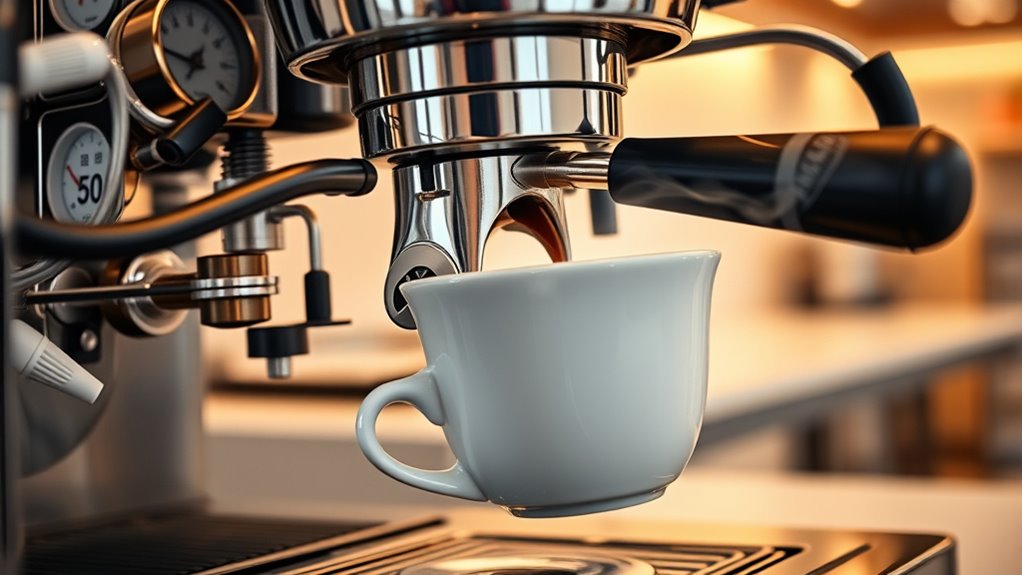
How exactly does an espresso machine create that rich, concentrated coffee you love? It forces hot water through finely ground coffee at a high pressure of about 9 bars. You’ll find that precise temperature control, typically between 190°F and 200°F, is vital to extracting the perfect flavors without bitterness.
Inside the machine, components like the boiler, pump, and group head work together to maintain consistent pressure and temperature during extraction. When you insert the portafilter filled with coffee grounds into the brew head, the machine pushes water through it under pressure.
This produces a dense, aromatic shot.
This process results in a signature crema layer, a fine foam that signals a well-extracted espresso. It delivers both texture and enhanced flavor. So, that crema you see on top is a good sign your espresso was made just right.
Consistent extraction timing from pump activation also plays a crucial role in achieving balanced flavor and crema development.
What Parts and Technologies Make Espresso Machines Expensive?
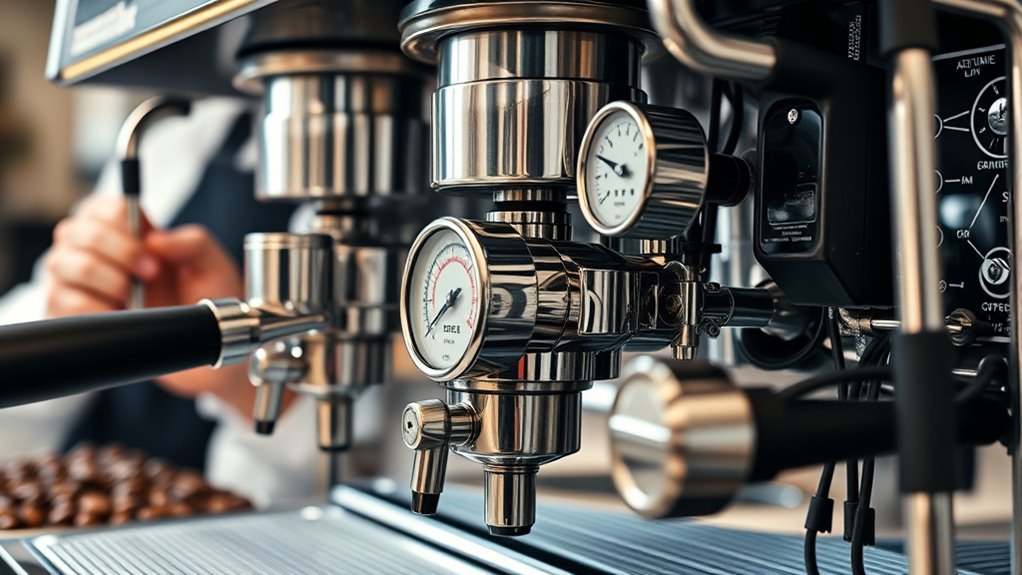
Because you expect consistent quality and durability, espresso machines incorporate high-grade components and advanced technologies that drive up their cost. Key parts like pressure sensors, boilers, and precision valves are crafted from durable materials such as stainless steel and brass to withstand continuous high-pressure operation, typically around 10 bar.
Espresso machines use high-quality, durable components like stainless steel pressure sensors and boilers for consistent performance.
Advanced features like PID controllers and proprietary software enable precise temperature and pressure regulation. These require significant development investment.
Plus, micro-metrical grinders and sophisticated pressure systems enhance extraction consistency but increase manufacturing complexity.
Commercial-grade models include multiple boilers, programmable dosing, and automatic cleaning systems. All of these demand complex engineering and premium materials.
These specialized components and technologies guarantee reliable performance and longevity but substantially raise the overall price of espresso machines.
Precise dosing control is also integrated to ensure consistent flavor profiles by managing coffee dose and extraction time accurately.
Why Does Brand Reputation Matter for Espresso Machines?
The high-quality components and advanced technologies inside espresso machines often come tied to well-known brands. When you choose an established name like La Marzocco or Nuova Simonelli, you’re investing in proven durability, innovation, and consistent performance.
These brands justify premium prices by integrating superior craftsmanship and using high-grade parts that elevate brewing quality. You’ll also benefit from their extensive research and rigorous quality control, which guarantee reliability but add to production costs.
Beyond hardware, reputable brands offer robust customer support, warranties, and customization options, enhancing your ownership experience. Their prestige influences your perception, making their machines appear more trustworthy and desirable.
Ultimately, brand reputation matters because it signals technical excellence and long-term value. It helps you make a confident, informed purchase. For example, machines like the Mastrena espresso machine exemplify how brand-specific design and automation contribute to superior consistency and quality.
How Much Should You Expect to Pay for an Espresso Machine?
Expect to invest anywhere from a few hundred to several thousand dollars when purchasing an espresso machine, depending on your needs and desired features. Entry-level models range from $100 to $300 but often lack advanced temperature control and durability.
Investing in an espresso machine varies widely based on features, starting from budget-friendly entry-level models to advanced options.
Mid-range machines, priced between $500 and $1,000, provide improved build quality and frothing capabilities. These are great for serious home users who want a step up from basic models.
High-end, professional-grade machines start around $1,500 and can exceed $5,000. They incorporate sophisticated technology and premium materials for peak performance.
Commercial units designed for heavy daily use cost $10,000 to $25,000 or more due to enhanced durability and features.
For most enthusiasts, allocating $600 to $1,500 strikes a balance between reliability, performance, and long-term value in a home espresso machine.
Additionally, the espresso shot size you plan to brew can influence the type of machine you select, as different machines accommodate varying shot volumes and extraction needs.
Are Expensive Espresso Machines Worth the Investment?
While you might hesitate at the initial cost, investing in an expensive espresso machine pays off through consistent, professional-quality results and durable construction. You gain precision and longevity that cheaper models can’t match.
It’s definitely a smart choice for serious coffee lovers or businesses.
Consider these benefits:
- Consistent, high-quality espresso extraction every time
- Durable materials and engineering for 10+ years of use
- Advanced customization and control features for brewing precision
- Reduced repair costs due to superior craftsmanship
- Savings over time by cutting daily coffee shop expenses
Additionally, features like PID temperature control provide stable brewing temperatures that greatly enhance espresso quality and consistency.
How to Choose the Right Espresso Machine for Your Needs?
First, think about how you like to brew your espresso. Do you want to be hands-on, or would you prefer something more automatic? Also, figure out which features are important to you—maybe temperature control or frothing capabilities matter a lot.
Then, take a good look at your budget. Keep in mind that quality machines usually start around $600, but they tend to last a long time, so it’s an investment worth considering.
Finally, check out the technical features of the machine. Make sure they match up with what you want in terms of convenience and performance. That way, you’ll end up with a machine that fits your needs perfectly.
Additionally, understanding the importance of grind size and extraction can help you maximize flavor and caffeine content from your espresso machine.
Assess Brewing Preferences
Because espresso machines vary widely in features and complexity, evaluating your brewing preferences is crucial before making a purchase. You need to identify how involved you want to be in the brewing process and what specific functionalities matter most to you.
Consider these key factors: Do you prefer automatic convenience or manual control? Automatic machines simplify brewing but usually cost more. What features do you need? Temperature control, milk frothing, and programmable settings impact price and complexity.
How much coffee do you consume daily? Choose a machine size and capacity that matches your usage and space. Is durability important? Opt for reputable brands to guarantee long-term reliability.
Do you want advanced technology like PID controllers or multiple boilers for precision brewing? Assessing these preferences helps you select a machine that fits your needs and justifies its cost. Maintaining stable brew temperature can significantly influence espresso quality and consistency, making machines with precise temperature control more desirable for enthusiasts.
Consider Budget Range
After pinpointing your brewing preferences, the next step is to align those needs with a realistic budget. Budget-friendly espresso machines can cost as little as $100 but often lack the durability and advanced features of higher-end models.
If you want more control without breaking the bank, semi-automatic machines offer a balance between cost and functionality.
For casual brewing, manual devices like moka pots or French presses provide strong espresso-like flavors without a significant investment.
Focus on machines that include essential features such as reliable temperature control and a quality portafilter to maintain good extraction.
Also, think about how often you’ll use the machine. This will help you decide if a mid-range or entry-level model delivers better value.
That way, your purchase matches both your budget and brewing demands.
Remember that freshly brewed espresso’s crema and essential oils play a crucial role in flavor, so investing in a machine that preserves these elements can significantly improve your coffee experience.
Evaluate Machine Features
While choosing an espresso machine, evaluating its features is essential to match your brewing style and skill level. You want a machine that aligns with how much control you desire and the convenience you expect.
Pay close attention to the type of operation: automatic, semi-automatic, or manual. Temperature stability and the quality of the steam wand also matter a lot.
Look for programmable settings tailored to your preferences. Build quality and durable materials are key for consistent performance.
And don’t forget additional functionalities like integrated grinders or multiple brewing options—they can make a big difference.
Measuring espresso yield by weight rather than volume is also crucial for achieving consistent shot quality with your machine.
Frequently Asked Questions
How Do Espresso Machines Affect the Taste of Different Coffee Beans?
Espresso machines let you control temperature and pressure precisely, enhancing each coffee bean’s unique flavors. You’ll extract aromatic oils and adjust grind and tamping, tailoring the taste to highlight or soften specific bean characteristics expertly.
It’s pretty cool how small tweaks can make a big difference. You get to bring out the best in your beans just the way you like.
Can Espresso Machines Be Repaired or Upgraded Over Time?
You can upgrade or repair espresso machines, often extending their lifespan beyond 10 years. Modular parts like boilers and pressure valves are replaceable, and firmware updates improve performance.
That said, complex repairs usually require certified technicians for the best results. It’s definitely worth investing in professional help if you want your machine to keep running smoothly.
What Maintenance Is Required to Keep an Espresso Machine in Top Condition?
You need to descale regularly and clean the portafilter and baskets daily. Replacing water filters periodically is also important to keep things running smoothly.
Don’t forget to check the pressure and temperature settings from time to time. It helps ensure your espresso tastes just right.
Lastly, servicing gaskets, seals, and pumps annually will keep your machine in top shape for the long haul. Taking these steps really pays off!
How Does Water Quality Impact Espresso Machine Performance?
Imagine your espresso machine clogging from mineral buildup. That’s poor water quality at work. You’ll notice reduced efficiency, corrosion, and inconsistent shots.
Using balanced, filtered water guarantees smooth operation and precise brewing. It also extends your machine’s lifespan considerably. So, taking care of your water means taking care of your espresso.
Are There Eco-Friendly Espresso Machines or Energy-Saving Features Available?
Yes, you’ll find eco-friendly espresso machines with energy-saving modes, insulated heating elements, and programmable timers.
Look for models built with sustainable materials and ENERGY STAR certifications to reduce electricity consumption while maintaining excellent brewing performance.
It’s a great way to enjoy your coffee and be kind to the environment at the same time!
Conclusion
When you invest in an espresso machine, you’re paying for precision engineering. Over 60% of espresso enthusiasts report better taste and consistency with higher-end models.
These machines use advanced pressure systems and durable materials that justify their cost. While brand reputation guarantees reliability, choosing the right machine depends on your needs and budget.
Understanding these factors helps you make a smart purchase. That way, each shot of espresso meets your expectations every time.

Pingback: How Much Is An Espresso Machine – Price Guide