Espresso’s invention traces back to 1884 when Angelo Moriondo patented the first steam-driven coffee machine that brewed coffee quickly using pressure. Luigi Bezzera later improved it with faster brewing, portafilters, and controlled pressure. Pavoni popularized espresso commercially by enhancing functionality.
Then, Gaggia revolutionized it in 1938 by introducing high-pressure lever machines that created the signature crema. These breakthroughs shaped today’s espresso standards. It’s pretty fascinating how each step built on the last to get us here.
If you dig deeper, you’ll see how technology and culture combined to shape espresso’s rich heritage and flavor. It’s not just about the machine but the experience behind every cup.
Origins of the Espresso Machine and Moriondo’s Patent
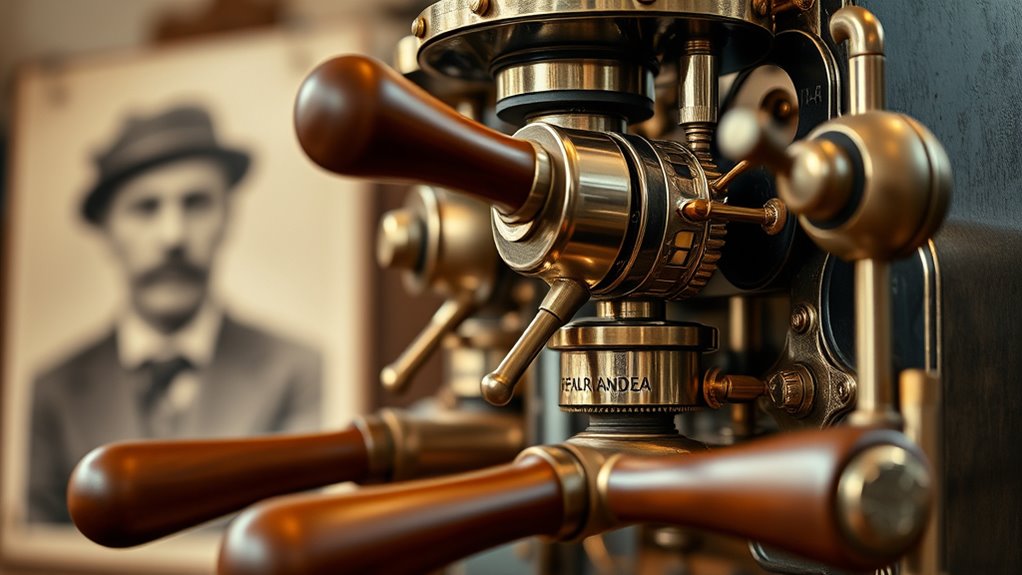
Although espresso as we understand it wasn’t yet fully developed, Angelo Moriondo’s 1884 patent marked the essential first step in its invention. You’d recognize his machine as the earliest formal attempt to speed up coffee brewing by using steam pressure. It was designed to cut down brewing time markedly.
Moriondo’s device was large and operated primarily as a bulk coffee brewer rather than producing individual espresso shots. He showcased this machine at the Turin General Exposition, where it earned a bronze medal for innovation.
While it didn’t become commercially widespread, this invention laid the foundational technology for rapid coffee extraction.
Even though Moriondo soon faded from espresso history, his patent remains a pivotal milestone. It really marks the shift toward the espresso machines that followed. So, while not the espresso we sip today, his work set the stage for what was to come. Measuring espresso yield by weight rather than volume is a crucial advancement that later machines would incorporate to ensure shot consistency and flavor balance.
Luigi Bezzera’s Innovations and Early Espresso Machines
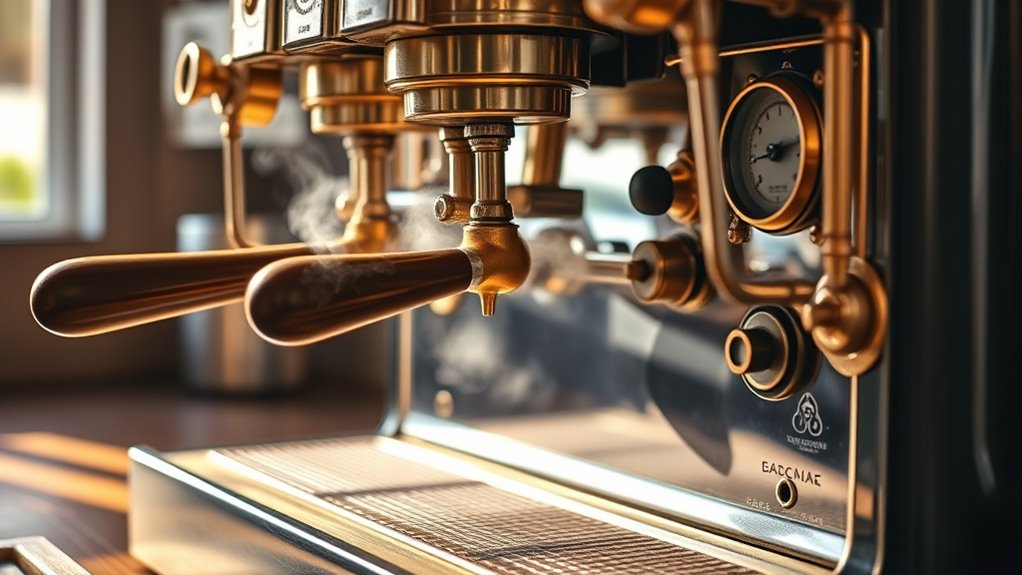
You’ll find that Luigi Bezzera’s 1901 espresso machine used steam pressure to brew coffee quickly, which was a major step forward.
What’s really interesting is how his design included key elements like a portafilter and multiple brew heads. This wasn’t just about making coffee faster—it actually boosted efficiency in a big way.
These innovations really set the stage for modern espresso machines. By focusing on speed and pressure control, Bezzera helped shape how we enjoy espresso today.
Controlling extraction time and pressure were crucial advancements that continue to define espresso quality.
Bezzera’s Steam Pressure Machine
How did espresso machines evolve from slow brewing methods to the rapid process we’re familiar with today? Luigi Bezzera’s steam pressure machine, developed in 1901, marked a significant turning point. By applying steam pressure, Bezzera drastically shortened brewing time, moving away from traditional, lengthy extraction methods.
His machine featured multiple brew heads and a lever mechanism to generate the necessary high pressure. In 1903, Bezzera patented this design, which he called “The Fast Coffee Machine,” emphasizing speed and efficiency. It was quite a breakthrough for coffee lovers.
Then, in 1906, Bezzera showcased his invention at the Milan Fair. This event helped lay the foundation for modern espresso machines by prioritizing rapid extraction through controlled pressure. Thanks to his work, espresso preparation shifted toward the quick, concentrated style you recognize today.
Bezzera is definitely a key figure in espresso machine history. Modern espresso techniques focus on precise extraction times and pressure to produce a rich, flavorful shot with crema, similar to the quality Bezzera aimed to achieve with his innovations in espresso preparation.
Early Espresso Machine Features
What made Luigi Bezzera’s early espresso machine stand out was its innovative use of steam pressure combined with practical features like the portafilter and multiple brew heads. These innovations cut brewing time considerably and improved efficiency, marking a clear shift from traditional methods.
The machine’s boiler generated steam and hot water under pressure, speeding up extraction without sacrificing quality. Pretty clever, right?
| Feature | Description |
|---|---|
| Steam Pressure | Rapidly brews coffee using steam force |
| Portafilter | Holds coffee grounds securely |
| Multiple Brew Heads | Allows simultaneous brewing of several cups |
| Boiler | Produces steam and hot water under pressure |
| 1906 Milan Fair | First public showcase of Bezzera’s machine |
You’d find these innovations foundational to modern espresso machines. They really set the stage for what we now expect from our coffee makers. This early focus on high-pressure extraction laid the groundwork for the signature rich flavor and crema that define espresso today.
Pavoni’s Role in Popularizing Espresso Machines
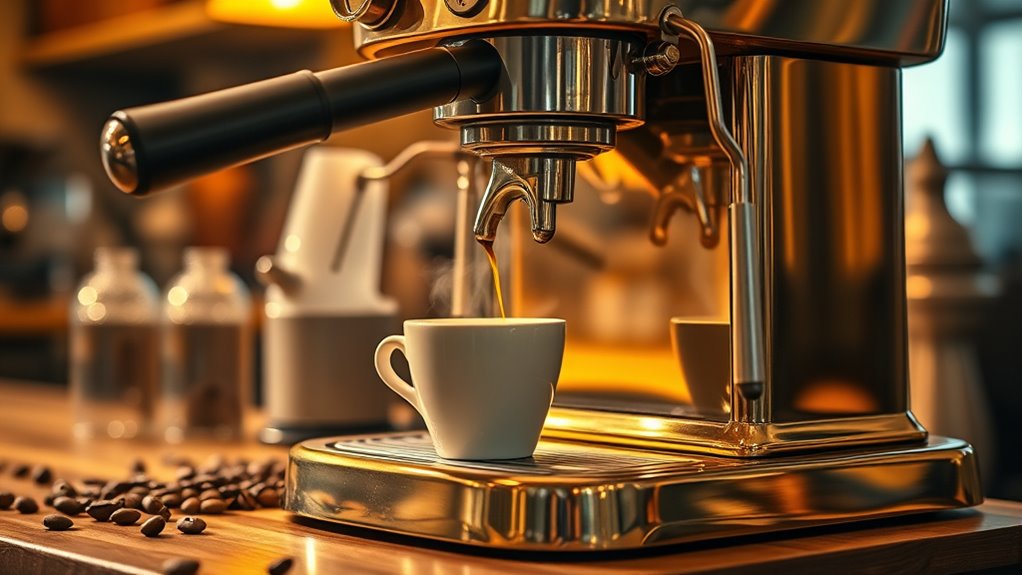
Although Luigi Bezzera invented the initial espresso machine patents, it was Desiderio Pavoni who transformed the technology into a commercial success by acquiring Bezzera’s patents and launching the “Ideale” machine in 1906.
Pavoni’s innovations played a pivotal role in popularizing espresso. Here’s how:
He introduced the pressure release valve and steam wand, boosting brewing efficiency and versatility. Pavoni marketed the machine’s ability to produce quick, high-quality espresso, appealing to cafés and consumers.
His “Ideale” machine enabled rapid brewing, setting a new standard for espresso preparation. This advancement laid the foundation for the complex engineering components and precise pressure systems that define modern espresso machines as described in advanced pressure systems.
From Pavoni to Gaggia: The Push for Better Espresso Machines
While Pavoni laid the groundwork for commercial espresso machines with steam pressure technology, it was Achille Gaggia who pushed the boundaries in 1947 by introducing a piston-based system that markedly increased extraction pressure to 8-10 bars. This increase emphasized crema formation, a defining feature of authentic espresso, unlike Pavoni’s machines that operated at 1.5-2 bars.
Gaggia’s lever system allowed you to “pull” a shot manually, improving flavor and texture. Below is a comparison:
| Innovator | Pressure (Bars) | Key Feature |
|---|---|---|
| Pavoni | 1.5-2 | Steam pressure |
| Bezzera | 1.5-2 | Early espresso machine |
| Gaggia (1947) | 8-10 | Piston lever & crema |
This push for better pressure extraction set the stage for future electric pump machines. It really changed how espresso was made and enjoyed. The higher extraction pressure also contributed to the higher caffeine concentration found in espresso compared to drip coffee.
Gaggia’s Game-Changing High-Pressure Espresso Machine
Building on the foundation laid by earlier machines, Achille Gaggia’s 1938 invention revolutionized espresso brewing by introducing a lever-operated system capable of generating 8-10 bars of pressure. This breakthrough improved espresso quality dramatically and set new industry standards.
Here’s what made Gaggia’s machine game-changing:
- It used a high-pressure lever system, allowing you to manually control extraction.
- It produced a rich crema layer, defining authentic espresso’s signature look and taste.
- It emphasized precise water pressure control, essential for balanced flavor.
- It paved the way for modern espresso machines, turning espresso preparation into an art form.
Thanks to Gaggia, you can now pull professional-quality shots, even outside traditional cafés. Pretty cool, right?
To ensure consistent flavor and quality, maintaining the machine by regularly cleaning the portafilter and group head is essential for optimal espresso machine maintenance.
How Espresso Machines Evolved Through the 20th Century
As espresso gained popularity, inventors continuously refined the machines throughout the 20th century to improve efficiency and flavor extraction. After Moriondo’s initial 1884 steam-powered design, Bezzera and Pavoni enhanced functionality in 1906 by adding a pressure release valve and steam wand.
In 1947, Gaggia’s lever-operated machine raised pressure to 8-10 bars, producing the signature crema and defining modern espresso.
The 1960s introduced horizontal machines with electric pumps, standardizing high-pressure extraction. This era also saw the rise of semi-automatic and automatic machines, which made brewing more consistent and accessible. Regular machine descaling became an important practice to maintain performance and flavor quality during this evolution.
Why Espresso’s History Matters for Today’s Coffee Lovers
You’ll find that espresso’s history really shapes how you enjoy every cup. From the brewing methods to the cultural rituals behind it, there’s a lot more than meets the eye.
When you know how coffee techniques evolved, it helps you appreciate the craftsmanship and innovation that make today’s espresso so special.
Plus, understanding these roots connects you to a rich tradition that influences both the taste and the technique.
Mastering the extraction process is key to replicating authentic espresso flavors and honoring its heritage.
Historical Influence On Brewing
Although espresso has become a daily ritual for many, understanding its historical development reveals why it tastes and feels the way it does today. When you appreciate espresso’s history, you grasp how brewing evolved to deliver its signature qualities.
Key points include: The shift from steam-powered to pump-driven machines increased brewing speed, quality, and consistency. Establishing the 9-bar pressure standard was essential for producing the rich crema and intense flavor. Innovators like Gaggia and Illy shaped the technology and techniques still in use.
Italy’s origins of espresso underscore its role as both a social ritual and a craft. Knowing these influences helps you value every shot you pull, recognizing the precise science and art behind your cup. Mastery of espresso requires understanding precise variables such as extraction time and grind size to achieve the ideal flavor balance.
Cultural Impact And Traditions
Understanding the technological advances behind espresso machines helps explain how espresso shaped more than just brewing methods. It influenced social habits and cultural norms too.
In early 20th-century Italy, espresso’s quick preparation encouraged brief, standing consumption, reflecting values of efficiency and affordability.
This tradition still defines Italian coffee culture today. You’ll find that innovations like Gaggia’s high-pressure machines didn’t just improve flavor. They also helped establish espresso as a symbol of Italian identity.
Furthermore, recognizing espresso’s regional origins reveals how local preferences shaped global coffee customs.
The shift from street-side espresso bars to elegant cafes shows how espresso became both a social ritual and an artistic expression.
For today’s coffee lovers, understanding these cultural roots deepens appreciation for every shot you enjoy.
Evolution Of Coffee Techniques
Because espresso’s history is marked by continuous innovation, today’s coffee lovers benefit from techniques that enhance flavor and texture in every shot. The evolution of coffee techniques reveals how careful refinement shapes your espresso experience.
Back in 1947, Gaggia’s lever machine introduced high-pressure extraction, which dramatically improved consistency and crema quality.
Then came the shift from steam-based to pump-driven machines, giving you better control over brewing parameters.
Adjustments in grind size, pressure, and temperature help fine-tune flavor profiles to suit your preferences. These innovations have turned espresso into a true craft, focusing on consistency, complexity, and richness.
Frequently Asked Questions
What Types of Coffee Beans Are Best for Making Espresso?
You should use medium to dark roasted Arabica beans for balanced, rich espresso, or add Robusta for stronger flavor and crema. Fresh, finely ground beans within 2-4 weeks of roasting deliver the best results.
It’s really all about freshness and the right roast. The darker the roast, the bolder the espresso. But if you want something a bit smoother, stick with medium roasts. Adding Robusta can give you that extra kick in flavor and crema you’re looking for.
How Does Espresso Differ From Other Coffee Brewing Methods?
You’ll notice espresso packs about twice the solids of drip coffee because it forces hot water through finely ground beans at 9 bars pressure. This quick, high-pressure method delivers a richer, bolder, and more concentrated flavor than others.
It’s pretty different from other brewing styles, right? The pressure makes all the difference, pulling out flavors fast and intense. That’s why espresso tastes so powerful in just a small shot.
What Is the Ideal Water Temperature for Brewing Espresso?
You should use water between 90°C and 96°C (194°F to 205°F) for brewing espresso. Staying within this range guarantees ideal extraction, balancing flavor and aroma while avoiding bitterness or weak taste in your shot.
Keeping the temperature just right makes a big difference. Too hot or too cold, and your espresso can lose that perfect taste we all love. So, it’s worth paying attention to the water temperature when you brew.
Can Espresso Machines Be Used to Make Other Coffee Beverages?
Think of your espresso machine as a painter’s palette. You can craft lattes, cappuccinos, and Americanos by blending espresso with steamed milk, foam, or hot water. It’s like revealing endless coffee beverage possibilities with precision and ease.
Basically, you’re not just stuck with straight espresso shots. Your machine opens up a whole new world of coffee drinks you can make right at home. Pretty cool, right?
How Has Espresso Influenced Coffee Culture Outside of Italy?
Espresso’s influence means you’ll find specialized coffee shops, diverse espresso-based drinks, and skilled baristas worldwide. It’s shaped your coffee culture by emphasizing quality and technique.
People everywhere now appreciate crafted, flavorful coffee experiences more than ever. This shift has made coffee more than just a drink — it’s become a moment to savor and enjoy.
Conclusion
By understanding espresso’s evolution, you’ll appreciate its craftsmanship more deeply. Did you know that by the mid-20th century, espresso machines could generate up to 9 bars of pressure, three times more than early models?
This leap transformed espresso from a quick coffee into a rich, complex experience you enjoy today. Knowing this history helps you value every shot.
It connects you to the innovation and passion behind your daily cup.

Pingback: Does Espresso Powder Expire – Shelf Life Guide