A long shot espresso uses the same grounds as a standard espresso but with more water and a longer extraction time, usually around 40-60 seconds. You adjust the grind size coarser and control temperature and pressure to avoid bitterness. This produces a smoother, more complex flavor with rich chocolatey, smoky notes.
This method lets you enjoy a milder, nuanced espresso experience. Keep exploring to discover how beans, roast, and brewing techniques shape its unique profile.
What Is a Long Shot Espresso?
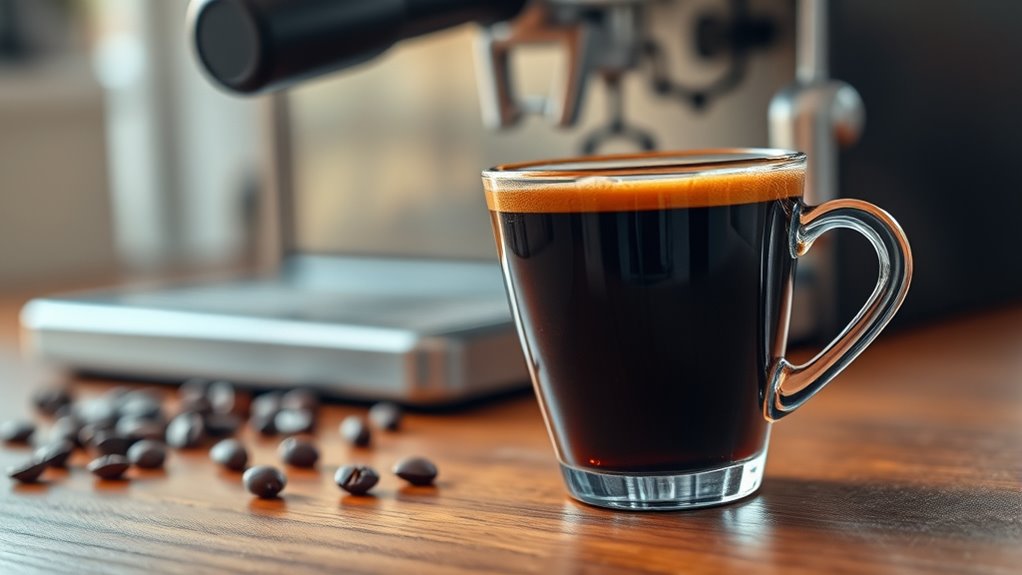
Although it uses the same coffee grounds as a standard espresso, a long shot espresso, or lungo, brews with more water and extends the extraction time to around 60 seconds.
You’ll notice this method increases the brew ratio to about 1:3 or more, resulting in a larger volume of coffee in your cup.
By doing so, the longer extraction pulls out additional flavor compounds, oils, and caffeine, creating a milder, less intense taste.
When you sip a lungo, you experience a smoother, more aromatic profile with nuanced complexity rather than the concentrated intensity of a standard shot.
This style suits drinks like Americanos and long blacks, where you want a lighter coffee that still offers depth and character without overwhelming bitterness or heaviness.
It’s a great way to enjoy a coffee that feels both rich and easygoing.
Because the longer extraction time increases the amount of caffeine drawn from the grounds, a long shot typically contains more caffeine than a standard espresso, though it remains less concentrated per ounce due to the larger volume of water used, demonstrating the balance between extraction time and caffeine content.
How Brewing Time and Water Shape Flavor
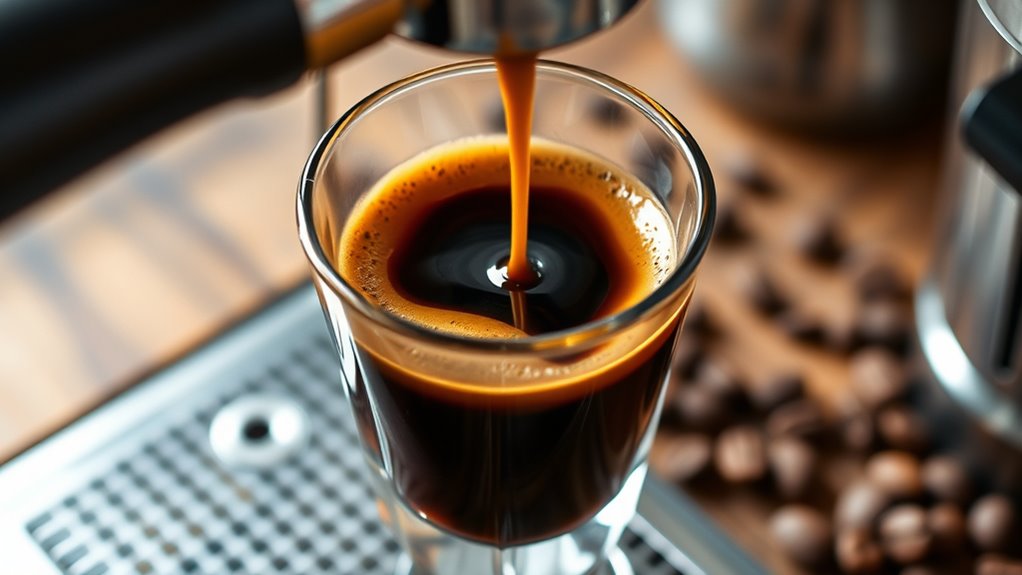
When you extend the brewing time and increase the water volume in a long shot espresso, you allow a broader spectrum of flavors to emerge from the coffee grounds. This longer extraction, often up to 60 seconds, draws out more soluble compounds, including aromatic oils and acids, enriching the espresso’s complexity and mouthfeel.
Extending brew time and water volume unlocks richer, more complex flavors and aromas in a long shot espresso.
However, precise control is vital to prevent over-extraction, which can introduce bitterness and dryness. Here’s what you should consider:
- Longer brew time pulls a wider range of flavors
- Increased water volume extracts oils and acids
- Flavor profile becomes milder and less intense
- Risk of bitterness grows without careful timing
- Enhanced complexity and layered taste develop
Controlling the extraction time and adjusting grind size are key to maintaining balance during extended extractions.
Best Coffee Beans and Roasts for Long Shot Espresso
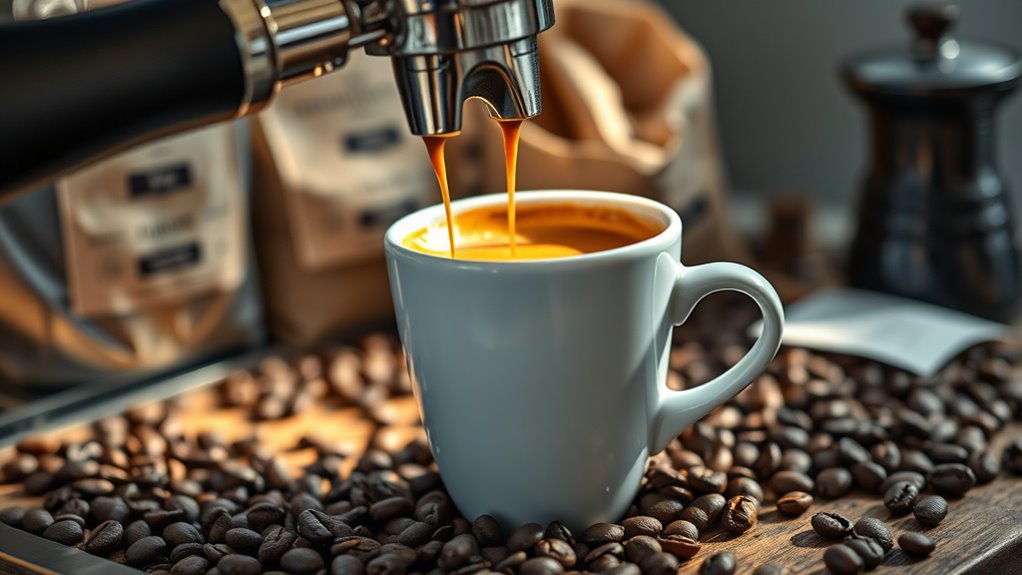
Selecting the right coffee beans and roast level plays a crucial role in revealing the full potential of a long shot espresso. You’ll want to choose light to medium roasts, as these develop nuanced flavors during the extended extraction.
Beans with higher density and acidity, like Ethiopian Yirgacheffe or Kenyan AA, respond exceptionally well to longer brew times, enhancing complexity.
Single-origin beans are preferable because they offer more distinctive, layered profiles compared to blends. Avoid dark roasts since they tend to produce excessive bitterness and over-roasted notes when brewed longer.
For the best results, use freshly roasted beans within 2 to 4 weeks to guarantee maximum flavor and solubility.
This way, your long shot espresso can really showcase its vibrant character with clarity and depth. It’s all about letting those subtle flavors shine through without any harshness getting in the way. Remember to consider the caffeine content variability in beans and brewing methods to maintain a balanced and safe caffeine intake.
Flavor and Aroma Profiles of Long Shot Espresso
When you take a sip of a long shot espresso, you’ll notice a nice balance between bitterness and sweetness. It creates a smooth, milder flavor that’s really easy to enjoy.
Because the extraction is longer, it brings out some complex aroma notes too—think chocolatey and smoky hints.
All of this makes the whole experience feel richer, even though the intensity is lighter. It’s a great way to highlight the unique character of the beans while giving you a refined, aromatic profile to savor.
The extraction time in a long shot influences both the flavor and aroma, allowing for a more nuanced and layered sensory experience.
Flavor Characteristics
Although long shot espresso involves extended extraction, it delivers a milder, more balanced flavor that highlights layered notes of bitterness, chocolate, and smoky undertones. This longer brewing draws out more oils and soluble compounds, giving you a richer, creamier mouthfeel.
You’ll notice the taste is smoother and less intense than a ristretto, with subtle flavors emerging over time. Depending on the bean origin and roast, the profile emphasizes depth rather than brightness or sharpness.
When you sip, expect a mellow bitterness that’s refined, not harsh. Deep chocolate undertones come with a velvety texture, while smoky hints add complexity. You’ll also get enhanced smoothness and richness along with a balanced finish that lingers pleasantly.
This makes the long shot espresso a nuanced, enjoyable experience for those who appreciate subtlety. However, achieving the ideal flavor profile often depends on factors like roast level and bean freshness, which play a crucial role in the final taste.
Aroma Nuances
Because a long shot espresso undergoes extended extraction, it releases a more complex and layered aroma profile that captivates your senses. The longer brew time lets more volatile aromatic compounds emerge, creating a richer and fuller-bodied scent. You’ll notice roasted, smoky, and chocolatey notes that deepen with each sip.
Depending on the roast and grind, earthy and nutty aromas may also stand out, adding dimension. Sometimes, a subtle bitterness in the aroma balances the sweeter scents, enhancing overall complexity without overpowering.
The balance of acids, sugars, and oils dissolved during extraction plays a crucial role in shaping these nuanced flavors through controlled extraction variables.
| Aroma Note | Description | Effect on Experience |
|---|---|---|
| Roasted | Deep, warm | Adds richness |
| Smoky | Slightly charred | Introduces depth |
| Nutty/Earthy | Grounded, natural | Enhances flavor complexity |
Bitterness And Sweetness
As you savor a long shot espresso, you’ll notice its bitterness and sweetness strike a delicate balance shaped by extended extraction. The longer brew time draws out more bitter compounds and tannins, yet it also unveils nuanced sweetness and complex flavors.
This balance depends greatly on factors like bean roast, grind size, and precise extraction time.
When done right, you experience pleasant chocolate, smoky, or caramel undertones. However, over-extraction tips the scale, creating excessive bitterness and an astringent aftertaste that dulls flavor harmony.
To appreciate a long shot’s flavor profile, consider these key points:
- Extended extraction increases bitterness but reveals complexity
- Balanced sweetness emerges from proper brewing
- Roast level influences flavor depth
- Grind size affects extraction rate
- Over-extraction causes harsh, dry aftertaste
Mastering hot water temperature and stirring technique can further enhance flavor extraction and crema formation, improving overall taste and texture in your espresso craftsmanship.
Comparing Long Shots, Ristretto, and Espresso
When you compare long shots, ristretto, and traditional espresso, you’ll notice some clear differences in both flavor and how they’re brewed.
Long shots use more water and a longer extraction time, which creates a milder, more bitter profile.
On the other hand, ristretto pulls a shorter, more concentrated shot that’s packed with sweetness and intensity.
Espresso kind of sits right in the middle, offering a classic, well-rounded taste with a moderate volume.
Adjusting the grind size is crucial in balancing extraction time and flavor for each of these espresso variations.
Flavor Profiles Comparison
How do the flavor profiles of long shots, ristretto, and espresso differ so distinctly? Understanding these nuances helps you appreciate each shot’s unique character.
Ristretto offers a concentrated, bold flavor with fruity, velvety notes and a syrupy sweetness that minimizes bitterness.
Espresso strikes a balance between sweetness, acidity, and bitterness, serving as a standard reference point.
Long shots develop richer, chocolatey, and smoky flavors due to extended extraction but can introduce more bitterness if over-extracted.
Compared to ristretto’s intensity, long shots present a milder, layered taste with nuanced bitterness and complexity.
Overall, long shots deliver a broader flavor range, while ristretto sharpens and intensifies the coffee’s core attributes.
This comparison reveals how extraction time shapes the sensory experience of each espresso variant.
Mastering proper espresso extraction time is essential to achieving these distinct flavor profiles consistently.
Brewing Techniques Differences
Why do brewing techniques vary so much between long shots, ristretto, and traditional espresso? It’s all about water volume, grind size, and extraction time. These factors shape each shot’s flavor and intensity.
For a long shot, you use more water, about a 1:3 ratio or higher, and extract for up to 60 seconds with a coarser grind. This pulls out more water-soluble compounds and gives you a milder, more diluted cup.
Ristretto, by contrast, uses less water—between 1:1 and 1:1.5—a finer grind, and a short extraction of 15 to 20 seconds. This concentrates flavors into a sweeter, more intense espresso.
Traditional espresso strikes a balance with a 1:2 ratio and a 25 to 30 second extraction. It creates a robust yet nuanced profile. Each method tailors the brew to distinct taste preferences.
Additionally, the caffeine content can vary with these techniques, influencing the strength and effects of each shot, which is important when considering safe caffeine limits.
Popular Drinks Featuring Long Shot Espresso
Although long shot espresso carries a milder flavor, it forms the foundation of several popular coffee drinks you might enjoy. This espresso variant, with its extended extraction and higher water ratio, creates a smoother, fuller-bodied base.
You’ll find long shots enhancing drinks that balance nuanced bitterness with a softer intensity.
Here are five popular drinks featuring long shot espresso:
- Americano: Diluted with hot water for a smooth, less intense coffee.
- Long Black: Hot water poured first, then long shot, preserving crema.
- Lungo Cappuccino: A cappuccino variation using a long shot for delicate layering.
- Flat White: Sometimes made with long shot for a gentler espresso flavor.
- Espresso Macchiato: A long shot topped with a small dollop of milk foam.
These drinks highlight the versatility of long shots in your coffee routine. It’s a great way to enjoy espresso with a softer touch.
Tips and Equipment for Brewing Long Shots at Home
When you aim to brew a long shot espresso at home, adjusting your grind size and extraction parameters becomes crucial. Use a coarser grind than standard espresso to prevent over-extraction and maintain balance.
Brewing a long shot espresso means using a coarser grind and tweaking extraction for perfect balance.
Extend your extraction time to 40-50 seconds, letting more water flow through the grounds to enhance flavor complexity.
Keep your water temperature steady around 200°F and pressure near 9 bars for ideal results. Investing in a high-quality espresso machine with precise flow control ensures consistency in your long shots.
Don’t forget to regularly calibrate your grinder to maintain accurate grind size adjustments, which directly impact extraction and taste.
With these tips and the right equipment, you can master long shot espresso brewing right in your kitchen. It’s all about experimenting a little and finding what works best for your taste buds.
Give it a try—you’ll be surprised how good your long shots can get!
Frequently Asked Questions
Can I Use a Long Shot Espresso in Iced Coffee Recipes?
Yes, you can use a long shot espresso in iced coffee recipes. It gives you a smoother, less bitter base with more caffeine and volume. That makes it perfect for balancing flavors and creating invigorating, energizing iced coffee drinks.
It’s a great option if you want your iced coffee to have a bit more kick without being too harsh. Plus, the extra volume means you get more coffee flavor in every sip. So go ahead and give it a try!
How Does Water Temperature Affect a Long Shot Espresso?
You’ll find that water temperature directly impacts extraction. Too hot makes your long shot bitter, and too cool results in sour, weak flavors.
Keeping it steady around 195-205°F is key. This range ensures a balanced taste, rich crema, and full aroma.
Is a Long Shot Espresso Healthier Than a Regular Espresso?
No, a long shot espresso isn’t necessarily healthier than a regular one. You’ll get more caffeine, but less concentrated antioxidants. Plus, prolonged extraction might increase bitterness.
Honestly, how it affects your health depends more on your caffeine tolerance and what you add to your espresso. So, it’s not just about the shot itself.
Can I Make a Long Shot Espresso With Pre-Ground Coffee?
Yes, you can make a long shot espresso with pre-ground coffee, but you need to use a coarser grind.
Make sure to adjust the brew time carefully. Keep an eye on the extraction to avoid bitterness. That way, you’ll get the balanced, smooth flavor you’re aiming for.
What Is the Ideal Cup Size for Serving a Long Shot Espresso?
You’ll want a 4 to 6-ounce cup to serve a long shot espresso. This size preserves the flavors developed during extraction, prevents over-concentration, and balances the milder taste for a smooth, enjoyable sip every time.
Using the right cup makes a big difference. It helps keep the espresso’s character just right, so each sip is tasty and well-rounded. Plus, it’s all about enjoying that perfect balance without overwhelming your palate.
Conclusion
Now that you know a long shot espresso stretches your coffee’s flavor like a painter’s brushstroke, you can brew with confidence. By adjusting water and time, you reveal rich, nuanced notes that dance on your palate.
Choose the right beans and equipment, and you’ll craft a cup that’s bold yet balanced. So go ahead, experiment and savor the deep, lingering essence only a long shot can deliver.