You can eat espresso beans safely in moderation since roasting makes them crunchy and flavorful while preserving caffeine. Each chocolate-covered bean has about 12 mg of caffeine, so limit yourself to around 30 beans daily to avoid side effects like jitters or upset stomach.
Keep your beans fresh by storing them airtight in a cool, dry place. If you want to know how to enjoy these beans wisely or make your own chocolate-covered batch, there’s more useful info ahead.
What Makes Espresso Beans Different From Regular Coffee Beans?
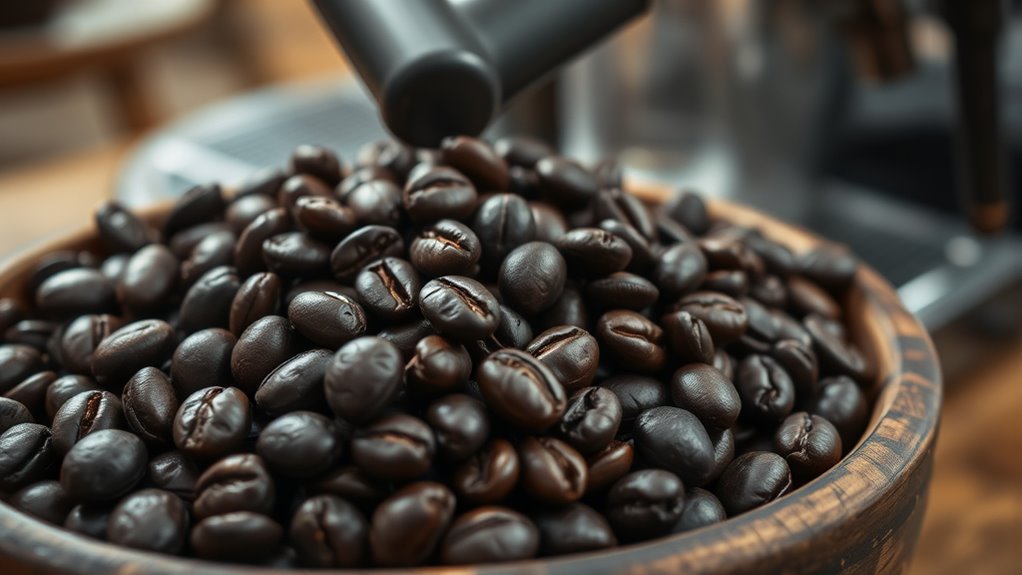
Although espresso beans come from the same coffee plants as regular beans, their distinct roasting process sets them apart. You’ll notice espresso beans undergo a longer, higher-temperature roast, which intensifies their boldness and aroma.
This darker roast develops a richer, fuller flavor profile compared to the lighter roasts common in regular coffee.
Additionally, espresso beans often come from specific varieties like Arabica or Robusta, selected for their unique flavor and caffeine content.
While both bean types are ground differently—espresso finely ground for brewing—the roasting style remains the key difference.
This specialized process aims to produce the intense, smooth shot of espresso you’re familiar with, contrasting with the more varied roasting levels seen in standard coffee beans.
Always consider these factors carefully when choosing your coffee. It really makes a difference in the flavor and experience you get from your cup.
Espresso’s distinct caffeine concentration is influenced by the roasting and brewing methods used to extract its bold flavor and stimulant effect.
Are Espresso Beans Safe To Eat On Their Own?
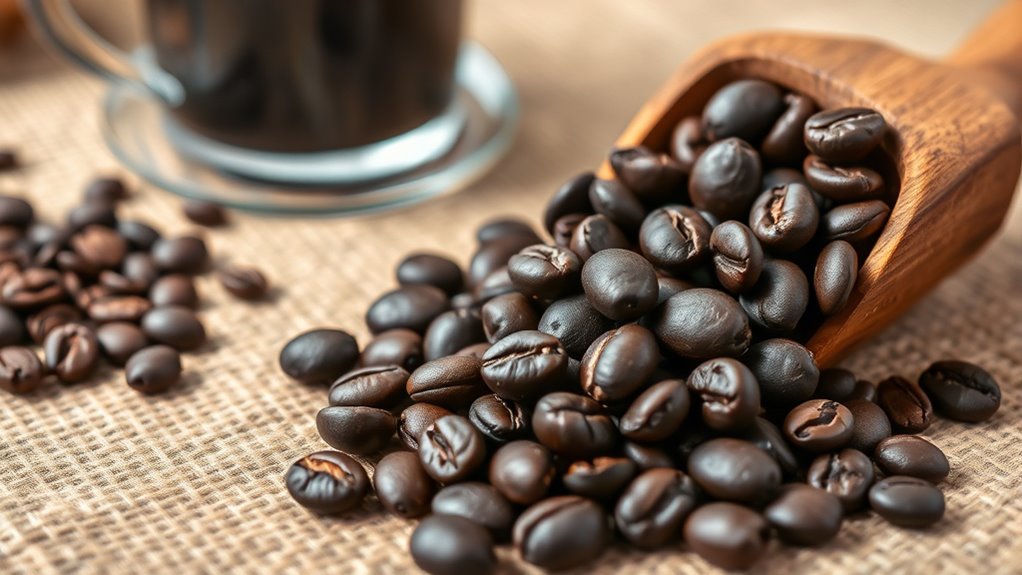
If you enjoy the bold taste of espresso, you might wonder whether eating espresso beans on their own is safe. The good news is that roasted espresso beans are safe to eat when you consume them in moderation.
Their roasting process transforms green coffee beans into crunchy, flavorful beans that many find enjoyable as a snack.
Eating the beans whole preserves their natural caffeine, flavor, and nutritional benefits better than brewing. However, it’s essential to limit how many you eat because the caffeine content can cause side effects like sleep disturbances or stomach discomfort.
Additionally, understanding factors like extraction time can help you appreciate how espresso flavor is developed and why the beans have their distinctive taste.
How Much Caffeine Is In Chocolate-Covered Espresso Beans?
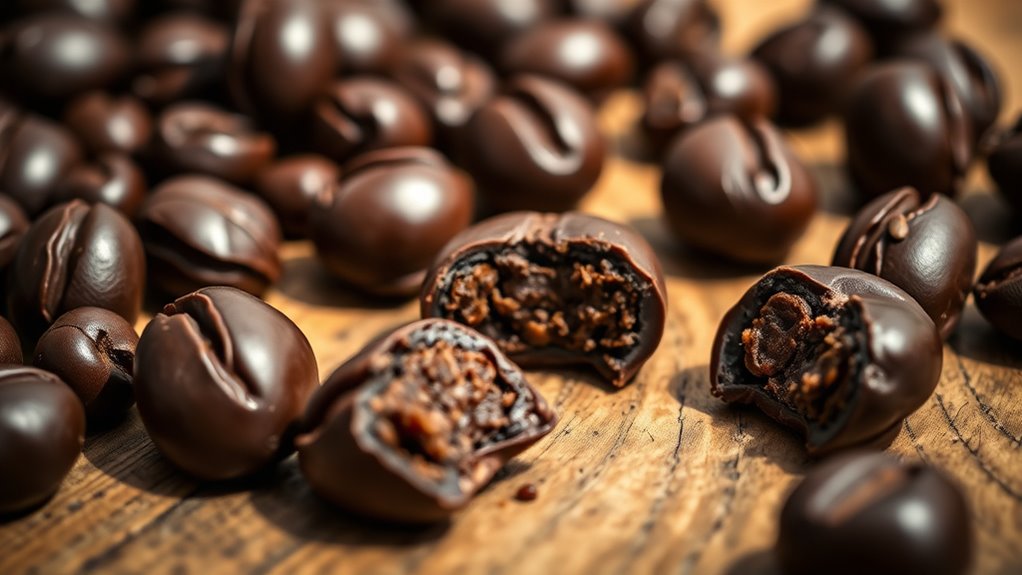
When you eat chocolate-covered espresso beans, you consume about 12 mg of caffeine per bean, combining the caffeine from both the coffee bean and the chocolate coating. This amount can vary based on the coffee bean type, with Robusta beans containing nearly twice the caffeine of Arabica beans.
Keep in mind, 30 beans can provide around 360 mg of caffeine, which is close to the daily recommended limit of 400 mg for most adults. So, it’s good to be aware of how many you’re eating.
| Coffee Bean Type | Caffeine per Bean (mg) | Approximate Beans per 360 mg Caffeine |
|---|---|---|
| Arabica | 8 | 45 |
| Robusta | 15 | 24 |
| Mixed | 12 | 30 |
Consume these beans cautiously to avoid excessive caffeine intake and side effects. It’s easy to lose track, but a little mindfulness goes a long way.
How Many Espresso Beans Should You Eat?
You should stick to about 10 to 11 espresso beans if you want a moderate caffeine boost without risking any side effects. Each bean has roughly 12mg of caffeine, so eating more than 30 beans could get you close to—or even past—the daily recommended limit of 400mg. It’s a good idea to start with a smaller amount to see how your body reacts. That way, you can avoid things like jitters or trouble sleeping. For a bold, balanced flavor, using 2-3 shots of espresso is recommended to enhance your caffeine intake safely, as detailed in the Coffee Strength Adjustments.
Recommended Daily Consumption
How many espresso beans should you eat daily to enjoy their benefits without risking negative effects? Experts recommend limiting your intake to around 30-33 beans per day. This keeps caffeine consumption within safe limits for most adults.
Since about 11 beans deliver roughly 132 mg of caffeine, eating more than this can quickly add up. If you’re new to espresso beans, start with fewer than 10 to gauge your tolerance. This helps you avoid side effects like jitters or gastrointestinal discomfort.
Remember, individual sensitivity varies, so you should adjust your intake accordingly. Moderation is key. Stick to recommended amounts to benefit from espresso beans without experiencing negative symptoms.
Always listen to your body and consult a healthcare provider if you’re uncertain. Also, understanding the roast level can help you better assess how the beans might affect you, as darker roasts contain more oils influencing caffeine absorption.
Caffeine Effects Consideration
Although espresso beans offer a convenient caffeine boost, it’s important to take into account their potent effects before consuming them.
Eating about 11 chocolate-covered espresso beans delivers roughly 132 mg of caffeine, close to the recommended 400 mg daily limit for most adults.
Consuming more than 30 beans can push you past safe caffeine levels, risking sleep problems, jitters, and heart palpitations.
Since each bean contains around 12 mg of caffeine, though this varies by type and roast, monitoring your total intake from all sources is vital.
If you’re sensitive to caffeine or pregnant, limiting yourself to 5-10 beans is safer.
Always consider your overall caffeine consumption to determine how many espresso beans you can eat without adverse effects.
The caffeine content in espresso beans can vary significantly depending on factors like bean type and roast level, which affects how much caffeine you actually consume per bean.
What Happens If You Eat Too Many Espresso Beans?
If you consume too many espresso beans, you risk ingesting an excessive amount of caffeine that can trigger symptoms like insomnia, jitteriness, and a rapid heart rate. Eating beyond the recommended moderate amount, generally 11 to 30 beans, increases these risks markedly.
Consuming too many espresso beans can cause insomnia, jitteriness, and rapid heart rate due to excess caffeine.
Plus, the high acid content in espresso beans may cause gastrointestinal issues such as heartburn, nausea, and stomach upset. Overconsumption can also lead to dehydration and headaches because of caffeine’s stimulant effects.
Sensitive individuals, including pregnant women, might experience heightened anxiety, restlessness, and trouble sleeping. It’s important to keep an eye on your intake and remember that eating too many espresso beans isn’t just about caffeine.
It also affects your digestive system and overall well-being. Staying within moderate limits helps prevent these uncomfortable and potentially harmful effects.
Because espresso contains about 63 mg of caffeine per shot, consuming many beans quickly can lead to a rapid and intense caffeine absorption that intensifies these symptoms.
Enjoying Chocolate-Covered Espresso Beans Safely
You can definitely enjoy chocolate-covered espresso beans safely, just as long as you keep moderation in mind. Each bean contains about 12 mg of caffeine, so eating too many might lead to some unwanted side effects.
It’s a good idea to aim to stay within the recommended 400 mg daily caffeine limit. Also, be aware of how your body reacts—if you notice any sensitivity symptoms, it might be time to cut back a bit.
And here’s a little tip: storing your beans airtight in the fridge helps keep them fresh and flavorful. That way, your snack stays enjoyable and you stay responsible!
For coffee enthusiasts interested in brewing, learning about espresso machine automation can enhance your overall coffee experience.
Moderation And Caffeine Limits
Because each chocolate-covered espresso bean contains about 12mg of caffeine, keeping track of your intake is essential to avoid exceeding the recommended daily limit of 400mg for most adults. That means roughly 30 beans max per day.
To enjoy them safely, consider these guidelines: Limit total caffeine from all sources to stay within safe levels. Monitor your consumption closely, especially if you drink coffee or energy drinks.
Pregnant individuals and caffeine-sensitive people should reduce their intake considerably.
Spread your intake throughout the day to prevent sudden caffeine spikes. Be aware of how your body responds and adjust accordingly.
Consistently consuming caffeine beyond the safe daily limit can lead to negative side effects and should be avoided.
Potential Side Effects
While chocolate-covered espresso beans offer a convenient caffeine boost, consuming them in excess can trigger side effects such as insomnia, headaches, and a rapid heart rate.
The high caffeine content can also increase stomach acid, leading to heartburn and nausea.
Eating too many may cause dehydration and digestive discomfort, especially if you overdo it.
If you’re pregnant or sensitive to caffeine, it’s best to limit your intake to avoid sleep disturbances and anxiety.
Moderation is key to enjoying these treats safely without risking negative health effects.
Being mindful of how many you consume helps you benefit from their energy lift while minimizing the chance of unpleasant reactions.
Always listen to your body and adjust your consumption accordingly.
Keep in mind that caffeine concentration in espresso beans is much higher than in brewed coffee, so portion control is essential to avoid excessive intake of caffeine.
Proper Storage Tips
Managing how you store chocolate-covered espresso beans plays a big role in keeping them fresh and safe to eat. To make sure they stay tasty and flavorful, here are some essential storage tips you should follow.
First, use an airtight container to keep moisture out and preserve freshness. Then, store the container in a cool, dry place away from direct sunlight. This helps maintain the beans’ texture and flavor.
If you want to extend their shelf life, refrigerate them. When properly sealed, they usually last about 2 to 4 weeks in the fridge. Just be sure not to place them near strong-smelling foods because the beans can easily absorb odors.
Also, before sealing the container, make sure the beans are completely cooled and dry. This prevents condensation, which could lead to mold growth.
Trust me, these simple steps make a big difference!
How To Make Homemade Chocolate-Covered Espresso Beans
If you want to enjoy a rich and energizing treat, making homemade chocolate-covered espresso beans is a straightforward process that starts with selecting high-quality dark chocolate containing at least 70% cocoa. This guarantees both health benefits and ideal melting.
Choose your preferred coffee beans, Arabica for flavor or Robusta for caffeine strength, and roast them to your desired level.
Melt the chocolate gently using a double boiler or microwave, stirring until smooth. Add the roasted espresso beans and coat them evenly.
Use a fork to lift each coated bean, letting excess chocolate drip off before placing them on parchment paper.
Let the beans cool and dry at room temperature for several hours. This careful approach helps achieve a balanced, enjoyable treat without compromising texture or flavor.
For an extra boost of authentic coffee flavor, consider incorporating espresso powder into your chocolate coating for deeper, richer notes.
It’s a simple way to make a delicious snack you can feel good about!
Storing Chocolate-Covered Espresso Beans For Freshness
Because chocolate-covered espresso beans combine two perishable ingredients, proper storage is essential to keep them fresh and flavorful. To keep them at their best, you should store them in an airtight container to prevent air and moisture from getting in.
Keep them in a cool, dry place between 60-70°F (15-21°C). If you need to refrigerate them, make sure they’re sealed airtight to avoid moisture and chocolate bloom.
Avoid warm or humid areas since these can cause melting and that whitish chocolate bloom you don’t want.
For long-term storage, freeze the beans while sealed. When you’re ready to enjoy them, thaw gradually at room temperature before opening.
Following these steps helps preserve both the chocolate’s texture and the coffee bean’s aroma, so your chocolate-covered espresso beans stay fresh and delicious.
Frequently Asked Questions
Can Espresso Beans Cause Allergic Reactions?
Yes, espresso beans can cause allergic reactions, especially if you have nut or seed allergies. You might experience itching or swelling, so it’s best to consult an allergist before trying them to stay safe and informed.
Better safe than sorry, right? Talking to a professional can really help you understand your risks and how to handle any reactions.
Do Espresso Beans Affect Dental Health?
Yes, espresso beans can affect your dental health by eroding enamel and staining teeth due to their acidity and tannins.
To protect your teeth, brush regularly and rinse with water after eating them.
Taking these simple steps can help keep your smile bright and healthy!
Are Espresso Beans Suitable for Children?
You shouldn’t give espresso beans to children since their high caffeine content can cause jitters, increased heart rate, and sleep issues. It’s safer to avoid them entirely to protect your child’s health and well-being.
Honestly, it’s just not worth the risk. Kids are more sensitive to caffeine, so even small amounts can have a big impact. Keeping espresso beans away from children is a simple way to keep them safe and healthy.
Can Espresso Beans Be Used in Cooking Recipes?
Yes, you can use espresso beans in recipes. They have about 60-80 mg of caffeine per tablespoon when ground.
Just grind them finely for even flavor and texture. Use sparingly though, so you don’t end up with too much bitterness or caffeine.
It’s all about balance to get that perfect taste in your dish.
How Do Espresso Beans Compare Nutritionally to Regular Coffee?
Espresso beans pack more caffeine and antioxidants per serving than regular coffee, giving you faster nutrient absorption. However, roasting reduces some nutrients, so while nutritionally dense, consume them cautiously to avoid excessive caffeine intake.
Just keep in mind, too much caffeine can be a bit much for some people. So, enjoy your espresso beans, but maybe don’t go overboard. It’s all about balance!
Conclusion
So, yes, you can eat espresso beans, but don’t go thinking they’re candy-coated energy bombs without limits. Munching a handful might give you a jittery dance party, not a calm coffee break.
Remember, those little beans pack a caffeine punch stronger than your average cup, so treat them like the potent power snacks they are. Enjoy them thoughtfully, or you might end up wired enough to debate philosophy with your toaster.