Yes, a latte always contains espresso, which is its true foundation. When you order a latte, you get 1 or 2 bold espresso shots that deliver rich coffee flavor and essential caffeine. This perfectly balances the creamy milk.
Espresso’s high-pressure extraction brings intense oils and crema that define the latte’s texture and taste. Without espresso, a latte wouldn’t have its signature depth or strength.
Keep exploring to understand how espresso’s roast and preparation shape your perfect latte.
What Is Espresso and Its Role in a Latte?
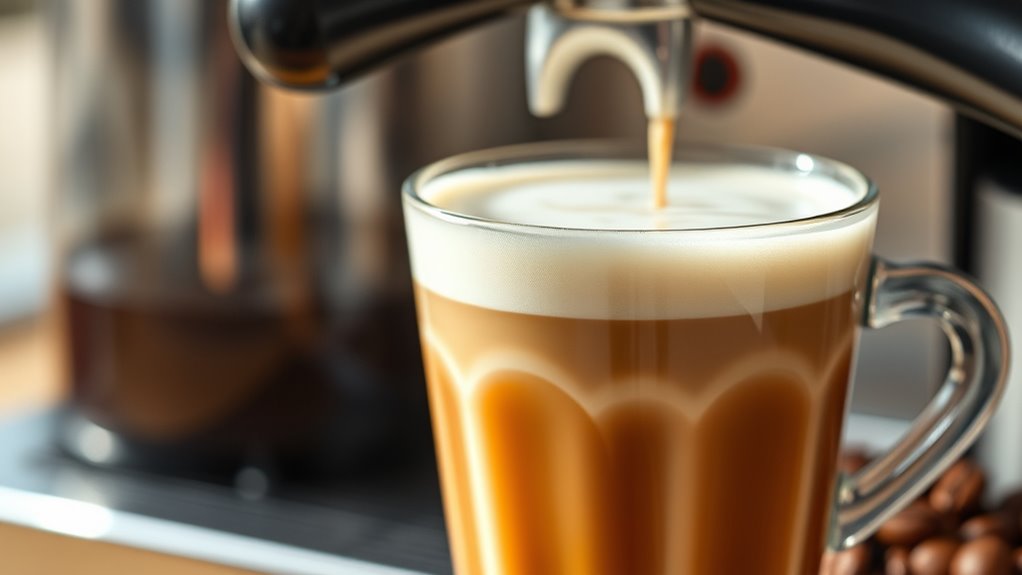
Although you might think a latte is all about the milk, espresso actually plays an essential role in defining its character. Espresso is a concentrated coffee shot made by forcing hot water under high pressure through finely-ground coffee beans. This process extracts a bold, intense flavor that forms the core of your latte.
Typically, a latte contains one or two shots of espresso, delivering most of the caffeine and coffee strength. Without espresso’s intensity, the large volume of creamy milk would overwhelm the coffee taste.
The quality and strength of the espresso directly shape the latte’s flavor profile, ensuring that every sip balances rich coffee notes with smooth creaminess. Achieving the right espresso extraction time is crucial to maintaining the balance of flavors in a latte.
How Espresso Shapes Latte Flavor and Texture

When you take a sip of a latte, the bold, concentrated espresso shot is what delivers the distinctive coffee flavor that cuts through the creamy milk. This pressurized extraction pulls essential oils and solids, producing the rich crema that adds depth and texture.
Despite the milk’s volume, the espresso’s intensity guarantees the coffee flavor remains prominent and balanced. The espresso’s quality and roast level directly influence the latte’s complexity, shaping both taste and mouthfeel.
Its concentrated nature creates a smooth, harmonious blend, where the espresso’s boldness complements the milk’s creaminess. Without that precise shot, the latte would lack the defining richness and layered texture that make it such a satisfying coffee experience. The pressure-driven process of pulling an espresso shot is key to extracting the complex flavors that characterize a well-made latte.
Why Is Espresso Essential for a True Latte?
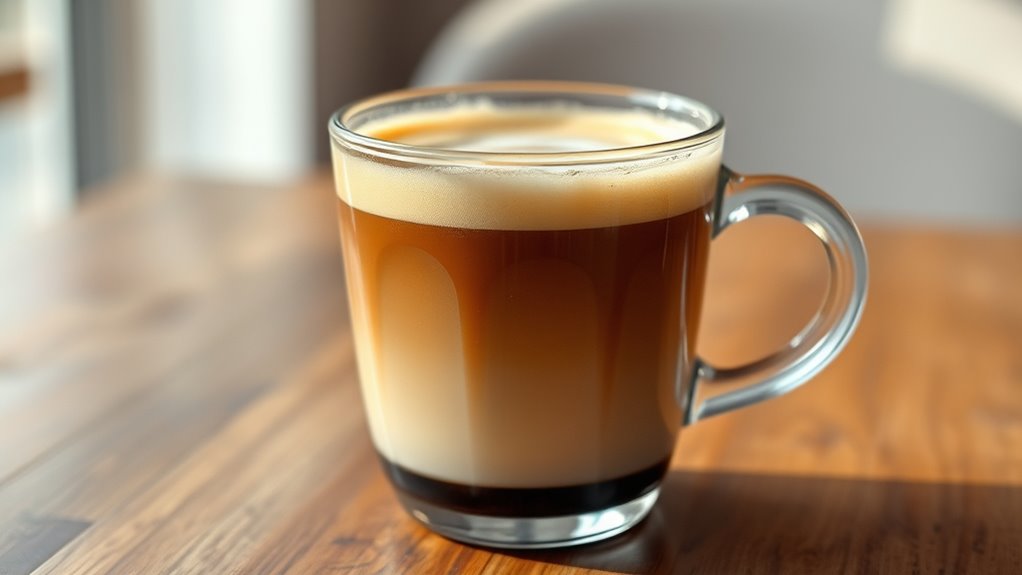
Because espresso delivers a concentrated burst of coffee flavor and rich oils extracted under pressure, it forms the essential base of a true latte. Without this intense shot, you’d just have steamed milk with flavoring, lacking the bold coffee essence that defines a latte.
Espresso’s pressure-based extraction pulls out compounds other methods can’t, giving the drink its signature depth. It balances the large volume of steamed milk, creating the harmonious blend you expect. Plus, the caffeine kick and rich flavor differentiate it from other milk-coffee drinks.
Additionally, the fine grind size and consistent 9 bars pressure used in espresso preparation ensure optimal flavor and crema, which contribute to the latte’s distinctive taste.
| Feature | Importance in Latte |
|---|---|
| Concentrated Flavor | Provides bold coffee taste |
| Pressure Extraction | Extracts rich oils and compounds |
| Balance with Milk | Harmonizes strength and creaminess |
How Much Espresso Is Typically in a Latte?
When you order a latte, you’ll usually get one or two shots of espresso. That’s about 1 to 2 ounces of concentrated coffee.
No matter if you choose a small or large cup, the amount of espresso typically stays the same. The milk is what changes to fill up the rest of the cup.
Knowing this balance is pretty helpful. It lets you appreciate how the espresso’s strength influences the flavor and caffeine kick in your latte.
Standard Espresso Shot Amount
Although latte sizes can vary, the amount of espresso they contain remains fairly consistent. Typically, a standard latte includes one shot of espresso, which is about 1 ounce (30 ml).
This is especially true for a 12-ounce latte, where a single shot provides a balanced flavor without overpowering the milk.
Even when you order a larger latte, such as 16 ounces, the espresso content usually stays at one or two shots.
Cafes prioritize shot count over volume, so the espresso flavor and caffeine depend on how many shots are used, not the cup size.
Understanding this standard helps you anticipate the strength and taste of your latte, whether you prefer a mild or bolder coffee experience.
It’s pretty handy to know when you’re deciding how strong you want your coffee to be!
Adjusting the number of shots is key to customizing the espresso strength in your latte.
Single vs Double Shots
How much espresso goes into your latte can vary depending on whether you choose a single or double shot. Typically, a standard 12 oz latte contains one shot of espresso, which is about 1 oz, delivering roughly 63 mg of caffeine.
If you prefer a stronger coffee flavor, you can opt for a double shot, doubling the espresso volume to approximately 2 oz and nearly doubling the caffeine content.
Many cafes default to double shots for larger lattes to maintain a balanced taste against the increased milk volume.
Choosing between single and double shots affects not only the intensity and caffeine kick but also how bold the espresso flavor stands out in your latte.
Your choice shapes the entire drinking experience. So, whether you like it mild or strong, it’s all about what suits your taste best.
The typical milk-to-espresso ratio of about 3:1 helps balance the boldness of the espresso while creating a smooth texture.
Latte Volume And Espresso
Understanding the amount of espresso in your latte helps you appreciate how this concentrated coffee shapes the drink’s character. Typically, the espresso content varies based on latte size and barista preference. Here’s a clear breakdown:
A standard 12 oz latte usually has 1 to 2 shots of espresso, about 1-2 ounces of concentrated coffee. Smaller lattes commonly contain a single shot, balancing flavor without overpowering milk.
Larger lattes, like 16 oz or more, often feature double shots to boost coffee intensity.
Espresso comprises roughly 10-15% of the total drink volume, making it a small but powerful flavor base.
Knowing this helps you understand how the espresso volume influences both caffeine strength and taste in your latte. Increasing the number of shots results in a more robust, full-bodied coffee flavor due to the shot count’s effect.
How Espresso Roast Affects Latte Flavor
You’ll notice that the roast strength and body of your espresso play a big role in how it stands up to milk in a latte.
Darker roasts, with their rich oils and bold flavors, really cut through the creaminess better than lighter roasts. Those lighter ones can sometimes get lost in all that milk.
Additionally, understanding the alcohol content in espresso-based cocktails like the Espresso Martini can enhance your appreciation of espresso’s robust flavor profile.
Roast Strength And Body
Because espresso roast directly influences the strength and body of your coffee, it plays a critical role in how your latte tastes. When you choose the right roast, your latte’s flavor shines through the milk. Here’s what to take into account:
- Dark roasts, like ARC’s Spectre, have a strong body that stands out in milk, giving your latte a bold presence.
- Light and medium roasts have thinner bodies, which can get lost or muted when mixed with steamed milk.
- The roast level affects flavor retention. Darker roasts maintain boldness better in milk-based drinks.
- A high-body espresso roast ensures your latte won’t taste diluted but rich and robust.
Selecting a roast with strength and body guarantees your latte stays flavorful and balanced. It’s all about finding that perfect balance so your coffee really shines through. Additionally, the extraction time during espresso brewing also influences how well the roast’s flavors are preserved in your latte.
Milk Compatibility With Roast
How does the roast level of your espresso influence the flavor of your latte? Dark espresso roasts, like ARC’s Spectre, have a bold, full body that lets their flavors shine through the milk’s creaminess. Their strength and oil content cut through milk, preserving a rich, balanced taste.
Lighter roasts, however, often fade when paired with milk because their thinner body can’t hold up. This usually results in a muted latte flavor.
Medium roasts fall in between. They offer moderate body and versatility but might lack the robustness needed to stand out in a milk-heavy drink.
This is because darker roasts produce thicker, more stable crema, which enhances texture and visual appeal in milk-based drinks.
Can You Make a Latte Without Espresso?
Can you enjoy a latte without using espresso? While a traditional latte relies on one or two shots of espresso for its signature flavor, you can create similar drinks without it. Here’s how you might approach it:
Use strong brewed coffee or cold brew as your base instead of espresso. Heat and froth milk just like you’d for a classic latte. Combine the coffee concentrate and milk for a creamy, coffee-milk blend. However, using a doppio espresso can provide a richer flavor and stronger caffeine content, enhancing the latte experience.
Common Espresso and Latte Questions Answered
When you order a latte, you’re getting a carefully balanced drink that always includes one or two shots of espresso as its foundation. This concentrated coffee provides the bold flavor and caffeine kick, perfectly balanced by steamed milk. Whether you choose a 12 oz cup with one shot or double shots for more strength, the espresso content stays consistent, usually about 63 mg of caffeine per shot.
Here’s a quick guide to common questions:
| Question | Answer |
|---|---|
| How many espresso shots in a latte? | Usually 1-2 shots |
| Does espresso define a latte? | Yes, it’s the coffee base |
| Caffeine per espresso shot? | About 63 mg |
| Can a latte be made without espresso? | Traditionally no |
| Difference between latte and flat white? | Latte has more milk, same espresso |
Frequently Asked Questions
What Types of Milk Work Best in a Latte?
You’ll find whole milk works best for a rich, creamy latte, while 2% offers smooth microfoam. Oat and almond milk suit plant-based options but vary in sweetness and texture, so choose based on your flavor preference.
If you like something a bit lighter, 2% is a great middle ground. And for those who want to keep it dairy-free, oat milk tends to froth well and has a mild taste. Almond milk is a bit nuttier and can be sweeter, so that might sway your choice too.
How Long Should You Steam Milk for a Latte?
You should steam milk for about 20 to 30 seconds, keeping the temperature between 140°F and 155°F.
Insert the steam wand just below the surface and spin gently. This helps create smooth, velvety microfoam for your latte.
It’s all about getting that perfect texture and temperature to make your drink just right.
Can a Latte Be Served Iced or Only Hot?
You can definitely enjoy a latte iced or hot. For iced, you’ll pour espresso over cold milk and ice, skipping steaming. It’s a revitalizing, smooth option.
Especially perfect when you want a cool caffeine boost.
What Is the Difference Between a Latte and a Cappuccino?
You’d think a latte and cappuccino are worlds apart, but the difference lies in milk and foam. Lattes have lots of steamed milk and little foam, while cappuccinos balance equal espresso, milk, and thick frothy foam.
It’s really all about the texture and ratio. So, if you like your coffee creamy with just a touch of foam, go for a latte. But if you want a stronger coffee flavor with a fluffy top, a cappuccino’s your best bet.
How Do Latte Art Designs Affect the Drink Experience?
Latte art designs enhance your drink experience by engaging your senses visually and emotionally. They reveal the barista’s skill and influence the aroma and texture of your coffee.
Plus, seeing those beautiful patterns encourages you to savor every sip more mindfully and joyfully. It’s like a little extra treat that makes your coffee moment feel special.
Conclusion
Now that you know espresso is the heart of a true latte, you can appreciate how it weaves bold flavor and creamy texture into every cup. Without it, a latte loses its soul, becoming just warm milk with a hint of coffee.
So next time you sip that velvety delight, savor the espresso’s rich embrace. It’s the secret that turns simple milk into a masterpiece you can’t resist.