To make espresso with instant coffee, dissolve 2-3 teaspoons of high-quality instant coffee in 2 tablespoons of warm water for a single shot, or about 5 teaspoons for a double. Use water heated just below boiling to avoid bitterness, then whisk vigorously to create a thick, concentrated brew resembling espresso.
Adjust the coffee-to-water ratio to your taste for strength. This simple method won’t replicate true espresso’s crema but delivers rich flavor fast. Give it a try and see how it works for you.
Feel free to experiment a bit to perfect your instant espresso craft. It’s a quick hack that can come in handy when you’re short on time or equipment.
How To Make Instant Coffee Espresso: A Quick Start Guide

Although you can’t replicate true espresso with instant coffee, you can create a concentrated, espresso-style shot by dissolving 2-3 teaspoons of high-quality instant coffee in 2 tablespoons of slightly warm water.
Start by heating the water just enough to be warm, not boiling. This helps avoid bitterness and guarantees smooth dissolution. Stir the coffee thoroughly until fully dissolved, creating a rich, intense base.
Heat water until warm, not boiling, to prevent bitterness and dissolve coffee fully for a rich, smooth base.
Adjust the coffee-to-water ratio depending on how strong you want your shot. A standard espresso is about 1 ounce, so tailor it to your taste.
Remember, instant coffee lacks the pressure extraction of real espresso machines, so avoid using it in those devices.
For a fuller experience, add milk or sweeteners after preparing your concentrated shot. It’s an easy way to enjoy something close to espresso without any fancy equipment.
Keep in mind that true espresso extraction relies on precise timing and pressure to develop its signature flavor and crema.
Differences Between Instant Coffee And True Espresso

You’ll notice that true espresso is made by forcing hot water under high pressure through finely-ground beans.
On the other hand, instant coffee is just dehydrated crystals that dissolve in hot water.
Because of these different brewing methods, the flavors and textures end up quite distinct.
Espresso gives you a richer, more complex taste along with that creamy crema layer on top.
Instant coffee doesn’t have that pressure extraction, so it feels lighter in your mouth and doesn’t have as strong of an aroma.
Proper extraction time is crucial for achieving the optimal flavor and crema quality in espresso.
Brewing Method Contrast
When you compare brewing methods, true espresso relies on forcing hot water through finely-ground coffee at high pressure, typically around 9 bars. This extracts rich oils and complex flavors.
Instant coffee, on the other hand, skips this pressure extraction altogether. It dissolves dehydrated coffee crystals in hot water.
This fundamental difference shapes the brewing experience and equipment needs.
Here’s how they differ:
- Pressure: Espresso requires high pressure; instant coffee needs none.
- Grinding: Espresso uses finely ground beans; instant coffee is already processed into soluble crystals.
- Equipment: Espresso demands specialized machines capable of high pressure; instant coffee only requires hot water.
Understanding these contrasts helps you appreciate why instant coffee can mimic espresso quickly but can never replicate the authentic brewing process.
Ingredient and Flavor Differences
Because true espresso involves brewing finely ground, dark roasted beans under high pressure, it delivers a richer, more concentrated flavor profile than instant coffee. You should know that espresso uses carefully selected beans, roasted specifically for pressure extraction, which creates complex aromas and a thick, golden crema.
Instant coffee, on the other hand, is made from coarser, dehydrated coffee grounds that dissolve in water without pressure, resulting in a simpler, less nuanced taste.
While you can concentrate instant coffee to mimic espresso’s intensity, it can’t replicate the crema or the layered flavors produced by authentic brewing.
Understanding these ingredient and flavor differences helps you set realistic expectations when using instant coffee as a quick espresso alternative.
Additionally, the caffeine content in espresso typically ranges from 47–65 mg per shot, a factor that instant coffee preparations often do not match in concentration, affecting both flavor and stimulant effect caffeine content in espresso.
Top Instant Coffee Brands Ideal For Espresso Shots
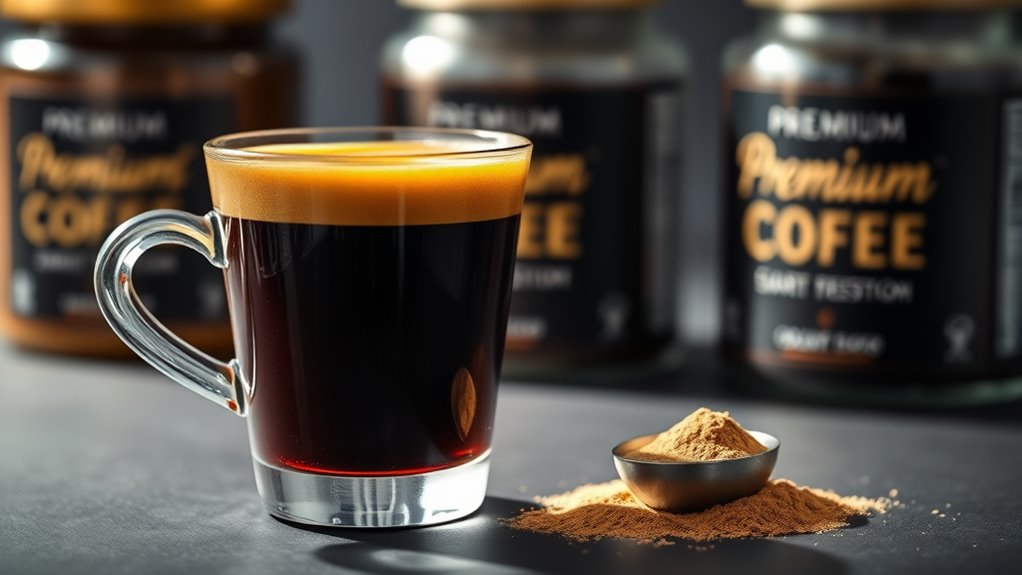
When you’re picking instant coffee for espresso shots, it’s best to go with premium options that bring out rich, authentic flavors. For example, brands like Thrive Market and Mount Hagen are great choices.
Not only do they offer high-quality beans, but they also focus on eco-friendly packaging. Choosing instant coffee with a fine grind size helps mimic the extraction quality of true espresso.
Premium Instant Coffee Options
Although instant coffee often gets overlooked by espresso enthusiasts, several premium brands deliver rich, concentrated flavors perfect for espresso shots. These options use darker roasted, high-quality Arabica beans to ensure a bold, intense profile with higher caffeine content. It’s ideal for your espresso-like drink.
Here are three top picks to contemplate:
1. Thrive Market Organic Instant Coffee
Made from 100% Arabica beans, it offers a smooth, refined flavor that mimics traditional espresso.
2. Mount Hagen Instant Coffee
Known for ethically sourced beans and recyclable packaging, it provides a high-quality, rich taste.
3. Sun Alchemy Specialty Instant Coffee
Infused with mushroom extract, it combines unique health benefits with a distinct, robust flavor.
Choosing these brands guarantees a superior instant espresso experience. You might find one that really hits the spot! Remember, using freshly ground beans or freshly brewed instant coffee can significantly enhance the aroma and crema in your espresso-like drinks.
Eco-Friendly Coffee Packaging
How can you enjoy a rich espresso shot while minimizing your environmental footprint? Choosing instant coffee brands that prioritize eco-friendly packaging is a smart start.
Mount Hagen, for instance, offers recyclable packaging, reducing waste without sacrificing quality.
Thrive Market’s organic instant coffee uses environmentally conscious materials that align with sustainable practices.
Sun Alchemy takes it further by incorporating recyclable and biodegradable components, ensuring minimal environmental impact.
Many top brands now focus on packaging solutions that lower your coffee’s carbon footprint. By opting for these eco-conscious options, you support responsible coffee consumption while savoring your espresso.
Additionally, using instant coffee as a substitute for espresso powder can provide convenience and sustainability benefits.
This way, you not only enjoy convenience and flavor but also contribute to a healthier planet with every cup you brew.
How To Prepare Hot Water For Instant Coffee Espresso
Because the quality of your water directly affects the taste and texture of your espresso, you’ll want to use fresh, filtered water heated to around 195-205°F (90-96°C). This temperature range guarantees ideal flavor extraction and helps dissolve the instant coffee granules fully without burning them.
To prepare the hot water properly, start by boiling fresh, filtered water. Then, let it cool for about 30 seconds so you don’t scald the coffee powder.
Next, measure the water accurately. Use 2 tablespoons (30 ml) for a single shot or 4 tablespoons (60 ml) for a double shot.
Finally, pour the hot water directly over the instant coffee granules in your cup for quick and even dissolution.
Following these steps guarantees a smooth, concentrated espresso-like shot every time. It’s simple, but it really makes a difference!
Keep in mind that water quality and temperature work together to produce the best flavor and prevent bitterness or flatness in your espresso.
Step-By-Step: Making Single And Double Shots With Instant Coffee
When you’re ready to brew your espresso, start by measuring 2 to 3 teaspoons of instant coffee for a single shot or 5 teaspoons for a double shot.
For a single shot, mix your coffee with 2 to 4 tablespoons of hot water; for a double shot, use about ¼ cup.
Use hot water that’s slightly cooled to avoid burning the coffee powder and to enhance flavor.
Stir or whisk vigorously until the coffee completely dissolves, forming a thick, concentrated brew.
You can adjust the coffee-to-water ratio to match your strength preference, but make sure the mixture stays dark and dense for an authentic espresso taste.
This method really transforms instant coffee into a rich, espresso-like shot efficiently and consistently.
For the best flavor, use freshly roasted, high-quality beans ground to a very fine, salt-like consistency as described in the coffee bean selection.
Customizing Your Instant Coffee Espresso For Better Flavor
You can easily tailor your instant coffee espresso by adjusting the coffee-to-water ratio until you find the strength that suits your taste.
Want to mix things up a bit? Adding flavor enhancers like vanilla, cinnamon, or just a touch of sugar can help balance any bitterness and really boost the flavor.
If you’re after something a little more indulgent, try frothing some milk separately and then blending it in. It creates a smooth, latte-style drink that’s a real treat.
Give it a go—you might find your new favorite way to enjoy instant espresso!
Keep in mind that the coffee-to-water ratio plays a crucial role in determining the intensity and flavor of your espresso-style drink.
Adjust Coffee-To-Water Ratio
Although instant coffee can’t perfectly replicate traditional espresso, adjusting the coffee-to-water ratio lets you tailor the strength and bitterness to suit your taste. By modifying this balance, you control how rich and intense your espresso shot becomes.
Try these steps to find your ideal ratio:
- Start with 2 teaspoons of instant coffee per 2 tablespoons of hot water for a balanced flavor.
- Increase the coffee amount relative to water to create a stronger, more concentrated espresso.
- Use less water with the same coffee quantity to boost richness and intensity without added bitterness.
Go ahead and experiment with these ratios until you find a flavor that closely mimics traditional espresso. This way, you can really enhance your instant coffee experience.
Incorporate Flavor Enhancers
Adjusting the coffee-to-water ratio sets the foundation for your instant espresso, but enhancing the flavor profile takes it a step further. You can add a splash of vanilla extract or a pinch of cinnamon to introduce warm, aromatic notes that deepen complexity.
For a richer experience, sprinkle in some cocoa powder to craft a mocha-like shot right at home.
Sweeten your espresso naturally with honey, maple syrup, or flavored syrups to balance bitterness and add layered sweetness. If you want to experiment, try infusing frothed cream with vanilla or caramel for a smooth, indulgent touch.
For a unique twist, consider incorporating mushroom extract or herbal infusions. They not only enhance flavor but also offer potential health benefits, elevating your instant espresso beyond the ordinary.
You can also explore using lighter roast coffee or white espresso to achieve a milder, nuttier flavor profile with higher caffeine content.
Give it a try—you might discover a new favorite way to enjoy your coffee!
Experiment With Milk Options
How can different milk choices transform your instant coffee espresso experience? By experimenting with milk, you tailor texture, flavor, and aroma to suit your taste perfectly.
Whole milk creates a rich, creamy base that intensifies your espresso’s depth. Plant-based options like almond or oat milk introduce subtle nuances and a lighter mouthfeel.
Heating milk to 155-160°F before frothing gives you a smooth, velvety foam that complements the concentrated coffee shot beautifully.
Here are three key ways to customize your milk:
- Choose whole milk for thicker, creamier froth or plant-based milk for a lighter, airy foam.
- Heat milk to the ideal temperature for optimal texture and flavor integration.
- Add flavored syrups, such as vanilla or caramel, to enrich and personalize your drink.
How To Turn Instant Coffee Espresso Into A Homemade Latte
Once you’ve brewed a concentrated shot of instant coffee espresso, transforming it into a creamy homemade latte is simple and rewarding.
Start by heating 10 ounces of milk to 155-160°F. Then froth it using a French press or handheld frother until it’s rich and foamy.
Heat 10 ounces of milk to 155-160°F, then froth until luxuriously rich and foamy.
Pour the coffee shot into a 12-ounce mug. Add sweeteners like vanilla syrup or honey if you like.
Gently top the coffee with the frothed milk, aiming for a layered look that shows off the latte’s smooth texture.
Finally, garnish with a sprinkle of cocoa powder or a drizzle of honey to boost flavor and presentation.
Give it a light stir before you dive in. Enjoy your expertly crafted instant coffee latte with that perfect balance of bold espresso and creamy milk!
Can You Use Instant Coffee In An Espresso Machine?
Why might you consider using instant coffee in an espresso machine? You might think it’s a quick shortcut to espresso, but instant coffee isn’t designed for espresso machines. Here’s why:
Espresso machines require finely ground coffee to create the necessary pressure extraction, which instant coffee lacks since it’s dehydrated and soluble. Using instant coffee in the machine can clog or damage it because the powder doesn’t compact like ground beans.
The brewing process won’t extract proper flavor, resulting in weak, off-tasting shots.
Instead of using instant coffee in your espresso machine, dissolve it separately in hot water to mimic espresso’s strength. This method preserves your machine and gives you a better-tasting cup.
Espresso Vs. Instant Coffee: Clearing Up Common Myths
Although instant coffee offers convenience, it’s quite different from true espresso in both how it’s made and how it tastes. Espresso is brewed under high pressure using finely ground beans. This process creates a rich, full-bodied shot topped with crema.
Instant coffee, on the other hand, is just dehydrated crystals that dissolve in hot water without any pressure. It doesn’t have the signature crema or the same texture you get from espresso.
| Feature | Espresso |
|---|---|
| Brewing Method | High-pressure extraction |
| Coffee Form | Finely ground beans |
| Texture | Thick, rich, with crema |
| Equipment Needed | Espresso machine |
| Flavor Profile | Complex, intense |
Instant coffee tries to mimic espresso’s taste but can’t match its authentic body or crema. So, there’s a clear difference between the two.
Tips For The Strongest, Richest Instant Coffee Espresso
To craft the strongest, richest instant coffee espresso, you need to use a higher coffee-to-water ratio and make sure your water is just below boiling to fully extract the flavor. This method helps you get maximum dissolution and an intense taste.
Follow these tips for a bold espresso-like experience:
- Use 2 to 3 teaspoons of high-quality instant coffee per shot, or about 5 teaspoons for a double shot with ¼ cup water. This concentrates the flavor and strength.
- Heat water until just below boiling. This temperature gets the best extraction without burning the coffee.
- Stir or whisk vigorously until you get a thick, frothy consistency. That really boosts the espresso’s richness and mouthfeel.
Avoid using too much water to keep your espresso from getting diluted. You want to preserve that deep, intense flavor in every cup.
Frequently Asked Questions
How Long Does Instant Coffee Espresso Stay Fresh After Brewing?
You can expect instant coffee espresso to stay fresh for about 30 minutes if kept in an airtight container at room temperature. After that, its flavor and aroma start fading, so it’s best to drink it promptly.
Honestly, the taste just isn’t the same after that window. So, if you want the best experience, try to enjoy it soon after brewing.
Can Instant Coffee Espresso Be Used in Iced Drinks?
Of course, you can make iced instant espresso. It’s not just for sad office mornings. Just brew it strong and then let it cool.
After that, pour it over ice. It dissolves fast and blends perfectly with cold milk or water. Easy and refreshing!
What Is the Caffeine Content in Instant Coffee Espresso?
You’ll find instant coffee espresso contains about 30-50 milligrams of caffeine per shot, depending on the brand and amount used.
If you double the amount, caffeine roughly doubles to 60-100 milligrams. It’s pretty straightforward like that. Just keep in mind, different brands might vary a bit.
Is Instant Coffee Espresso Suitable for Decaf Options?
You won’t get a barista-level decaf espresso from instant coffee, but it’s a handy substitute. It lacks authentic crema and robust flavor, yet offers a convenient, caffeine-free option when you want quick, simple espresso-like satisfaction.
It’s not going to wow you like fresh-brewed espresso, but it works in a pinch. Perfect for those moments when convenience beats complexity.
How Should Instant Coffee Espresso Be Stored for Best Flavor?
You should store instant coffee espresso in an airtight container. Keep it in a cool, dark place away from sunlight. Avoid the fridge because moisture can affect the flavor.
It’s best to use the original packaging or resealable bags to preserve its flavor and aroma. This way, your coffee stays fresh for longer. Just a few simple steps can make a big difference in taste!
Conclusion
Now that you know how to craft espresso with instant coffee, you can enjoy rich, bold flavors without fancy equipment. Imagine Sarah, a busy college student, who nails her morning espresso shot in minutes, fueling her study sessions effortlessly.
With the right instant brand and hot water, you’ll get a surprisingly authentic espresso experience. Keep experimenting with strength and milk froths to perfect your homemade latte.
Instant espresso is a game-changer for convenience and taste. Give it a try and see how easy and satisfying your coffee routine can be!