You might think cold brew is espresso, but they’re quite different. Cold brew steeps coarse grounds in cold water for 12-24 hours, producing a smooth, less acidic drink with fruity, chocolate notes.
Espresso forces hot water under high pressure through finely ground coffee in seconds, creating a bold, rich shot with crema and complex flavors. Their caffeine content, equipment, and flavor profiles don’t overlap.
If you want a deeper understanding, keep exploring their unique qualities and brewing nuances. It’s pretty interesting once you get into it!
Cold Brew vs. Espresso: Definitions and Differences
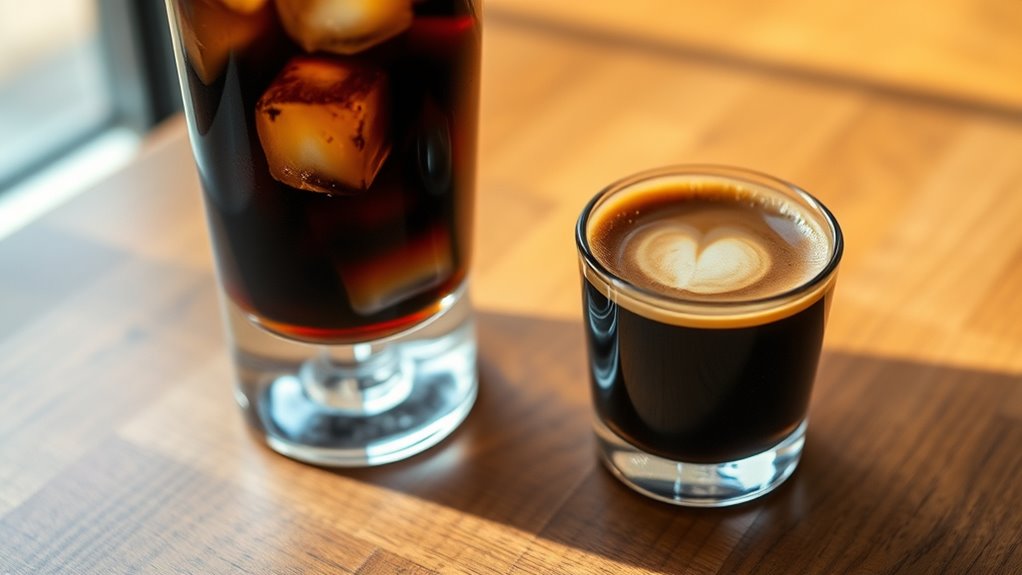
Although both cold brew and espresso revolve around coffee, they differ fundamentally in their brewing methods and resulting characteristics. When you make cold brew, you steep coarsely ground coffee in cold water for 12 to 24 hours, producing a smooth, less acidic concentrate.
Cold brew and espresso differ in brewing techniques, with cold brew steeped slowly for a smooth, less acidic taste.
In contrast, espresso involves forcing hot water under high pressure through finely ground coffee in about 25 to 30 seconds, yielding a strong, concentrated shot topped with crema.
You’ll notice cold brew typically contains 150 to 300 mg of caffeine per 16-ounce serving, while a single 1-ounce espresso shot has about 63 mg.
Cold brew’s cool, revitalizing nature allows it to be served over ice and stored up to two weeks. Espresso is usually served hot and consumed quickly in small amounts.
Espresso’s unique crema development adds a rich, velvety texture and enhances the coffee’s flavor profile.
How Cold Brew and Espresso Brewing Methods Differ
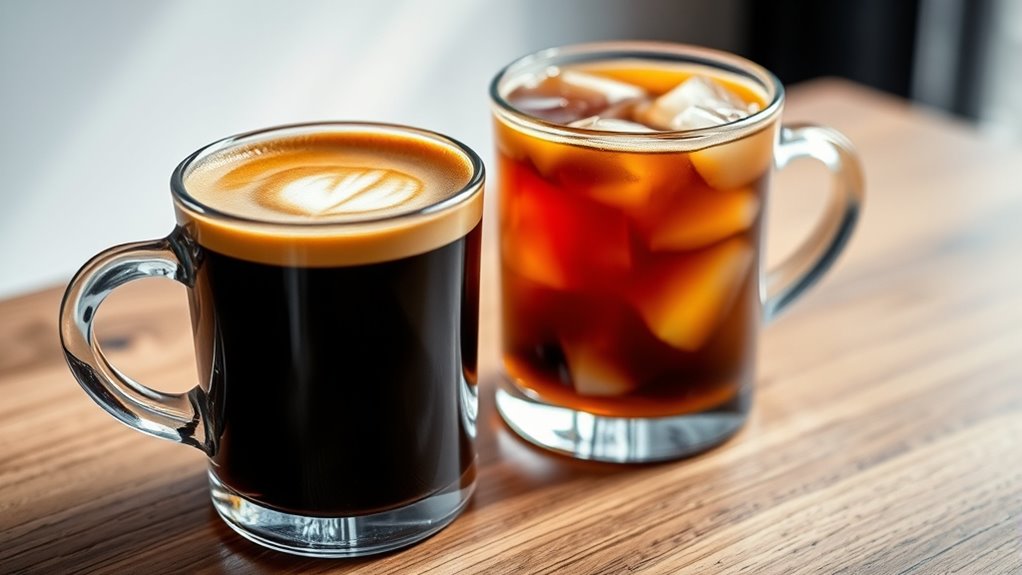
You’ll notice that cold brew relies on a long steeping time—usually between 16 to 24 hours—and uses a coarse grind.
On the other hand, espresso is all about speed, demanding a quick extraction of just 25 to 30 seconds with a fine, powder-like grind.
Temperature and pressure also set these two methods apart. Cold brew uses cold or room temperature water and doesn’t involve any pressure.
Espresso, however, forces hot water—around 201°F—through the grounds under high pressure.
Consistent espresso extraction within the optimal time frame relies on precise control of factors like grind size and water temperature to achieve balanced flavor.
Brewing Time Contrast
When comparing brewing methods, you’ll notice that cold brew and espresso differ dramatically in their approach and timing. Cold brew requires you to steep coffee grounds in cold water for 12 to 24 hours, allowing caffeine and flavors to extract gradually without heat.
In contrast, espresso demands that you force hot water through finely ground coffee under high pressure, producing a concentrated shot in just 25 to 30 seconds. This rapid extraction under heat yields a bold, intense flavor, while cold brew’s long infusion creates a smoother, less acidic profile.
You rely on time to develop cold brew’s character, whereas espresso depends on heat and pressure to quickly pull complex flavors. Understanding this brewing time contrast clarifies why these two methods produce such distinct coffee experiences. The precise control of variables like pressure, temperature, and grind size in espresso extraction is key to achieving its unique flavor profile.
Grind Size Importance
How does grind size influence the distinct outcomes of cold brew and espresso?
For cold brew, you need a coarse grind, about the size of sea salt. This larger particle size slows extraction during the long steep, preventing bitterness and over-extraction.
In contrast, espresso requires an extra-fine, powder-like grind to maximize surface area. This enables rapid extraction under high pressure.
If you use a grind that’s too fine for cold brew, it results in a bitter, muddy cup.
Conversely, a grind too coarse for espresso produces weak, under-extracted shots lacking crema and richness.
Consistency matters, too. Uneven grind size causes unpredictable extraction, affecting caffeine levels, flavor balance, and overall quality.
Understanding these differences ensures you tailor your grind precisely for smooth cold brew or bold espresso.
Slight adjustments in grind size can dramatically impact shot timing, taste, and crema, making grind size precision essential for espresso quality.
Temperature And Pressure
Beyond grind size, temperature and pressure play defining roles in shaping the distinct profiles of cold brew and espresso. When you make cold brew, you steep coarsely ground coffee in cold water at room temperature or refrigerated, without applying heat or pressure. This slow extraction, lasting 12 to 24 hours, yields a smoother, less acidic coffee.
In contrast, espresso demands hot water near 201°F forced through finely ground coffee under roughly 9 bars of pressure. It completes extraction in just 20 to 30 seconds. This intense combination produces a bold, concentrated shot with a rich crema.
That crema is something you won’t find in cold brew because it doesn’t use pressure.
Understanding these factors helps explain why cold brew and espresso differ so much in flavor, texture, and body. It’s pretty interesting when you think about how just temperature and pressure can change the whole coffee experience. Additionally, the long steeping time in cold brew allows for more caffeine extraction overall despite the lower temperature and lack of pressure.
How Grind Size Changes Your Cold Brew and Espresso
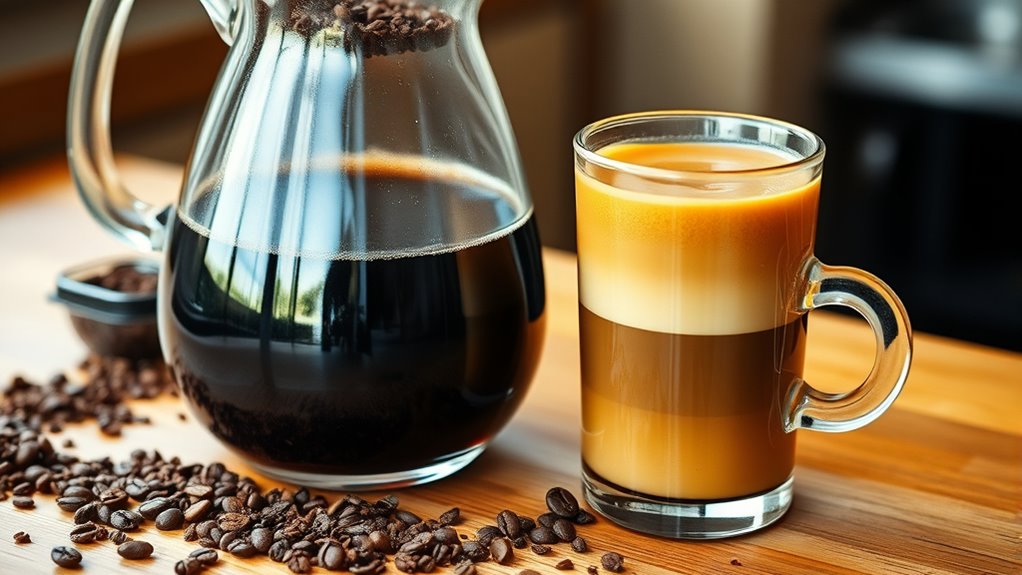
Although grind size might seem like a minor detail, it plays a critical role in determining the flavor and texture of both cold brew and espresso.
For cold brew, you need a coarse grind, about the size of sea salt, to avoid over-extraction and bitterness during its long steeping. If you use too fine a grind, your cold brew can become sludgy and overly bitter.
Espresso, on the other hand, demands a very fine, powder-like grind to maximize surface area, ensuring rapid extraction under high pressure. Using a grind too coarse for espresso results in weak, under-extracted shots.
Understanding and adjusting grind size precisely lets you control extraction rates and flavor profiles, creating balanced, rich espresso or smooth, mellow cold brew.
It’s all about finding that sweet spot to get the best cup every time.
Proper grind size influences extraction time, flavor, and crema quality, making it essential for achieving optimal espresso results with any bean type, especially when using regular coffee beans.
Comparing Caffeine Levels in Cold Brew and Espresso
When comparing caffeine levels in cold brew and espresso, you’ll notice that espresso packs more caffeine per ounce. A single 1 oz shot contains about 63 mg.
Cold brew, on the other hand, usually comes in larger servings, typically 16 oz. It ranges between 150 to 300 mg of caffeine, depending on brewing variables.
So, while espresso is more concentrated, cold brew often delivers more total caffeine because of its volume and extended steeping process. This process extracts caffeine thoroughly.
Keep in mind, cold brew’s caffeine content varies widely based on bean type, grind size, steep time, and dilution. If you want a precise caffeine hit, consider both serving size and brewing method rather than just concentration alone.
Using cold brew instead of espresso in cocktails can also help reduce overall calories while maintaining flavor, especially in drinks like the espresso martini.
Flavor Profiles: What Sets Cold Brew and Espresso Apart
While both cold brew and espresso come from the same coffee beans, their distinct brewing methods create remarkably different flavor profiles that you can easily detect.
Cold brew’s long, cold steeping extracts smooth, slightly sweet notes with chocolate and fruity undertones, resulting in a mellow, less acidic taste.
In contrast, espresso’s rapid, high-pressure extraction delivers a bold, rich, and slightly bitter flavor marked by caramelized and intense coffee notes.
You’ll notice cold brew’s flavor remains stable and smooth over time, emphasizing subtle floral and chocolate hints.
Espresso reveals a complex interplay of bitterness and sweetness with a brighter acidity.
These differences stem directly from how extraction time and temperature influence which compounds are drawn from the beans during brewing.
The high-pressure extraction process in espresso is essential for producing its characteristic crema and complex flavor profile.
Picking the Right Beans for Cold Brew and Espresso
When you’re making cold brew, it’s best to go for medium to dark roast beans. Using a coarser grind helps bring out that smoothness and keeps the acidity in check.
Now, for espresso, you’ll want beans that are roasted longer—think Italian or Espresso Dark Roast. These give you those rich, smoky flavors everyone loves.
Just remember, both the grind size and the quality of the beans play a big role in how your coffee tastes and smells, no matter which method you choose.
For the best results, always use freshly ground beans to preserve the volatile aromatic compounds that enhance flavor and aroma.
Best Beans For Espresso
Choosing the right beans for espresso and cold brew directly shapes the flavor and quality of your coffee. For espresso, you’ll want darker roasts like Italian Roast Espresso, Café Espresso, or Espresso Dark Roast. These deliver deep, smoky flavors with balanced dark chocolate notes, perfect for high-pressure extraction.
Fresh, high-quality beans guarantee richer intensity and complexity. Below is a quick guide to espresso beans:
| Bean Type | Flavor Profile |
|---|---|
| Italian Roast Espresso | Deep, smoky, dark chocolate |
| Café Espresso | Balanced, rich, intense |
| Espresso Dark Roast | Bold, smoky, full-bodied |
Picking these roasts makes sure you get that robust flavor and crema that define excellent espresso. It really takes your brewing experience up a notch. Using high-pressure pumps is essential to achieve the ideal extraction time and balanced taste in espresso brewing.
Ideal Cold Brew Beans
The beans you select for cold brew play a big role in shaping its smoothness and natural sweetness. These qualities are quite different from espresso’s bold intensity.
For cold brew, medium to dark roast beans are your best bet because they bring out chocolate and caramel notes without adding bitterness.
The grind size matters too. Coarse, sea salt-like grounds help prevent over-extraction during the long steeping process.
When picking the ideal beans for cold brew, consider these tips:
- Choose medium to dark roasts for a balanced, smooth profile.
- Opt for coarsely ground beans to avoid harsh bitterness.
- Select freshly roasted, high-quality beans to maximize flavor clarity and aroma.
Following these points will guarantee your cold brew has gentle sweetness and depth, which is totally different from espresso’s intense punch.
Bean Flavor Impact
Although both cold brew and espresso start with coffee beans, their flavor outcomes depend heavily on the bean type and roast profile you select. For cold brew, medium to dark roasts with natural sweetness and chocolate notes create smooth, deep flavors.
Espresso demands dark roasts like Italian or Espresso Dark Roast, delivering bold, smoky, and balanced bitterness. Grind size also matters: coarse for cold brew to avoid over-extraction, extra-fine for espresso to ensure proper extraction.
Your choice of high-quality, freshly roasted beans enhances aromatic complexity and flavor richness in both.
| Brew Type | Roast Profile | Flavor Characteristics |
|---|---|---|
| Cold Brew | Medium to Dark Roast | Smooth, sweet, chocolate notes |
| Espresso | Dark Roast (Italian) | Bold, smoky, balanced bitterness |
| Both | Freshly Roasted Beans | Richness, aromatic complexity |
Choosing Coffee Based on Taste and Caffeine Needs
When you weigh your caffeine needs against flavor preferences, selecting between cold brew and espresso becomes clearer. Cold brew’s higher caffeine content (200-330 mg per serving) offers a sustained energy release. Espresso’s quick, intense boost (64-75 mg per shot) suits immediate alertness.
Flavor plays a vital role: cold brew’s smooth, chocolatey, and fruity notes contrast espresso’s bold, rich, and slightly bitter profile. Consider these points:
- If you want a strong, rapid caffeine hit in a small volume, espresso is your go-to.
- For a mellow, less acidic taste with prolonged caffeine effects, cold brew fits better.
- Balance your choice by prioritizing either flavor complexity or caffeine timing to match your lifestyle and taste buds precisely.
Frequently Asked Questions
Can Cold Brew Be Used as a Base for Espresso Drinks?
Yes, you can use cold brew as a base for espresso drinks by diluting it or reheating it under pressure. It offers a smooth flavor and low acidity, which many people enjoy.
That said, cold brew lacks the traditional espresso’s crema and intensity. So, if you’re expecting the usual espresso punch, be ready for a different experience. But hey, it’s a tasty alternative worth trying!
How Does Water Temperature Affect the Health Benefits of Coffee?
You’ll find that colder water preserves antioxidants and reduces acidity, making coffee gentler on your stomach.
Hotter water extracts more chlorogenic acids but also increases bitterness and compounds that may irritate digestion.
What Equipment Is Best for Making Cold Brew at Home?
You’ll want a cold brew coffee maker or a large French press with a fine mesh filter for precise steeping. Use a kitchen scale to measure coarse grounds and water accurately, ensuring ideal extraction and easy cleanup.
It’s all about getting the right balance, so measuring helps a lot. Plus, having the right gear makes the whole process smoother and less messy.
Does Cold Brew Coffee Go Bad Faster Than Espresso?
No, cold brew coffee doesn’t go bad faster than espresso. You’ll find cold brew lasts up to two weeks refrigerated because it has lower acidity.
Espresso, on the other hand, has volatile oils that mean it stales within hours after brewing. So, cold brew actually keeps its freshness a lot longer. It’s pretty convenient if you like to make coffee ahead of time!
Can Espresso Shots Be Chilled to Mimic Cold Brew Flavor?
You can’t turn a fiery sunrise into a calm dawn by just waiting. Chilling espresso shots won’t mimic cold brew’s smooth, sweet complexity.
Its unique flavor demands slow, cold extraction, not a quick temperature change. So, just cooling down your espresso won’t give you that same mellow taste.
Cold brew is all about patience and a totally different brewing process. Quick fixes like chilling won’t quite hit the mark.
Conclusion
Now that you know the key differences between cold brew and espresso, from grind size to caffeine content, how will you choose your next cup? Both methods highlight unique flavors and strengths. So, your pick depends on whether you want a smooth, mellow sip or a bold, intense shot.
Understanding these nuances lets you tailor your coffee experience precisely to your taste and energy needs. Which brew will fuel your day best?