A standard single shot of espresso is about 30 milliliters (1 ounce), though this can vary slightly depending on your machine and brewing style. A double shot typically yields around 60 milliliters. But factors like grind size, freshness, and machine cleanliness influence the exact volume.
Since volume isn’t always consistent due to crema and density, many experts measure espresso by weight for precision. Understanding these details can help you perfect every shot you pull. It’s all about getting that perfect balance in your cup.
What Is The Standard Volume Of A Single Shot Of Espresso?
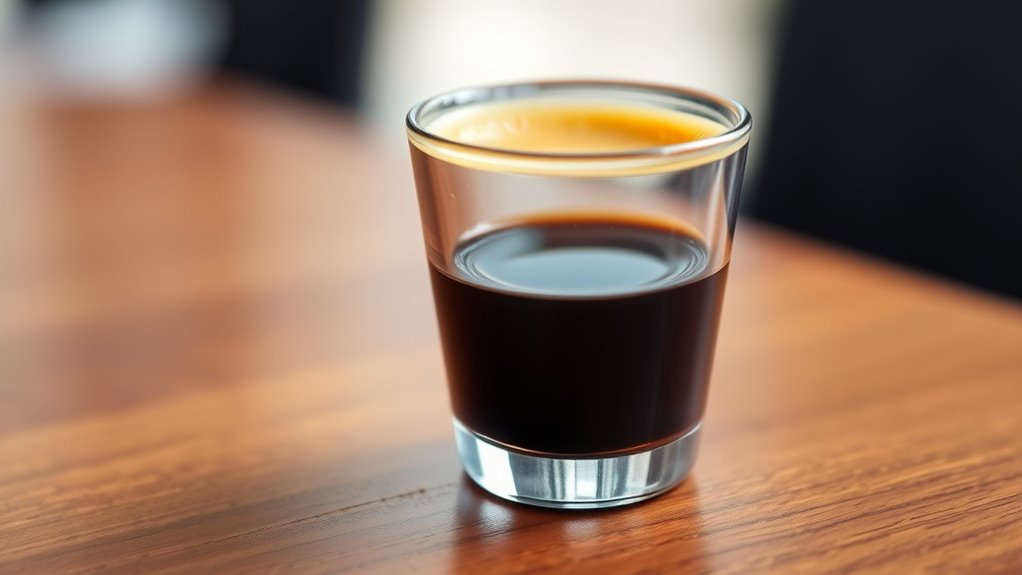
While espresso shot volumes can vary slightly based on the machine or method, you can expect a standard single shot to measure about 30 milliliters (1 ounce). This volume is widely accepted in cafes and espresso recipes worldwide as the benchmark for a single shot.
A standard single espresso shot typically measures around 30 milliliters, a global café benchmark.
Typically, a single shot produces between 25 to 30 ml of liquid coffee, brewed under precise pressure and extraction time.
You’ll find that industry standards recommend measuring by volume rather than weight to maintain consistency since weight can fluctuate with grind size and coffee bean density.
Although slight variations occur, aiming for around 30 ml ensures you get the balanced flavor and strength that defines a classic espresso shot. Consistent extraction timing within the 25-30 second window is crucial to achieving this balance and optimal flavor.
How Many Ml Is A Double Shot Of Espresso And Why It Varies?
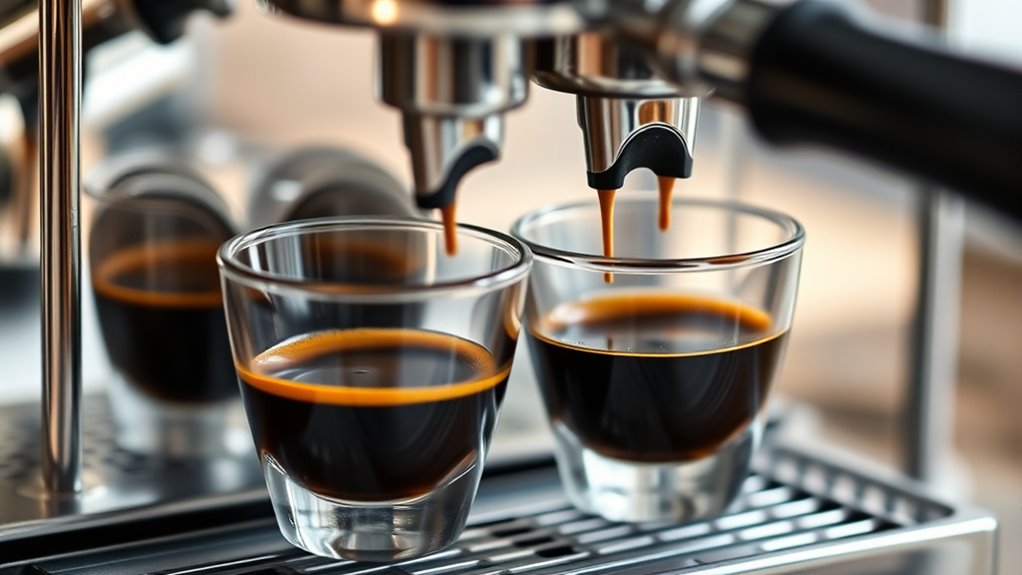
Because a double shot of espresso involves extracting twice the amount of coffee grounds, it usually yields between 50 and 60 milliliters of liquid. The official guideline often settles on 60 ml, but actual volumes can vary depending on factors like the amount of crema, coffee bean roast, and machine pressure.
You’ll notice differences between cafes and home setups due to brewing techniques and equipment calibration. These variables influence the final liquid volume, making it hard to pin down an exact milliliter number every time.
While volume measurements are useful, the double shot’s consistency depends more on controlling weight and extraction parameters rather than aiming for a fixed liquid volume. That’s why the double shot size isn’t always uniform.
Extraction under high pressure is key to producing the characteristic crema and rich flavor that define a quality espresso shot.
Why Measure Espresso By Weight, Not Volume
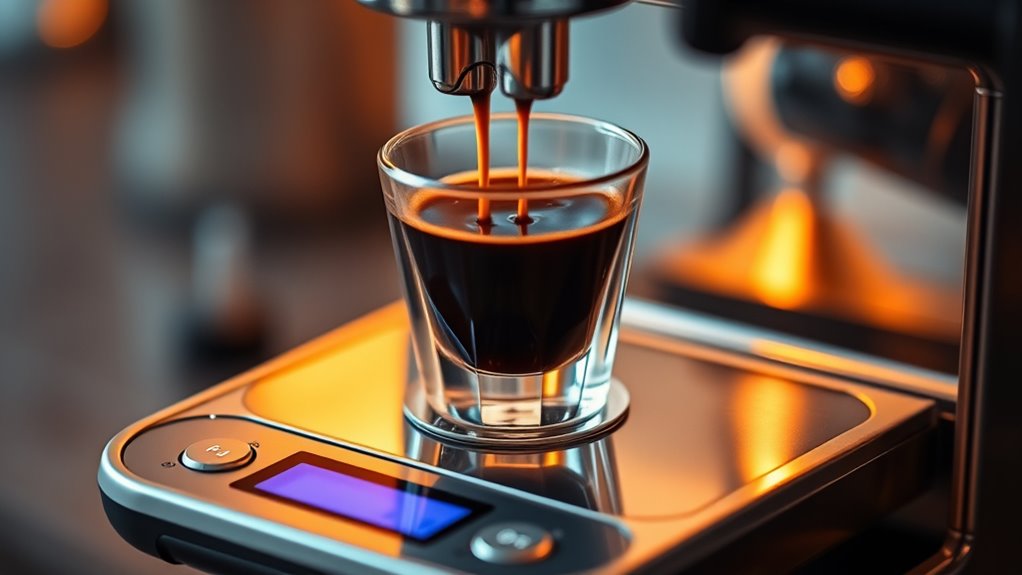
You might expect measuring espresso by volume to be straightforward, but factors like crema and bean roast can distort the actual liquid amount. Crema inflates the visual volume without adding liquid, making volume measurements unreliable.
Instead, measuring espresso by weight gives you greater accuracy and consistency. A standard double shot uses about 18 grams of coffee grounds, producing roughly 36 grams of brewed espresso when weighed.
Using a scale lets you precisely control extraction by accounting for variables like grind size, bean freshness, and machine pressure. These factors influence the final shot size more than volume alone.
Measuring espresso yield by weight also eliminates uncertainty caused by the crema layer, ensuring more reliable and consistent shot results.
How Espresso Brew Ratios Define Shot Size And Flavor
You control espresso’s shot size and flavor by adjusting its brew ratio—that’s the weight of liquid extracted compared to the coffee grounds you start with.
When you go for lower ratios, you get intense, concentrated shots that really pack a punch.
On the other hand, higher ratios give you larger pours that tend to be milder and easier to sip.
Using weight to measure your brew ratio is a great way to fine-tune the extraction.
It helps you keep things consistent, so every shot you pull tastes just right.
Precise measurement using a digital scale with 0.1-gram accuracy is essential for achieving consistent brew ratios and flavor.
Understanding Brew Ratios
When dialing in your espresso, understanding brew ratios is essential to controlling both shot size and flavor. Brew ratios compare the weight of coffee grounds to the weight of espresso extracted. This ratio directly influences the volume and concentration of your shot.
| Brew Ratio | Description |
|---|---|
| 1:1 – 1:1.5 | Ristretto (small, concentrated) |
| 1:2 | Traditional espresso (balanced) |
| 1:3 | Lungo (larger, milder) |
For example, 18 grams of coffee at a 1:2 ratio yields about 36 grams of espresso. Adjusting these ratios lets you precisely control your shot’s size and character. The ideal extraction time of 25-30 seconds at 9 bars pressure plays a crucial role in achieving this balance, ensuring a rich and flavorful espresso shot.
Impact On Flavor
Because brew ratios dictate the amount of water passing through coffee grounds, they play a crucial role in defining both the size and flavor profile of your espresso shot.
A typical 1:2 ratio balances extraction, producing a 50-60 ml double espresso with rich, nuanced flavors.
When you increase the ratio by adding more water, you get a larger, milder lungo with reduced intensity and acidity.
On the other hand, lowering the ratio yields a smaller, more concentrated ristretto, emphasizing boldness and sweetness.
Shot volumes ranging from 15 ml (ristretto) to 90 ml (lungo) greatly shift taste, bitterness, and mouthfeel.
Controlling these ratios precisely lets you tailor your espresso’s strength and flavor, so each shot matches your desired profile without compromising quality or consistency.
Achieving this balance also depends on consistent dosing and tamping techniques to ensure uniform extraction.
Measuring By Weight
How exactly do baristas guarantee each espresso shot hits the perfect balance of flavor and strength every time? They measure by weight. Using 7-9 grams of coffee grounds for a single shot and 14-18 grams for a double, they control the input precisely.
The key is the brew ratio, typically around 1:2, which means the weight of brewed espresso is double the coffee grounds. For example, a double shot yields about 36 grams of liquid espresso.
Measuring output by weight rather than volume assures consistency despite crema or visual differences. This method controls shot size and flavor by keeping coffee-to-water ratios steady.
It lets you replicate your favorite flavor profile every time, whether at home or in a busy café.
Precise control of variables like grind size and shot time is essential to maintain this consistency and achieve balanced extraction.
How Ristretto And Lungo Differ In Volume And Taste
You’ll notice a ristretto pours about 15-20 ml, which is roughly half the volume of a standard espresso.
On the other hand, a lungo can reach 40-50 ml, nearly double the size.
This difference in water volume really changes how they taste.
A ristretto comes out sweeter and more concentrated, while a lungo tends to be milder but also more bitter.
Knowing these contrasts makes it easier to pick the flavor intensity that suits your preference.
The caffeine content also varies with volume, as a standard espresso shot typically contains around 63 mg of caffeine, influencing the strength of your drink.
Volume Differences Explained
While both ristretto and lungo start with the same amount of coffee grounds, their volumes differ a lot because of how much water is used during extraction. A ristretto usually gives you about 15-20 ml since it uses less water, making a shorter, more concentrated shot.
On the other hand, a lungo pulls about 40-50 ml by letting more water flow through the grounds. This creates a larger, milder shot.
The difference in volume comes down to how much water you let pass through, not the amount of coffee.
Knowing this helps you control your espresso’s strength and intensity by changing the water volume instead of the coffee dose. So, if you want a shot with less volume but more concentration, go for ristretto.
For a longer, smoother espresso, choose lungo.
Adjusting the water volume while maintaining the same coffee dose is key to balancing extraction time and flavor in different espresso styles.
Taste Profile Variations
Because ristretto and lungo differ mainly in water volume, their taste profiles vary considerably. Ristretto, with about 15-20 ml, delivers a concentrated, sweeter shot due to less water extracting fewer bitter compounds. Lungo, at 60-90 ml, results in a milder, more bitter flavor from prolonged water contact.
This volume difference shapes their intensity and complexity, giving you distinct experiences from the same coffee dose. It is important to note that true espresso extraction relies on high pressure to achieve its rich crema and complex flavor, which volume alone cannot replicate.
| Aspect | Ristretto | Lungo |
|---|---|---|
| Volume | 15-20 ml | 60-90 ml |
| Flavor Intensity | Intense, rich, sweet | Milder, bitter, complex |
| Water Used | Less (half espresso) | More (extended shot) |
| Extraction Time | Short | Longer |
Choose based on your preference for boldness or subtlety.
How Grind Size, Freshness, And Machine Cleanliness Affect Espresso Shot Volume
Although many factors influence espresso shot volume, grind size, bean freshness, and machine cleanliness play essential roles.
When you use a finer grind, it increases resistance during extraction. This typically produces a smaller, more concentrated shot with less volume.
Using stale beans affects crema production, resulting in a flatter shot that looks like it has less volume due to fewer bubbles and foam.
Machine cleanliness directly impacts water flow. A clean machine ensures consistent pressure and extraction, maintaining your desired shot volume.
Conversely, buildup inside your machine can cause blockages, altering water pressure and leading to inconsistent shot sizes.
To achieve the perfect espresso volume, focus on using fresh beans, adjusting your grind appropriately, and keeping your machine well-maintained and clean.
Tips For Accurately Measuring Your Espresso Shots At Home
Maintaining grind size, bean freshness, and machine cleanliness sets the foundation for consistent espresso volumes. But you also need accurate measurement techniques at home. Use a dedicated espresso shot glass with clear volume markings like 30ml for single shots and 60ml for doubles to gauge output precisely.
However, crema can distort visual volume, so weighing your coffee grounds, aiming for about 18 grams, and measuring the extracted espresso by weight offers greater consistency.
Time your extraction carefully, targeting 25-30 seconds to ensure proper shot development. Adjust your volume based on taste and equipment, but always rely on weight and timing rather than visual cues alone.
These practices help you replicate your ideal shot every time with accuracy and confidence.
Frequently Asked Questions
What Type of Coffee Beans Are Best for Espresso Shots?
You’ll get the best espresso shots using freshly roasted Arabica beans for balanced flavor. These are often blended with Robusta to boost crema and caffeine.
Dark roasts work well too. They deliver rich, bold, caramelized notes you’ll really appreciate. Give it a try and see how the flavor changes!
How Long Should an Espresso Shot Pull Take?
You should pull an espresso shot for 25 to 30 seconds to achieve ideal extraction. Pulling too fast under-extracts the coffee, while going too slow over-extracts it. Both of these affect the flavor balance and the quality of the crema.
It’s a good idea to use a timer for consistency. That way, you can make sure each shot is just right every time. It really helps when you want to dial in the perfect espresso.
Can Espresso Shots Be Made Without an Espresso Machine?
You can craft espresso shots without a machine; it’s like painting with different brushes. Using tools like AeroPress or Moka pot, you’ll extract concentrated coffee.
Though the crema and pressure won’t match a commercial espresso machine’s precision, it still makes a strong, flavorful shot. It’s a great way to enjoy espresso if you don’t have the fancy equipment.
How Does Water Temperature Affect Espresso Extraction?
Water temperature directly affects espresso extraction by controlling flavor balance. Too hot, and you’ll get bitterness from over-extraction. Too cool causes sourness from under-extraction.
You’ve got to maintain 195°F to 205°F for ideal taste. Keeping it in this range helps you pull a shot that’s just right—neither too sharp nor too dull. It’s all about hitting that sweet spot for flavor.
What Equipment Is Essential for Making Espresso at Home?
To craft espresso like a sculptor shaping marble, you’ll need a quality espresso machine, a calibrated grinder, a digital scale, a firm tamper, and precise measuring tools. These essentials guarantee your shots hit that perfect, balanced extraction every time.
Having the right gear makes all the difference. It’s not just about the machine but also how you grind, measure, and tamp the coffee. Getting these steps right ensures your espresso tastes just how you like it.
Conclusion
Now that you know a single shot of espresso typically measures about 30 ml, you might think that’s the whole story. But wait, there’s more beneath the surface. Factors like grind size, brew ratio, and even machine cleanliness quietly reshape your shot’s volume and flavor.
Master these and you’ll uncover espresso’s true potential. So next time you pull a shot, remember it’s not just about milliliters; it’s about precision in every drop.