You won’t find a significant caffeine boost in blonde espresso compared to regular espresso because roast level impacts flavor more than caffeine. Blonde espresso uses lightly roasted, denser beans that preserve natural acidity and floral notes. The caffeine content is nearly equal by weight to darker roasts.
Brewing factors like dose and extraction time play a bigger role in caffeine levels. If you want to understand how roast and brewing shape both caffeine and taste, there’s more to explore.
What Is Blonde Espresso and How Is It Roasted?
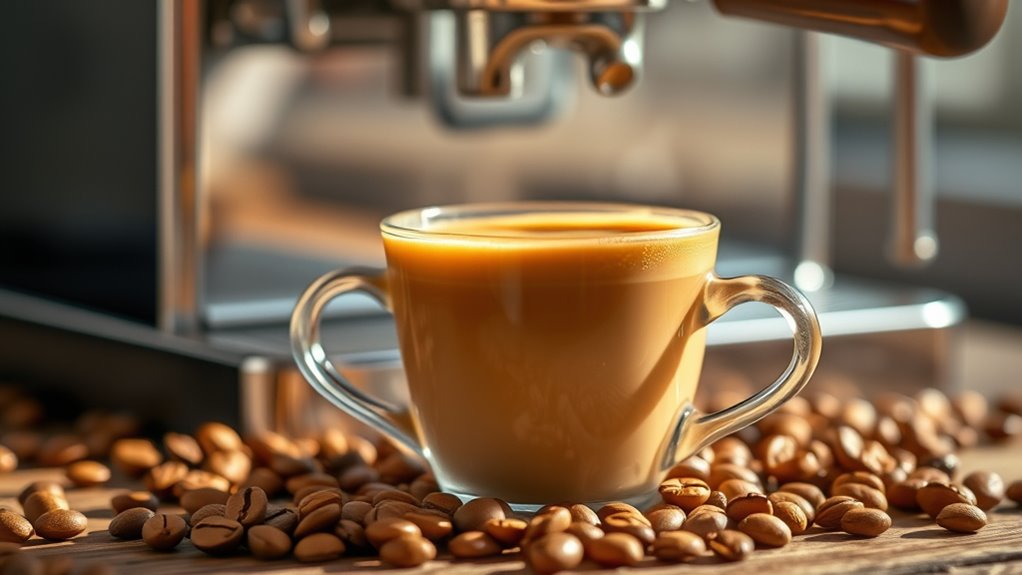
Although you might assume all espresso roasts are dark, blonde espresso is actually made from lightly roasted beans that are roasted for about 8-10 minutes, just before the first crack.
This shorter roasting time, typically reaching around 385°F (196°C), preserves the beans’ natural flavors, acidity, and distinctive floral or citrus notes.
Unlike darker roasts, blonde espresso beans remain denser and non-oily, exhibiting a light brown, delicate appearance.
By halting the process before the second crack, the roast emphasizes origin-specific characteristics, resulting in a brighter, more vibrant espresso shot.
This careful roasting approach really sets blonde espresso apart from traditional dark roasts.
It focuses on clarity and complexity rather than the deeper, more robust flavors you get from longer roasting times.
Because blonde espresso retains more of its natural oils, it can benefit from aeration techniques like shaking to enhance smoothness and balance its bright notes.
Does Blonde Espresso Have More Caffeine Than Regular Espresso?
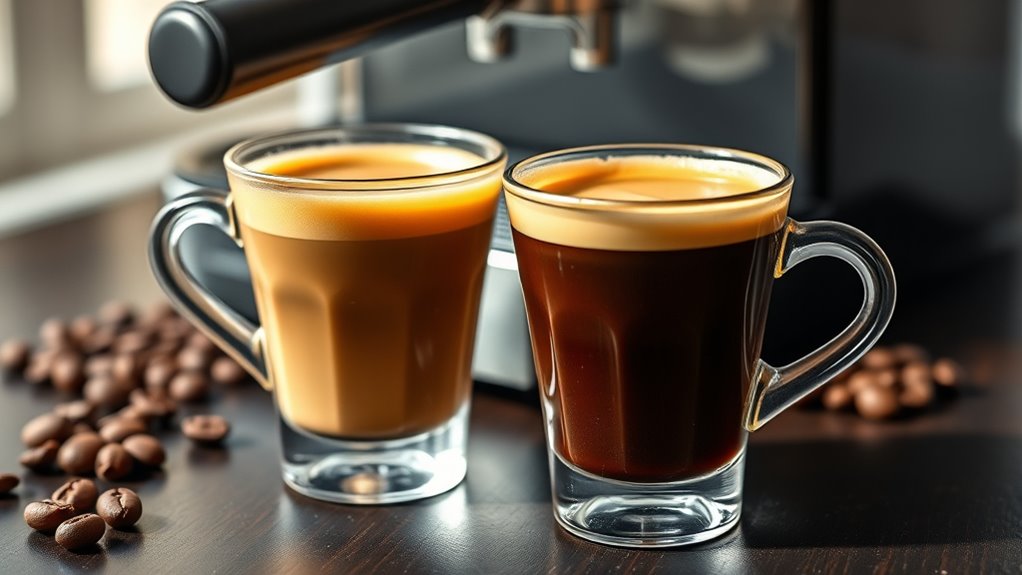
You might think blonde espresso has more caffeine than regular espresso since it uses lighter roast beans. Those beans are denser and can give you a bit more caffeine if you measure by volume.
But here’s the thing—if you measure by weight, both blonde and regular espresso have almost the same amount of caffeine. That’s because roasting doesn’t really change how much caffeine is in the beans.
Additionally, the subtle differences in roast level can affect the extraction of natural oils and proteins, which influence espresso’s calorie content and composition.
Caffeine Content Comparison
How much caffeine does blonde espresso really have compared to regular espresso? When measured by weight, the caffeine content in blonde and regular espresso is nearly identical, showing only minor differences.
Blonde espresso beans are lighter roasted, so they retain more caffeine due to shorter roasting times and lower temperatures. Plus, these light-roast beans are denser, which means you can fit more caffeine per scoop compared to darker roasts.
However, the overall caffeine difference between the two is minimal. It mostly depends on brewing factors like grind size, dose, and extraction time rather than the roast level itself. Adjusting extraction time can significantly impact the caffeine concentration and flavor profile of your espresso.
Impact Of Roast Level
The slight caffeine difference observed when comparing blonde and regular espresso by volume largely stems from the roast level’s impact on bean density and caffeine retention. Blonde espresso uses lighter-roast beans, which are denser and retain caffeine better than darker roasts.
When you measure by weight, caffeine content between the two is nearly identical, since roasting minimally affects caffeine levels.
However, per scoop, blonde espresso can deliver more caffeine due to bean density. Dark roasting slightly degrades caffeine but only marginally.
Keep in mind, dose and brewing method influence caffeine content more than roast level.
- Blonde espresso: denser, light-roast beans
- Dark roast: longer roasting causes minimal caffeine loss
- Caffeine per weight: nearly equal in both roasts
- Volume-based caffeine: slightly higher in blonde espresso
Additionally, the extraction process under high pressure can affect the caffeine concentration in the final espresso shot, regardless of roast level.
What Happens to Caffeine When Coffee Is Roasted?
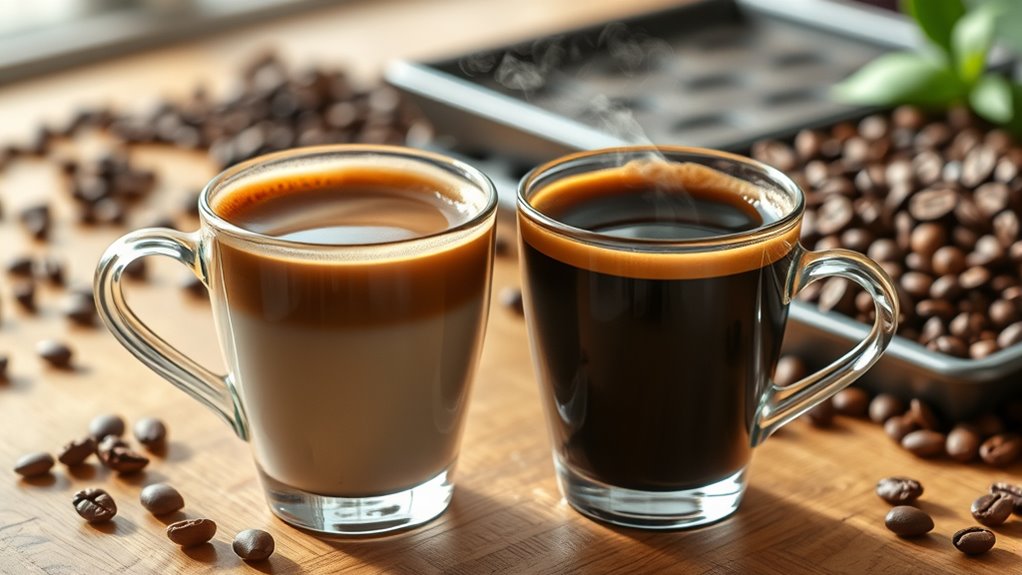
When coffee is roasted, the caffeine mostly stays put—it doesn’t break down much, even at really high temperatures. So, you won’t lose much caffeine during the roasting process.
Now, if you look at lighter roasts, like blonde espresso, they tend to be denser and actually have a little more caffeine by volume compared to darker roasts. But here’s the catch: if you measure caffeine by weight, the difference between light and dark roasts is pretty much negligible.
Additionally, the bean type and grind size can also influence the caffeine content extracted in your espresso shot.
Caffeine Stability During Roasting
Although roasting exposes coffee beans to high temperatures, caffeine remains largely stable throughout the process. You won’t see significant caffeine degradation, even under intense heat. Minor decreases can occur at higher temperatures, but these changes are minimal and don’t drastically affect caffeine content.
Think of caffeine as pretty tough when it comes to heat—it doesn’t break down easily during roasting. Sure, you might see a tiny bit lost if the roasting gets really intense, but it’s barely noticeable.
Here are some quick points about caffeine stability during roasting:
- Caffeine is thermally stable and resists breakdown during roasting.
- Slight caffeine loss may happen at extreme roasting temperatures.
- Caffeine content depends more on bean density and roast level than roasting time.
- Light roasts, like blonde espresso, retain slightly more caffeine per bean due to less thermal exposure.
Knowing this helps you understand why roasting only changes caffeine content a little bit. So, no matter the roast level, the caffeine stays pretty consistent.
Roast Level Impact
Since caffeine remains mostly stable during roasting, you might expect little difference in caffeine content between light and dark roasts. However, light roasts like blonde espresso are denser, so when measured by volume, they contain slightly more caffeine than darker roasts.
This density difference arises because roasting causes bean expansion and minor caffeine degradation at very high temperatures, though the losses are minimal.
The key factor influencing caffeine content isn’t the roast level itself but the amount of coffee you use and how you brew it. Also, the perceived caffeine difference often comes down to how you measure it—by weight versus volume—rather than actual caffeine loss.
Moreover, extraction under high pressure during espresso brewing can impact the caffeine concentration in your cup, regardless of roast level.
How Roast Level Changes Blonde Espresso’s Flavor, Not Caffeine
Because roast level influences the chemical composition of coffee beans, you’ll notice that blonde espresso offers a brighter acidity and more pronounced natural flavors compared to darker roasts. The lighter roast preserves organic acids and original bean characteristics, while darker roasts develop caramelization and bitterness.
Importantly, roasting changes flavor profiles but doesn’t markedly alter caffeine content. Here’s what you can expect from blonde espresso’s flavor due to roast level:
- Enhanced fruity and floral notes
- Higher acidity with crisp brightness
- Minimal caramelization, avoiding burnt flavors
- Retention of the bean’s unique origin characteristics
Additionally, while caffeine content can vary based on factors like roast level and brewing method, three espresso shots typically contain between 180 and 225 mg of caffeine, which remains consistent across roast types.
How Brewing Affects Blonde Espresso’s Caffeine Content
When you adjust brewing parameters like dose, grind size, and extraction time, you directly influence the caffeine content in blonde espresso more than the roast level itself does.
Blonde espresso beans are denser and lighter roasted, which can slightly increase caffeine per volume. However, extending extraction time or increasing shot size raises caffeine levels regardless of roast.
Using a finer grind and ideal temperature for blonde espresso typically yields a brighter, more caffeinated shot compared to darker roasts.
Ultimately, manipulating these brewing variables proves more effective for controlling caffeine content than simply choosing between blonde and regular espresso.
By focusing on precise brewing adjustments, you guarantee consistent caffeine extraction tailored to your preference, rather than relying solely on the roast’s inherent caffeine differences.
Maintaining water temperature between 195°F and 205°F during extraction is essential for optimizing both flavor and caffeine concentration.
Blonde vs Dark Espresso: Which Tastes Stronger?
Although blonde espresso often tastes lighter and brighter, you might find its crisp acidity and floral notes create a surprisingly intense flavor experience.
When comparing blonde and dark espresso, the perceived strength depends on flavor characteristics rather than caffeine content.
Blonde espresso delivers brightness and acidity, while dark espresso presents a bold, roasted bitterness.
Consider these points to understand the taste differences:
- Blonde espresso offers a thinner, more delicate crema influencing flavor perception.
- Its crisp acidity can feel sharper on your palate.
- Dark espresso has a heavier, more robust crema with pronounced bitterness.
- The bold roasted character of dark espresso registers as stronger but less bright.
Ultimately, “strength” in taste varies: blonde’s intensity comes from brightness; dark’s from boldness. It really depends on what kind of flavor punch you’re looking for.
Blonde espresso typically contains about 20% more caffeine per shot than darker roasts due to its lighter roasting process and denser beans.
Should You Choose Blonde Espresso for More Caffeine?
Three key factors influence caffeine content in espresso: roast level, bean density, and brewing parameters.
Blonde espresso typically has slightly more caffeine per volume due to denser beans, but by weight, caffeine content is nearly identical to darker roasts. This minimal difference rarely affects your actual caffeine intake during normal brewing.
Instead of switching to blonde espresso expecting a significant caffeine boost, focus on adjusting your shot size or drink volume. These changes more effectively increase caffeine levels.
Brewing parameters like dose and extraction time play a larger role than roast level in caffeine yield.
Decaffeination methods such as the Swiss Water process can significantly reduce caffeine content in espresso, highlighting the importance of bean processing in caffeine levels.
Frequently Asked Questions
Can Blonde Espresso Be Used in Iced Coffee Recipes?
You might be surprised, but yes, you can use blonde espresso in iced coffee recipes. Its bright flavor and slightly higher caffeine hold up well over ice, creating a drink that’s both invigorating and energizing.
Plus, it does all this without any bitterness. So if you’re looking for a smooth, lively twist on your iced coffee, blonde espresso is a great choice. Give it a try and see how it brightens up your brew!
Does Blonde Espresso Have a Different Shelf Life Than Dark Roast?
Yes, blonde espresso has a slightly shorter shelf life than dark roast because it has higher moisture content and a lighter roast. You should definitely store it airtight, away from heat and light.
Try to use it within 2-4 weeks for the best freshness. Keeping it fresh really makes a difference in taste!
Is Blonde Espresso Suitable for Espresso-Based Milk Drinks?
Yes, you’ll find blonde espresso ideal for milk-based drinks. Its sweeter, brighter flavors and higher acidity complement milk’s creaminess. This combination enhances lattes and cappuccinos without being overpowered.
It creates a smooth, nuanced, and balanced beverage experience. So, if you like your milk drinks with a little extra brightness, blonde espresso is a great choice.
How Does Blonde Espresso Affect Espresso Machine Maintenance?
Blonde espresso demands more frequent cleaning and descaling because its oils and acids cause quicker residue buildup. You’ll need to adjust grind size, temperature, and pressure to optimize extraction and reduce strain on your espresso machine parts.
It’s all about keeping your machine happy and working smoothly. When you dial in those settings just right, you help prevent wear and tear, making maintenance less of a headache in the long run. So, a little extra care goes a long way with blonde espresso.
Can Blonde Espresso Be Mixed With Dark Roast for Flavor Balance?
Yes, you can mix blonde espresso with dark roast to achieve a balanced flavor. Adjusting proportions lets you soften acidity while enhancing richness. This creates a complex yet harmonious taste profile without overwhelming bitterness or intensity.
It’s all about finding the right blend that suits your palate. Try different ratios to see what works best for you. Mixing can be a fun way to explore new flavors!
Conclusion
If you’re chasing more caffeine, Blonde Espresso might surprise you. It can contain up to 10% more caffeine than dark roasts because lighter roasting helps preserve the caffeine content.
However, roast level mainly influences flavor, not caffeine. Brewing methods also play a big role in how much caffeine gets extracted.
So, while Blonde Espresso tastes milder, it can still pack a stronger caffeine punch. Choose it if you want a smoother taste without giving up your caffeine kick.