A moka pot brews strong, bold coffee by using steam pressure to push hot water through the grounds, but it doesn’t generate the 9 bars of pressure needed for true espresso. You won’t get the rich, thick crema or the same texture that defines espresso.
While moka coffee’s flavor is intense and enjoyable, it remains distinct from authentic espresso. If you want to understand why and explore the differences, there’s more to uncover.
What Is Espresso and How Is It Made?
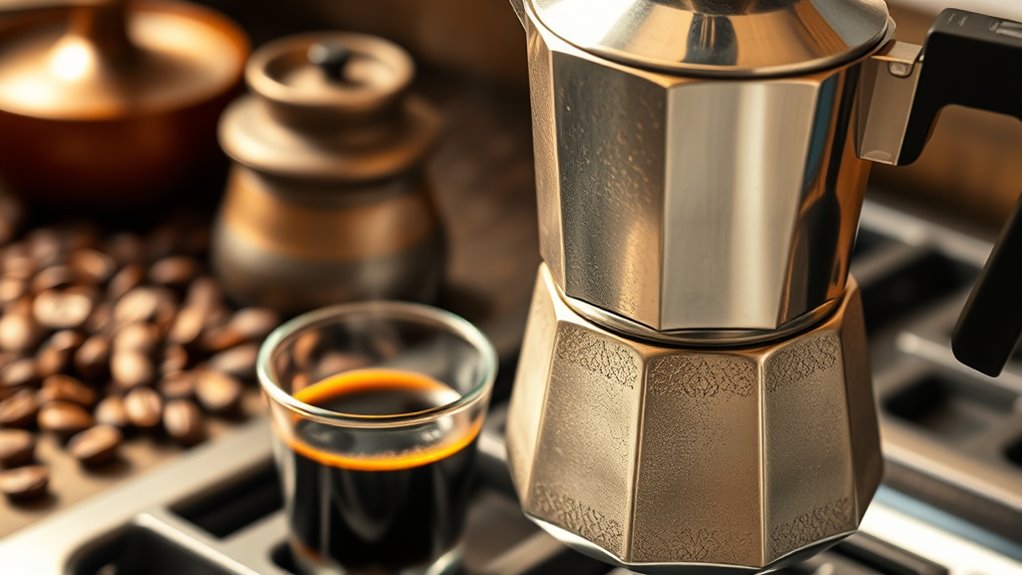
What exactly defines espresso, and how does its brewing process set it apart? Espresso is a concentrated coffee made by forcing hot water through finely ground coffee at about 9 bars of pressure. This high-pressure extraction creates a rich, full-bodied flavor with complex notes you won’t find in other brews.
You’ll notice a thick, golden crema on top, an emulsion of oils and CO2, that’s unique to true espresso. To achieve this, the water temperature must stay between 90 and 95°C (194–203°F), ensuring ideal flavor and aroma extraction.
Unlike drip coffee or moka pot methods, you need specialized espresso machines to maintain these precise pressure and temperature conditions. So, making authentic espresso is really about careful engineering and technique.
Controlling factors like extraction time and grind size is essential to balancing flavor and achieving the characteristic espresso profile.
How Does a Moka Pot Brew Coffee Differently?
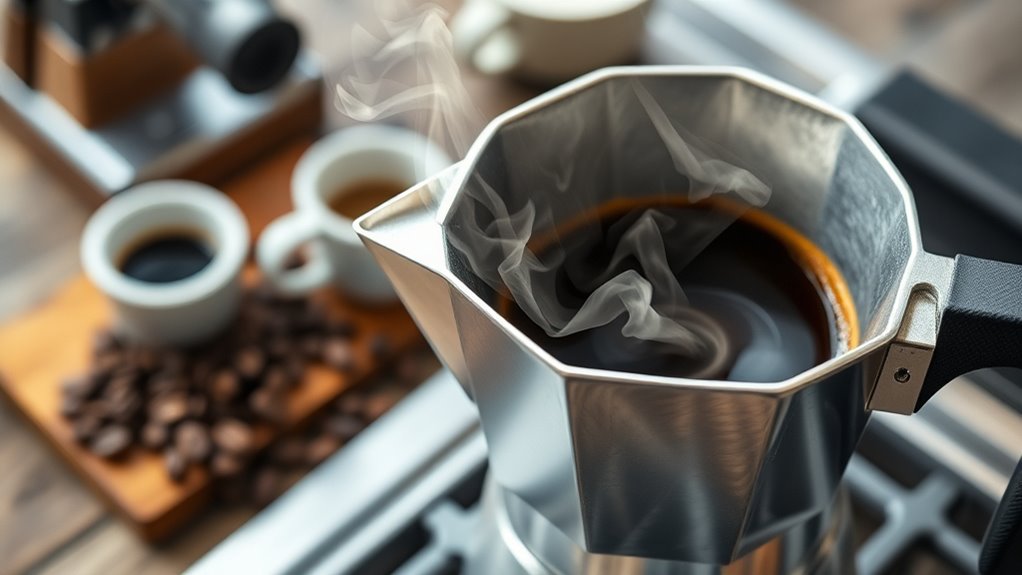
Although both moka pots and espresso machines use pressure to brew coffee, the moka pot operates at a much lower pressure, around 1 to 2 bars, compared to the 9 bars typical of espresso machines. You’ll notice moka pots use steam pressure to push hot water through coarser grounds. Espresso machines force water at high pressure through finely tamped grounds.
This difference influences flavor, texture, and crema presence.
| Feature | Moka Pot | Espresso Machine |
|---|---|---|
| Pressure | 1-2 bars | 9 bars |
| Grind Size | Coarser | Fine |
| Brewing Temp | >100°C | ~90-96°C |
| Crema | Typically absent | Thick crema present |
| Flavor Profile | Strong, sometimes bitter | Complex, balanced |
That’s why moka pot coffee, though bold, lacks the true crema and texture you get from espresso. Achieving an ideal espresso extraction ratio is also impossible with a moka pot due to its lower pressure and brewing method.
Pressure and Temperature in Espresso vs. Moka Pot?
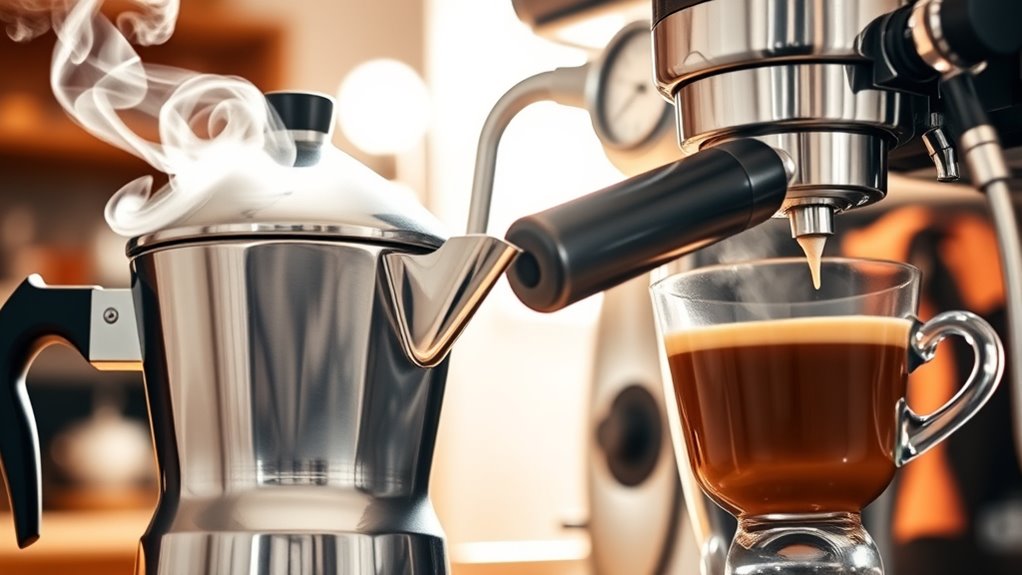
Two critical factors set espresso machines and moka pots apart: pressure and temperature. Espresso machines force water through finely ground coffee at about 9 bars of pressure, while moka pots operate near 1 bar. This huge pressure difference impacts extraction and flavor markedly.
Consider these key contrasts:
- Espresso uses high pressure (~9 bars) for rich extraction; moka pots can’t reach this.
- Moka pots heat water above 100°C, creating steam pressure, but it’s far lower than espresso machines.
- Lower pressure in moka pots yields a different flavor profile and less crema formation.
- Temperature and pressure interplay influences crema quality and overall coffee richness.
You’ll notice moka pots produce strong coffee, but it’s not authentic espresso due to these pressure and temperature limits. Additionally, espresso’s higher pressure and precise extraction timing enable a higher caffeine concentration compared to moka pot coffee.
How Grind Size Affects Moka Pot and Espresso Coffee
You’ll want to use a medium-fine grind for your Moka pot. This helps balance the extraction without clogging up the filter.
On the other hand, espresso calls for a much finer, evenly textured grind. That finer grind is essential because it creates the pressure needed for a good shot.
The grind size basically controls how water flows through the coffee, which then affects the flavor clarity and strength. It’s pretty interesting how something as simple as grind size can make such a big difference.
Also, don’t forget about tamping when it comes to espresso. Tamping compacts the grounds to build resistance, which is crucial for pulling a proper espresso shot.
But for Moka brewing? You actually don’t need to worry about tamping at all.
Adjusting grind size within an ideal 200-400 micron range helps optimize extraction and flavor balance.
Grind Size Differences
Because grind size directly influences extraction and pressure, understanding its differences is crucial when comparing moka pot and espresso coffee.
Espresso demands a very fine, powdery grind (around 1.5 to 2 mm) to build enough resistance for high-pressure brewing.
In contrast, moka pots need a medium-fine grind, similar to fine sand, allowing water to flow at lower pressure.
Using the wrong grind size can seriously impact your coffee quality. Too fine for moka pots causes clogging and over-extraction.
Too coarse for moka pots yields weak, under-extracted coffee.
Espresso grind is notably finer to handle high-pressure extraction.
Proper grind size ensures balanced resistance without bitterness or weakness.
Knowing this difference helps you optimize each brewing method for the best cup.
Additionally, achieving the correct grind size and tamping pressure is essential for consistent extraction and flavor, as emphasized in the preparing for brewing steps of espresso machine use.
Extraction Impact
Grind size directly shapes how water interacts with coffee grounds, influencing extraction in both moka pots and espresso machines.
In espresso, a fine grind creates the necessary resistance, allowing high pressure to extract rich oils and complex flavors efficiently.
In contrast, the moka pot uses medium-fine grounds, which let water flow more freely under lower pressure. If you use too fine a grind in a moka pot, it increases resistance, causing over-extraction and bitterness, similar to espresso but less controlled.
Conversely, a coarser grind allows water to pass too quickly, leading to under-extraction and a weak, sour taste.
The pressure applied during extraction is a key variable that differs significantly between moka pots and espresso machines, impacting the optimal grind size and flavor profile.
Tamping And Texture
While tamping plays a crucial role in espresso preparation by creating resistance for uniform extraction, the moka pot demands a different approach. You don’t want to tamp the coffee in a moka pot because it can overly restrict water flow, causing over-extraction and bitterness.
Instead, focus on using the right grind size and texture. Use a medium-fine grind, similar to sand, for ideal water flow. Avoid tamping; keep grounds loose and level for balanced extraction.
Finer grinds or tamping increase resistance, which can lead to burnt flavors. Proper texture also prevents clogging and ensures smooth brewing. Unlike espresso, the moka pot does not operate under high pressure, so the grind size and tamping must be adjusted accordingly.
Can You Get Crema With a Moka Pot?
How close can a moka pot get to producing the rich crema you expect from espresso? While moka pots do create a thin, light layer of foam, it’s not the true, dense crema espresso lovers seek. This difference comes down to pressure.
A moka pot’s pressure hovers around 1 bar, which is far below the 9 bars needed to form authentic crema. Because of this, the foam you get is short-lived and doesn’t have the same aromatic depth or thickness as genuine espresso crema.
| Aspect | Moka Pot Crema |
|---|---|
| Pressure | ~1 bar |
| Crema Thickness | Thin, light |
| Longevity | Short-lived |
| Aroma and Texture | Mild, frothy, superficial |
You’ll notice that moka pot crema is more like foam than true crema. It lacks the rich persistence you get from espresso. For the best results in creating a rich crema and frothy texture, espresso should be brewed with a high-pressure espresso machine and used immediately after extraction.
When Is a Moka Pot the Right Choice for You?
If you’re into strong, bold coffee but aren’t too fussed about getting that perfect espresso with crema, then a Moka pot might just be your best bet. It’s great if you enjoy a hands-on brewing experience and don’t mind playing around with grind size and heat to get things just right. On top of that, it’s a budget-friendly option that works right on your stovetop. However, keep in mind that a Moka pot typically produces less caffeine than a double shot of espresso, so it offers a different caffeine experience.
Ideal User Profiles
Because you enjoy crafting your coffee experience and want control over variables like grind size and heat, a Moka pot suits you perfectly. It allows you to brew a strong, bold coffee akin to espresso without needing pricey, high-pressure machines. You’ll appreciate its vintage charm if you love retro designs.
Plus, it’s ideal if you like experimenting to refine flavor and avoid bitterness.
A Moka pot is right for you if:
- You want a hands-on brewing process with variable control
- You seek rich, robust coffee without an espresso machine
- You enjoy the nostalgic aesthetic of classic stovetop makers
- You prefer an affordable, quick way to make quality coffee
This tool offers a precise, rewarding brewing experience tailored to your preferences. Regular maintenance, including descaling your coffee maker, ensures consistent flavor and prolongs the life of your equipment.
Brewing Experience Preferences
When you crave a brewing method that puts you in control of every detail, from grind size to heat level, a Moka pot stands out as an excellent choice. It lets you tailor your coffee’s strength and flavor with precision. You get a bold, espresso-like brew without the need for complex pressure systems.
If you enjoy a hands-on, manual process that’s straightforward yet rewarding, this method suits you well. The Moka pot’s vintage design also appeals if you value nostalgic kitchen tools.
Beginners appreciate its simplicity compared to an espresso machine, while enthusiasts love experimenting with different techniques to perfect their cup.
Ultimately, if you want a robust coffee experience that balances control, ease, and tradition, the Moka pot offers an ideal brewing journey. It’s a great way to enjoy coffee your way without fuss.
Tips for Brewing the Best Moka Pot Coffee
Although brewing moka pot coffee might seem straightforward, mastering a few key techniques will really elevate your cup to a rich, balanced experience. Start by using a medium-fine grind, similar to sand. This guarantees ideal extraction without clogging or weak flavor.
Fill the water chamber just below the safety valve with hot water to avoid bitterness. Assemble your moka pot tightly and heat it on medium-low with the lid open, so you can keep an eye on the brewing progress.
When you hear gurgling or sputtering, remove the pot from heat immediately to prevent over-extraction. Finally, cool the base under cold water to stop extraction and preserve the coffee’s delicate flavor.
Follow these tips to consistently enjoy the best moka pot coffee:
- Use medium-fine grind
- Fill water chamber with hot water below valve
- Heat on medium-low with lid open
- Remove from heat at first sputter and cool base
Best Moka Pots for Espresso-Like Coffee
If you want to get as close as possible to espresso using a moka pot, choosing the right model matters considerably. The Bialetti Moka Express stands out for its classic aluminum build, delivering rich, espresso-like coffee consistently.
If convenience and precision matter, consider electric options like the Cuisinart SS-15, which provides steady heat control for better extraction.
For a thicker crema, the Bialetti Moka Brikka’s pressure valve mimics espresso’s texture and appearance more closely.
Size also impacts strength: smaller pots yield a more intense brew, while 9-cup versions produce a fuller volume.
Finally, if you have an induction stove, stainless steel moka pots like the Cuisinart DLonghi combine compatibility with authentic, espresso-style results, making them an excellent choice for your coffee needs.
Frequently Asked Questions
How Long Does It Take to Brew Coffee With a Moka Pot?
It takes you about 5 to 10 minutes to brew coffee with a Moka pot. Heating water creates pressure, pushing it through the grounds.
You’ll know it’s done when you hear a gurgling sound. That’s your cue to take it off the heat and enjoy!
Can I Use the Same Coffee Beans for Moka Pot and Espresso?
Yes, you can use the same coffee beans for both. Just adjust your grind size.
For a moka pot, go with a medium-fine grind. For espresso, use a very fine grind instead. This helps make sure you get the right extraction.
That way, you’ll get the best flavor balance without any bitterness or weakness. It’s all about dialing in the grind to match your brewing method.
How Do I Clean and Maintain My Moka Pot?
Clean your moka pot regularly. You know what they say, “a stitch in time saves nine.”
Start by disassembling it and rinsing all the parts with warm water. Avoid using soap since it can affect the flavor of your coffee.
Gently scrub the filters to keep them clear. If you notice any stubborn stains, soak those parts in vinegar for a bit.
Make sure everything is dried thoroughly before putting it back together. And don’t forget to replace the gaskets now and then to keep your coffee tasting perfect.
Is Moka Pot Coffee Suitable for Milk-Based Drinks?
Yes, moka pot coffee suits milk-based drinks perfectly. Its strong, bold flavor stands up well to milk, creating rich lattes or cappuccinos. You’ll enjoy its intense taste balanced by creamy, steamed milk and a hint of sweetness.
It’s great because the coffee doesn’t get lost when you add milk. Instead, it blends nicely, giving you that satisfying coffee kick alongside the smoothness of milk. So if you love your coffee with milk, moka pot coffee is definitely worth trying.
What Are Common Mistakes to Avoid When Using a Moka Pot?
Don’t doom your moka pot coffee to bitterness by using too fine a grind or blasting high heat! Avoid overfilling, tamping grounds, and ignoring the gurgle.
You’ll master rich, balanced brews with simple, precise care.
Conclusion
You now know a moka pot won’t produce true espresso because it uses lower pressure and a different brewing method. But it still makes a rich, bold coffee that’s perfect for your morning ritual. Think of it like a trusty pocket watch in a digital age—it offers charm and reliability.
By mastering grind size and brewing tips, you can enjoy espresso-like coffee without needing a fancy machine. So, when you want strong, flavorful coffee without the fuss, the moka pot’s got your back.