You’re getting coffee brewed at high pressure with Nespresso, but it’s not real espresso. Genuine espresso requires about 9 bars forcing hot water through finely tamped coffee grounds to extract complex flavors and form rich crema from emulsified oils and CO₂.
Nespresso uses capsules with spinning infusion and limited control over variables. This produces a milder, less nuanced result without authentic crema creation.
If you want to understand these differences in depth and how they affect taste, you’ll find the full explanation ahead.
What Is Real Espresso and How Is It Made?
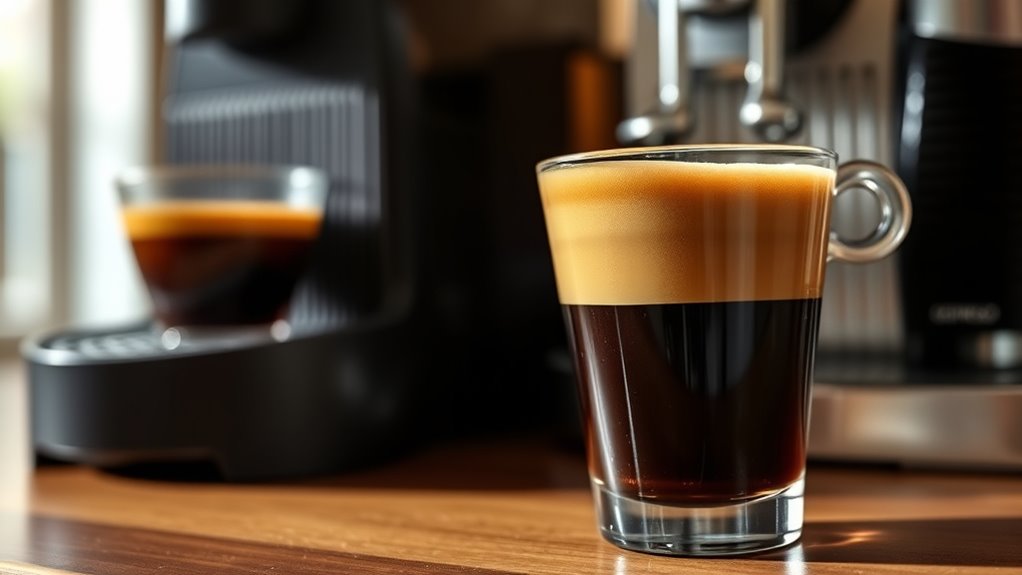
How exactly is real espresso made? You force hot water at about 9 bars of pressure through finely ground coffee, which you’ve packed tightly into a tamped puck. This high pressure is essential because it extracts concentrated flavors and oils swiftly.
You have to control several variables precisely: grind size, tamping pressure, water temperature, and extraction time. Usually, you use around 7 grams of coffee, following standardized definitions like those from INEI.
The result is a dense, rich shot topped with a delicate crema. That crema is a velvety foam formed by emulsified oils and carbon dioxide released during brewing.
Conventional espresso machines generate this pressure mechanically, which ensures full flavor extraction. This method sets authentic espresso apart from other brewing techniques that don’t have consistent pressure or precise control.
For optimal flavor, the entire extraction should generally take between 25 and 30 seconds to balance taste and crema development, making extraction time a crucial factor in the process.
How Do Nespresso Machines Brew Coffee Differently?
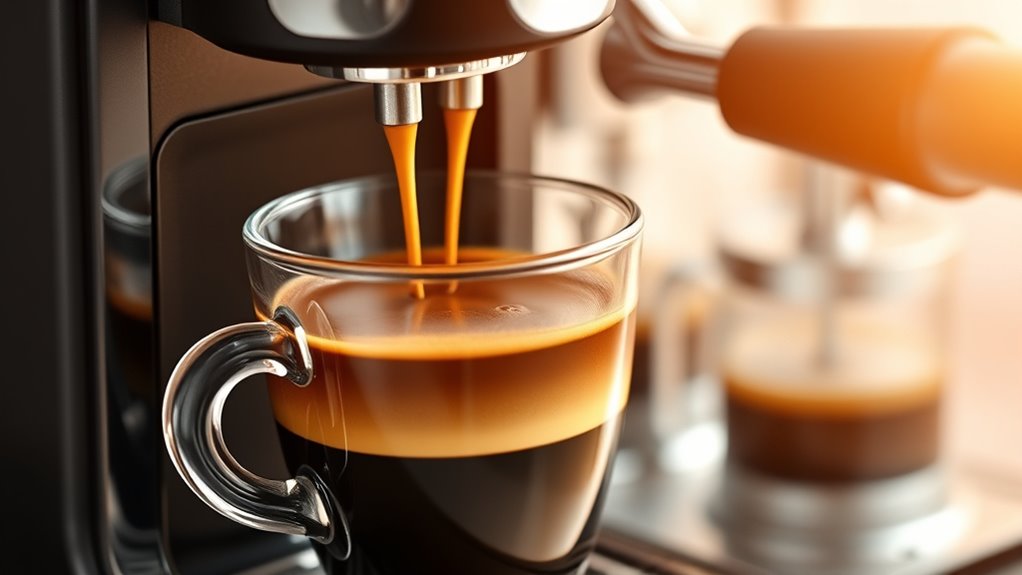
Although Nespresso machines operate at pressures comparable to traditional espresso machines, around 19 bars, they brew coffee using a fundamentally different approach. Instead of relying on high-pressure extraction, Nespresso uses a method that involves puncturing a sealed capsule and forcing hot water through it.
Nespresso machines use punctured capsules and hot water, differing from traditional high-pressure espresso extraction.
This process uses infusion or spinning techniques rather than the precise pressure and temperature control you’d find in espresso machines.
You’ll also notice that Nespresso machines operate at lower temperatures and use fewer coffee grounds per shot, which affects the extraction quality.
The capsule design limits variables like grind size and tamping pressure, so it’s tough to replicate authentic espresso extraction fully. Because of this, the coffee you get resembles espresso but doesn’t have the same depth and complexity you get from traditional high-pressure methods.
Additionally, the caffeine concentration per ounce is generally lower due to these differences in brewing variables.
Why Nespresso’s Crema Isn’t Real Espresso Foam
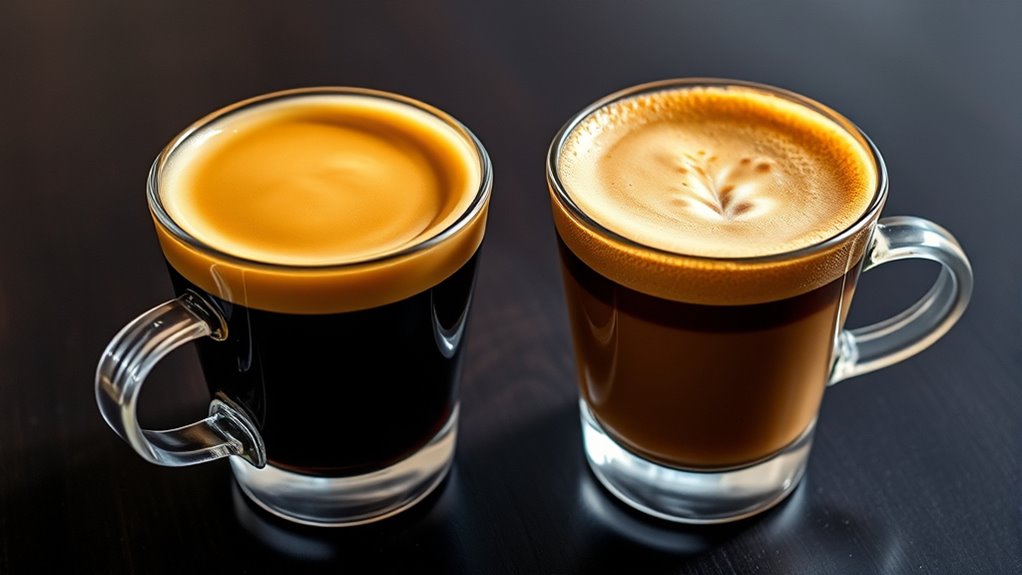
Even though Nespresso machines produce a layer of crema on their coffee, this foam doesn’t match the authentic espresso crema formed by emulsified oils and carbon dioxide under roughly 9 bars of pressure.
You should understand why Nespresso’s crema falls short. For starters, it forms through spinning and infusion, not high-pressure extraction. Because of that, it lacks the chemical and physical conditions that create genuine espresso foam.
Authentic crema comes from emulsified natural oils combined with CO₂ released under about 9 bars of pressure. This is a process Nespresso machines just don’t replicate.
The foam on Nespresso coffee might look frothy, but it doesn’t have the delicate, velvety texture you get from true espresso crema. So, while it looks similar, it just isn’t quite the same.
True espresso requires approximately 9 bars pressure to develop its characteristic crema and flavor.
How Does Nespresso Coffee Compare to Espresso Taste?
When you compare Nespresso coffee to traditional espresso, you’ll notice a clear difference in flavor complexity and richness. Nespresso’s extraction yields a more uniform, milder taste that lacks the nuanced profile of authentic espresso. Its machine-generated crema also lacks the natural oils and emulsified CO₂ that contribute to espresso’s velvety texture and fuller body.
Here’s a quick look at how they stack up:
| Aspect | Nespresso Coffee | Traditional Espresso |
|---|---|---|
| Flavor Profile | Uniform, mild | Complex, layered |
| Crema Quality | Machine-generated, less oily | Natural, velvety, oil-rich |
| Body | Lighter, less full | Fuller, robust |
| Aroma | Less intense, simpler | Rich, intense, aromatic |
Traditional espresso provides a concentrated dose of antioxidants per serving due to its brewing technique, which contributes to its health benefits and flavor depth.
Why Pressure and Extraction Matter for Espresso
Why does pressure play such a critical role in espresso extraction? True espresso demands forcing hot water through finely ground coffee at about 9 bars of pressure. This precise pressure is essential because it extracts rich flavors by efficiently dissolving soluble compounds.
It also emulsifies coffee oils and CO₂, producing the authentic velvety crema. Plus, it ensures a balanced body, aroma, and flavor that’s tough to replicate with inconsistent pressure.
While Nespresso machines, like the Vertuo line, often operate at similar pressures, they don’t have the exact pressure control needed for true espresso extraction. Their crema comes from spinning or infusion, not pressure-based emulsification.
Without proper pressure, you miss the chemical and physical reactions that give genuine espresso its complexity and texture. Achieving the right pressure is one of several key variables that must be balanced for a harmonious extraction.
Nespresso vs Espresso Machines: Cost and Convenience
Understanding the technical differences in pressure and extraction between Nespresso and traditional espresso machines naturally leads to thinking about cost and convenience.
Nespresso machines usually cost less than a few hundred pounds, making them a great option for home users who want quick, consistent brews with minimal effort.
Affordable and convenient, Nespresso machines offer quick, consistent espresso with minimal effort for home users.
On the other hand, traditional espresso machines paired with grinders often require investments of thousands of pounds, reflecting their advanced features. These setups let you control grind size, pressure, and extraction time precisely, which means you can get flavor profiles that capsule systems just can’t match.
While Nespresso delivers reliable espresso with less skill, it does give up some customization and the craftsmanship needed for professional-quality shots.
However, it’s important to note that caffeine content can vary between Nespresso and traditional espresso due to differences in extraction method and shot size.
Who Should Choose Nespresso and Who Needs an Espresso Setup?
Although both Nespresso machines and traditional espresso setups produce espresso, your choice depends on your priorities and skill level. If you want quick, consistent coffee without mastering barista techniques, Nespresso suits you. However, if you aim for precision and craft, a traditional setup is preferable.
Consider these points:
- Convenience & Budget: Choose Nespresso if you prioritize ease, speed, and lower upfront costs, or have limited space.
- Control & Customization: Opt for a traditional espresso machine with grinder if you want to manipulate grind size, tamping pressure, and extraction time to enhance flavor complexity.
- Experience & Commitment: Use Nespresso if you’re a beginner or casual drinker; invest in a traditional setup if you’re a serious home barista or professional seeking mastery and experimentation.
Your decision hinges on balancing convenience against control and expertise. Think about what matters most to you and go from there.
How to Decide If Nespresso or Espresso Suits You?
Choosing between Nespresso and a traditional espresso machine hinges on clearly defining your priorities and expectations.
If you want convenience, speed, and consistent results without having to master grind size, tamping, or pressure, Nespresso is a great fit. Its capsules deliver espresso-like coffee quickly but don’t offer the authentic 9-bar extraction or control over variables that true espresso demands.
On the other hand, if you care about the full sensory experience, like rich crema, nuanced flavors, and hands-on craftsmanship, then investing in a manual or semi-automatic espresso machine is the way to go. These machines require precise adjustments to grind, dose, tamp, and pressure. This lets you tailor each shot exactly how you like it.
At the end of the day, it really depends on what matters more to you. Do you want ease of use and affordability? Or are you after the depth and authenticity of traditional espresso preparation? Your choice comes down to that.
Frequently Asked Questions
Can I Use Nespresso Capsules in Traditional Espresso Machines?
You can’t directly use Nespresso capsules in traditional espresso machines because their designs are different.
While there are adapters available, they often lead to poor extraction and inconsistent flavor.
Are Nespresso Capsules Recyclable or Eco-Friendly?
Imagine you drop used Nespresso capsules at a boutique. Yes, they’re recyclable but not biodegradable.
You need to use specific recycling bags and authorized collection points to guarantee proper processing. This helps minimize environmental impact effectively.
How Long Do Nespresso Machines Typically Last?
Nespresso machines typically last 5 to 10 years with proper maintenance, including regular descaling. Usage frequency impacts longevity, so how often you use it really matters.
High-end models usually outlast entry-level ones. It’s worth considering if you want something that lasts longer.
To keep your machine in good shape, clean and replace parts regularly. This will help extend your machine’s lifespan effectively.
Can I Customize the Strength or Flavor of Nespresso Coffee?
You can customize Nespresso coffee strength by selecting stronger capsules or using multiple pods.
You can also adjust flavor through post-brew additions like milk or syrups. However, brewing parameters like grind size remain fixed and unmodifiable.
Do Nespresso Machines Require Special Cleaning or Maintenance?
You don’t just rinse Nespresso machines; you must descale them every three months using a specific solution. This helps keep everything running smoothly and prevents buildup inside the machine.
Regularly clean the drip tray, capsule container, and brewing unit. Doing this maintains pressure, prevents blockages, and guarantees ideal coffee extraction.
Taking these simple steps ensures your machine works great and your coffee tastes just right every time.
Conclusion
In fact, true espresso demands 9 bars of pressure for ideal extraction. Nespresso machines approximate this but don’t fully achieve it. While Nespresso offers convenience and consistent results with a crema-like foam, it falls short of authentic espresso’s complex flavor profile and texture.
If precision and traditional craftsmanship matter to you, a dedicated espresso machine is essential. But for quick, reliable coffee, Nespresso remains a technically sound, efficient choice. So, it really depends on what you’re looking for in your espresso experience.

Pingback: Does Nespresso Make Espresso – The Truth