Yes, you can make espresso with regular coffee beans, but you’ll need to adjust your grind size to a very fine consistency and tamp firmly to get proper extraction. Regular coffee often lacks the darker roast and uniform grind made for espresso, which can lead to weaker flavor and less crema.
With careful technique and fresh beans, you can improve your results a lot. Just keep experimenting, and you’ll find ways to get better espresso shots using regular coffee. It’s all about tweaking your method and having fun with it!
What Is Espresso and How Is It Made?
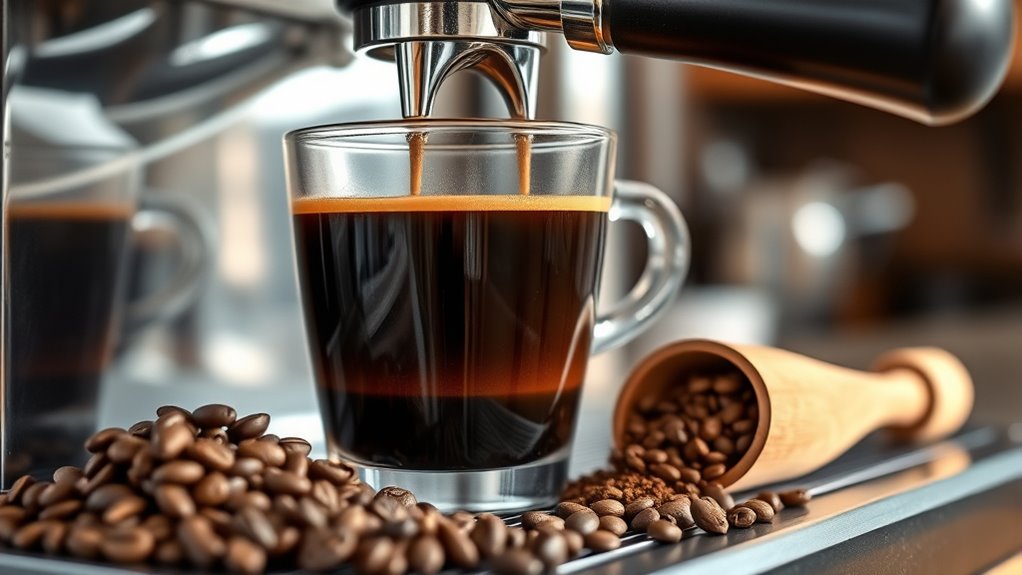
What exactly makes espresso different from other coffee drinks? You brew it by forcing hot water heated between 195° and 205°F through finely ground coffee under 9 to 10 atmospheres of pressure.
This intense process extracts a concentrated shot with a thick, dark golden crema on top, resembling warm honey in viscosity.
To get it right, you need a very fine, consistent grind, precise tamping, and strict timing, usually between 20 to 30 seconds.
Typically, a single shot uses 7 to 9 grams of coffee, while a double shot requires 14 to 18 grams.
This high-pressure, quick extraction method delivers espresso’s signature rich flavor, vibrant aroma, and velvety texture.
Consistent extraction timing between 25-30 seconds is essential for achieving balanced flavor and optimal crema development.
Can Any Coffee Bean Work for Espresso?
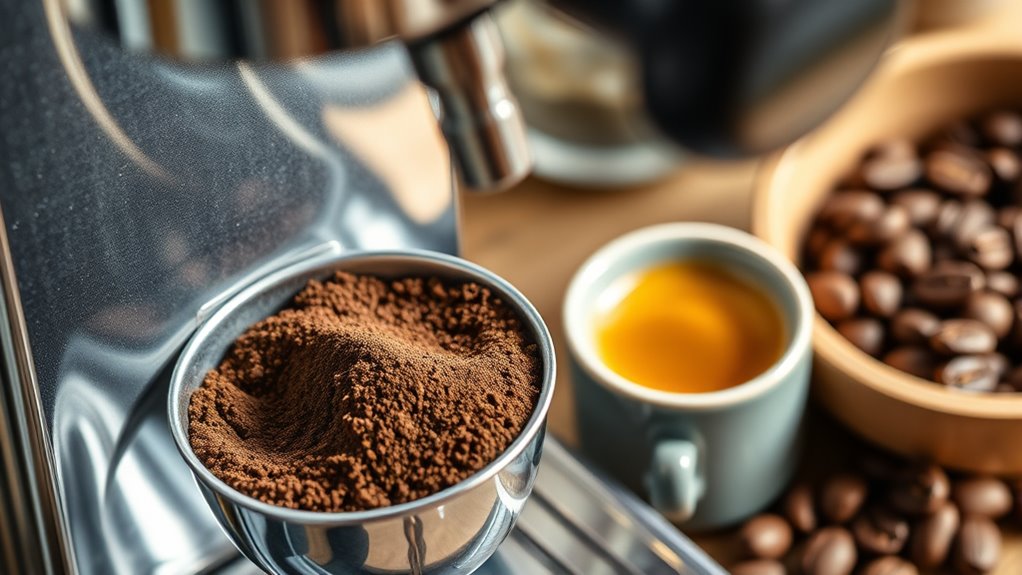
You can use any coffee bean to make espresso since it’s a brewing method, not a specific bean type. The flavor you get really depends on the bean’s origin, roast, and freshness.
Usually, darker roasts tend to give you a richer shot.
If you try experimenting with different beans, you’ll find a whole range of flavor notes that go beyond the traditional espresso profile. It’s pretty fun to explore and see what you like best!
However, achieving optimal flavor requires attention to grind size and extraction time to balance the shot quality.
Bean Types for Espresso
Although coffee beans labeled specifically for espresso are common, any type of coffee bean can work for making espresso. The essential factors are grind size and roast level, not the bean type itself. Espresso beans tend to be roasted darker and ground finer, but you can use lighter roasts if you adjust your technique accordingly.
The key is choosing fresh, high-quality beans, no matter the label, to extract the best flavors.
Consider these points when selecting beans for espresso:
- Roast level impacts extraction and crema quality
- Grind size must be fine and consistent
- Freshness influences flavor clarity and intensity
- Bean origin affects inherent flavor notes
- Espresso-specific beans are often blends designed for balance
You can craft excellent espresso with regular beans by mastering these elements. Using a high-quality espresso machine can further enhance the richness and crema of your espresso, regardless of the bean type.
Flavor Variations by Bean
While any coffee bean can be pulled as espresso, the flavor you experience depends heavily on the bean’s variety, roast, and origin.
Arabica beans typically yield a smoother, more nuanced profile, while Robusta offers a stronger, more bitter taste with extra crema.
Dark roasts, often marketed as espresso beans, deliver bold, rich, and smoky flavors ideal for traditional espresso. However, light or medium roasts, common in drip coffee, can also produce vibrant, bright, and complex espressos if ground finely and brewed under proper pressure.
The bean’s origin adds another layer. Fruity, floral, spicy, or earthy notes come from the terroir and processing methods.
Ultimately, the beans you choose shape your espresso’s character, but any coffee bean can work with the right grind size and technique. Understanding the importance of extraction ensures you get the best flavor without overpowering the drink, especially when used in cocktails like the Espresso Martini.
How Does Regular Coffee Differ From Espresso Beans?
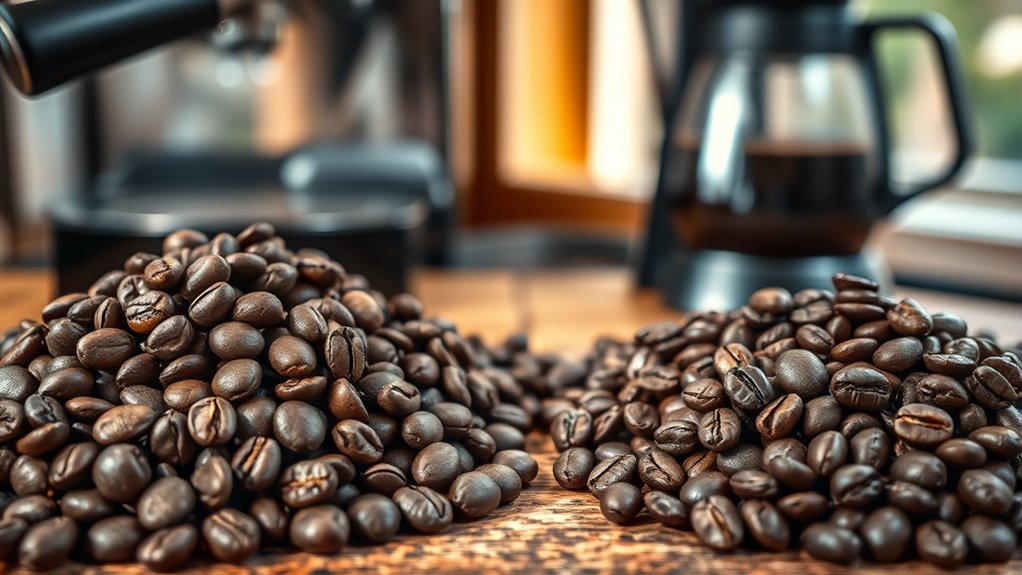
Since the primary difference between regular coffee and espresso beans lies in their roast level and grind size, understanding these factors is key to mastering each brewing method. Both come from the same bean types, but espresso beans are roasted darker to endure the high-pressure extraction process.
You’ll notice espresso beans are ground much finer than regular coffee beans, which is essential for proper brewing. This difference impacts flavor intensity and concentration.
- Regular coffee beans are lighter to medium roasted
- Espresso beans have a darker roast for boldness and resilience
- Espresso grind is very fine; regular coffee grind is coarser
- Espresso delivers a concentrated, intense flavor
- Any bean can be espresso if ground and roasted appropriately
Grasping these distinctions helps you appreciate each brew’s unique profile. It’s pretty cool how the same beans can taste so different just by changing the roast and grind! A precise grind size and dose adjustment is crucial for achieving the ideal espresso extraction.
What Happens When You Use Regular Coffee in an Espresso Machine?
When you use regular coffee in an espresso machine, you might run into some extraction issues. This often leads to a weak flavor and uneven crema, which isn’t what you’re hoping for.
That’s because the coarser or inconsistent grind can cause clogging or over-extraction. As a result, you might end up with sour or bitter notes instead of the rich, velvety texture that true espresso gives you.
You can try adjusting the grind size to improve things, but honestly, regular coffee rarely matches the quality and crema you get from proper espresso grounds. This is because proper pressure and extraction are essential to achieve the balanced aroma, body, and authentic crema characteristic of real espresso.
Flavor Impact And Quality
Although an espresso machine is designed to extract rich, concentrated flavors, using regular coffee grounds often leads to disappointing results. You’ll notice the shot lacks intensity, and the crema is minimal or absent.
The coarser grind used for regular coffee causes under-extraction, producing sour, flat, or overly acidic notes.
Inconsistent grind size can also disrupt extraction, affecting the espresso’s texture and balance. This means your shot might taste uneven or just not quite right.
- Weaker, less concentrated espresso shots
- Minimal or no crema formation
- Sour, flat, or overly acidic flavor profile
- Thin, watery consistency lacking depth
- Uneven extraction due to inconsistent grind size
Ultimately, regular coffee just doesn’t deliver the robust, aromatic quality that true espresso demands. So, it ends up being a less satisfying choice for your espresso machine. Proper grind size and pressure are key to achieving the ideal espresso extraction.
Extraction Challenges And Issues
If you rely on regular coffee grounds in your espresso machine, you’ll face significant extraction challenges that compromise the shot’s quality. Regular coffee grounds are typically too coarse, causing water to flow through too quickly.
This prevents proper extraction, resulting in weak, under-extracted shots that taste sour or flat.
Also, inconsistent grind size can lead to channeling, where water finds paths of least resistance. This causes uneven extraction and poor crema.
Coarser grounds may even clog the portafilter or increase pressure buildup, which can risk leaks or damage your machine over time.
In the end, using regular coffee grounds gives you a thin, watery espresso that lacks the rich body and intensity you expect from a true espresso shot.
Proper brewing involves precise grind size, tamping, and extraction time to achieve optimal flavor and caffeine content.
Crema Formation Differences
Why does the crema layer often disappoint when you use regular coffee grounds in an espresso machine? It’s mainly due to the grind size and consistency. Regular coffee grounds are coarser and less uniform, which prevents the pressure buildup essential for proper crema formation.
Without fine, consistent grounds, the oils and proteins don’t emulsify well. This results in a thin or nonexistent crema layer. You’ll notice the shot often tastes flat, with little foam or richness.
Here’s what happens with regular coffee grounds in your espresso machine:
- Coarser grind inhibits pressure buildup
- Uneven extraction reduces crema stability
- Oils and proteins fail to emulsify properly
- Shots lack the signature golden foam
- Possible clogging disrupts brewing pressure
Using regular grounds compromises the crema and overall espresso quality. So, if you want that rich, foamy top, sticking to a fine, consistent grind really makes all the difference.
Why Espresso-Specific Beans Work Better
Because espresso brewing relies on high-pressure extraction, you need beans that are specifically roasted and ground to meet these demands. Espresso-specific beans are roasted darker and ground finer, allowing them to withstand intense pressure and deliver a richer flavor with a thick crema.
These beans are carefully curated to balance acidity, bitterness, and body, creating a complex and concentrated espresso shot.
The fine grind ensures proper extraction within a short brew time, preventing under-extraction or over-extraction.
Additionally, using espresso-formulated beans reduces issues like channeling and clogging, helping you achieve smoother, more consistent shots.
Unlike regular roast beans, espresso-specific ones are designed to optimize crema and flavor under pressure, making them the better choice for authentic espresso preparation.
Because caffeine content varies by bean type, roast level, grind size, and extraction time, using espresso-specific beans helps maintain consistent caffeine levels in your shot.
How to Adjust Grind and Technique When Using Regular Coffee
When working with regular coffee beans to mimic espresso, you’ll need to finely adjust your grind and technique to compensate for their different roast and texture.
Start by grinding your beans with a burr grinder to a very fine, salt-like consistency. Then, focus on tamping evenly to ensure proper compression and water flow.
You might also want to slightly increase the brewing time to extract more flavor.
Keep an eye on the dose, typically 7-9 grams for a single shot, to maintain concentration.
Finally, control your water temperature, aiming for around 200°F to optimize extraction.
Use a burr grinder for fine, consistent grind.
Apply even, firm tamping pressure.
Increase brewing time slightly.
Adjust coffee dose between 7-9 grams.
Maintain water temperature near 200°F.
Remember that grind size directly affects extraction time and flavor balance, so small adjustments can make a big difference.
Tips to Improve Espresso Shots Using Regular Coffee Beans
Although regular coffee beans aren’t specifically designed for espresso, you can considerably enhance your shots by fine-tuning key variables.
Start by grinding your beans with a burr grinder to a fine, uniform texture resembling salt. This guarantees ideal extraction.
Next, apply consistent tamping pressure to compress the grounds evenly, which helps compensate for their non-espresso nature.
Keep your brew time short, around 20-25 seconds, to avoid over-extraction that leads to sour or flat flavors.
If your machine allows, try increasing the pressure slightly to extract more flavor from coarser grounds.
Finally, always use freshly roasted and ground coffee to maximize flavor clarity and minimize bitterness.
These adjustments help you craft richer, more balanced espresso using regular coffee beans.
How to Make Espresso Without a Traditional Machine
Mastering espresso with regular coffee beans sets a solid foundation, but you don’t need a traditional espresso machine to enjoy a rich, concentrated brew at home. You can use alternative methods that mimic espresso’s intensity and flavor. The key is to grind your coffee finely, almost like salt, to maximize extraction.
Consider these options: AeroPress presses coffee quickly, creating a dense, flavorful cup with crema-like foam. The Moka Pot brews on the stovetop, producing strong, espresso-like coffee with a rich body. And the French Press, though less concentrated, can intensify flavor if you use a fine grind and less water.
Freshly ground coffee enhances aroma and depth in all methods. Proper technique also matters; controlling water temperature and pressure helps get the ideal extraction.
These methods won’t fully replicate espresso machines but offer satisfying espresso-style coffee at home. So, give them a try—you might be surprised how close you can get to the real thing.
How to Choose Coffee Beans for Your Espresso
Selecting the right coffee beans plays a crucial role in crafting a rich, flavorful espresso. You’ll want freshly roasted beans specifically roasted for high-pressure brewing, usually darker roasts. Both Arabica and Robusta beans work, but Robusta adds more crema and a bolder taste.
Make sure to grind your beans finely and uniformly for the best extraction. Choosing a balanced bean profile with acidity, body, and flavor really enhances the espresso’s richness and crema.
| Factor | Recommendation |
|---|---|
| Roast Level | Dark, espresso-specific roast |
| Bean Type | Arabica for smoothness, Robusta for crema |
| Grind Consistency | Fine and uniform powder |
Picking the right beans ensures your espresso shot is rich, bold, and perfectly extracted every time.
Frequently Asked Questions
Can I Use Pre-Ground Regular Coffee for Espresso?
You can use pre-ground regular coffee for espresso, but it’s not ideal. You’ll likely get weak, sour shots with poor crema.
Try adjusting tamping and extraction time to improve the taste a bit. Still, freshly ground espresso coffee works best for quality results.
If you want a great shot, grinding fresh is definitely the way to go. It really makes a difference in flavor and crema.
How Does Water Temperature Affect Espresso Extraction?
Water temperature directly affects espresso extraction by controlling flavor balance. If it’s too low, your espresso tastes sour and weak. Too high, and it turns bitter and burnt.
Keeping the temperature consistent guarantees a rich, smooth crema and aroma. It’s all about finding that sweet spot to make your espresso taste just right.
What Is the Ideal Espresso Shot Volume?
The ideal espresso shot volume is 25-35ml for a single and 50-70ml for a double. You want to stop extraction right after the crema forms to capture balanced flavors. This helps avoid bitterness or sourness.
It’s all about timing and paying attention to the look of the espresso as it pours. Once you see that crema, it’s a good sign to stop. That way, your shot tastes just right every time.
Can Espresso Be Made With a French Press?
You can’t make true espresso with a French press since it lacks the 9 bars of pressure espresso requires.
However, you can brew a strong, concentrated coffee that’s richer than regular drip but without authentic crema.
How Long Should an Espresso Shot Take to Pull?
You should pull an espresso shot between 20 to 30 seconds. This timing guarantees balanced extraction, avoiding sourness from rushing or bitterness from over-extraction. It delivers a rich, crema-filled espresso with ideal flavor depth.
Getting the timing right really makes a difference. Too quick, and your espresso might taste sharp or sour. Too slow, and it can get bitter — nobody wants that! Just aim for that sweet spot, and you’ll enjoy a delicious shot every time.
Conclusion
Think of making espresso with regular coffee beans like painting with a palette not meant for oils but acrylics. You can create art, but the texture shifts. While regular beans lack the rich oils espresso demands, adjusting your grind and technique lets you craft a satisfying shot.
With patience and understanding, you’ll transform ordinary beans into a bold brew. It just goes to show that even the simplest tools can paint a masterpiece in your cup.