You can’t make true espresso with a regular coffee maker because it lacks the high pressure and precise temperature needed for authentic extraction.
However, by using dark roast beans, grinding them finely, increasing your coffee-to-water ratio, and tweaking the brew time, you can create a rich, bold espresso-like coffee at home.
It won’t have espresso’s signature crema or intensity, but these adjustments bring you closer to that classic shot.
Give these techniques a try and see how they transform your daily brew.
What Is Espresso and How Is It Different?
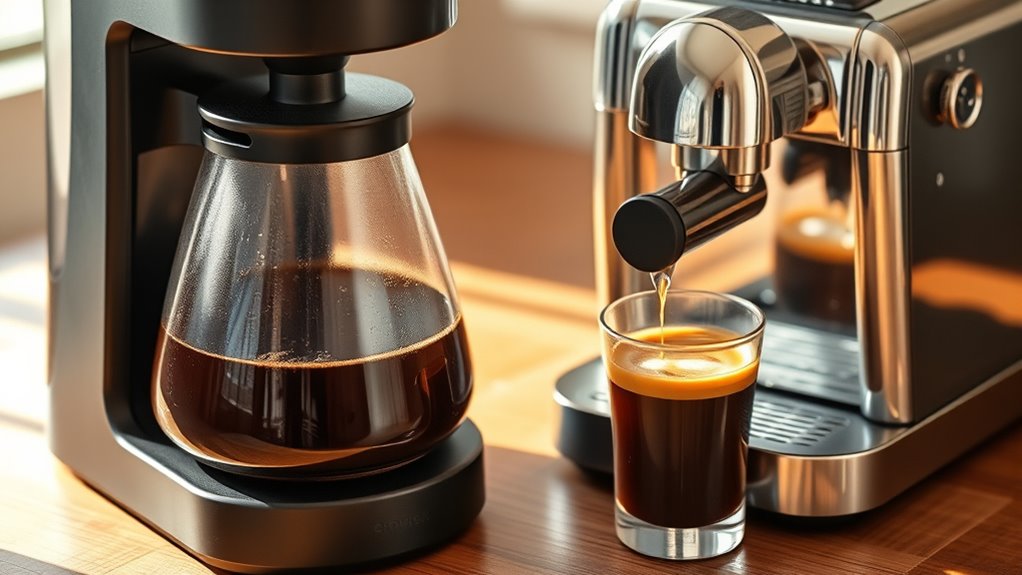
Although you might be familiar with your morning cup of drip coffee, espresso stands apart as a concentrated coffee experience brewed by forcing hot water through finely ground coffee at high pressure.
Espresso offers a bold, concentrated coffee experience crafted by high-pressure brewing through finely ground beans.
You’ll notice it yields just 25–35ml of intensely rich coffee with a strong aroma and a distinctive thick, golden crema atop.
The brewing process requires water heated precisely between 195–205°F and pressurized around 9–10 atmospheres, extracting bold flavors within 20–30 seconds.
This results in a velvety texture and viscosity akin to warm honey.
Unlike drip coffee’s gentler extraction, espresso’s rapid, high-pressure method emphasizes maximum flavor concentration, delivering an intense, aromatic shot that sets it apart as a uniquely powerful and refined coffee style you can truly savor.
Consistent extraction timing is essential to achieve the balanced flavor and crema characteristic of a quality espresso shot.
How Do Regular Coffee Makers Brew Compared to Espresso Machines?
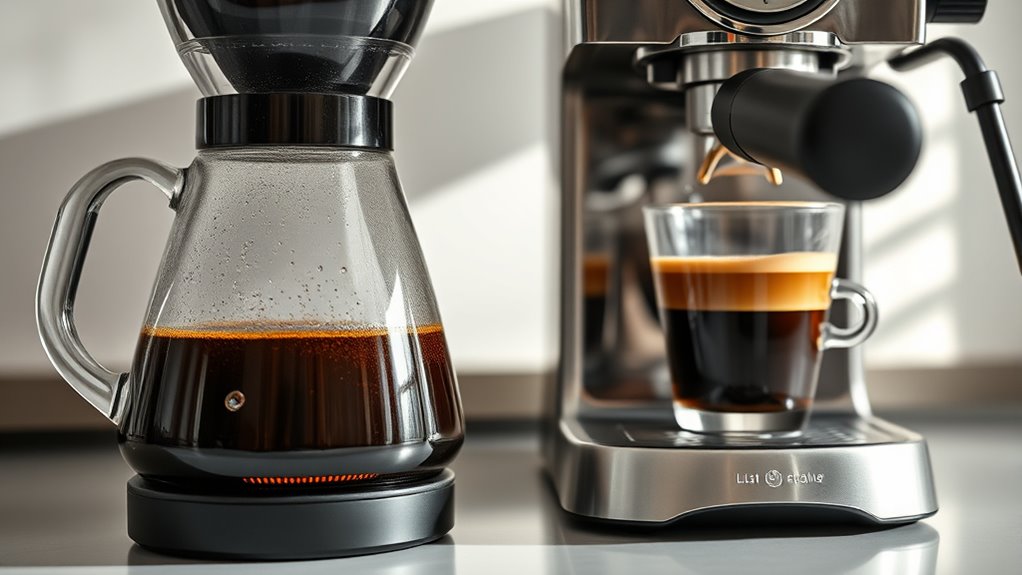
Understanding what sets espresso apart naturally leads to examining how regular coffee makers brew in comparison. When you use a drip coffee maker, hot water trickles over coarser grounds by gravity, producing a milder, less concentrated cup. This method operates at atmospheric pressure over several minutes, extracting flavor gently.
In contrast, espresso machines force hot water through finely ground coffee at around 9 bars of pressure, yielding a thick, bold shot topped with crema. That high pressure rapidly extracts intense flavors and oils, creating espresso’s signature texture and strength.
Since regular coffee makers can’t generate this pressure, they can’t replicate espresso’s richness or crema. The precise control of variables such as pressure, temperature, and grind size in espresso machines is essential for achieving the balanced and complex flavors unique to espresso.
Can a Regular Coffee Maker Make Espresso-Like Coffee?
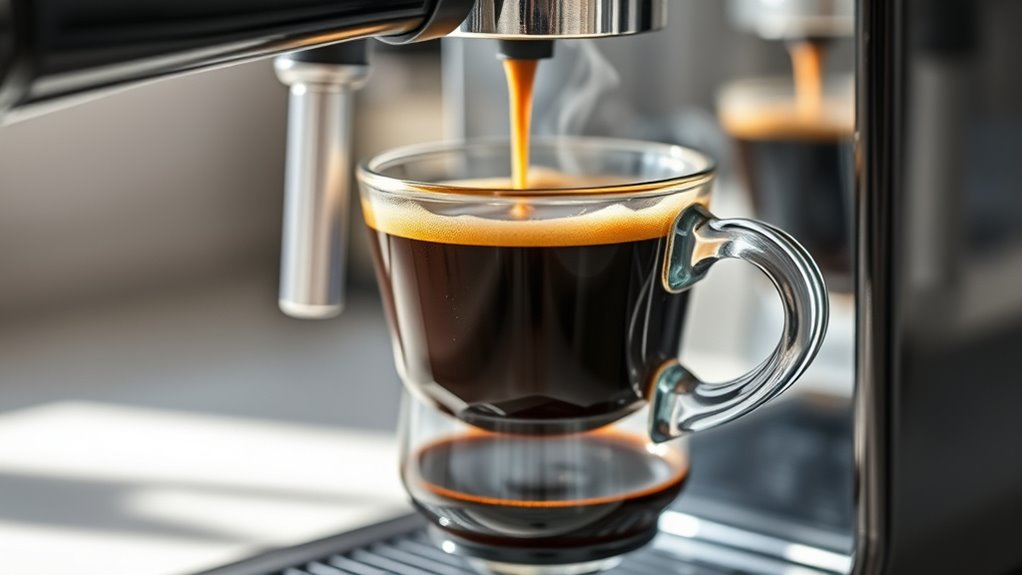
Even though a regular coffee maker can’t produce the high pressure needed for true espresso, you can still experiment to create a stronger, espresso-like coffee at home.
Start by using a finer grind than usual, closer to espresso grind but not too fine to clog your machine. Opt for dark roast beans to boost richness and depth.
Use a finer grind and dark roast beans to enhance richness and approach espresso flavor.
Adjust brewing time to extract more flavor without over-extracting bitterness. While these tweaks enhance strength and body, remember the absence of 9 bars of pressure means you won’t get the crema or intense texture authentic espresso delivers.
For a truly espresso-like experience, alternative devices like AeroPress or Moka pot offer better pressure and extraction.
Still, with careful adjustments, your drip machine can yield a satisfying, bolder cup that edges toward espresso’s profile.
Keep in mind that true espresso’s caffeine concentration is significantly higher due to its precise brewing process and coffee-to-water ratio.
What Coffee Beans Work Best for Espresso?
When aiming for an espresso-like brew, the choice of coffee beans plays a pivotal role in shaping the final flavor and texture. Espresso-specific beans are usually roasted darker to withstand high-pressure extraction, delivering a bold, balanced shot with the right acidity, bitterness, and body.
While regular coffee beans, often roasted lighter for drip or French press, can work, they may fall short without proper roasting and grinding. To truly elevate your espresso, opt for freshly roasted, high-quality beans designed for espresso.
Their rich oils and fine grindability ensure a vibrant crema and intense flavor, even if you’re using a regular coffee maker. Selecting the right beans is your first step toward crafting a satisfying espresso experience at home. Proper grind size and pressure control is essential to unlock the full potential of any coffee bean used for espresso.
Why Grind Size Matters for Espresso vs. Drip Coffee
You need a much finer grind for espresso than for drip coffee to get the right extraction under pressure. If your grind is too coarse, your espresso can end up weak and sour.
On the other hand, if the grind is too fine in a drip coffee maker, it can clog the machine and cause over-extraction, which ruins the flavor.
White espresso beans are denser and harder than regular beans, requiring a dedicated grinder to avoid damage and ensure proper extraction.
Grind Size Differences
Because espresso demands a very fine, almost powdery grind, understanding grind size differences is essential to mastering your coffee brewing. Espresso’s tiny, uniform particles maximize surface area, allowing high-pressure machines to pull intense, concentrated flavors quickly.
In contrast, drip coffee thrives on medium to coarse grounds, which extract more slowly and yield a milder, balanced cup. If you use coarser grounds for espresso, your shot will under-extract, resulting in weak, sour, or watery flavors.
On the other hand, too fine a grind in drip machines can clog filters and cause uneven extraction. Knowing these distinctions helps you choose the right grind for your method and avoid common pitfalls.
Mastering grind size means revealing the full potential of your coffee, whether you’re pulling espresso or brewing drip. It’s all about matching the grind to your brew to get the best taste possible. Regular maintenance, such as descaling frequency, can also impact the quality of your espresso by ensuring optimal machine performance.
Impact On Extraction
Although grind size might seem like a minor detail, it plays a vital role in how your coffee extracts and ultimately tastes. For espresso, you need a very fine, almost powdery grind to maximize surface area. This ensures water under high pressure extracts rich, complex flavors efficiently.
On the other hand, drip coffee uses coarser grounds to allow water to flow freely and avoid under-extraction. Getting grind size wrong impacts extraction considerably.
Too coarse in espresso leads to weak, sour shots due to under-extraction. Too fine in drip coffee clogs filters, causing bitterness from over-extraction. Proper espresso grind provides resistance, balancing extraction time under 9 bars of pressure.
Extraction time, flavor, and brew quality hinge on matching grind size to your brewing method. Understanding this is essential if you want authentic results. Adjusting grind size also helps prevent extraction issues by controlling water flow and flavor balance through consistent particle size.
How to Mimic Espresso With a Drip Coffee Maker
To mimic espresso with your drip coffee maker, start by using a finely ground dark roast to boost extraction. This helps get more flavor out of the coffee grounds.
You’ll want to increase the coffee-to-water ratio and tamp the grounds firmly to create the right resistance. It might feel a bit different than usual, but it really makes a difference.
Also, preheating the water to about 200°F and shortening the brew time will help concentrate the flavors, bringing you closer to that rich espresso profile.
Give it a try, and you might be surprised by the results!
Keep in mind that espresso’s unique high pressure extraction is difficult to fully replicate with a drip coffee maker, which affects the crema and intensity of the brew.
Grind Size Adjustments
When you adjust the grind size to a very fine texture, resembling powdered sugar or fine salt, you change how your drip coffee maker extracts flavor. This lets you mimic the concentrated profile of espresso. The finer grind increases surface area and brewing resistance, which pulls out richer, more intense flavors.
To master this, gradually refine the grind until water flows slowly, kind of like espresso’s pressure. Just be careful not to go too fine. Otherwise, you might clog the filter or end up with bitter, over-extracted coffee.
Make sure to use fresh, high-quality beans and a burr grinder for precision. Keep an eye on the extraction time too; it’s really key to balancing flavor and avoiding sourness. Adjusting grind size controls shot quality and flavor consistency, even when using alternative brewing methods like drip coffee makers by mimicking extraction dynamics.
Concentration Techniques
Fine-tuning your grind size sets the stage, but truly capturing espresso’s intensity with a drip coffee maker demands smart concentration techniques. Start by using dark roast beans, ground finely to a powdery texture for maximum extraction.
Increase your coffee-to-water ratio to about one heaping tablespoon per six ounces, intensifying the brew.
Preheat your machine and water to around 200°F to release richer flavors.
Tamp the grounds firmly in the filter basket to create resistance, mimicking espresso’s pressure.
Finally, reduce brew time by stopping the drip early or manually controlling the flow to avoid dilution.
These precise steps sharpen your coffee’s strength and depth, bringing you closer to that bold, espresso-like experience without needing specialized equipment. It’s all about making the most of what you have and dialing in those little details.
Give it a try and see how much richer your coffee can get!
Adjusting Coffee-to-Water Ratios for Stronger Espresso-Like Coffee
Although regular coffee makers aren’t designed to produce true espresso, you can get remarkably close by carefully adjusting your coffee-to-water ratios.
By increasing coffee grounds and reducing water, you’ll concentrate flavors and achieve a richer, more intense brew.
Here’s how to fine-tune your ratios for espresso-like results:
- Use 10-12 grams of finely ground coffee per 2-3 ounces of water for ideal strength.
- Reduce water volume to create a denser, more concentrated cup.
- Tamp your grounds firmly to increase resistance during brewing, enhancing extraction.
- Favor higher coffee-to-water ratios while maintaining proper grind size to mimic espresso intensity.
Mastering these adjustments transforms your regular coffee maker into a tool for a bold, espresso-inspired experience.
Give it a try—you might be surprised how close you can get!
Note that using freshly ground beans just before brewing helps preserve aroma and flavor, improving the overall quality of your espresso-like coffee.
Using Dark Roasts and Fine Grinds for More Intense Espresso Flavor
If you want to boost your espresso’s intensity using a regular coffee maker, start with dark roast beans. They’re packed with concentrated flavors and oils that give you that rich, espresso-like taste.
Then, grind those beans really fine—almost powdery. This helps pull out bold, complex notes during brewing.
Dark Roast Benefits
When you choose dark roast beans for your espresso, you tap into a bold, intense flavor profile that mirrors the rich character of traditional espresso shots. Dark roasts reveal deep, smoky notes with a smooth finish. This happens because of the oils released during roasting that enhance crema and richness.
You’ll appreciate how dark roast beans offer a less acidic, fuller-bodied cup. That makes your espresso more satisfying.
Consider these dark roast benefits:
- Rich oils improve crema quality and texture.
- Bold, concentrated flavors mimic authentic espresso.
- Lower acidity results in smoother, balanced taste.
- Fuller body delivers a robust, satisfying mouthfeel.
Using dark roasts transforms your regular coffee maker’s brew. It pushes it closer to an espresso experience with every cup you craft.
Importance Of Fine Grind
Dark roast beans bring rich oils and bold flavors that set the stage, but achieving that intense espresso profile also depends on the grind size you choose. When you use a fine grind, you increase the coffee’s surface area, allowing water to extract flavors and oils more efficiently.
Dark roasts, being oilier and more soluble, respond beautifully to this fine grind, producing a thicker crema and a richer, more concentrated taste. The fine grind slows water flow, extending brew time and drawing out those robust, deep notes you expect from espresso.
Alternative Tools to Make Espresso-Like Coffee Without a Machine
Although you mightn’t have a traditional espresso machine, several alternative tools can help you craft espresso-like coffee right at home. These devices use pressure or brewing techniques to extract intense flavors, giving you a rich cup without investing in expensive equipment.
The moka pot uses steam pressure to deliver a bold, espresso-like brew. The AeroPress presses hot water through finely ground beans, mimicking espresso’s texture and flavor.
A French press, when using fine grounds and a higher coffee-to-water ratio, produces a dense, rich coffee reminiscent of espresso.
You can also try a drip coffee maker. With very finely ground coffee, it can make a stronger, concentrated brew, though it won’t have crema or pressure extraction.
Each method offers a unique path to espresso-like satisfaction, perfect for home enthusiasts.
Tips to Improve Your Espresso-Like Coffee at Home
Exploring alternative brewing methods is just the start. Refining your technique can dramatically elevate the quality of espresso-like coffee you make at home.
First, use a fine, consistent grind about the texture of salt to mimic espresso extraction.
Increase your coffee-to-water ratio and cut brewing time to concentrate flavors.
Preheat your machine and use water near 200°F to maximize extraction.
Tamp the grounds firmly and evenly, creating resistance that simulates the pressure espresso requires.
Finally, choose dark roast or espresso-specific beans to boost richness and encourage crema-like foam.
These precise adjustments help you push your regular coffee maker beyond its limits.
You’ll end up with a bold, intense cup that approaches true espresso without specialized equipment.
Frequently Asked Questions
Can I Use Instant Coffee to Make Espresso-Like Coffee at Home?
You can conjure a quick espresso-like shot with instant coffee, but it won’t capture that rich crema or depth.
Just adjust the water and coffee ratio, then add steamed milk. This way, you can craft a satisfying cappuccino right at home.
It’s not exactly the same as espresso, but it’s a handy trick when you want a fast, tasty coffee fix.
How Does Water Temperature Affect Espresso Extraction in Regular Coffee Makers?
Water temperature directly controls your espresso’s extraction. If it’s too low, your espresso can taste sour and weak. On the other hand, if the temperature is too high, bitterness tends to dominate.
Regular coffee makers often don’t have precise temperature control. Because of this, your espresso flavor can vary a lot each time you make it. It’s a bit of a gamble, honestly. So, dialing in the right temperature really makes a difference.
Are There Health Differences Between Espresso and Drip Coffee?
You’ll find espresso packs more antioxidants and diterpenes per ounce, but both espresso and drip coffee offer similar caffeine.
Your health impact depends more on how much you drink and what you add, not just the brew. So, it’s really about your overall habits rather than the type of coffee alone.
Can I Froth Milk Without an Espresso Machine?
Can you really froth milk without an espresso machine? Absolutely! Use a handheld frother, shake heated milk in a jar, or pump a French press.
These methods deliver creamy, airy foam to elevate your coffee experience effortlessly. It’s easier than you might think, and no fancy equipment is needed.
Give it a try and enjoy café-style froth right at home!
How Do I Clean My Regular Coffee Maker After Making Espresso-Like Coffee?
You should remove used grounds and the filter immediately, then run a water-vinegar cycle to dissolve any buildup. This helps keep things clean and prevents clogging.
Clean the removable parts weekly with warm soapy water. Don’t forget to wipe down the exterior too—it keeps your coffee maker looking nice.
Also, descale regularly to keep your coffee maker working flawlessly. It’s a simple step that makes a big difference in taste and performance.
Conclusion
While a regular coffee maker can’t craft classic crema or true espresso’s intense extraction, you can still create a strong, satisfying sip by selecting dark, finely ground beans and adjusting your coffee-to-water ratio.
Embrace experimentation. Explore alternative tools and tweak your technique to transform your brew into a bold, beautiful blend.
With passion and precision, you’ll perfect a potent, punchy potion that perks up your mornings, proving great coffee doesn’t always need an espresso machine.