A traditional chai latte doesn’t have espresso. It’s made from black tea steeped with spices like cardamom and cinnamon, mixed with steamed milk and sweetener.
If you want a bolder, more caffeinated kick, you can add a shot of espresso to create a “dirty chai.” This combo blends rich coffee notes with chai’s aromatic spices. It’s a simple way to boost both caffeine and flavor complexity.
Keep exploring to discover how to customize and prepare your perfect chai latte. There are lots of ways to make it just the way you like!
What Is a Chai Latte? Does It Contain Espresso?
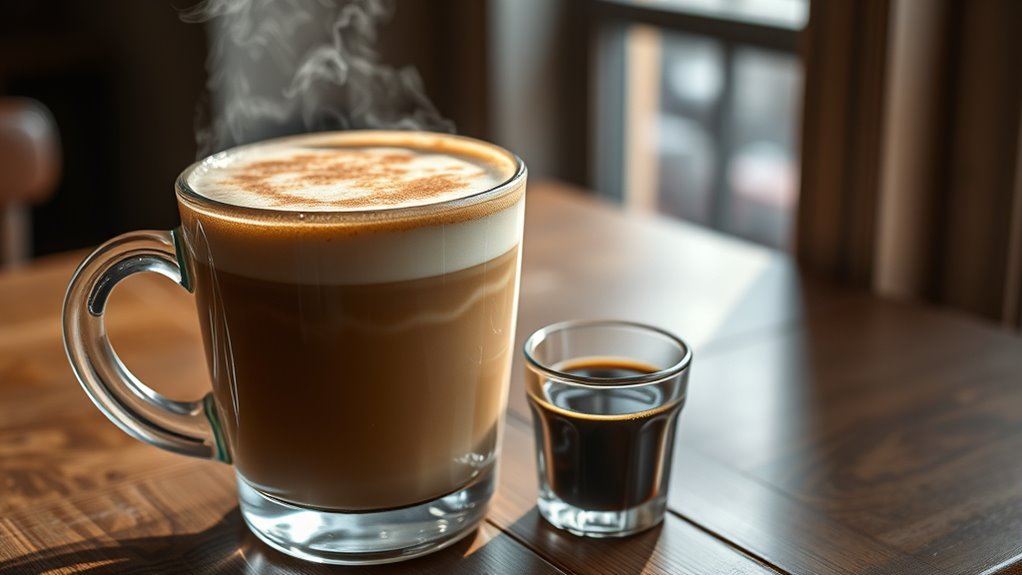
You won’t find espresso in a standard chai latte, which keeps its caffeine content moderate, typically between 30 to 50 mg per 8-ounce serving.
This makes it a lighter alternative to coffee when it comes to caffeine.
If you want a bolder, more caffeinated option, a dirty chai adds a shot of espresso to the mix, boosting both flavor and caffeine.
Keep in mind, chai lattes made with herbal or decaffeinated teas are naturally caffeine-free.
But traditional versions rely on black tea’s subtle caffeine kick.
For optimal espresso shots, baristas carefully control extraction time to ensure balanced flavor and crema.
Ingredients in a Traditional Chai Latte
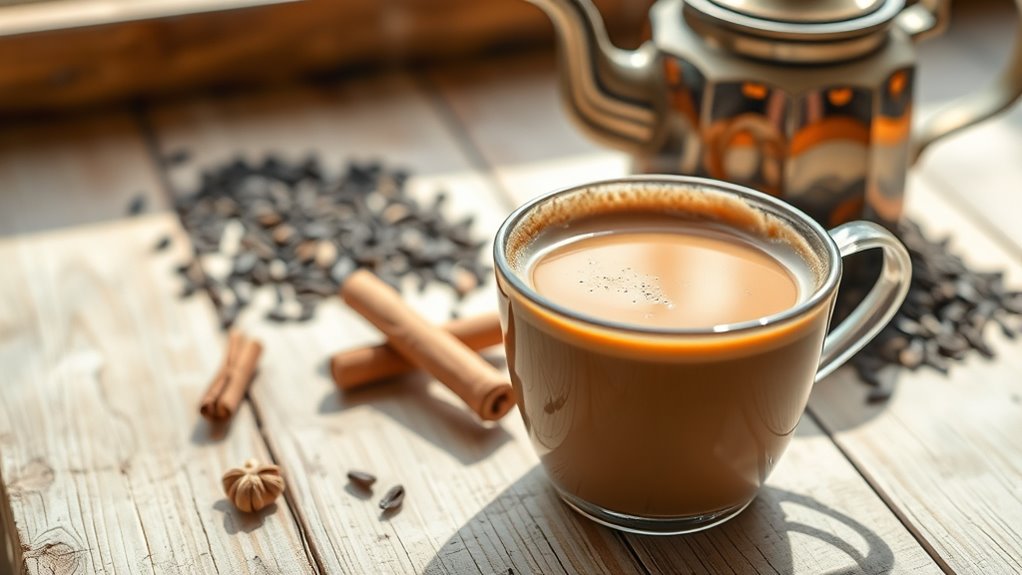
When you savor a traditional chai latte, you’re tasting a carefully balanced blend of black tea and warming spices like cardamom, cinnamon, cloves, and ginger. These spices infuse the tea with rich, aromatic flavors that define the chai experience.
The brewed tea combines with steamed milk, which adds creamy texture and smoothness.
Sweeteners like sugar or honey are often included to enhance the drink’s comforting sweetness. Some recipes use pre-made chai concentrates or powdered spice blends to simplify preparation without sacrificing flavor.
The key is steeping the spice-infused black tea in hot water before mixing it with milk.
Unlike variations containing espresso, a traditional chai latte relies solely on these ingredients to deliver its signature warmth and depth. It’s all about that perfect balance.
And honestly, once you get it right, nothing else quite compares.
It’s important to note that traditional chai lattes contain no espresso shots, unlike many Starbucks drinks where espresso shots can be added for extra caffeine.
Differences Between Dirty and Classic Chai Lattes
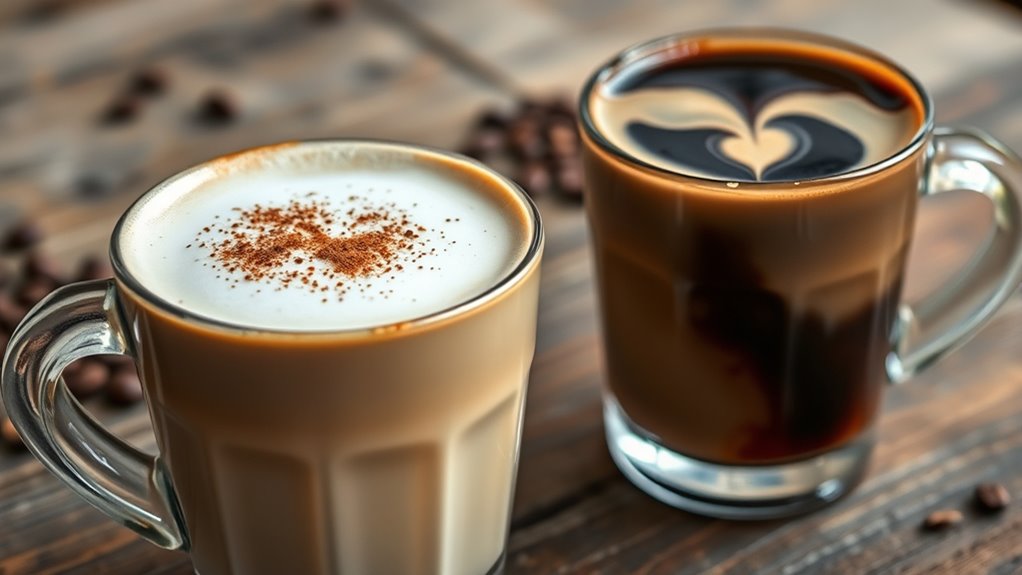
If you’re familiar with a classic chai latte’s warm, spiced flavors, adding a shot of espresso transforms it into a dirty chai latte with a bold, coffee-forward kick. Here’s how they differ:
- Classic chai latte blends black tea, spices, milk, and sweetener, creating a smooth, aromatic drink.
- Dirty chai latte includes a shot of espresso, introducing a richer, more robust coffee flavor.
- The term “dirty” highlights the espresso’s impact on color and taste, giving a muddy hue and stronger bite.
- Caffeine content rises markedly in a dirty chai, thanks to the espresso’s added punch, making it ideal if you want more energy.
Espresso is made by forcing hot water through finely ground coffee at high pressure, producing a concentrated shot with a thick texture known as crema, which adds to the flavor complexity of the dirty chai.
How Espresso Affects Flavor and Caffeine in a Chai Latte
When you add espresso to a chai latte, you get this bold, roasted flavor that really cuts through the sweetness and spices. It creates a nice, complex balance that’s pretty exciting.
Plus, that single shot pumps up the caffeine by about 65 mg, so the drink definitely feels stronger.
Knowing how the coffee and chai work together helps you appreciate that unique taste and energy you get from a dirty chai. It’s more than just mixing two drinks—it’s about how they complement each other to make something special.
Because espresso contains a concentrated amount of caffeine, the overall caffeine content in the chai latte increases significantly, giving you a quicker and more intense energy boost.
Espresso’s Impact On Flavor
Although chai lattes are beloved for their warm spices and creamy texture, adding a shot of espresso transforms their flavor profile dramatically. You’ll notice how espresso’s bold, roasted notes introduce a slightly bitter edge that balances the chai’s sweetness. This combination creates a richer, more complex taste experience.
Here’s what you can expect:
- A robust coffee aroma blending with spicy chai scents
- Deep, earthy undertones complementing cinnamon, cardamom, and cloves
- A layered flavor where espresso’s bitterness sharpens the creamy sweetness
- A harmonious fusion that enhances both the chai’s spice and espresso’s intensity
This blend results in a chai latte with a distinctly stronger, coffee-infused character while preserving its signature warmth and creaminess. It’s like getting the best of both worlds in every sip. Adding a doppio espresso can amplify this effect by introducing a fuller flavor and higher caffeine content.
Caffeine Boost From Espresso
How much caffeine does adding espresso really pack into your chai latte? Each shot of espresso adds about 65mg of caffeine, boosting a standard chai latte’s total to roughly 105mg. This caffeine increase makes the drink comparable in strength to a regular cup of coffee.
You’ll feel a layered caffeine effect. The black tea delivers a gentle lift, while the espresso shot provides a stronger, immediate boost.
Beyond caffeine, espresso’s bold, roasty flavor intensifies the chai latte’s profile, enhancing its natural spices and creaminess.
This combination not only amps up your alertness but also offers a richer, more dynamic taste experience. So, if you need that extra kick, adding espresso transforms your chai latte into a robust, caffeine-packed beverage.
A well-pulled espresso shot with a thick, persistent crema also contributes to the overall texture and flavor complexity of the chai latte.
Balancing Chai And Coffee
Adding espresso to your chai latte does more than just boost caffeine. It reshapes the drink’s entire flavor profile. When you balance chai and coffee, you create a rich, complex beverage that combines the boldness of espresso with the spicy sweetness of chai.
Here’s how espresso affects your chai latte:
- It introduces a bold coffee flavor that cuts through the chai’s sweetness.
- It raises caffeine content considerably, often adding around 105 mg per shot.
- It adds bitter, rich notes that complement warm spices, enhancing depth.
- It requires careful proportioning to maintain the cozy spice character while boosting strength.
Moderate espresso intake also provides antioxidants that can contribute to health benefits when enjoyed without added sugars.
Customizing Your Chai Latte (With or Without Espresso)
You can totally customize your chai latte by adding a shot of espresso if you want an extra caffeine kick. Or, if you prefer something a bit gentler, just skip the espresso altogether.
Try experimenting with different kinds of milk, like almond or oat, to change up the texture and creaminess.
And don’t forget to adjust the sweetness to your liking—whether that’s with honey, maple syrup, or sugar. It’s all about making it just right for you!
Keep in mind that using espresso made from darker, longer roasted beans can provide a stronger caffeine punch per serving due to its higher caffeine concentration.
Espresso Options Explained
While a chai latte is delicious on its own, adding espresso shots turns it into a dynamic “dirty chai” that boosts both the flavor and caffeine kick. You can easily customize your chai latte by choosing how many espresso shots you want and the brewing style that suits your taste.
Here are some espresso options to think about:
- Traditional espresso shot, bold and intense, perfect if you want a strong flavor.
- Cold brew coffee adds smoothness and a subtle touch of acidity.
- French press espresso gives you a richer, fuller-bodied taste.
- Decaf espresso is great when you want the flavor without the caffeine.
Picking the type and amount of espresso you add changes the drink’s boldness, caffeine level, and overall flavor. So, you can make the perfect chai latte just the way you like it every time.
Milk And Sweeteners
Though espresso defines the boldness of your chai latte, the choice of milk and sweeteners shapes its overall character and balance. You can customize your drink using plant-based milks like almond, soy, coconut, or oat to adjust creaminess and flavor.
Barista-style milk enhances frothing, delivering a richer texture whether you add espresso or not. Sweetness is equally flexible. Choose from sugar, honey, maple syrup, or sugar-free options to match your preference.
If you want the chai’s spicy, earthy notes to shine, cut back on sweeteners or skip them altogether. When espresso enters the mix, upping milk or sweetener balances its intensity, creating a smooth, indulgent dirty chai.
Tailoring these elements lets you craft a chai latte exactly how you like it. The roast profile of the espresso beans can also influence the flavor balance, with darker roasts providing a richer, bolder taste that complements the chai’s spices.
Ordering a Dirty Chai Latte
Wondering how to order a Dirty Chai Latte at your favorite cafe? It’s simple but requires a clear request, since many cafes don’t list it on their menu. Ask for a chai latte with an added shot of espresso, or just say “dirty chai.”
You can customize how bold it’s by choosing one or two espresso shots based on your caffeine preference. Also, specify if you want it hot or iced to get exactly what you want.
Here’s how to order:
- Request a chai latte.
- Ask for one or two shots of espresso.
- Say “dirty chai” if you prefer a shortcut.
- Specify hot or iced.
This guarantees your drink is perfectly tailored and delivers that rich, energizing twist.
Making a Dirty Chai Latte at Home
If you enjoy ordering a dirty chai latte at cafes, making one at home can be just as satisfying and lets you customize every aspect.
Start by steeping 2 teaspoons of chai tea in boiling water for 4-5 minutes, then remove the tea bags.
Brew a shot of espresso separately and stir it into the chai. Add sweetener if you like.
Froth your preferred milk or plant-based alternative and pour it over the chai-espresso mix.
For an iced version, fill a glass with ice, pour in the chai and espresso, then top with cold milk and stir.
Store leftover chai concentrate in the fridge for up to two weeks so you can whip up a dirty chai latte quickly whenever you want.
Shaking the espresso with ice before adding it to the chai can create a smoother texture and a pleasant frothy top, enhancing the overall drink experience with aeration techniques.
Frequently Asked Questions
Can I Use Different Types of Tea for a Chai Latte?
Yes, you can use different teas for your chai latte. Experiment with black, green, white, or herbal teas to customize the flavor and caffeine levels.
Feel free to adjust brewing times and spices to balance each tea’s unique profile perfectly. It’s all about finding what you like best!
Are Chai Lattes Suitable for People With Caffeine Sensitivity?
If you’re sensitive to caffeine, you should avoid regular chai lattes. Instead, choose decaffeinated chai or try herbal alternatives like rooibos chai.
That way, you can enjoy the flavor without the jitters or sleepless nights. It’s all about finding what works best for you!
What Milk Alternatives Work Best in Chai Lattes?
You’ll find oat and cashew milk work best in chai lattes, offering creamy, velvety textures that really bring out the spices. They blend smoothly and give your drink a nice, rich feel.
Almond, coconut, and soy are also great dairy-free options. Each one adds its own unique flavor and richness to your chai latte. So, you can mix it up depending on what taste you’re in the mood for.
How Long Can I Store a Pre-Made Chai Latte?
You can store a pre-made chai latte in the fridge for 24 to 48 hours. Beyond that, freshness and foam quality decline, so drink it quickly.
Try to avoid freezing it, as that changes the texture and flavor. It’s best enjoyed fresh, but if you need to keep it a bit longer, the fridge is your friend. Just don’t wait too long!
Can Chai Latte Spices Benefit Health?
You’ll find chai latte spices pack a punch. They fight inflammation, improve digestion, and regulate blood sugar.
With antioxidants and anti-inflammatory benefits, they’re like nature’s little health boosters. They help you feel balanced and energized daily.
Conclusion
Now that you know a classic chai latte doesn’t have espresso, you can decide if you want to spice things up with a dirty chai. Adding espresso is like painting bold strokes on a warm, creamy canvas. It intensifies both flavor and caffeine kick.
Whether you stick to tradition or customize your cup, you’re in control of your chai experience. So go ahead, brew your perfect blend and savor every comforting sip.