You make espresso by forcing hot water at high pressure (around 9 bars) through finely ground coffee. This extracts intense flavors and oils in about 25–30 seconds. The result is a concentrated, rich shot topped with a golden crema, which signals freshness and quality.
Key factors like grind size, tamping pressure, and water temperature all shape its bold profile. Master these, and you reveal espresso’s distinctive complexity and texture. It’s really about getting those details just right.
Explore further to uncover the nuances behind every perfect shot. You’ll find there’s a lot more to espresso than meets the eye. Enjoy the journey!
Defining Espresso: The Basics of This Unique Coffee Shot
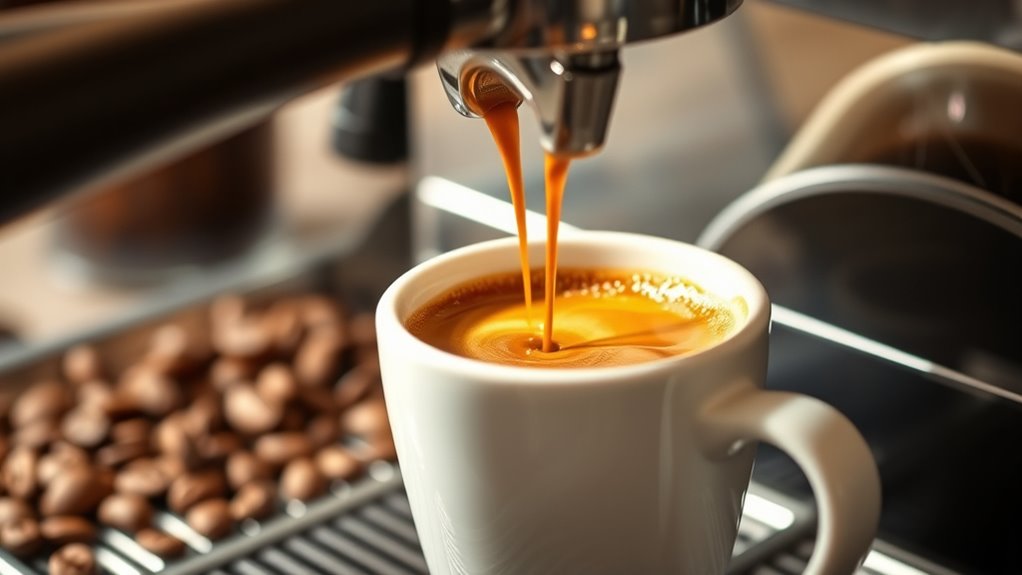
Although espresso might seem like just a small cup of coffee, it’s actually a highly concentrated beverage. It’s crafted by forcing hot water at 6 to 9 bars of pressure through finely ground coffee.
You control key variables like grind size, tamping pressure, water temperature, and extraction time, which usually lasts 25 to 30 seconds.
This process produces a dense, flavorful liquid topped with a golden crema. That crema is a signature layer of emulsified oils that signals freshness and quality.
The high-pressure extraction draws out intense flavors and aromatic oils. This gives espresso its rich body and complexity.
Mastering these precise parameters lets you release espresso’s unique character. So, it’s more than just coffee; it’s a concentrated expression of craftsmanship and passion.
Understanding how pressure and temperature influence extraction is essential to perfecting your shot.
How Espresso Differs From Drip Coffee
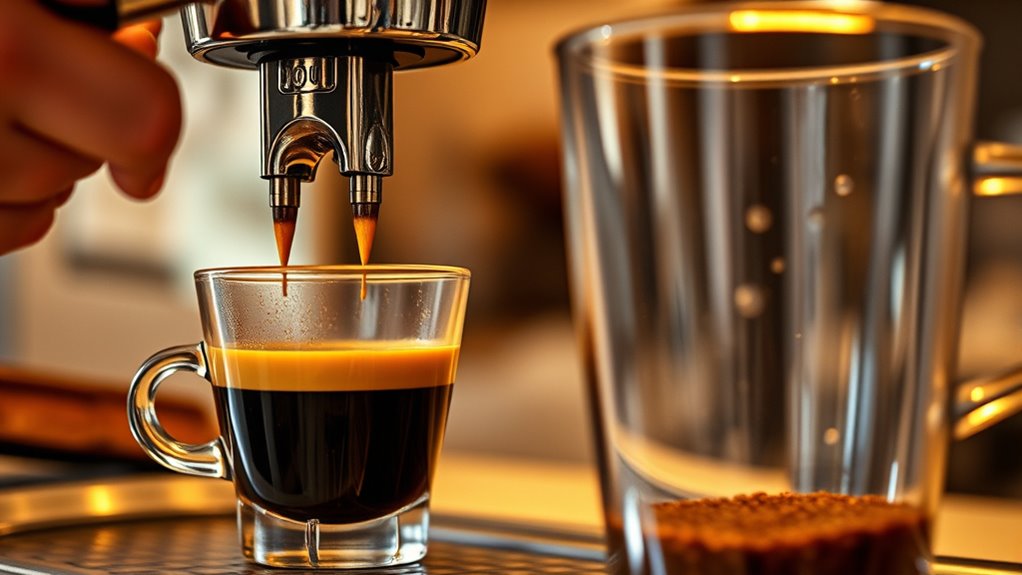
Espresso’s distinctive character comes from its intense extraction method, which sets it apart sharply from drip coffee. When you make espresso, hot water is forced through finely ground coffee at around 9 bars of pressure, extracting flavors quickly within 25–30 seconds.
In contrast, drip coffee relies on gravity pulling water through coarser grounds over several minutes, producing a lighter, less concentrated brew. You’ll notice espresso’s thicker consistency and signature crema layer on top, a product of this high-pressure process, absent in drip coffee.
Despite espresso’s higher caffeine concentration per ounce, its smaller serving size usually means less total caffeine than a large drip coffee.
This technical divergence in brewing parameters defines espresso’s bold, intense profile versus the more delicate, extended extraction of drip coffee. Precise control over extraction time and pressure is key to achieving espresso’s unique flavor and texture.
Espresso Beans and Roasts: Creating Distinctive Flavors
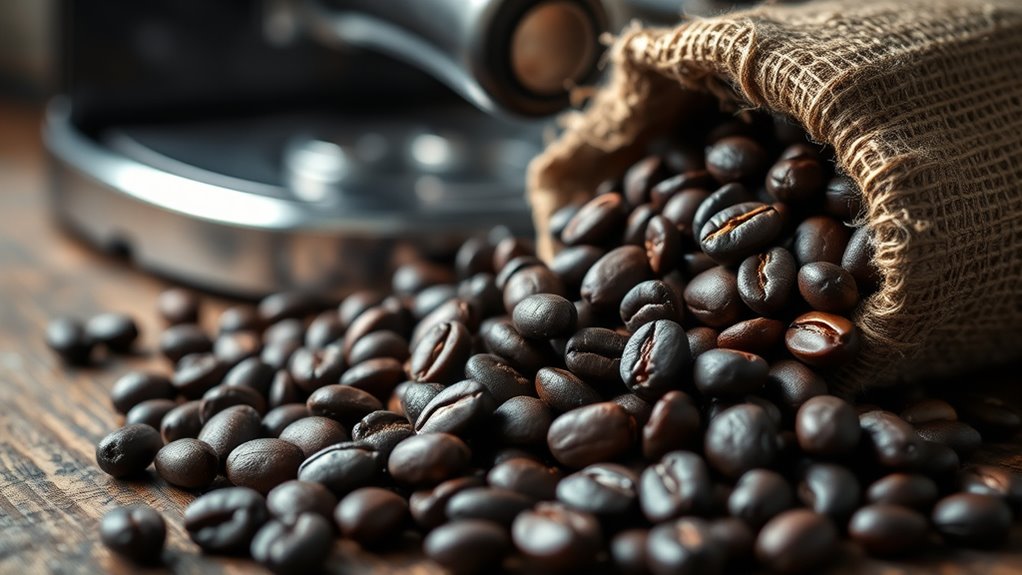
When you select beans for espresso, the roast level plays a crucial role in shaping the shot’s flavor and texture. Espresso beans are typically roasted darker than drip coffee beans, which intensifies their oil content and flavor depth. These natural oils are essential because they create the crema, that signature foam layer atop your shot.
You’ll find both Arabica and Robusta beans used. Robusta yields more crema due to higher oil and caffeine levels. Darker roasts deliver richer, bolder profiles, while lighter roasts offer brighter acidity and nuanced complexity.
Regional preferences and personal taste really defy strict rules about roast level, so you can experiment confidently. Understanding these variables empowers you to tailor espresso flavors precisely. That way, you craft shots that express distinctive character and intensity. Proper storage in airtight, dark containers is also key to preserving the beans’ freshness and flavor.
Why Grind Size, Pressure, and Timing Matter in Brewing Espresso
Selecting the right beans and roast sets the foundation, but nailing the grind size, pressure, and timing shapes the espresso’s final character. You need a fine, uniform grind to create resistance, allowing hot water to extract flavors effectively under high pressure.
Maintaining about 9 bars of pressure emulsifies oils, producing espresso’s signature texture.
Timing is essential. Aim for a 25 to 30 second extraction to avoid bitterness or weak flavors. Here’s what you must control:
- Use a consistent fine grind to balance resistance and flow.
- Keep pressure steady around 9 bars for proper emulsification.
- Extract within 25 to 30 seconds to optimize flavor.
- Avoid coarse grind because it causes under-extraction and weak body.
- Don’t go too fine since it slows extraction and creates bitterness.
Mastering these variables defines espresso’s true quality. Regular calibration of your grinder ensures that the grind size consistency is maintained for optimal extraction.
How Crema Reveals Espresso Quality
How can you tell if an espresso shot was pulled just right? Look at the crema—the dense, golden-brown foam atop your espresso. This layer isn’t just aesthetic; it’s a precise indicator of extraction quality.
Crema forms when high pressure (6-9 BAR) emulsifies oils and traps CO2 released from fresh beans, ideally roasted within two weeks. If your crema is thick and persistent, you’re witnessing balanced extraction, fresh coffee, and optimal brewing parameters all in harmony.
Factors like grind size, temperature, and bean freshness directly influence crema’s appearance and stability. The ideal extraction time of 25-30 seconds is also crucial to achieving a rich and stable crema.
Common Espresso Problems and How They Change the Flavor
You’ll notice that channeling creates uneven extraction, which leaves bitter or sour pockets in your shot. It’s kind of like when water finds the easiest path through the coffee puck, so some areas get over-extracted while others barely get touched.
Under-extraction is another common issue. It strips the espresso of its body and sweetness, leaving you with a sharp, thin taste that just doesn’t feel quite right.
On the other hand, over-extraction pulls out those bitter, burnt notes that can really overpower the delicate balance you’re aiming for in your cup. It’s all about finding that sweet spot! Maintaining the correct water temperature between 195°F and 205°F is crucial to avoid both under- and over-extraction.
Channeling Effects
Why does your espresso sometimes taste uneven or sour despite using quality beans? The culprit is often channeling. This happens when water finds weak spots in the coffee puck and bypasses the grounds, causing uneven extraction and weaker crema.
This leads to bitterness or sourness because some areas over-extract while others under-extract. It can be frustrating when you’re aiming for that perfect shot.
To combat channeling, focus on these critical factors:
- Use a consistent grind size to avoid gaps or dense spots
- Distribute coffee grounds evenly before tamping
- Apply uniform tamping pressure for a solid puck
- Watch for uneven or broken crema as a sign of channeling
- Monitor flow rate; a too-quick pour hints at water bypassing grounds
Mastering these details ensures balanced flavor and a rich, authentic espresso experience every time. Additionally, understanding how crema quality reflects extraction balance can help you identify and correct channeling issues early.
Under-Extraction Issues
Although dialing in your espresso shot can feel like a delicate balancing act, under-extraction often sneaks in when water flows through the grounds too quickly. This leaves you with a sour, weak, and underdeveloped flavor. You’ll notice a light-colored crema and flavors that taste grassy, watery, or overly acidic.
This happens primarily because your grind is too coarse or the extraction time is too short, typically under 25 seconds. When under-extracted, the water fails to dissolve enough soluble compounds. That robs your espresso of body and depth.
To fix this, you can fine-tune your grind size to be finer, extend the brewing time, or increase pressure slightly. These adjustments guarantee a fuller extraction and reveal the rich complexity that true espresso demands. Fresh espresso is crucial because it provides essential oils and crema that form rich, frothy foam, enhancing both flavor and texture.
Over-Extraction Consequences
When water lingers too long on finely ground coffee, it extracts bitter and harsh compounds that overwhelm the shot’s balance. Over-extraction pulls undesirable elements like tannins and chlorogenic acids, which create a dry, puckering mouthfeel and mask the coffee’s nuanced flavors.
You might notice a dark, overly thick crema accompanied by burnt or astringent notes.
Factors like an excessively fine grind or too much pressure extend extraction time, making these issues worse. To avoid this, watch for these common signs:
- Bitter, harsh taste dominating the shot
- Overly intense, unbalanced flavor profile
- Dark, thick crema with burnt notes
- Dry or puckering sensation on the palate
- Excessively fine grind or high tamp pressure
Recognizing these consequences is key to dialing in the perfect espresso shot. Keep an eye out, and you’ll be brewing better coffee in no time. Adjusting parameters such as grind size and brewing time can help control caffeine extraction and improve flavor balance.
Tips for Perfecting Your Espresso Extraction
To perfect your espresso extraction, you need to control several important variables with precision. Start by grinding your coffee to a very fine, uniform consistency that looks like table salt. This helps make sure the extraction is even every time.
Next, tamp the grounds evenly with about 30 pounds of pressure. This creates the right resistance for high-pressure brewing.
Keep your extraction time between 25 and 30 seconds for a double shot. That way, you’ll balance flavor and crema perfectly.
Make sure to keep the water temperature strictly between 90 and 96°C (194–205°F). This is key to emulsifying oils and developing a rich crema.
Also, don’t forget to regularly calibrate your grinder, tamp pressure, and temperature settings. Staying consistent with these details will help you get the best results.
Mastering these technical steps lets you bring out espresso’s full potential. You’ll get shots that are intense, balanced, and vibrant every single time. For an ideal iced espresso drink, consider shaking the brewed espresso with crushed ice and brown sugar syrup to create a rich frothy texture.
Frequently Asked Questions
Can Espresso Be Made With Decaffeinated Beans?
Yes, you can make espresso with decaffeinated beans. You’ll just need to adjust the grind size and brewing time a bit because the oils and moisture in the beans are a little different.
Good quality decaf still gives you a rich crema and a nuanced flavor. It just comes with minimal caffeine, so you get the taste without the buzz.
How Does Water Temperature Affect Espresso Taste?
Water temperature is the maestro of espresso’s flavor symphony. If it’s too low, your shot sings sour notes. Too high, it screams bitterness.
You want to hit that sweet spot between 90 and 96°C to get a balanced, rich, and aromatic espresso every time. It’s all about finding that perfect heat to bring out the best in your coffee.
What Equipment Maintenance Keeps Espresso Machines Optimal?
You keep your espresso machine ideal by regularly descaling and cleaning group heads. Replacing worn gaskets is also key. Backflushing with solutions helps keep everything running smoothly.
Calibrating grinders is another important step. These precise actions maintain pressure, temperature, and extraction consistency. That way, you get perfect espresso every time.
Is Espresso Healthier Than Regular Coffee?
Espresso isn’t inherently healthier than regular coffee; you’ll get more antioxidants per volume, but you also consume caffeine faster.
Your overall health impact depends on how much you drink and your sensitivity to caffeine. So, it’s a good idea to monitor your intake carefully.
Can Espresso Shots Be Used in Cocktails?
Yes, you can use espresso shots in cocktails. Their concentrated flavor and rich crema intensify aroma, balance sweetness, and complement alcohol.
This makes your cocktails bold and energizing. They’re perfectly crafted for both shaken and stirred variations.
Conclusion
Now that you know what makes espresso espresso, you’re ready to master this artful science. Like a symphony, every element—grind size, pressure, timing, and crema—must harmonize perfectly to reveal espresso’s rich, bold character. Remember, small tweaks can turn a bitter shot into liquid gold.
Keep experimenting with precision and passion. Soon you’ll pull espresso shots that sing with flavor and quality every single time.