Espresso machines range widely in price, from under $100 for basic models to over $10,000 for professional-grade units. Your budget, skill level, and desired features largely determine the cost. Entry-level machines offer essential functions, while high-end options provide advanced technology like dual boilers and PID controls.
Keep in mind, you’ll also need to factor in grinder costs and routine maintenance. Understanding these variables can really help you find the perfect machine tailored to your needs and preferences. It’s all about balancing what you want with what you’re willing to spend.
Factors That Influence Espresso Machine Prices
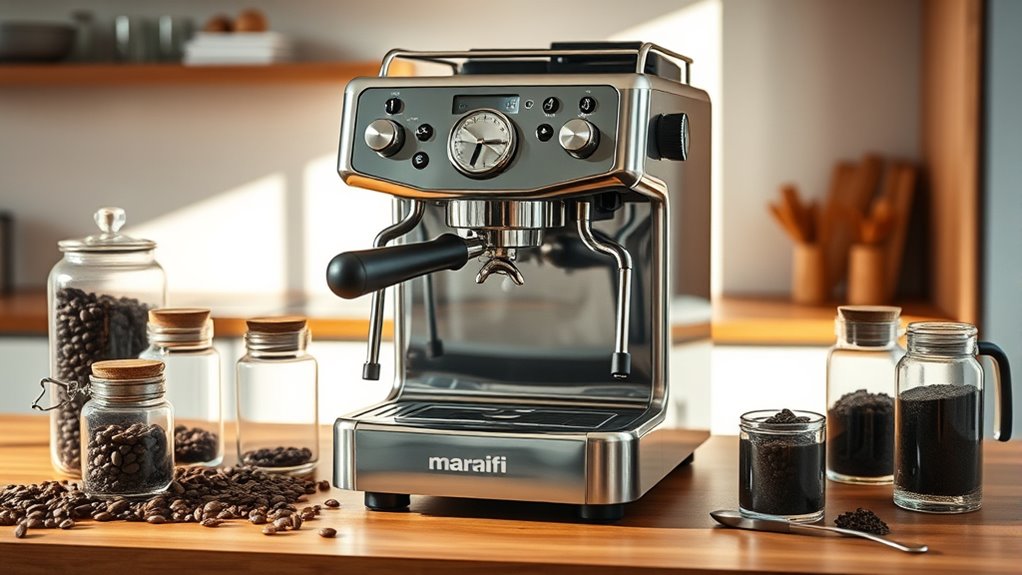
Although espresso machines come in a wide price range, from under $100 for basic models to over $10,000 for professional-grade units, understanding what drives these costs can help you make a smarter purchase. The type of machine you choose, whether manual, semi-automatic, or super-automatic, greatly affects the price.
Espresso machines vary widely in price, influenced heavily by machine type and functionality.
Build quality, like durable materials and craftsmanship, also plays a key role. Advanced features such as dual boilers, PID temperature controls, pressure profiling, and digital displays tend to push prices higher.
Don’t overlook brand reputation either; established manufacturers often charge more but provide reliable support and easier access to replacement parts.
Plus, you’ll want to factor in extras like grinders, water filters, and accessories. These add to the total investment needed for a complete espresso setup.
Knowing these factors guarantees you invest wisely. Additionally, maintaining precise temperature and pressure requires complex engineering components, which significantly influence the machine’s cost and performance.
Choosing the Right Espresso Machine for Your Budget
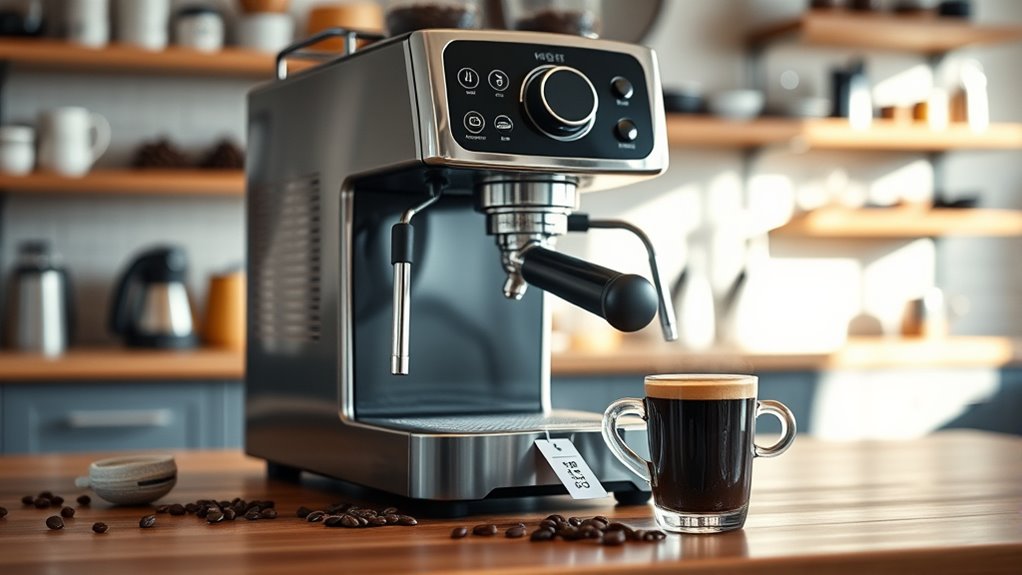
When selecting an espresso machine, your budget plays a crucial role in balancing features, control, and long-term value.
If you’re just starting out, machines under $200 offer basic functionality but demand manual skill to pull decent shots.
Stepping up to $300–$600, you’ll find entry-level semi-automatic and manual machines that deliver better build quality and more control. These are ideal for enthusiasts who want to hone their craft.
For those ready to invest seriously, prosumer models priced between $1,000 and $2,000 bring advanced features like dual boilers and PID temperature control. These enhance consistency and durability.
Assess your skill level and desired features carefully. This guarantees you pick a machine that matches your expectations without overspending or compromising on performance and reliability.
Regular maintenance such as descaling and backflushing is essential to keep your espresso machine performing at its best over time.
Manual vs Automatic Machines: Price and Function Differences
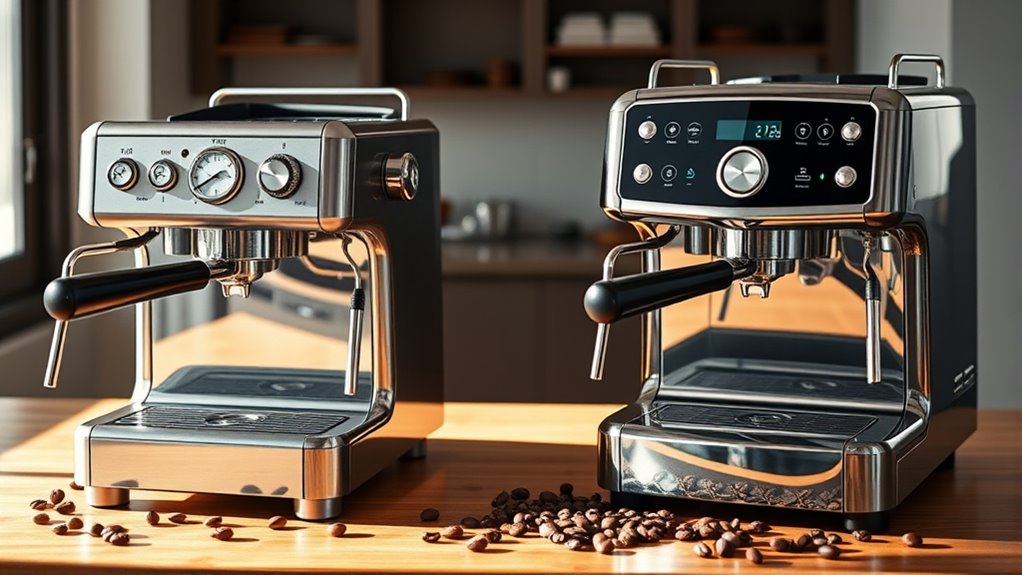
Since you’re deciding between manual and automatic espresso machines, understanding their price and functional differences is key to making the right choice.
Manual machines typically cost $150 to $600, giving you full control over brewing but demanding skill and effort. They’ve simpler mechanics and lower upfront costs but often require extra purchases like grinders and tampers.
Manual espresso machines offer full control and simplicity but need skill and extra tools like grinders and tampers.
On the other hand, automatic and super-automatic machines range from $300 to $2,000, offering convenience with preset functions and integrated milk frothing. Their higher price reflects advanced electronic controls, built-in grinders, and time-saving features.
Ultimately, your decision hinges on whether you value hands-on brewing mastery or prefer effortless, consistent espresso with the push of a button. Regular maintenance, including descaling your machine every few months, is essential to preserve performance and espresso quality regardless of the type you choose.
Budget Espresso Machines Under $100
How far can you stretch your espresso budget without compromising too much on quality? Budget espresso machines under $100 offer a practical entry point. While these models are basic, they produce decent shots if you’re willing to experiment a bit.
Most support pre-ground coffee and rely on simple brewing methods, making them perfect for beginners. Their designs are straightforward, with limited features and minimal automation, so you control the process manually.
Quality and durability vary, so prioritize models with positive reviews and solid warranties to avoid disappointment. These machines won’t replace a high-end setup but excel for casual use or learning espresso fundamentals.
If you want a cost-effective way to explore espresso without a steep investment, these budget options deserve your consideration. Keep in mind that many budget machines support pre-ground coffee usage, which is ideal for those new to espresso making.
Entry-Level Machines Between $100 and $500
When you’re looking for an entry-level espresso machine between $100 and $500, you’ll come across a mix of manual and semi-automatic options. These machines strike a good balance between control and convenience.
It’s a good idea to focus on essential features like a reliable steam wand and consistent boiler pressure. These are key to getting the best results.
With a little practice, you’ll find that these budget-friendly machines can deliver impressive espresso without breaking the bank.
Make sure to follow proper preheating guidelines to ensure temperature consistency and optimal brewing results.
Budget Espresso Options
What can you expect from an entry-level espresso machine priced between $100 and $500? These budget options, like the DeLonghi Stilosa, offer solid performance with features such as pressurized baskets and steam wands. While some learning is required, you’ll find many machines support pre-ground coffee, making them accessible.
This price range suits beginners enthusiastic to experiment without a hefty investment. Here’s a quick comparison:
| Model | Features | Price Range |
|---|---|---|
| DeLonghi Stilosa | Pressurized basket, steam wand | $150 – $200 |
| Hamilton Beach | Semi-automatic, compact design | $100 – $130 |
| Breville Bambino | Fast heat-up, consistent shots | $400 – $500 |
| Mr. Coffee Café | Simple interface, easy clean | $120 – $150 |
| Nespresso Essenza | Capsule system, quick brewing | $150 – $200 |
Choosing a reliable, well-reviewed budget machine will kickstart your espresso journey confidently. It’s also important to understand espresso extraction time to get the best flavor and consistency from your machine.
Manual Vs. Automatic
Exploring budget espresso machines means deciding between manual and automatic models, each offering distinct advantages in the $100 to $500 range. Manual machines, typically priced between $100 and $300, demand more skill and effort but give you greater control over shot quality.
You’ll often find they lack features like temperature control or steam wands, focusing on the essentials of brewing.
On the other hand, automatic machines in this price bracket prioritize convenience with preset brewing programs and integrated milk frothers. They’re perfect if you want consistent results without the learning curve.
While automatics tend to be pricier, their user-friendly features justify the cost for many beginners.
Ultimately, your choice depends on whether you value hands-on control or seamless operation in your espresso journey. Both options have something great to offer, so think about what matters most to you.
Keep in mind that grind size adjustment is crucial for achieving the best espresso quality regardless of the machine type.
Essential Features Guide
Although entry-level espresso machines priced between $100 and $500 come with basic boilers and manual controls, they deliver reliable performance that suits beginners perfectly. You’ll find these machines often use pressurized baskets and support pre-ground coffee, simplifying your brewing process.
Their small water tanks and straightforward interfaces make daily use hassle-free.
Brands like DeLonghi, Breville, and Gaggia strike a balance between affordability and decent espresso quality, giving you a solid foundation to start your espresso journey.
While steaming power may be limited, these machines handle casual home use well.
As you grow more confident, upgrading your grinder or adding accessories can enhance your experience since the core components here are basic but dependable.
This range offers a practical entry point without compromising essential functionality. Maintaining a stable brew temperature within the optimal range is key to extracting the best flavor from your espresso, even on entry-level machines.
Mid-Range Machines Priced $500 to $1,500
If you want to elevate your home espresso experience without spending a fortune, mid-range machines priced between $500 and $1,500 deliver exceptional value. These models strike a perfect balance, offering advanced features like dual boilers and PID temperature control that guarantee consistent extraction and precise brewing.
You’ll also notice superior build quality compared to entry-level machines, which means durability and enhanced performance. Popular choices such as the Breville Dual Boiler, Lelit Elizabeth, and Profitec Go cater to serious home baristas aiming to refine their craft.
Many machines in this range support customization and pressure profiling, giving you control over every shot. Plus, their steaming capabilities rival pricier prosumer options, making them a smart investment for anyone serious about espresso quality at home. Understanding proper espresso preparation techniques can further enhance the quality of your shots when using these machines.
High-End Espresso Machines Over $1,500
When you invest over $1,500 in an espresso machine, you’re stepping into a domain where precision, durability, and professional-grade features converge.
Models like the Breville Dual Boiler and Lelit Elizabeth exemplify this with dual boilers, PID temperature control, and customizable pre-infusion profiles. These machines cater to serious home baristas who demand cafe-quality espresso consistently.
Breville Dual Boiler and Lelit Elizabeth deliver dual boilers, PID control, and customizable pre-infusion for cafe-quality espresso at home.
The Breville Dual Boiler, priced around $1,599, offers precise temperature stability, powerful steaming, and intuitive digital controls.
Meanwhile, the Lelit Elizabeth, at approximately $1,800, boasts true dual boilers, multiple pre-infusion modes, and a sleek Italian design.
When you choose a high-end machine, you’re securing superior build quality, extensive control options, and long-term durability.
This ensures your espresso experience remains exceptional day after day.
For those seeking even greater automation and consistency, machines like the Starbucks Mastrena demonstrate how integrated grinders and tampers can optimize espresso quality in a commercial setting.
Hidden Costs of Espresso Machines: Grinders & Maintenance
Investing in a top-tier espresso machine like the Breville Dual Boiler or Lelit Elizabeth sets you up for exceptional coffee, but it’s just one part of the overall expense. You’ll also need a high-quality grinder, which can equal or even surpass your machine’s cost.
Plus, ongoing maintenance like gasket replacements, descaling, and servicing adds up, especially if your water is hard and causes mineral buildup. Upgrading components like PID controllers will further increase your costs.
If you neglect upkeep, you risk machine damage and expensive repairs down the line. It’s definitely worth staying on top of maintenance to keep your espresso machine running smoothly.
| Expense Type | Typical Cost Range | Impact on Machine Lifespan |
|---|---|---|
| Grinder | $300 – $1,200 | Essential for quality shots |
| Maintenance | $100 – $400/year | Prevents costly repairs |
| Upgrades | $150 – $500+ | Enhances performance |
Where to Find the Best Espresso Machine Deals
Where can you score the best deals on espresso machines without compromising quality? Start by monitoring seasonal sales, holiday promotions, and clearance events at major retailers like Whole Latte Love, Amazon, and specialty coffee shops.
Subscribing to newsletters and deal alerts keeps you informed about discounts and exclusive offers on top brands.
Don’t overlook online marketplaces and certified pre-owned sections. They often carry refurbished models with warranties at a fraction of the price.
Always compare prices across multiple retailers and take advantage of price-matching policies to secure the lowest cost.
Finally, consider purchasing during off-peak periods like late summer or mid-winter when retailers slash prices to clear inventory.
With these strategies, you’ll find an excellent espresso machine deal without sacrificing quality or features.
Frequently Asked Questions
How Long Do Espresso Machines Typically Last With Regular Use?
With regular use and proper maintenance, your espresso machine typically lasts 5 to 10 years. Higher-quality models can exceed a decade. Budget options often wear out sooner, around 3 to 5 years, because they have less durable parts.
Can I Use Any Coffee Beans With an Espresso Machine?
Coffee beans are the palette for your espresso canvas; you can use any beans, but choosing freshly roasted, espresso-suited ones guarantees richer, balanced flavors.
Adjust grind and extraction technique to reveal each bean’s unique character.
It’s all about finding what tastes best to you, so don’t be afraid to experiment with different beans and settings.
Your perfect espresso might just be a grind away!
What Is the Energy Consumption of Espresso Machines?
Espresso machines typically consume between 100 and 1500 watts, with peak energy use during heating and steaming. You’ll find standby modes use under 10 watts, so choosing energy-efficient models can save power without sacrificing quality.
It’s pretty interesting how much energy these machines use, especially when they’re heating up. But don’t worry, picking the right model can make a big difference in your electricity bill. So, it’s worth paying attention to those standby power numbers!
Are There Eco-Friendly or Sustainable Espresso Machine Options?
You might be surprised, but yes, eco-friendly espresso machines exist! They use energy-saving modes, sustainable materials, and some even run on solar power. Choosing these helps you brew great coffee while protecting the planet.
It’s a smart and sustainable choice. Plus, it feels good knowing your morning cup is kinder to the environment. So, why not go green with your espresso routine?
How Noisy Are Different Types of Espresso Machines During Operation?
You’ll find manual lever machines quieter since they lack pumps, while semi-automatic and automatic models hum around 70-80 decibels.
Built-in grinders and commercial machines crank up noise, sometimes exceeding 80 decibels during steaming.
Conclusion
Choosing the right espresso machine is an investment in your daily ritual. Did you know 60% of home baristas upgrade within two years to improve their brew? Whether you’re on a tight budget or ready to splurge, understanding prices and features empowers you to pick the perfect machine.
Remember to factor in grinders and maintenance costs to avoid surprises. With the right knowledge, you’ll enjoy café-quality espresso at home without breaking the bank.