You’ll find about 75 mg of caffeine in a standard Starbucks espresso shot. Blonde roasts have a bit more, around 80 mg. Decaf shots, on the other hand, are much lower, ranging from 3 to 15.8 mg.
Cup size and shot count matter too. Larger drinks usually have more shots, which means more caffeine. You can also customize your order by adding shots or picking lighter roasts to boost caffeine levels.
Take a closer look at these details to better manage your caffeine intake. It’s all about finding what works best for you!
How Much Caffeine Is in One Starbucks Espresso Shot?
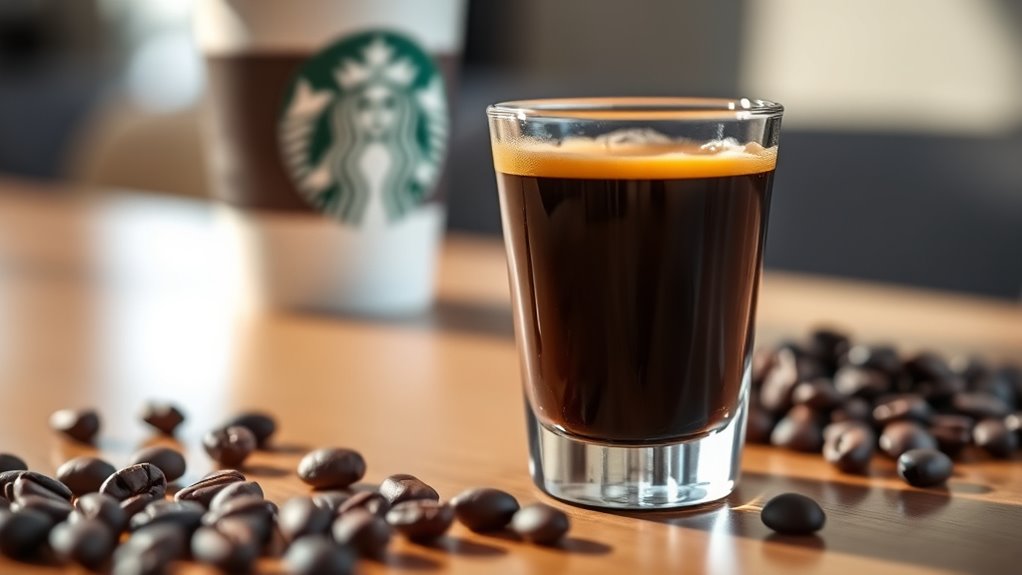
Although the size of a Starbucks espresso shot stays consistent at about 1 ounce, its caffeine content can vary. Typically, a standard shot contains around 75 mg of caffeine, but this can range from 65 to 80 mg depending on the roast and bean type.
For example, blonde espresso shots usually have a slightly higher caffeine content, closer to 80 mg per shot.
Even decaffeinated espresso shots contain small amounts of caffeine, generally between 3 and 15 mg.
So, when you order a single espresso shot, you’re getting a concentrated dose of caffeine that varies mainly based on the beans used, while the volume remains steady.
This precise caffeine range helps you gauge your intake accurately.
Keep in mind that factors like bean type and extraction method significantly influence the final caffeine content in each shot.
Caffeine Comparison of Blonde, Dark, and Medium Roast Espresso
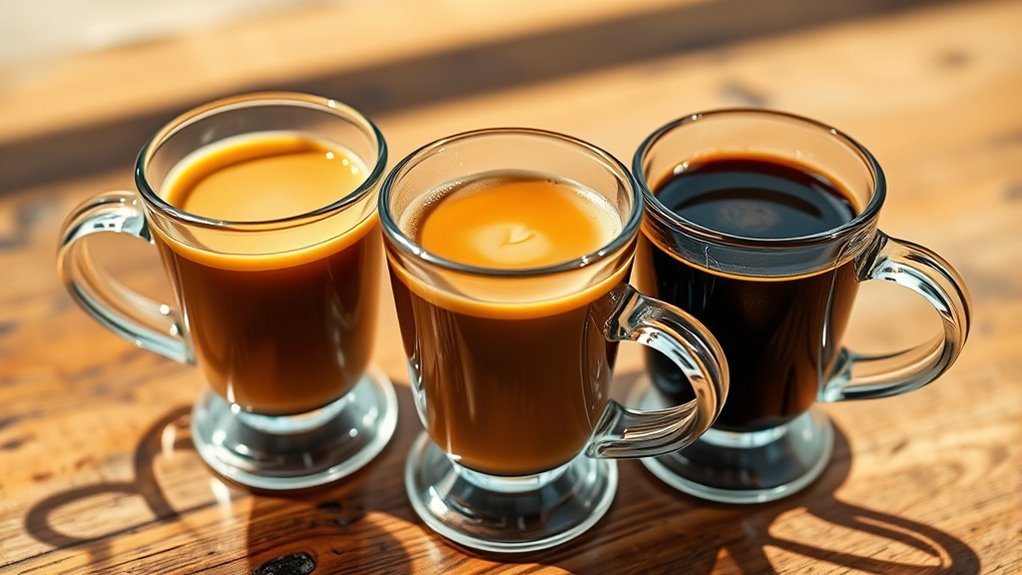
When you compare Starbucks espresso roasts, you’ll notice that Blonde roast contains about 80 mg of caffeine per shot, making it the most caffeinated option.
Medium roast isn’t far behind, with roughly 80-85 mg depending on the beans.
Dark roast has a bit less, coming in around 75 mg per shot.
These differences might seem small when you look at them by weight, but here’s the thing: because Blonde roast is lighter and less dense, it actually delivers a bit more caffeine per volume.
The caffeine content also depends on factors like the coffee dose, bean type, roast, grind, and extraction process, which all influence the final caffeine yield.
Roast Caffeine Differences
Three main roast levels, Blonde, Medium, and Dark, offer distinct caffeine profiles in Starbucks espresso. Blonde Roast espresso contains about 80 mg of caffeine per shot, making it the strongest among the three.
Medium roast, like Pike Place, has a caffeine content that typically falls between Blonde and Dark roasts.
Dark roast espresso, while known for its bolder flavor, generally contains slightly less caffeine than Blonde roast.
The differences in caffeine by weight are minimal, but because lighter roasts are denser, they provide more caffeine when measured by volume.
Overall, you’ll find that roast level influences caffeine content only slightly, with lighter roasts usually delivering a marginally higher caffeine dose than darker ones.
This subtle variation helps you choose based on strength and taste preferences.
Extraction time and pressure also play a role in caffeine levels, as high-pressure extraction effectively draws caffeine and other compounds into the shot.
Espresso Caffeine By Roast
If you’re comparing caffeine levels in Starbucks espresso roasts, you’ll find Blonde Roast leads with about 80 mg of caffeine per shot. Medium roast espresso follows closely, averaging around 78 mg, while Dark roast contains slightly less, roughly 75 mg per shot.
These differences stem largely from bean density and roast characteristics rather than roast color alone. Lighter roasts like Blonde Roast are less dense and more porous, which means they retain marginally more caffeine by volume.
However, the variation is subtle, so your caffeine intake won’t dramatically change between these roasts.
Understanding these nuances helps you make an informed choice based on caffeine content and flavor preference when selecting your espresso roast at Starbucks.
It is also important to consider the extraction time as it influences the flavor profile and consistency of your espresso shot.
How Starbucks Cup Size and Espresso Shots Affect Caffeine Levels
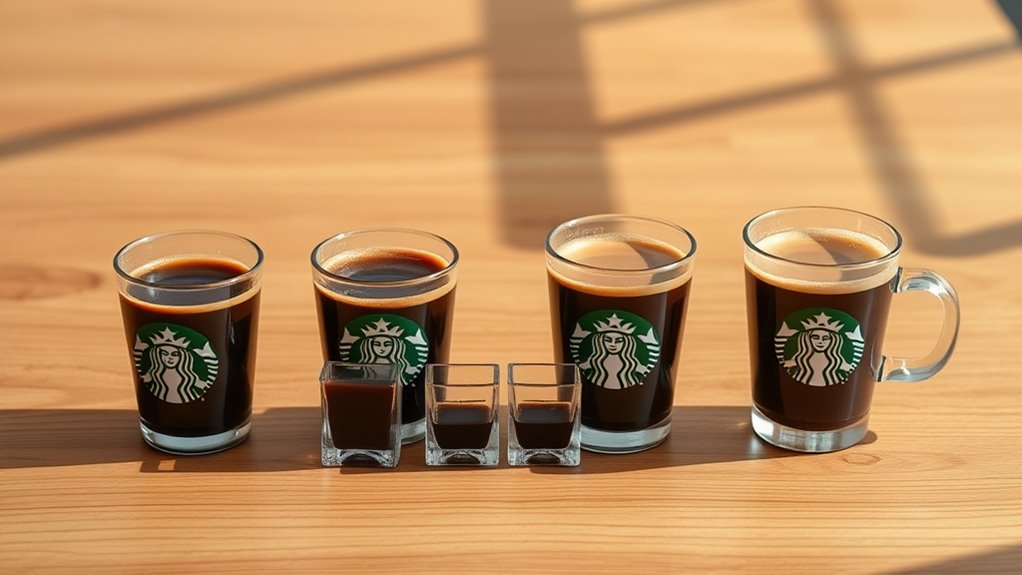
When you pick a Starbucks cup size, you’re also deciding how many espresso shots go into your drink. And that’s important because each shot adds about 80 mg of caffeine.
So, naturally, a bigger cup usually means more shots and higher caffeine levels.
Knowing this can help you get just the right amount of caffeine, depending on what you’re looking for.
Whether you want a gentle boost or a serious kick, understanding the connection between cup size and espresso shots makes it easier to customize your caffeine fix.
For example, using freshly brewed espresso ensures a rich flavor along with that caffeine punch.
Cup Sizes Explained
How do Starbucks cup sizes and the number of espresso shots influence your caffeine intake? Understanding the cup sizes is key because volume impacts caffeine, but the espresso shots matter more.
Here’s what to take into account:
- Cup Sizes: Starbucks ranges from Short (8 oz) to Trenta (30 oz). Larger cups hold more liquid, which can raise caffeine content.
- Shot Count: A Tall (12 oz) latte usually has one shot (~75 mg caffeine), while a Venti (20 oz) often contains two or three shots. That really boosts caffeine.
- Caffeine Concentration: Even with the same cup size, more espresso shots dramatically increase caffeine. For example, a Venti with three shots can reach 225 mg.
Also, iced Venti drinks typically have extra espresso shots to counter ice dilution and maintain strong flavor and caffeine levels.
Espresso Shot Impact
Although Starbucks cup size influences the volume of your drink, the number of espresso shots has a far greater impact on caffeine levels.
Each espresso shot contains about 75 mg of caffeine, though this can vary slightly by bean and roast.
For example, a Tall Latte or Cappuccino includes one shot, delivering roughly 75 mg, but larger sizes typically have two shots, doubling the caffeine content.
Drinks larger than 8 oz generally come with multiple shots, markedly raising caffeine levels.
You can also customize your beverage by adding extra shots, with each additional shot contributing an extra 75 mg of caffeine.
Ultimately, the total caffeine in your Starbucks drink depends more on how many espresso shots it contains than on the cup size alone.
Keep in mind that four shots of espresso generally contain about 258 mg of caffeine, which is a concentrated amount compared to other coffee drinks.
Maximizing Caffeine Intake
Starbucks offers several cup sizes, but your caffeine intake depends far more on the number of espresso shots or the type of brew you choose than on the cup size alone.
To maximize caffeine, focus on these key factors:
- Increase espresso shots: Each shot adds 80-150 mg of caffeine, significantly boosting your drink’s potency regardless of size.
- Choose cold or nitro cold brew: These brewing methods concentrate caffeine, often yielding higher levels than espresso-based drinks, even in smaller cups.
- Opt for larger sizes with less ice: For example, a Trenta cold brew can deliver up to 360 mg of caffeine, and requesting less ice concentrates caffeine per ounce.
Additionally, Starbucks uses the Mastrena espresso machine to ensure consistent and precise extraction, which helps maintain the caffeine content and flavor quality in every shot.
How Many Espresso Shots Are in Popular Starbucks Drinks?
One shot of espresso typically powers a Tall Latte or Cappuccino, while larger sizes usually come with two shots to boost caffeine content. This increase directly raises the caffeine level, as each shot delivers about 80 mg of caffeine.
If you order a Venti or Grande, expect two shots unless you specify otherwise.
Specialty drinks, like the Caramel Macchiato, often contain multiple shots, with some Venti sizes including up to four.
It’s crucial to note that many popular Starbucks beverages, such as the Venti Cold Brew or Iced Coffee, don’t contain espresso shots unless you request them.
Understanding how many espresso shots your drink contains helps you manage caffeine intake more precisely, especially when selecting larger sizes or specialty beverages with additional espresso.
It’s always good to know what’s in your cup so you can enjoy your coffee just the way you like it.
Regularly maintaining your espresso machine by removing mineral deposits ensures consistent shot quality and caffeine extraction.
Starbucks Espresso Shots Compared to K-Cup Pods
When you consider the caffeine content in espresso shots from your favorite Starbucks drinks, you might wonder how they compare to the espresso servings in K-Cup pods. Both options generally deliver around 75 mg of caffeine per shot, offering a consistent caffeine experience.
Espresso shots at Starbucks and K-Cup pods both deliver about 75 mg of caffeine per serving.
Here’s how they stack up: A standard Starbucks espresso shot contains approximately 75 mg of caffeine, with some minor variations based on roast and brewing method.
Starbucks espresso K-Cup pods also provide about 75 mg of caffeine, though actual content can vary slightly depending on pod type and brewing conditions.
Double shots in Starbucks drinks double the caffeine to roughly 150 mg, a level not typically mirrored by single K-Cup pods.
This comparison helps you understand caffeine intake whether you brew at home or order in-store.
Because espresso uses a high-pressure brewing method, it delivers a higher caffeine concentration per ounce than drip coffee.
Tips to Maximize Caffeine Intake From Starbucks Espresso
Although a standard espresso shot contains about 80 mg of caffeine, you can easily boost your intake by requesting double or triple shots in your drink. Additionally, choosing larger cup sizes like Venti or Trenta increases your caffeine volume. Limiting milk or flavor syrups prevents dilution of caffeine concentration, and asking for less ice in cold drinks keeps caffeine levels higher.
| Strategy | Impact on Caffeine Intake |
|---|---|
| Double or triple espresso shots | Increases caffeine by 160-240 mg |
| Larger cup sizes (Venti/Trenta) | Provides more volume, more caffeine |
| Less milk, syrup, ice | Maintains caffeine concentration |
Use these tips to maximize your caffeine intake efficiently without sacrificing the espresso’s strength or flavor. Give them a try next time you order and see how much more kick you can get!
Understanding Caffeine Variability and Decaf Espresso Content
While boosting caffeine intake with extra espresso shots is straightforward, understanding the caffeine content in Starbucks decaf espresso requires a bit more nuance. Decaf espresso isn’t caffeine-free; its levels can vary quite a bit depending on several factors. Here’s what you need to know:
Decaf espresso shots at Starbucks contain between 3 to 15.8 mg of caffeine. This depends on the shot size and how it’s prepared.
The variability comes from differences in the decaffeination process, where the beans come from, brewing time, temperature, and the type of coffee bean used.
Some decaf shots can have caffeine amounts that nearly match regular brewed coffee. That’s why Starbucks provides approximate ranges—to reflect this natural variability and keep things transparent.
Frequently Asked Questions
Does Starbucks Espresso Caffeine Content Vary by Country?
Yes, Starbucks espresso caffeine content can vary slightly by country due to local bean sourcing, roasting, and regulations. However, you’ll generally find it consistent around 75 mg per shot, with only minor regional differences.
It’s pretty interesting how even small changes in beans or roasting can tweak the caffeine a bit. But overall, if you order a shot of espresso at Starbucks, it’s going to be pretty similar no matter where you are.
How Does Milk Type Affect Caffeine Absorption in Espresso Drinks?
Milk type slightly affects caffeine absorption. Dairy fats may slow it down a bit, while non-dairy milks have minimal impact.
You’ll still get nearly the same amount of caffeine, but the speed of absorption can vary subtly depending on your milk choice. It’s nothing drastic, just a small difference here and there. So, whether you go for regular milk or a plant-based option, your caffeine kick stays pretty consistent.
Are There Any Seasonal Starbucks Espresso Blends With Different Caffeine Levels?
Yes, you’ll find seasonal Starbucks espresso blends with slightly different caffeine levels due to bean origin and roast. Darker holiday roasts tend to have less caffeine per shot, while standard blends like Pumpkin Spice keep the typical caffeine content.
Can Espresso Caffeine Content Affect Sleep Differently Than Brewed Coffee?
Yes, espresso’s concentrated caffeine hits your bloodstream faster and stronger than brewed coffee, making it more likely to disrupt your sleep and increase sleep latency.
This is especially true if you drink it later in the day or have several shots in quick succession. So, if you’re sensitive to caffeine, it’s something to keep in mind.
Espresso might give you that quick boost, but it can also keep you tossing and turning when bedtime rolls around.
What Health Effects Are Linked to High Caffeine From Starbucks Espresso?
If your heart races like a drumbeat from too many espresso shots, you might face anxiety, insomnia, or stomach upset. High caffeine can disrupt sleep, raise blood pressure, and cause dependence with withdrawal symptoms.
It’s pretty common to feel jittery or wired after downing multiple Starbucks espresso drinks. And yeah, that can mess with your night’s rest. So, it’s a good idea to keep an eye on how much caffeine you’re sipping throughout the day.
Conclusion
Now you know a single Starbucks espresso shot packs about 75 mg of caffeine, which is more than many expect. Whether you prefer blonde, dark, or medium roast, understanding these differences helps you tailor your caffeine intake.
Keep in mind how cup size and added shots can quickly boost your total caffeine. With this info, you can confidently choose your espresso to match your energy needs without overdoing it.