You get about 63 mg of caffeine in a single shot of espresso, but this can vary depending on factors like bean type, roast level, grind size, and brewing method. A double shot doubles that amount to roughly 126 mg.
Compared to drip coffee, espresso is more concentrated but contains less caffeine per serving. Understanding these factors helps you control your caffeine intake and appreciate why espresso’s strength feels so intense.
There’s more to explore about how brewing choices impact caffeine content. It’s pretty interesting once you start digging into the details!
How Much Caffeine Is in a Single Shot of Espresso?
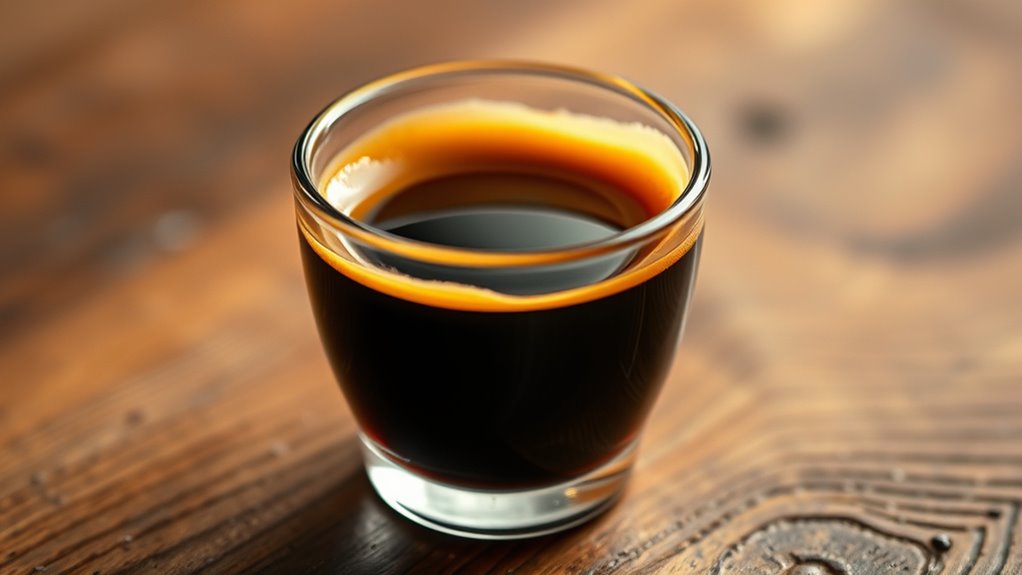
Although caffeine content can vary, a standard single shot of espresso typically contains about 63 mg of caffeine. However, this amount isn’t fixed. It can range from approximately 40 mg to 90 mg depending on several factors.
The type of coffee bean plays a significant role, as does the roast level. Lighter roasts generally retain more caffeine.
Grind size and brewing time also influence extraction. Finer grinds and longer brewing increase caffeine concentration.
Typically, a 1 oz shot falls within the 40–64 mg range, but preparation methods can push this higher.
Understanding these variables helps you gauge how much caffeine you’re consuming with each shot. This way, you can tailor your espresso to your preferred caffeine intake.
Additionally, the use of Robusta beans can nearly double the caffeine content compared to Arabica beans.
How Do Double Shots and Larger Espresso Drinks Compare?
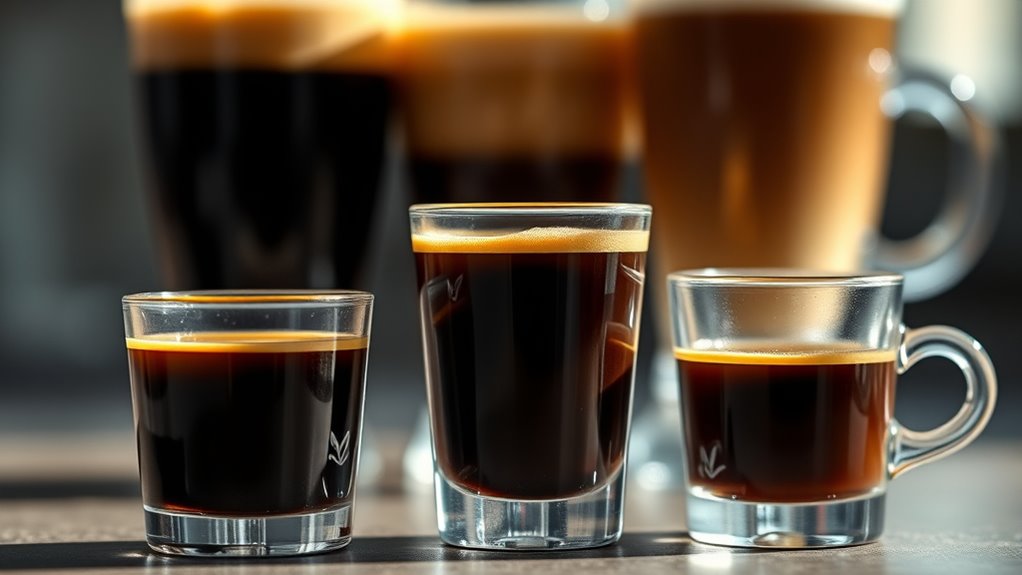
A standard double shot of espresso packs about 126 mg of caffeine, which means you’re getting twice the kick of a single shot.
Now, if you go for those larger espresso drinks, like venti or grande sizes, the caffeine content can vary quite a bit — usually somewhere between 200 to 300 mg. It all depends on how many shots they add in.
Extraction time typically ranges from 25-30 seconds for double shots to ensure optimal flavor and caffeine balance, highlighting the importance of consistent timing in espresso preparation.
Double Shot Caffeine Content
Many espresso enthusiasts consume double shots because they deliver about 126 mg of caffeine, roughly twice that of a single shot. Each shot contains approximately 63 mg of caffeine, so doubling it provides a significant boost without drastically increasing volume.
When you opt for a double shot, you’re effectively doubling your caffeine intake compared to a single shot. That usually means between 100 to 150 mg more caffeine overall.
This makes double shots a popular choice for those seeking a stronger caffeine kick in a smaller serving size.
Keep in mind, the caffeine content per shot stays pretty consistent no matter the drink size. So, the real caffeine increase depends on how many shots you add, not the total volume of the beverage.
Caffeine content can also vary based on factors like bean type and extraction methods, which influence the overall caffeine yield.
Larger Espresso Drink Levels
Building on the caffeine content of double shots, larger espresso drinks like Venti or Grande sizes often contain two or more shots. This pushes caffeine levels between 200 and 300 mg.
Each espresso shot consistently delivers about 63 mg of caffeine, so the total caffeine in your drink increases linearly with the number of shots added. For example, a double shot contains roughly 126 mg, similar to a 12 oz brewed coffee.
But a Venti with three or four shots can substantially raise your caffeine intake.
While espresso’s caffeine concentration per ounce remains higher than brewed coffee, the overall caffeine depends on shot count and drink size. Many coffee shops add extra shots to larger drinks.
Because espresso is extracted under high pressure, this method enhances the caffeine concentration per ounce compared to regular coffee.
Espresso vs. Drip Coffee: Which Contains More Caffeine?
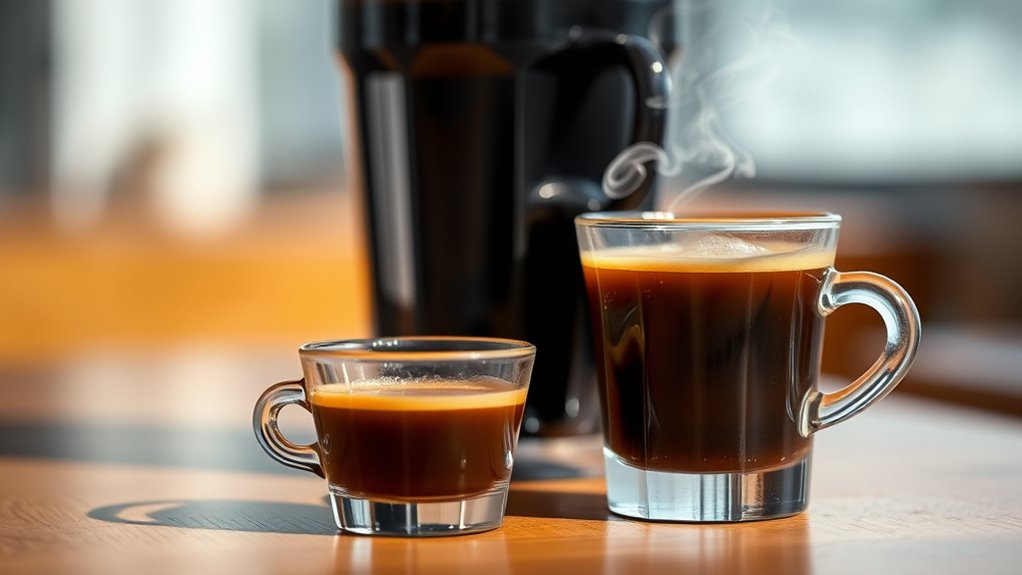
You might think espresso packs more caffeine, right? But actually, a single 1 oz shot contains about 63 mg.
On the other hand, a 12 oz cup of drip coffee has roughly 144 mg.
So, serving size really plays a key role here.
Espresso is definitely more concentrated, but drip coffee ends up offering more caffeine overall because of its larger volume.
Knowing this can help you make smarter choices depending on how much caffeine you want in your cup.
Additionally, espresso contains high nutrient density along with caffeine, providing antioxidants and other health benefits.
Caffeine Content Comparison
Although espresso packs a higher caffeine concentration per ounce, a single 1 oz shot contains about 63 mg of caffeine. That’s less than the approximately 144 mg found in a standard 12 oz cup of drip coffee.
This difference happens because drip coffee is served in much larger volumes, so you get more total caffeine per serving.
To match the caffeine in a typical cup of drip coffee, you’d need about two shots of espresso, which gives you roughly 126 mg.
Many people assume an espresso shot has more caffeine because it tastes stronger. But when it comes to total caffeine content, drip coffee usually wins per serving.
That said, drinking multiple espresso shots can easily surpass the caffeine in a cup of drip coffee. Still, a single shot by itself contains less overall caffeine.
It’s important to note that consuming caffeine in different forms, such as whole coffee beans, can deliver varying amounts of caffeine per serving due to factors like bean type and roast.
Serving Size Impact
When comparing espresso and drip coffee, the total caffeine you consume depends heavily on serving size rather than just caffeine concentration. A standard 1 oz shot of espresso contains about 63 mg of caffeine, whereas a 12 oz cup of drip coffee delivers roughly 144 mg.
Even though espresso is more concentrated, the larger volume of drip coffee usually results in higher overall caffeine intake.
For example, an 8 oz latte or cappuccino with one shot of espresso provides about 75-150 mg of caffeine, still less than a typical 12 oz brewed coffee.
Larger espresso-based drinks like venti or grande sizes can contain up to 300 mg, but their volume far exceeds a single shot.
This really emphasizes that serving size plays a vital role in caffeine consumption.
Total caffeine content depends more on the amount of coffee grounds used and the serving size than on concentration alone.
Why Does Espresso’s Caffeine Concentration Feel Stronger?
Because espresso contains about 63 mg of caffeine per ounce, which is significantly higher than drip coffee’s 12 mg, you experience a much stronger taste and quicker stimulation.
Espresso’s high caffeine concentration delivers a bolder flavor and faster, more intense stimulation than drip coffee.
This concentrated caffeine dose affects you rapidly due to the small volume and fast consumption time. Specifically, espresso feels stronger because:
- The rapid extraction process concentrates caffeine and flavor in a tiny shot.
- You consume it quickly, delivering caffeine to your bloodstream faster.
- The high caffeine density intensifies its stimulating effects compared to larger, diluted coffee servings.
These factors combine to create the perception of a more potent caffeine impact, even though a single espresso shot’s total caffeine roughly equals that of a standard cup of coffee.
The concentration and speed of intake make espresso’s caffeine feel distinctly stronger and faster acting.
Starbucks uses the Mastrena espresso machine to ensure each shot maintains consistent caffeine concentration and flavor quality.
What Factors Influence Espresso’s Caffeine Levels?
Various factors directly influence the caffeine levels in your espresso, shaping both its strength and flavor profile. The amount of coffee grounds you use and the brewing method, particularly pressure and extraction time, play essential roles in caffeine concentration.
A finer grind size and higher water temperature enhance caffeine extraction from the grounds.
Also, the serving size and the number of espresso shots you consume determine your total caffeine intake.
While bean type and roast level affect caffeine too, their impact will be detailed separately.
Understanding these brewing variables helps you control the caffeine strength in your espresso. This way, you can tailor your experience to match your preference for both intensity and flavor.
Maintaining optimal extraction time between 25-30 seconds is crucial for balancing caffeine content and flavor quality.
How Do Bean Type and Roast Affect Espresso’s Caffeine?
Although roasting influences espresso’s flavor, the type of bean you choose has a greater impact on its caffeine content. Robusta beans contain about twice the caffeine of Arabica beans, so espresso made with robusta is generally more caffeinated.
Bean variety matters most for espresso caffeine, with robusta containing about twice the caffeine of Arabica.
Light roasts tend to have slightly more caffeine than dark roasts because caffeine is more related to bean weight, and roasting reduces bean density.
However, the roast level’s effect on caffeine is minimal compared to bean type. When considering caffeine content, focus on choosing robusta for higher caffeine and using the right amount of beans, as quantity affects caffeine more than roast.
Also, keep in mind that dark roasts’ richer flavor doesn’t mean less caffeine.
This evidence shows bean variety and amount are key caffeine factors, not just roast. So, if you want a stronger caffeine kick, pay attention to your bean choice and how much you use.
Espresso typically contains 70-120 mg of caffeine per double shot, depending on the beans and preparation method, making its caffeine content significant for those monitoring intake.
How Does Brewing Method Impact Espresso’s Caffeine Content?
While bean type and roast set the foundation for espresso’s caffeine levels, how you brew your espresso plays a big role in the final caffeine content. The high pressure in espresso machines, usually around 9 bars, speeds up caffeine extraction. This creates a concentrated shot with roughly 63 mg of caffeine per ounce.
Espresso’s short extraction time, usually 20 to 30 seconds, limits total caffeine compared to longer methods. But factors like grind size and dose can really change how much caffeine you get. Using finer grounds and adding more coffee per shot boosts caffeine content.
Water temperature and pressure also directly affect extraction efficiency. So, tweaking these can change caffeine levels too. Knowing and adjusting these brewing details lets you customize caffeine content just the way you like it.
Frequently Asked Questions
Can Decaf Espresso Still Contain Caffeine?
Yes, decaf espresso can still contain caffeine. You’ll find small amounts, usually between 2 to 15 milligrams per shot, depending on the brand and decaffeination process. So, it’s not completely caffeine-free.
Keep that in mind if you’re sensitive to caffeine or trying to avoid it altogether. But for most people, the amount is pretty minimal and won’t have much of an effect.
How Does Caffeine Affect Espresso’s Flavor Profile?
Caffeine intensifies espresso’s bitterness and astringency, making the flavor bolder and more intense. You’ll notice it interacts with other compounds, balancing acidity and brightness. It also creates a pronounced caffeinated taste due to rapid extraction.
Is Espresso Caffeine Content Regulated or Standardized?
No, espresso caffeine content isn’t regulated or standardized globally. You’ll find variations depending on beans, roast, grind, and preparation methods.
How Long Does Caffeine From Espresso Stay in Your System?
Caffeine from espresso can feel like it’s running your life for hours. But it usually stays in your system about 3 to 7 hours. Sometimes it can last up to 14 hours, depending on your metabolism and other personal factors.
Everyone is different, so how long caffeine affects you might not be the same as for someone else. It really depends on things like your body chemistry and how much espresso you drank.
Can Espresso Caffeine Content Vary by Coffee Shop or Brand?
Yes, espresso caffeine content varies by shop or brand because they use different beans, roast levels, coffee amounts, and brewing methods.
You’ll notice differences in caffeine concentration depending on their sourcing and preparation techniques. It’s pretty interesting how much these factors can change your shot of espresso. So, next time you grab a coffee, remember it’s not just the size, but also the brand and method that matter.
Conclusion
You might think espresso always packs more caffeine than drip coffee, but that’s not necessarily true. While espresso is more concentrated per ounce, a typical drip coffee serving often contains more total caffeine. Understanding factors like bean type, roast, and brewing method helps you see why caffeine levels vary.
So, next time you choose your coffee, you’ll know exactly how much caffeine you’re getting. That way, you can make your pick smarter and more informed.