You’ll usually find one shot of espresso in a small latte and two shots in medium or large sizes. This balance keeps the flavor smooth without overpowering the milk. Some cafés stick to two shots even for bigger drinks, adding more milk instead.
You can always ask for extra shots if you want a stronger, bolder coffee with more caffeine. If you want to know how shot count impacts taste and how different drinks compare, there’s more to explore.
How Many Shots of Espresso Are in a Standard Latte
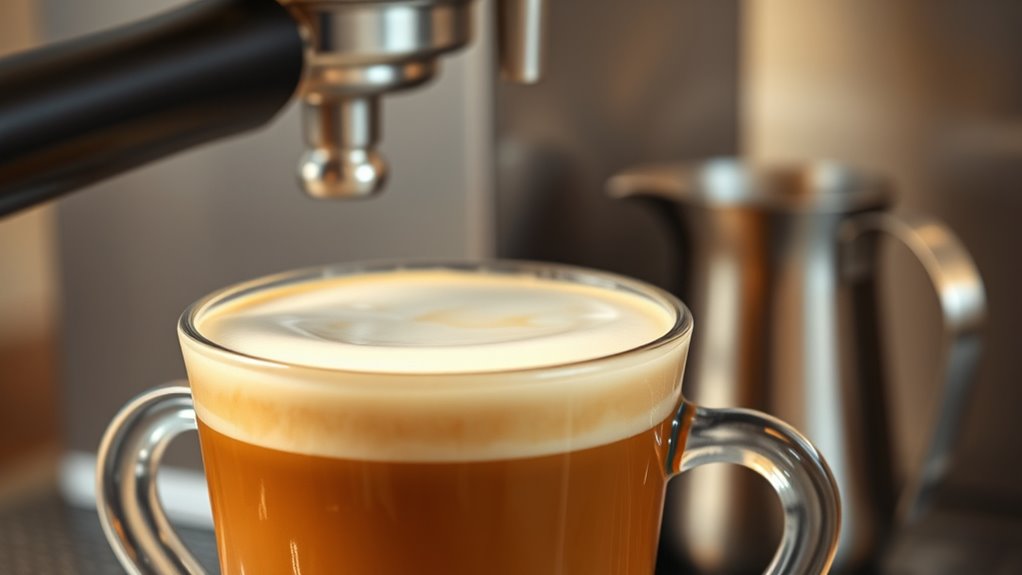
When you order a standard latte, expect it to come with one shot of espresso for smaller sizes and typically two shots for larger ones, like a 16 oz cup. Many coffee shops, especially chains and those in the UK, default to double shots even in regular and large lattes to boost flavor and caffeine.
Standard lattes usually have one shot for small sizes and two for larger, with many shops favoring double shots.
The number of espresso shots directly impacts the latte’s caffeine kick and taste intensity.
If you prefer a stronger or more caffeinated drink, you can usually request extra shots. Shot counts generally correspond with the size you choose—small lattes have one shot, regular and large sizes have two, and very large sizes may have up to three shots.
This balance guarantees the espresso flavor complements the milk without overpowering it. For the best flavor and texture, using fresh espresso with rich crema ensures a smooth and aromatic latte experience.
Why Bigger Lattes Don’t Always Have More Shots
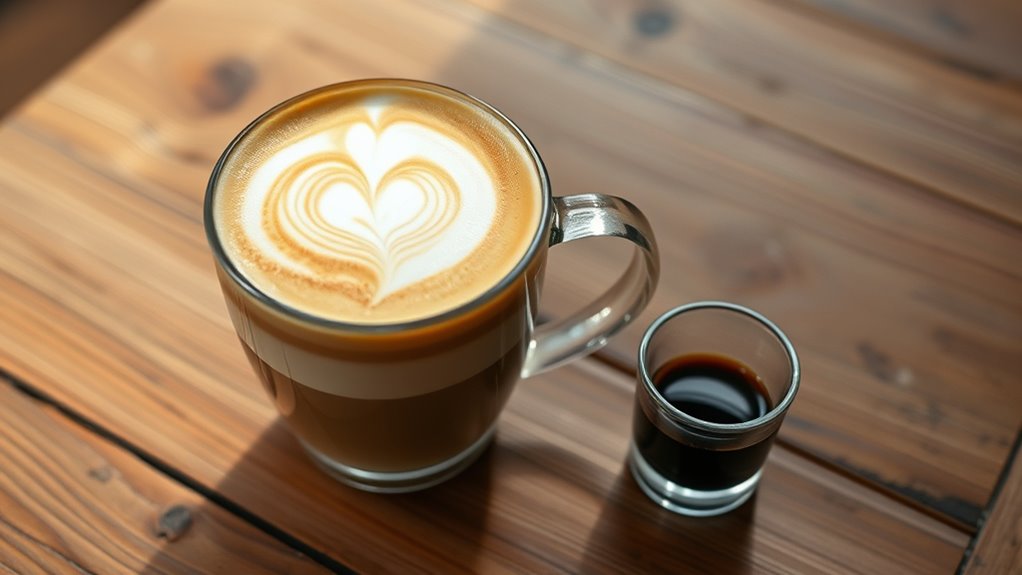
You might think that a bigger latte means more espresso shots, right? Well, that’s not always how it works. A lot of chain cafés like to keep the number of shots the same to make sure the flavor stays consistent. This approach helps maintain a consistent caffeine concentration regardless of the latte size.
Size Versus Shot Count
Although bigger lattes might look like they pack more caffeine, many cafes actually keep the espresso shot count the same regardless of size. This means a larger latte often just has more milk, not more espresso.
When you order a bigger size, consider these points:
Many cafes use a standard double shot for all latte sizes. Larger lattes have a higher milk-to-espresso ratio, which can dilute flavor intensity. Some places add extra shots for bigger drinks, but it’s not always the case.
The idea that bigger means more caffeine is a common misconception. Understanding this helps you choose the right size based on taste preferences rather than just caffeine content.
Adjusting the grind size and tamp pressure can also affect the flavor balance of your espresso shots in lattes.
Chain Café Practices
Because chain cafés prioritize consistency, they usually stick to a standard double shot for both regular and large lattes. You might assume a bigger latte means more espresso, but in most UK chains, that’s not the case.
Instead, the difference in size comes from adding more milk, not extra shots. Chains do this to keep the flavor and strength uniform across sizes, making your order simple and predictable every time.
So, when you order a large latte at a chain café, you’re getting the same caffeine punch as a regular, just with more milk to stretch it out. Maintaining consistent espresso extraction variables is key for these chains to ensure a balanced and repeatable flavor profile regardless of drink size.
How Shot Count Changes Latte Flavor and Strength
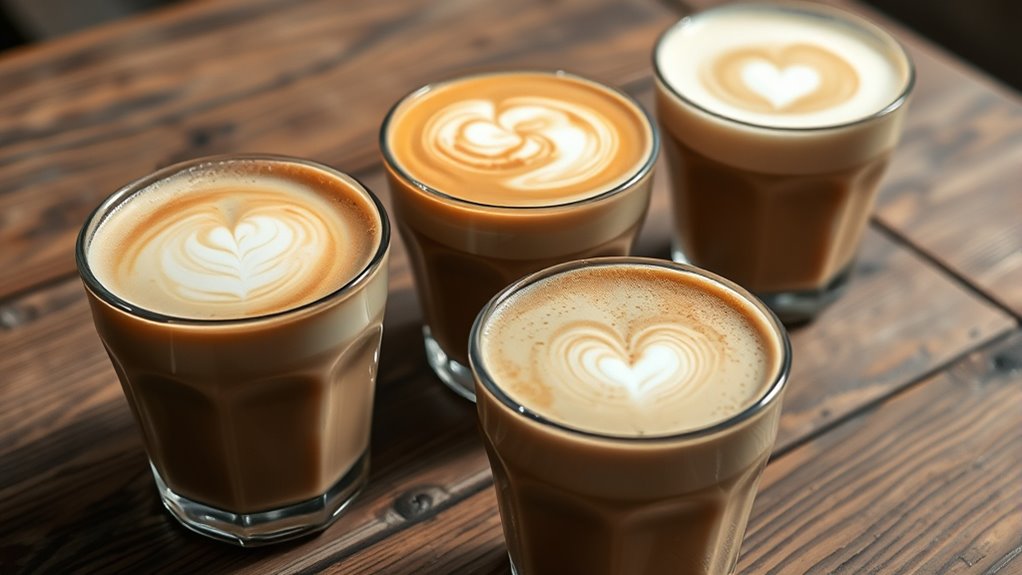
When you increase the number of espresso shots in your latte, the coffee flavor becomes noticeably more robust and full-bodied. Each additional shot deepens the intensity, cutting through the milk’s creaminess and giving your drink a richer profile.
You’ll also notice a stronger coffee presence that balances milk sweetness. Plus, there’s roughly doubled caffeine content with each extra shot.
The body and complexity get enhanced, especially with fresh, quality espresso.
The flavor shifts from mild and milky to bold and flavorful. Keep in mind, the flavor change depends not just on shot count but also on how well the espresso is extracted and the roast profile of the beans.
Achieving a balanced flavor also requires controlling variables like extraction time and grind size to avoid bitterness or sourness.
Why Extraction and Bean Quality Matter More Than Shots
Even if you add more shots to your latte, the quality of extraction and the beans you use shape the flavor far more. Proper extraction delivers a balanced espresso with the right body and brightness. This sets the foundation for your latte’s taste.
Using fresh, high-quality beans brings out vibrant, complex flavors that can make a well-pulled single shot taste better than multiple shots from stale or poorly roasted beans.
Watch out for extraction problems. Under-extraction leads to sourness, while over-extraction brings bitterness. Both spoil your latte more than shot count ever could.
Remember, the roast level and bean origin influence the flavor profile considerably. Focusing on consistent, skillful extraction from quality beans guarantees a superior latte experience.
It really shows that shot quantity is less important than how you pull your espresso.
Maintaining water temperature between 195°F and 205°F is crucial for proper espresso extraction and flavor balance.
Ordering Your Latte by Shot Count and Size
Although latte sizes vary widely, specifying your preferred shot count guarantees you get the strength and flavor you want. When ordering, be clear about both the size and number of espresso shots to avoid surprises.
Here’s what to keep in mind: Small lattes (~5-6 oz) usually come with a single shot. Medium and large sizes often include two or more shots, especially at UK chains. Independent cafés might have different defaults, so always clarify.
At home, match 1 shot (~30ml) to about 200-300ml of milk for balanced flavor. Regular maintenance like descaling your espresso machine ensures each shot is brewed with consistent temperature and pressure, preserving the true taste of your latte.
How Milk and Cup Size Affect Latte Flavor
Because larger cups hold more milk, they naturally dilute the espresso’s intensity, making your latte taste milder. Since the typical milk-to-espresso ratio is around 3:1, increasing the milk volume softens the coffee’s boldness.
If you want a richer, stronger espresso flavor, opting for a smaller cup with less milk can really make a difference.
The texture also changes. The amount of steamed milk and microfoam affects how balanced and smooth your latte feels.
Keep in mind, if you prefer a larger cup but don’t want to lose that espresso punch, baristas often add extra shots to maintain flavor strength.
Adjusting the grind size precisely can also enhance extraction, ensuring that each shot maintains optimal flavor regardless of milk dilution, thanks to controlling extraction time and flavor.
What Shot Counts Look Like in Home Latte Brewing
When you brew lattes at home, the number of espresso shots you use depends largely on your mug size and taste preferences. Smaller mugs around 200ml usually call for a single shot, while standard 300ml cups often work best with two shots.
Larger mugs, 350ml or more, typically benefit from two to three shots to keep the flavor balanced.
Here’s a quick guide:
- Use 1 shot for small (~200ml) mugs for a mild latte.
- Opt for 2 shots in standard (~300ml) mugs for a stronger taste.
- Consider 2–3 shots with larger mugs (~350ml+) for intensity.
- Use a digital scale to measure about 30ml per shot for consistency.
Adjust your shot count based on how bold or smooth you like your latte. It’s all about making it just right for you! Keep in mind that maintaining the optimal extraction time helps ensure each shot delivers balanced flavor and crema.
Reasons to Add a Third Shot to Your Latte
If you’ve been experimenting with one or two shots in your latte but find yourself craving a bolder flavor or a stronger caffeine boost, adding a third shot might be just what you need. This extra shot amps up the coffee’s strength and brings out a richer, more robust flavor that stands up well to the milk’s sweetness.
It also balances out any added flavorings, creating a harmonious taste that doesn’t get overshadowed. When using larger or more robust beans, a third shot makes sure the espresso’s intensity stays noticeable.
Plus, it enhances the latte’s body and richness, making your cup more satisfying overall.
Since each shot typically contains about 63 mg of caffeine, adding a third shot significantly increases the total caffeine content in your latte.
Shot Count Differences: Lattes, Flat Whites & Cappuccinos
Although these espresso-based drinks share similar ingredients, the shot count in lattes, flat whites, and cappuccinos varies to create distinct flavor profiles and textures. Understanding these differences helps you choose your ideal coffee strength and mouthfeel.
Here’s a quick rundown:
- Lattes usually have 1-2 shots, with larger sizes often doubling up for a bolder taste.
- Flat whites typically feature a single shot, though some spots offer doubles for extra punch.
- Cappuccinos commonly contain 1-2 shots, adjusted by size and personal preference.
- Shot counts balance espresso strength with milk volume, ensuring the right flavor intensity.
Frequently Asked Questions
Can Decaf Espresso Shots Be Used in Lattes?
Yes, you can definitely use decaf espresso shots in lattes. They provide that classic espresso flavor without much caffeine, so you get a tasty, lower-caffeine or caffeine-free drink without sacrificing the rich coffee taste you love.
It’s a great way to enjoy your favorite latte any time of day without worrying about the caffeine kick. Plus, it still feels like the real deal—just milder on the buzz. So go ahead and give decaf a try in your next latte!
How Does Caffeine Content Vary by Shot Number?
Think of caffeine like stacking blocks. The more shots you add, the taller the tower grows.
Each shot adds about 30-50 mg, so doubling shots doubles caffeine. This makes your latte stronger and more energizing with every sip.
What’s the Best Grind Size for Espresso Shots?
You want a very fine grind, like powdered sugar, to get the best espresso shots. It guarantees proper extraction, balancing flavor without bitterness or sourness.
Just keep in mind that you should adjust based on your machine and beans. That way, you get consistent, rich espresso every time. It’s all about finding that sweet spot for your setup!
Are Ristretto Shots Suitable for Lattes?
Yes, ristretto shots are great for lattes if you want a bolder, sweeter flavor. Just adjust your milk-to-espresso ratio to avoid overpowering the milk and keep the drink smooth and balanced.
It’s all about finding the right mix so the richness of the ristretto complements the creaminess of the milk. Give it a try and see how that intense espresso taste works in your latte!
How Long Should Espresso Shots Be Pulled?
Don’t pull espresso shots too short or too long. You want about 25 to 30 seconds. Pulling less leaves sour, weak flavors.
Pulling more turns bitter and harsh. This timing balances strength, flavor, and smooth crema perfectly. It’s all about finding that sweet spot for the best taste.
Conclusion
Now that you know how shot strength shapes your sip, savor selecting shots smartly. Size, shot count, and smooth steamed milk profoundly sway your latte’s luscious layers.
Remember, robust roasting and refined extraction reign supreme over mere shot numbers. Whether you’re crafting at home or ordering out, balancing boldness and balance brings better brews.
So, step up, customize confidently, and enjoy every espresso experience with expert ease and enthusiasm!