A standard shot of espresso is about 1 fluid ounce, made from roughly 7 grams of coffee grounds. You can customize it with variations like ristretto, which is smaller and sweeter at 0.5 to 0.75 ounces. Or you might go for a lungo, which is larger and milder, ranging from 1.5 to 3 ounces.
Double shots double the volume and dose for a stronger flavor. Understanding these differences helps you tailor the taste and strength to your liking. There’s actually a lot more to explore about how grind and brew time shape your perfect shot.
Standard Espresso Shot Size in Fluid Ounces
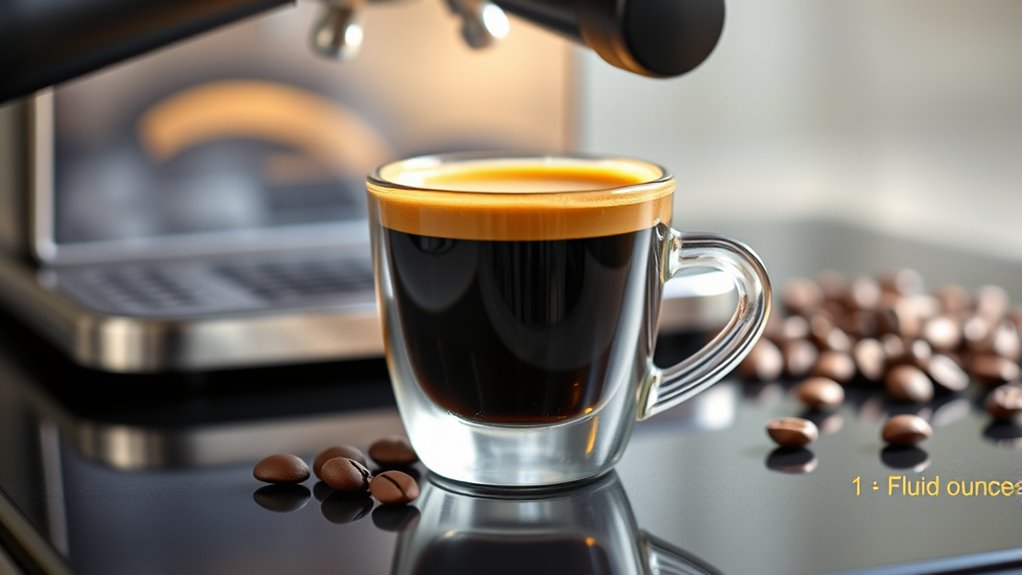
While espresso shot sizes can vary slightly, a standard single shot typically measures about 1 fluid ounce (30 milliliters). This measurement stays consistent across most cafes, giving you a reliable baseline when ordering or making espresso.
A standard single espresso shot is about 1 fluid ounce, providing a consistent measure across cafes.
Although fluid ounces are commonly used to quantify shot size, many baristas prefer weighing the espresso for precision since volume can be influenced by factors like crema or extraction method.
If you’re exploring different espresso styles, keep in mind that ristretto shots are smaller, usually between 0.5 and 0.75 ounces, concentrating flavor intensity.
Understanding this standard guarantees you appreciate the balance between volume and strength in your espresso, helping you make informed choices whether you’re brewing at home or ordering at your favorite coffee shop.
The total extraction time of a shot, typically between 25-30 seconds, is crucial for achieving optimal flavor and crema development, which directly influences the quality of your espresso. This is especially important when considering the espresso extraction time for different shot sizes and roast profiles.
Single vs. Double Shots: Volume and Coffee Dose
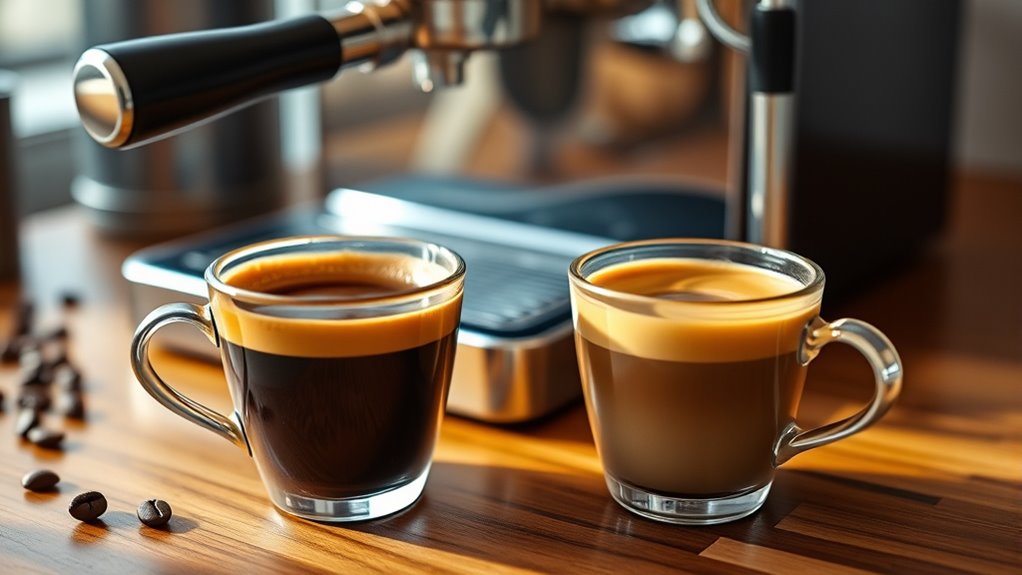
When you order a single shot of espresso, you’re getting about 1 fluid ounce brewed from roughly 7 grams of coffee grounds.
Now, if you go for a double shot, it’s basically twice that — so 2 ounces of espresso made with around 14 grams of coffee.
This means the double shot packs a stronger, more concentrated flavor.
Knowing the difference between single and double shots can really help you pick the right size to match your taste and how much caffeine you want.
For the most consistent results, it’s best to measure espresso yield by weight in grams rather than volume.
Single Shot Volume
Since understanding espresso shots starts with their volume and coffee dose, it’s important to know that a standard single shot measures about 1 fluid ounce (30 mL) and uses 7 to 9 grams of finely ground coffee.
This precise volume refers to the liquid espresso extracted, not the weight of the coffee grounds. When you pull a single shot, the goal is to achieve a balanced concentration of flavor within that 1-ounce volume.
While variations like ristretto or lungo adjust the liquid amount, the single shot’s foundational volume and coffee dose remain consistent.
Knowing this helps you appreciate how baristas control extraction to create your perfect espresso, ensuring each shot delivers the intended strength and richness within that compact 1-ounce serving.
The espresso extraction ratio plays a crucial role in determining the flavor and texture of each shot, guiding how much water is extracted relative to the coffee dose.
Double Shot Coffee Dose
Although a single shot of espresso serves as the foundation, you’ll find that a double shot uses twice the coffee, about 14 grams, to yield roughly 2 fluid ounces (60 mL) of rich espresso.
When you double the dose, you intensify the flavor and body. That’s why it’s the standard choice in most cafes, especially for espresso-based drinks like lattes and mochas.
To guarantee consistency, it’s best to measure your coffee dose using a scale rather than relying solely on volume. Factors like crema can alter liquid measurements, so weighing your coffee helps keep things accurate.
Keep in mind, the double shot’s increased coffee amount directly affects extraction quality and overall balance. This gives you a stronger, more robust espresso experience every time you pull a shot.
Proper dosing of 14-18 g grounds ensures consistency and balance in every double shot.
Comparing Shot Sizes
Whether you prefer a single or double shot, understanding their differences in volume and coffee dose is key to tailoring your espresso experience. A single shot typically yields 1 fluid ounce with 7-9 grams of coffee. A double shot doubles both volume and grounds, giving you 2 ounces and 14-18 grams.
Despite this, extraction times remain similar, around 20-30 seconds. Choosing between them affects strength, flavor intensity, and caffeine content. Adjusting the dose also requires minor grind changes to maintain optimal extraction and prevent issues like channeling.
| Shot Size | Volume (oz) | Coffee Dose (grams) |
|---|---|---|
| Single Shot | 1 | 7-9 |
| Double Shot | 2 | 14-18 |
Understanding these basics helps you decide how bold or balanced you want your espresso to be.
Why It’s Better to Measure Espresso by Weight
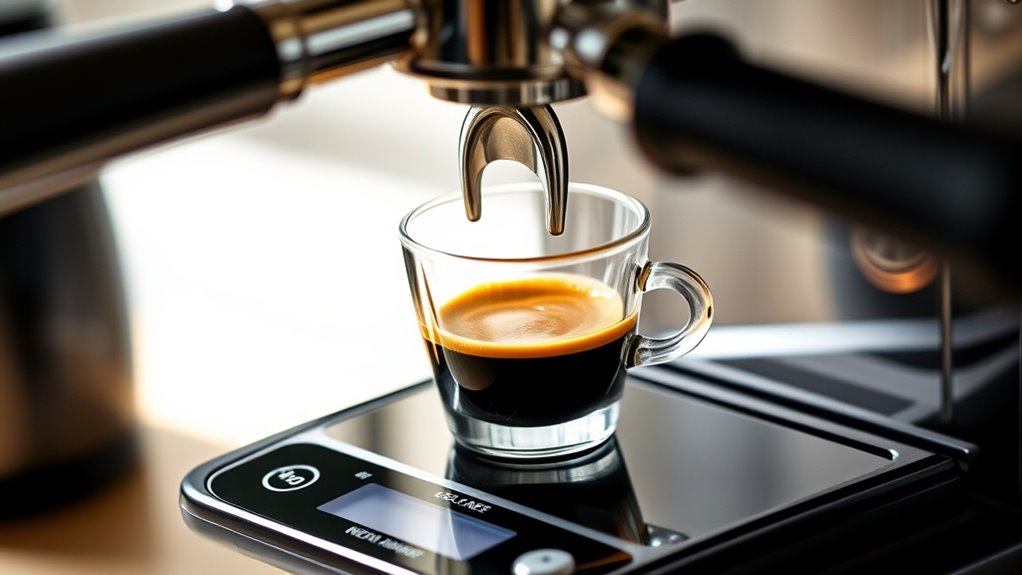
When you measure espresso by weight, you get precise control over the coffee dose. This directly affects extraction and flavor consistency. Unlike volume, weight isn’t influenced by crema, foam, or evaporation, so it gives you a more accurate sense of the coffee’s strength and quality.
Using a scale means you can consistently dose around 18-20 grams for a double shot. This helps ensure uniformity across every pull.
Weight-based measurements also take into account things like bean density, roast level, and grind size—stuff volume can’t reliably capture.
This kind of precision lets you fine-tune brew ratios, like the common 1:2 coffee-to-water ratio. The result? Balanced, repeatable flavors every time.
Bottom line: weighing your espresso grounds means you’re dialing in shots with consistency and control on every pull. Additionally, using finely ground coffee beans or high-quality espresso powder can further enhance the flavor depth and complexity of your brews.
Ristretto vs. Lungo: Differences in Volume and Flavor
You’ll notice a ristretto shot pours about half an ounce, which is much less than a lungo’s one and a half to three ounces.
Because it’s a smaller volume, the ristretto packs a sweeter, more concentrated flavor.
On the other hand, the lungo’s longer extraction time creates a milder, more bitter taste.
Knowing these differences makes it easier to pick the espresso style that suits your palate best.
Shaking espresso with ice creates microbubbles that enhance texture and flavor, distinguishing drinks like shaken espresso from traditional shots.
Volume Comparison Explained
A clear understanding of the volume differences between ristretto and lungo shots can transform how you experience espresso. Ristretto uses about 15 mL (0.5 oz) of water, creating a small, intense shot. Lungo stretches to 60-90 mL (2-3 oz), yielding a larger, milder espresso.
Knowing this helps you choose the right balance for your taste or recipe.
| Shot Type | Volume (mL) | Volume (oz) |
|---|---|---|
| Ristretto | 15 | 0.5 |
| Standard | 30 | 1 |
| Lungo | 60-90 | 2-3 |
This volume gap means ristretto is about one-third the size of a lungo, influencing concentration and texture. It really shapes your espresso experience. Proper machine maintenance, including regular descaling frequency, ensures your espresso shots maintain their optimal flavor and quality over time.
Flavor Profile Differences
Although ristretto and lungo shots use the same amount of coffee, their flavor profiles differ dramatically due to the volume and extraction time.
When you pull a ristretto, you use about 0.5 to 0.75 ounces of water, resulting in a concentrated, sweeter espresso that highlights richer, syrupy notes. This shorter extraction captures the initial flavorful compounds, creating a thick, intense shot.
On the other hand, a lungo pulls 1.5 to 3 ounces of water through the same coffee dose, producing a milder, more bitter flavor. The longer extraction time draws out more astringent, less concentrated elements, giving you a lighter-bodied espresso.
The use of an extra-fine grind is essential for espresso to ensure proper extraction under high pressure, which significantly influences these flavor differences.
How Grind and Brew Time Change Your Shot’s Volume
When you adjust the grind size and brew time, you directly influence the volume and quality of your espresso shot. A finer grind increases resistance, often shortening extraction time and producing a smaller, more concentrated shot.
On the other hand, a coarser grind lets water flow faster, which can cause over-extraction and a larger, less dense shot if brew time isn’t properly managed. Aim for a brew time of about 20-30 seconds to hit ideal extraction.
A coarser grind speeds water flow, risking over-extraction and a weak, larger shot without proper brew time control.
Extending brew time can increase dissolved solids, making the shot more voluminous but risking bitterness. So, balancing grind size with brew time is essential.
Tweaking one without adjusting the other might throw off both volume and flavor.
Mastering this interplay helps you craft shots with the precise volume and taste you want. It’s all about finding that sweet spot that works for your setup and palate.
Remember that proper tamping pressure ensures consistent resistance, which is crucial for controlling flow rate and extraction quality.
How Shot Volume Impacts Espresso Drinks and Recipes
Since shot volume directly shapes the strength and flavor of your espresso drinks, understanding its impact is essential for crafting balanced recipes. A standard shot (1 oz) delivers a concentrated flavor, while a double shot (2 oz) suits larger drinks like lattes, balancing flavor and caffeine.
Variations like ristretto (0.5 oz) and lungo (1.5 oz) change the intensity and sweetness of your espresso. Precise measurement guarantees consistency, which affects bitterness and crema density in your recipes.
| Shot Type | Volume (oz) | Flavor Impact | Ideal For | Recipe Notes |
|---|---|---|---|---|
| Ristretto | 0.5 | Intense, sweeter | Short, strong shots | Reduces bitterness |
| Standard | 1 | Balanced, classic | Most espresso drinks | Base for many recipes |
| Lungo | 1.5 | Milder, less sweet | Longer drinks | Adjust milk/syrup accordingly |
| Double | 2 | Robust, full flavor | Lattes, mochas | Balances larger volumes |
Frequently Asked Questions
What Equipment Is Needed to Pull a Perfect Espresso Shot?
You’ll need a quality espresso machine with pressure control, a burr grinder for a fine, consistent grind, and a flat tamper for even compression.
Also, having a scale to measure doses and a timer to nail extraction time precisely really helps.
These tools make pulling that perfect espresso shot way easier and more consistent. Just a few good pieces of equipment can make a big difference!
How Does Water Temperature Affect Espresso Extraction?
Water temperature controls espresso extraction like a maestro directing an orchestra.
If it’s too low, your shot tastes sour. Too high, and it’s bitter.
Keep it steady between 195°F and 205°F to reveal perfect, rich flavors every time.
Can Espresso Shots Be Made With Decaffeinated Coffee?
Yes, you can make espresso shots with decaffeinated coffee. You’ll use the same process, grind, and shot size.
Just expect slightly different flavors and much less caffeine. It usually has about 2 to 5 mg compared to regular espresso.
What’s the Ideal Pressure for Brewing Espresso?
You want to brew espresso at about 9 bars of pressure, which is roughly 130 PSI.
Keeping it consistent guarantees balanced extraction. This helps avoid sourness from too low pressure or bitterness from too high.
That way, you get that perfect, rich shot every time.
How Long Can You Store a Brewed Espresso Shot?
You can store brewed espresso up to 24 hours in the fridge, but after 10 minutes, its peak flavor starts fading. Don’t reheat it. This ruins taste and texture.
Conclusion
Now that you know a shot of espresso usually clocks in around one fluid ounce, you’re armed to craft your perfect brew. Think of it as the heartbeat of your coffee, small but powerful.
Whether you’re dialing in a ristretto’s intensity or savoring a lungo’s stretch, measuring by weight keeps you precise. So, play with grind and time, and watch your espresso dance to your taste buds’ tune.
Pingback: How Many Ounces Is A Double Shot Of Espresso – Answered
Pingback: How Much Espresso In A Shot – Exact Amount
Pingback: Where To Buy Espresso – Best Places