You might think espresso has way more caffeine, but it’s really about serving size. Espresso is highly concentrated, with about 40 mg of caffeine per ounce. Yet, you usually drink smaller amounts.
Drip coffee, though less concentrated, often comes in larger servings that deliver equal or more total caffeine. How you drink it also matters. Sipping slowly or gulping fast changes caffeine’s kick.
If you want the full story, understanding brewing methods and more can reveal surprising caffeine truths. It’s not just about the type of coffee but how you enjoy it.
How Much Caffeine Is in Espresso vs. Drip Coffee?
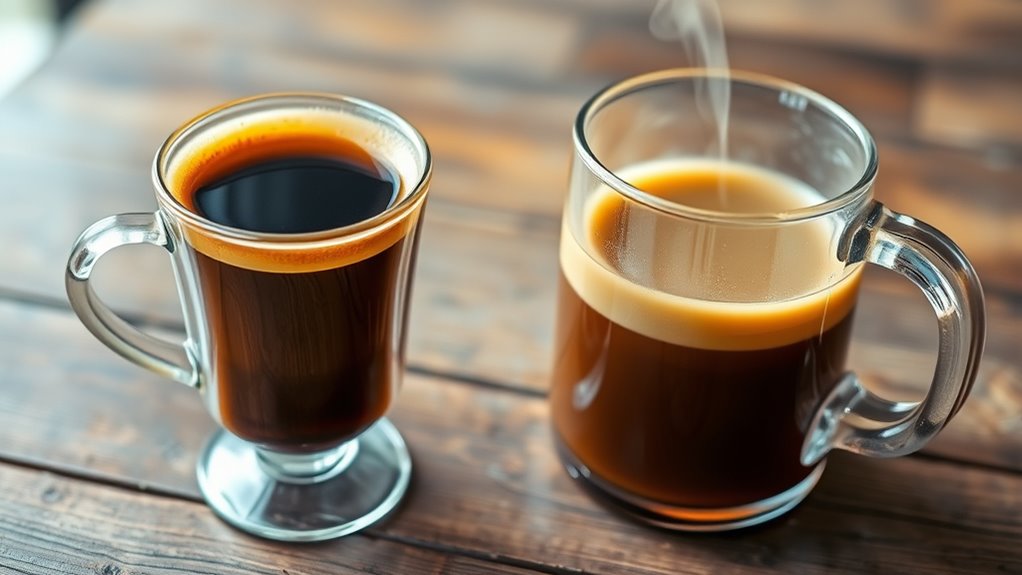
Although espresso packs a punch in caffeine concentration, it actually contains less caffeine per serving than drip coffee because of its smaller volume.
Espresso is more concentrated but delivers less caffeine per serving than drip coffee due to its smaller size.
A single 1-ounce shot of espresso delivers about 63 mg of caffeine, while an 8-ounce cup of drip coffee contains roughly 95 mg.
Even a double shot of espresso, approximately 2 ounces, offers around 126 mg, which is comparable to but not exceeding the caffeine in a standard coffee cup.
When you consider larger brewed coffee servings, like 16 ounces, caffeine content can soar beyond 200 mg, far surpassing espresso.
So, if you’ve believed espresso always has more caffeine, it’s time to rethink that.
The total caffeine you get depends on the volume you drink, not just espresso’s intensity.
Factors such as bean type and extraction time can also cause variations in espresso’s caffeine content.
Does Serving Size Change Your Total Caffeine Intake?
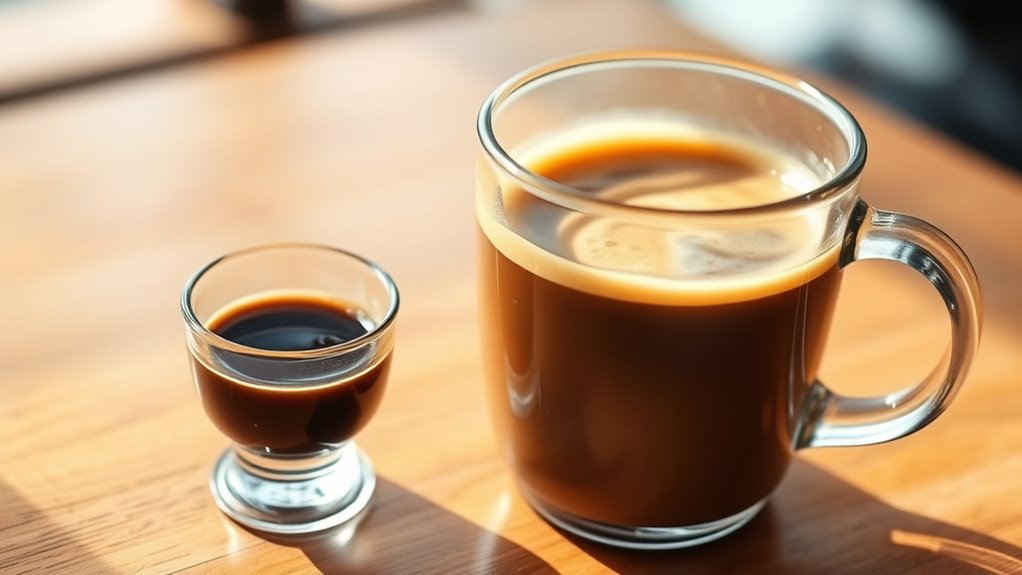
You might think espresso has more caffeine, right? But actually, the serving size makes a big difference in how much caffeine you get.
Espresso is super concentrated—more caffeine per ounce—but since brewed coffee is usually served in bigger amounts, you often end up consuming more caffeine overall.
Extraction time and factors like grind size play a crucial role in determining the caffeine content and flavor profile of your espresso shot.
Serving Size Impact
How much you drink plays an essential role in your total caffeine intake. Whether it’s espresso or brewed coffee, increasing the serving size directly raises the caffeine you consume.
For example, an 8 oz cup of drip coffee contains about 95 mg of caffeine, but a 16 oz cup doubles that amount.
Even though espresso packs more caffeine per ounce, a single 2 oz shot has roughly 126 mg, which is less than a 12 oz brewed coffee’s 144 mg.
When you consume multiple espresso shots or larger coffee drinks, your total caffeine intake skyrockets.
Ultimately, the total caffeine absorbed depends more on the volume you drink, not just the concentration.
The aeration process in beverages like shaken espresso can also affect how quickly caffeine is absorbed and enjoyed.
Concentration Versus Volume
Since espresso contains about 40 mg of caffeine per ounce, compared to brewed coffee’s 10 mg per ounce, its caffeine concentration is considerably higher. But concentration alone doesn’t tell the full story.
When you drink a 2 oz shot of espresso, you’re getting roughly 80 mg of caffeine.
Meanwhile, an 8 oz cup of brewed coffee delivers around 95 mg. This means that despite espresso’s intensity, the larger volume of brewed coffee usually results in a higher total caffeine intake.
So, if you want to understand your caffeine consumption, you need to take into account serving size, not just concentration.
Ultimately, volume plays an essential role in how much caffeine you actually consume, making bigger coffee servings more potent overall than smaller espresso shots.
It’s a good reminder that when it comes to caffeine, size does matter.
Regular maintenance like descaling espresso machines ensures consistent brew strength and caffeine extraction over time.
Caffeine Dose Variation
Serving size plays a crucial role in determining your total caffeine intake, no matter if you choose espresso or brewed coffee. While espresso packs more caffeine per ounce, the total amount you consume depends on the volume you drink.
For example, a standard 8 oz cup of brewed coffee contains about 95 mg of caffeine, whereas a 2 oz double espresso has around 126 mg.
If you drink larger servings of drip coffee, your caffeine intake can easily surpass that of a small espresso shot.
Espresso typically has a much higher caffeine concentration, approximately 2.1 mg/mL compared to drip coffee’s 0.4 mg/mL.
How Brewing Methods Affect Coffee’s Caffeine Levels
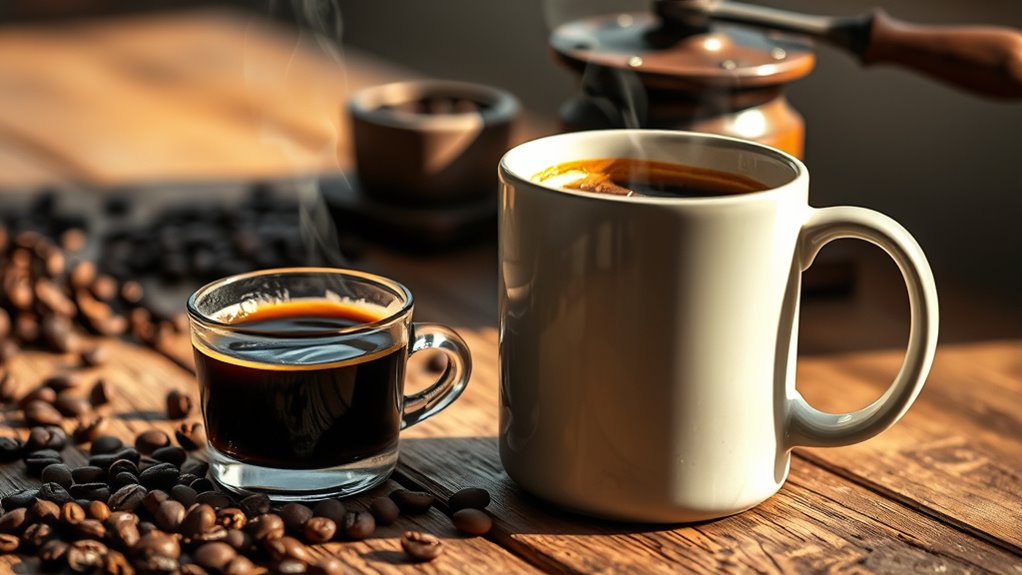
You’ll notice that extraction time is a big player in how much caffeine makes it into your cup. The longer you brew, the more caffeine gets dissolved.
Water temperature is important too—keeping it close to boiling helps you pull out caffeine effectively without burning your coffee.
Knowing these little details lets you manage the caffeine level no matter which brewing method you go with.
Regular maintenance like descaling espresso machines ensures consistent water flow and optimal brewing conditions, which can also affect caffeine extraction.
Extraction Time Impact
How does the time your coffee spends brewing influence its caffeine content? Short extraction times, like the 20-30 seconds in espresso, limit the total caffeine extracted compared to longer methods. But espresso uses high pressure and finely ground beans, boosting caffeine concentration per ounce.
In contrast, longer brewing durations, like cold brew or extended steeping, allow more caffeine to dissolve fully, increasing overall caffeine yield. The longer water interacts with coffee grounds, the more soluble caffeine compounds it extracts. Additionally, the grind size plays a crucial role in extraction efficiency, with finer grinds enhancing caffeine release during the brewing process.
Water Temperature Role
Although water temperature might seem like a simple factor, it plays a critical role in determining how much caffeine your coffee contains. When brewing espresso, hot water near boiling (95-105°C) under high pressure extracts caffeine quickly and efficiently within 20-30 seconds. This high temperature increases caffeine’s solubility, maximizing extraction without dragging out the process.
In contrast, cold brew uses much lower temperatures but compensates with hours of steeping to pull caffeine slowly from the grounds.
If the water’s too cool during espresso brewing, caffeine extraction drops, leaving you with a weaker shot. But if it’s too hot or brewing goes too long, bitter compounds can overshadow the caffeine-rich flavor. Using a high-quality espresso machine helps ensure proper brewing temperature and pressure for optimal caffeine extraction and flavor balance, as well as a rich crema espresso machine.
Does Coffee Roast Level Influence Caffeine Content?
Even though dark roast coffee beans undergo longer roasting and become less dense, this doesn’t considerably affect their caffeine content. You might expect a significant difference, but the caffeine level is more influenced by how much coffee you use and the brewing method rather than the roast itself.
Light roasts retain a bit more caffeine by weight, but the difference is minimal.
The longer roasting process in dark roasts can break down some caffeine molecules, slightly lowering caffeine per bean. However, when brewed, the overall caffeine content between light and dark roasts remains virtually the same.
Additionally, the brewing method significantly impacts caffeine extraction and final content in your cup.
Why Espresso Tastes Stronger but Isn’t More Caffeinated
When you take a sip of espresso, its bold, intense flavor immediately grabs your attention. But that doesn’t mean it packs more caffeine than regular brewed coffee.
Espresso contains about 40 mg of caffeine per ounce, making it highly concentrated compared to brewed coffee’s 10 mg per ounce.
However, a typical 2-ounce shot of espresso has roughly 126 mg of caffeine, which is only slightly more than an 8-ounce cup of drip coffee, averaging around 120 mg.
The strong taste you experience comes from espresso’s concentrated brewing method and the creamy crema on top, not from a higher caffeine content.
So, while espresso tastes stronger and hits you quickly, it isn’t necessarily more caffeinated overall than your standard cup of coffee.
It’s all about how it’s brewed and served, not just the caffeine amount.
Factors like bean type and shot size significantly influence the caffeine content in your espresso.
How Drinking Speed Changes Caffeine’s Effects on You
Because the speed at which you drink espresso directly impacts how your body absorbs caffeine, it plays a crucial role in the intensity and timing of its effects. When you down espresso quickly, caffeine floods your bloodstream rapidly, triggering an almost immediate surge in alertness and energy.
Drinking espresso quickly sends caffeine rushing through your bloodstream for an instant boost of energy and alertness.
This swift absorption can amplify side effects like jitters or a racing heart due to rapid central nervous system stimulation.
Conversely, sipping espresso slowly delays caffeine’s arrival in your bloodstream, offering a steadier, more sustained boost without the sharp spikes.
Understanding this lets you tailor your espresso experience, whether you want a quick hit of energy or a gradual, manageable lift.
Your drinking pace shapes not just how much caffeine you consume but how powerfully and quickly it impacts you.
Frequently Asked Questions
Can Espresso Caffeine Affect Sleep Differently Than Other Coffees?
Yes, espresso caffeine can affect your sleep differently because you consume it quickly, causing a rapid caffeine spike that hits your system faster. This intense boost might disrupt your sleep more than slower, diluted coffee intake.
It’s like a quick jolt that your body feels all at once. Other types of coffee usually take longer to drink and can have a more gradual effect on your system. So, espresso tends to pack a bigger punch in a shorter amount of time.
Does Espresso Have More Antioxidants Than Drip Coffee?
Espresso has more antioxidants per ounce thanks to its concentrated coffee solids. But drip coffee extracts more antioxidants overall because it brews for longer.
You’ll find antioxidant levels are pretty similar when using equal amounts of coffee. It really depends mostly on the beans and the roast. So, the type of coffee you start with plays a big role.
How Does Milk or Cream Alter Espresso’s Caffeine Absorption?
Don’t worry, adding milk or cream won’t reduce your espresso’s caffeine. Instead, it slows absorption slightly by binding caffeine with fats and proteins. This gives you a smoother, less immediate energy boost without cutting the total caffeine you consume.
Are There Health Risks Unique to Espresso Consumption?
Yes, drinking espresso can uniquely spike your heart rate and worsen acid reflux due to its concentrated caffeine. You should avoid overconsumption, especially if you’re sensitive or have heart issues, to prevent jitteriness and dehydration.
It’s pretty common for espresso to hit you faster than regular coffee because it’s so concentrated. So, if you notice your heart racing or feeling uneasy after a shot or two, it’s a good idea to cut back a bit. Taking it easy helps keep those side effects in check.
Does Espresso Caffeine Impact Metabolism Differently Than Brewed Coffee?
You won’t find espresso caffeine impacting your metabolism differently than brewed coffee; it’s the total caffeine amount that matters. Your body processes both similarly, so focus on how much you consume, not how you brew it.
Basically, whether it’s espresso or brewed coffee, the effect on your metabolism comes down to caffeine quantity. So, enjoy whichever you prefer! Just keep an eye on your overall intake.
Conclusion
Think of espresso like a lightning bolt, small but intense. Drip coffee, on the other hand, is more like a steady thunderstorm. Despite espresso’s bold taste, a single shot usually packs less caffeine than your average cup of drip coffee.
So, when you’re choosing your brew, remember it’s not just about strength but volume and how fast you sip it. Understanding this helps you enjoy your caffeine just the way you like it, without surprises.