You might think espresso has more caffeine because it’s stronger per ounce. But it actually contains less total caffeine than a typical cup of drip coffee due to its smaller serving size. A single espresso shot averages 63 mg, while an 8 oz coffee has about 95 mg.
However, multiple espresso shots can match or even exceed larger coffee servings. How caffeine concentration, brewing methods, and consumption habits influence your caffeine intake reveals deeper insights. It’s pretty interesting once you dig into the details!
How Much Caffeine Is in Espresso vs. Coffee?
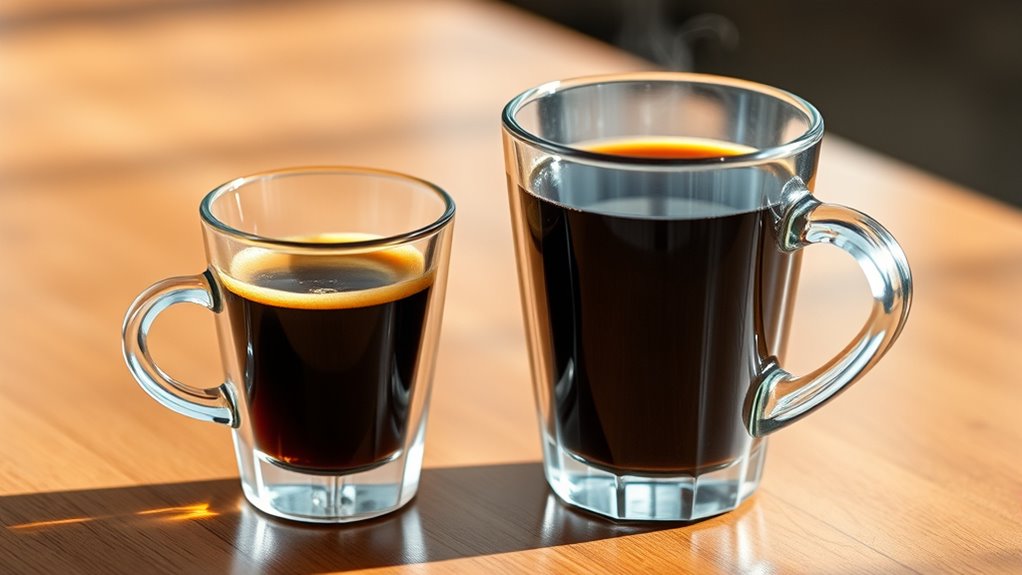
Although espresso contains a higher concentration of caffeine per ounce, about 60 to 80 mg compared to drip coffee’s 8 to 15 mg, the total caffeine in a single 1 oz shot (approximately 63 mg) is generally less than that in an 8 oz cup of brewed coffee.
That cup usually averages around 95 mg. This difference happens because the serving size of espresso is much smaller.
When you drink brewed coffee, the larger volume really adds up, increasing total caffeine intake despite its lower concentration. If you go beyond 8 ounces, the caffeine amount goes up even more, easily passing that of a single espresso shot.
Espresso shots at Starbucks typically contain about 75 mg of caffeine, which can vary based on roast and blend.
Why Espresso Feels Stronger Despite Less Total Caffeine
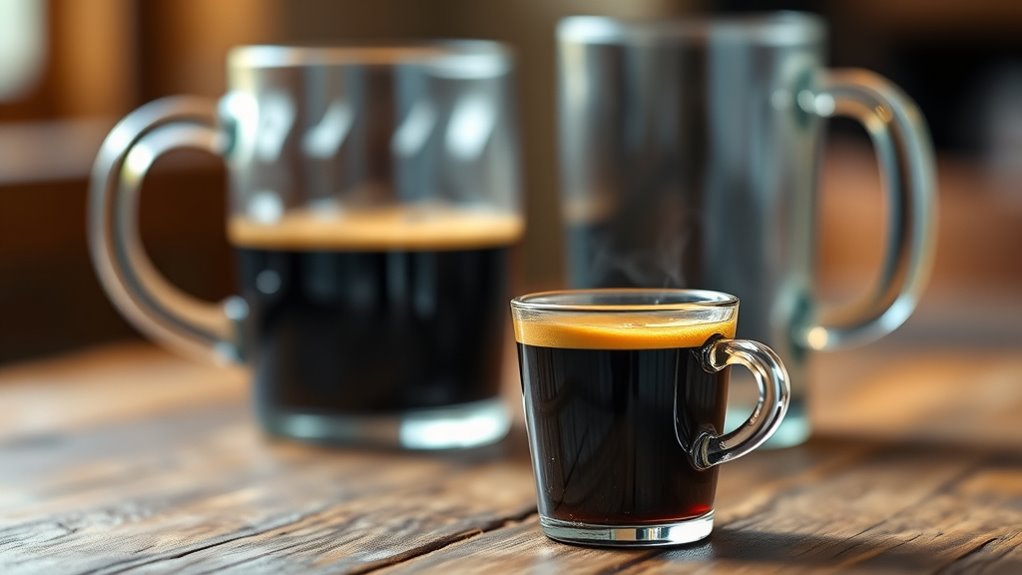
Because espresso delivers caffeine in a highly concentrated form, you experience a rapid and intense boost that feels stronger than brewed coffee. This concentration means caffeine enters your bloodstream quickly, triggering a swift spike in alertness.
The small serving size encourages fast consumption, which accelerates absorption and amplifies the perceived strength.
Plus, espresso’s rich, bold flavor and crema heighten your sensory experience, making the drink seem more potent beyond just caffeine content.
So, the combination of concentrated caffeine and intense flavor profile creates a subjective impression of strength, even though the total caffeine is less than a typical brewed coffee serving.
Understanding these factors explains why espresso feels stronger despite containing less caffeine overall.
Consistent extraction timing plays a key role in developing espresso’s bold flavor and crema that contribute to its intense sensory impact.
How Serving Size Affects Espresso and Coffee Caffeine
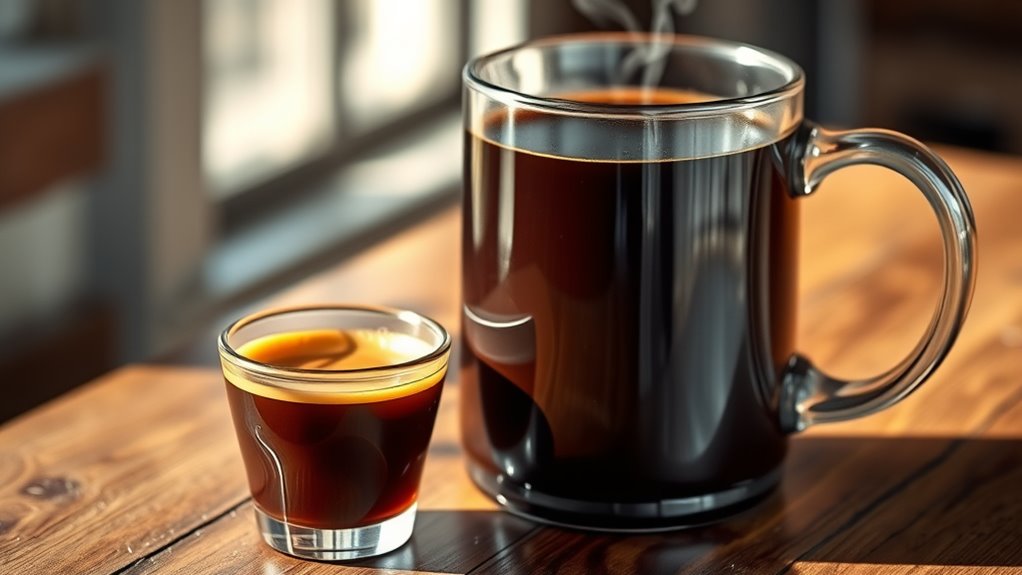
You’ll notice that espresso has more caffeine packed into each ounce compared to brewed coffee. But because espresso servings are usually smaller, the total caffeine you get can actually be less.
Now, if you decide to up the volume—like adding extra shots or going for a bigger cup—you’re basically increasing how much caffeine you consume.
The standard single shot contains about 63 mg of caffeine, but this amount can vary depending on factors like bean type and extraction method, which affects the caffeine concentration in your espresso.
Caffeine Concentration Differences
When comparing caffeine content, it’s essential to take into account serving size alongside concentration.
Espresso contains about 40 mg of caffeine per ounce, making it four times more concentrated than brewed coffee, which has roughly 10 mg per ounce.
A standard 1 oz shot of espresso typically delivers around 63 mg of caffeine, while an 8 oz cup of drip coffee contains approximately 95 mg.
Despite espresso’s higher caffeine concentration, its smaller volume means it usually has less total caffeine than larger servings of brewed coffee.
For example, a 12 oz cup of drip coffee can easily exceed the caffeine found in a single espresso shot.
Regular maintenance, such as descaling your espresso machine every few months, ensures optimal extraction and consistent caffeine delivery.
Impact Of Beverage Volume
Although espresso packs more caffeine per ounce, the total caffeine you consume depends heavily on the beverage’s volume.
For example, a standard 8 oz brewed coffee contains about 95 mg of caffeine, which often exceeds the 63 mg found in a 1 oz espresso shot.
To understand your caffeine intake, consider these points:
- Espresso delivers 60-80 mg of caffeine per ounce, but its small volume limits total caffeine.
- Larger coffee servings contain more caffeine overall, despite lower concentration.
- Consuming multiple espresso shots can match or surpass caffeine in a large coffee.
- Serving size impacts caffeine intake more than concentration alone.
The caffeine content in espresso can vary due to factors like bean type and extraction time, which affect the final amount you consume.
How Coffee Bean Amount Affects Espresso and Coffee Caffeine
How does the amount of coffee beans used impact the caffeine content in espresso and coffee? Simply put, the more coffee grounds you use, the higher the caffeine content.
Espresso generally demands about 7 grams per shot, concentrating caffeine in a smaller volume. In contrast, drip coffee often uses more grounds overall but dilutes caffeine across a larger cup.
The total caffeine scales proportionally with the weight of coffee beans, regardless of roast.
| Beverage Type | Coffee Grounds (grams) | Approximate Caffeine Content (mg) |
|---|---|---|
| Espresso | 7 | 63 |
| Drip Coffee | 15 | 120 |
| Drip Coffee | 20 | 160 |
This table illustrates how increasing grounds boosts caffeine in both drinks. However, achieving consistent caffeine levels also depends on proper espresso dosing to ensure balanced extraction and flavor.
Brewing Methods That Change Espresso and Coffee Caffeine
When you brew coffee, the extraction time has a big impact on how much caffeine makes it into your cup. For example, espresso only takes about 25-30 seconds to brew, so it extracts caffeine quickly.
But this can be quite different from longer methods like drip coffee or cold brew.
Water temperature also plays an important role. Hotter water usually helps dissolve caffeine better and makes the extraction more efficient.
Using freshly brewed espresso rich in crema can also influence the overall flavor and caffeine perception in your drink.
Extraction Time Effects
Since extraction time directly influences caffeine content, understanding its role is essential when comparing espresso and coffee.
Espresso’s short extraction time (25-30 seconds) limits caffeine extraction despite its fine grind and pressure-based brewing.
In contrast, methods like drip or cold brew extend extraction time, allowing more caffeine to dissolve.
Think about it this way: espresso’s rapid extraction yields a concentrated shot but less total caffeine than drip coffee’s longer brew.
Cold brew’s hours-long steeping extracts markedly more caffeine, though with a smoother taste.
Longer brewing times increase total caffeine by allowing hot water to dissolve more compounds.
The fine grind in espresso speeds extraction but can’t fully compensate for the brief contact time.
Additionally, variables like grind size and tamping play a crucial role in extraction efficiency and caffeine yield.
Water Temperature Influence
Although extraction time plays a critical role, water temperature directly impacts caffeine solubility and extraction efficiency in both espresso and drip coffee brewing.
Near-boiling temperatures between 95-105°C maximize caffeine extraction by increasing solubility, ensuring you get more caffeine per brew.
Espresso machines exploit this by combining high temperature and pressure, extracting significant caffeine rapidly within 25-30 seconds.
Conversely, drip coffee relies on steady hot water to maintain ideal extraction over longer periods.
If you use water that’s too cool, you’ll under-extract caffeine, resulting in weaker coffee.
Too hot, and you risk over-extraction, which brings bitterness without increasing caffeine proportionally.
Cold brew, which uses cold water for hours, extracts caffeine more slowly but can yield higher total caffeine due to extended contact time.
The balance between grind size and extraction time also plays a crucial role in optimizing caffeine extraction and flavor intensity.
Does Roast Level Affect Espresso and Coffee Caffeine?
Even though dark roast beans are less dense because they’re roasted longer, this doesn’t really change their caffeine content compared to light roasts. When you look at caffeine levels, keep these things in mind:
Light roast beans have a bit more caffeine by weight than dark roasts, but the difference is pretty small. Caffeine stays stable at the temperatures used in roasting, so roasting doesn’t break it down.
How you brew your coffee and how much coffee you use matter way more for caffeine content than the roast level. Overall, the roast level doesn’t have much effect on the caffeine you get in your espresso or brewed coffee. However, because blonde espresso beans are denser and undergo less caffeine degradation, they often contain slightly more caffeine per shot than darker roasts.
How Drinking Speed Changes Your Caffeine Experience
When you drink espresso quickly, caffeine hits your bloodstream fast, giving you a sudden boost in alertness and heart rate.
On the other hand, if you sip drip coffee slowly, the caffeine gets absorbed more gradually. That means the stimulating effects last longer.
Rapid Absorption Effects
Since drinking speed directly affects how quickly caffeine enters your bloodstream, consuming espresso rapidly causes a swift spike in alertness. When you gulp espresso, the concentrated caffeine crosses your blood-brain barrier faster, triggering intense short-term stimulation.
This rapid absorption contrasts with sipping drip coffee slowly, which leads to gradual caffeine entry and prolonged alertness.
Consider these key effects of rapid espresso consumption: Immediate caffeine spike heightens alertness quickly. Faster bloodstream delivery intensifies short-term stimulation. Multiple quick espresso shots amplify cumulative effects. Rapid intake can increase jitteriness due to sudden caffeine overload.
Understanding these dynamics helps you tailor your caffeine intake to suit your alertness needs and sensitivity. This way, you can ensure a more controlled and effective caffeine experience.
Consumption Pace Impact
Although espresso contains a high concentration of caffeine, the pace at which you drink it considerably shapes your caffeine experience. When you consume espresso quickly, caffeine enters your bloodstream rapidly, causing an immediate surge in alertness. This fast absorption can also heighten side effects like jitteriness or anxiety.
On the other hand, sipping drip coffee slowly results in gradual caffeine absorption, extending the energizing effects over time. The slower pace maintains a steadier caffeine level, reducing peaks and crashes.
So, how fast you drink your coffee directly influences not only how quickly you feel caffeine’s effects but also how long those effects last.
Understanding this relationship helps you tailor your caffeine intake to match your desired alertness and minimize unwanted reactions. It’s pretty handy to know, especially if you want to avoid that jittery feeling or the mid-afternoon slump.
Choosing Between Espresso and Drip Coffee for Caffeine Needs
How do you decide between espresso and drip coffee to meet your caffeine needs? It really depends on your caffeine goals and how much you like to drink at once. Here are a few things to think about:
A single 1 oz espresso shot has about 63 mg of caffeine. On the other hand, an 8 oz cup of drip coffee contains roughly 95 mg. So espresso packs more caffeine per ounce but usually less total caffeine per serving compared to drip coffee.
Espresso has more caffeine per ounce, but a full cup of drip coffee contains more overall caffeine.
If you drink a few espresso shots, you can actually get more caffeine than one large cup of drip coffee. But one shot alone usually doesn’t match the caffeine in a full cup of drip.
If you want to get the most caffeine efficiently, larger amounts of drip coffee work better than just a single espresso shot.
Go for espresso if you want a quick, concentrated caffeine boost in a small serving. Choose drip coffee if you prefer more caffeine spread out over a bigger cup.
Common Myths About Espresso and Coffee Caffeine
When you compare espresso and drip coffee, it’s easy to fall for common myths about their caffeine content. Many believe espresso has more total caffeine, but the truth is serving size matters. A single espresso shot has less caffeine than a typical cup of drip coffee.
Although espresso’s caffeine concentration per ounce is higher, the overall caffeine you consume depends on how much you drink.
Another widespread misconception is that dark roasts contain more caffeine. In reality, roast level barely affects caffeine content.
Similarly, flavor intensity misleads people into thinking espresso is stronger in caffeine, but total caffeine hinges on the coffee amount and volume.
Understanding these facts helps you make informed choices. This way, you avoid assumptions based on taste or color rather than evidence.
Why Espresso’s Concentration Isn’t More Caffeine
Because espresso delivers caffeine in a much smaller volume, its higher concentration per ounce doesn’t mean it has more total caffeine than brewed coffee. When you compare caffeine content, keep a few things in mind.
Espresso contains about 40-80 mg of caffeine per ounce, while brewed coffee has roughly 10 mg per ounce.
Espresso packs 40-80 mg caffeine per ounce, compared to about 10 mg in brewed coffee.
A standard 1 oz espresso shot has around 63 mg of caffeine, which is less than what you get in an 8 oz brewed coffee cup.
The total caffeine you consume depends mostly on the serving size, not just the concentration.
Also, even though espresso caffeine gets absorbed quickly, that doesn’t increase the total caffeine amount.
Frequently Asked Questions
Can Espresso Consumption Impact Sleep Differently Than Regular Coffee?
Yes, espresso can impact your sleep differently because its concentrated caffeine is absorbed rapidly. This causes a quicker spike in alertness that may disrupt sleep onset more abruptly than the gradual caffeine release from regular coffee.
Does Espresso Provide More Antioxidants Than Brewed Coffee?
Espresso provides more antioxidants per ounce because it’s more concentrated. But brewed coffee usually gives you a higher total antioxidant intake since the serving sizes are larger.
How Does Milk or Cream Affect Caffeine Absorption in Espresso?
You’ll find milk or cream slows caffeine absorption by about 10-15% due to dilution and fats delaying gastric emptying.
While total caffeine stays constant, the stimulating effects might feel milder and take longer to kick in.
Are There Health Benefits Unique to Espresso Compared to Coffee?
You’ll find espresso offers unique health benefits, like higher concentrations of chlorogenic acids and polyphenols. These compounds may enhance antioxidant intake, provide anti-inflammatory effects, and support cardiovascular health more effectively than regular coffee.
That said, research is still ongoing. So while espresso shows promise, we’re still learning about its full impact compared to regular coffee.
Can Espresso Cause Stronger Caffeine Withdrawal Symptoms Than Coffee?
You might think espresso hits harder, but it’s your total caffeine intake that shapes withdrawal severity.
Since coffee usually delivers more caffeine overall, you’re likely to face stronger symptoms if you quit regular coffee, not espresso.
Conclusion
When you compare espresso and coffee, think of caffeine like a river’s flow: espresso is a concentrated rapid, intense but brief, while drip coffee is a steady stream with more total caffeine. Your caffeine kick depends on serving size, brewing, and drinking pace, not just the bean’s strength.
So next time you crave that jolt, choose wisely. Know that espresso’s punch is about power per ounce, not sheer caffeine volume.