You’ll get more total caffeine from cold brew than from an espresso shot because cold brew comes in larger servings. It’s typically 10-16 oz with 200-330 mg caffeine, even though espresso has a higher caffeine concentration per ounce.
Espresso shots are usually 1-2 oz and contain about 64-75 mg caffeine. Things like grind size, brewing time, and bean type also affect caffeine levels.
Knowing these differences helps you pick the right brew for your caffeine needs. Plus, it shows how preparation influences how strong your coffee ends up.
How Much Caffeine Does Cold Brew Contain?
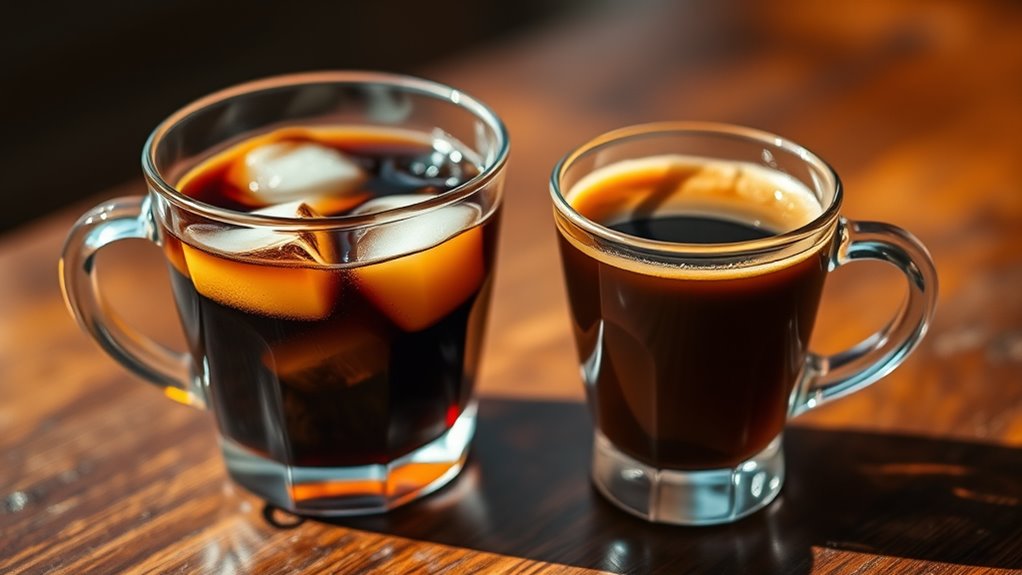
Although caffeine content can vary widely, a typical 16-ounce cold brew contains between 200 to 330 mg of caffeine, depending on factors like concentration and brewing method.
A 16-ounce cold brew typically contains 200 to 330 mg of caffeine, varying by brewing method and concentration
You should know cold brew is brewed as a concentrate over 12-24 hours, which extracts more caffeine compared to standard drip coffee.
When you consider ready-to-drink cold brews, they often pack more caffeine per volume than hot brewed coffee.
The caffeine level depends considerably on the coffee-to-water ratio, bean type, and steeping time, so values fluctuate.
For example, a 10-12 ounce serving can easily exceed 200 mg of caffeine, making cold brew generally more potent per serving than many other coffee types.
This variability means you need to check specifics to understand your cold brew’s caffeine impact accurately.
In comparison, espresso delivers a higher caffeine concentration per ounce due to its high-pressure extraction method.
Caffeine Content of a Standard Espresso Shot
You’ll find that a standard espresso shot contains about 64 to 75 mg of caffeine, packed into just 1-2 ounces. Because it’s so concentrated, espresso delivers caffeine pretty quickly.
But even though it packs a punch, the total caffeine amount is actually lower than what you’d get in an 8 oz cup of drip coffee. The extraction time and method significantly influence the caffeine concentration in each brew.
Espresso Caffeine Per Shot
When you take a standard shot of espresso, you’re consuming about 64 to 75 milligrams of caffeine concentrated into just one ounce. This makes espresso one of the most caffeine-dense coffee options available.
The small volume delivers a quick, intense caffeine boost, thanks to espresso’s rapid extraction process, which extracts caffeine efficiently from the coffee grounds.
However, the exact caffeine content can vary slightly depending on the type of coffee bean and specific brewing methods used. Despite these minor variations, the range of 64 to 75 mg per shot remains consistent across most standard espresso servings.
This precise caffeine measurement highlights why espresso is favored for those seeking a potent, compact dose of caffeine in a minimal serving size. It’s a great choice when you want something strong but don’t want to drink a lot of coffee.
The caffeine concentration can also be influenced by espresso yield, which affects how diluted or concentrated the final shot is.
Concentration Versus Serving Size
Since espresso delivers about 64 to 75 milligrams of caffeine in just one ounce, its concentration is significantly higher than that of cold brew.
When comparing caffeine, you have to weigh concentration against serving size to understand your intake accurately.
Espresso’s extra-fine grind and rapid extraction under pressure yield a highly concentrated shot.
Cold brew typically comes in larger servings of 10 to 12 ounces, with 200 to 300 milligrams of caffeine total.
Per ounce, espresso contains roughly five times more caffeine than cold brew.
But despite espresso’s higher concentration, cold brew’s larger volume results in greater total caffeine per drink.
Regular maintenance, such as descaling espresso machines, helps ensure consistent extraction and caffeine levels over time.
Why Serving Size Matters in Caffeine Comparison
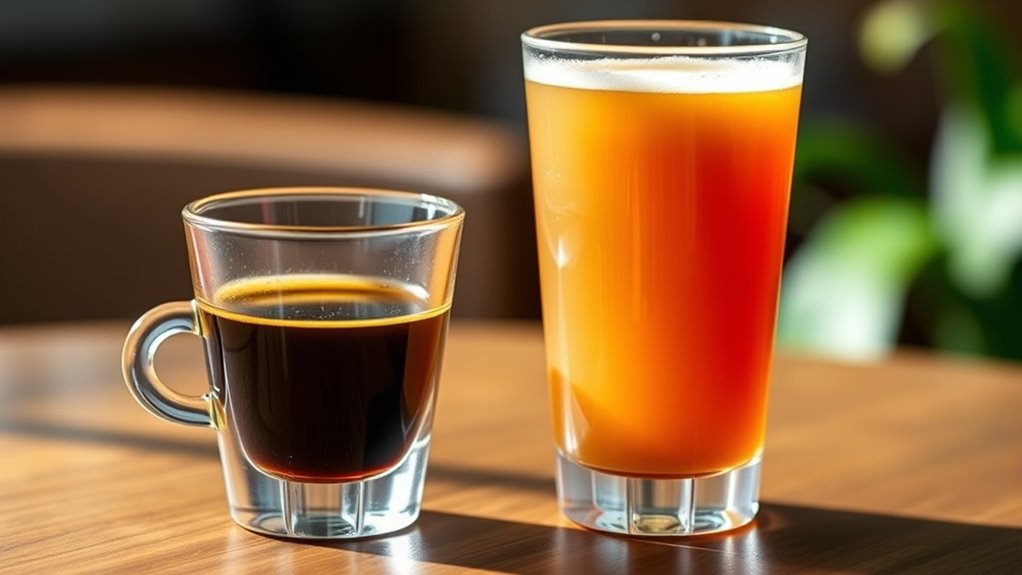
When you’re comparing cold brew and espresso, it’s important to think about how serving size changes the total caffeine you’re getting.
Sure, espresso packs more caffeine in each ounce, but cold brew usually comes in bigger servings, which means you might actually end up consuming more caffeine overall.
Additionally, factors like extraction time and coffee bean type can influence the caffeine content in both drinks.
Serving Volume Impact
Although espresso contains a higher caffeine concentration per ounce, you should consider serving size to understand total caffeine intake accurately. The volume of the drink directly affects how much caffeine you consume.
For example, cold brew servings are typically much larger than espresso shots, impacting caffeine totals profoundly. A 16 oz cold brew can contain 200-330 mg of caffeine, far exceeding a 2 oz espresso’s 64-75 mg.
Cold brew’s lower caffeine concentration per ounce is offset by its larger serving size. Comparing caffeine solely by concentration ignores how much you actually drink.
Total caffeine intake depends on both concentration and volume, making serving size vital. So, it’s not just about how strong your coffee is, but also how much you’re sipping.
Keep that in mind next time you order! Understanding the extraction time of espresso can also influence caffeine concentration and flavor intensity.
Concentration Versus Quantity
Understanding caffeine content requires more than just comparing concentration levels. You also have to consider how much you actually drink.
Espresso packs about 64-75 mg of caffeine per 1 oz shot, making it highly concentrated.
But cold brew is usually served in much larger volumes, ranging from 10 to 16 oz. Even though it has a lower caffeine concentration per ounce, the total caffeine in a cold brew can easily exceed that of a small espresso shot just because you’re drinking more of it.
So, when you compare these drinks, focusing only on concentration can be misleading. The total caffeine intake depends on both concentration and serving size.
To get a true sense of caffeine content, you need to look at both factors. Larger cold brews often deliver more caffeine overall than smaller, intense espresso shots.
It’s also important to note that roast level and coffee preparation method significantly influence caffeine extraction and flavor profile.
How Brewing Methods Change Caffeine Levels
Since brewing methods dictate how caffeine is extracted from coffee grounds, they play a crucial role in determining the caffeine content of your drink. Cold brew uses a high coffee-to-water ratio and steeping for 16-24 hours, allowing for more complete caffeine extraction.
Brewing methods shape caffeine levels, with cold brew’s long steep enhancing extraction and potency.
Espresso, by contrast, brews quickly in about 27 seconds under high pressure with finely ground beans, producing a concentrated but smaller volume shot. Consider these factors:
- Cold brew’s long steeping time maximizes caffeine extraction.
- Espresso’s rapid extraction yields higher caffeine concentration per ounce but less total caffeine.
- Brew temperature (cold vs. hot) impacts extraction minimally compared to contact time and coffee dose.
- The total caffeine depends mainly on how much coffee you use and how long it steeps.
Additionally, proper dosing and extraction in espresso preparation ensures consistent caffeine levels and flavor balance.
Understanding these dynamics helps you choose based on caffeine needs. So, whether you want a slow, strong sip or a quick, intense shot, knowing how brewing affects caffeine can guide your pick.
How Grind Size and Brew Time Affect Caffeine
When you adjust grind size and brew time, you directly influence how much caffeine your coffee extracts. Cold brew uses a coarse grind, which permits a long brewing period of 16 to 24 hours. This allows caffeine to dissolve gradually without excessive bitterness. The extended contact time increases caffeine content in the concentrate.
In contrast, espresso employs an extra-fine grind to maximize surface area. This enables rapid caffeine extraction in about 27 seconds under high pressure and temperature. However, the short brew time limits total caffeine extraction despite its concentration.
Increasing cold brew time generally boosts caffeine but risks extracting bitter compounds if it goes on too long. So, grind size and brew time control the balance between caffeine yield and flavor. Cold brew’s coarse grind and long brew time extract more caffeine overall than espresso’s fine grind and brief extraction.
Temperature stability is crucial for espresso to ensure consistent extraction and flavor balance, as even slight fluctuations can affect caffeine and other compound solubility during the short brew time, highlighting the importance of temperature control.
How Concentrates Affect Cold Brew Caffeine
Adjusting grind size and brew time sets the stage for caffeine extraction, but the form in which cold brew is served really changes its caffeine strength. Cold brew concentrates are brewed with a higher coffee-to-water ratio, usually between 1:4 and 1:8. They contain significantly more caffeine per ounce because of steeping times that last 12 to 24 hours.
When you dilute these concentrates, caffeine levels per serving can still be higher than regular cold brew or espresso, depending on how much you dilute. A few key things to keep in mind include:
- Higher initial coffee dose increases caffeine yield
- Extended steeping maximizes caffeine extraction
- Concentrates offer more caffeine per volume than standard brews
- Dilution controls final caffeine concentration while keeping the potency
Getting a grip on these factors helps you understand how concentrates really amp up cold brew’s caffeine kick. Unlike espresso, which relies on high pressure extraction to quickly pull caffeine, cold brew extraction depends on long steeping times at room temperature.
Which Coffee Beans Have More Caffeine?
Although many factors influence caffeine levels in your cup, the type of coffee bean plays the most significant role. Robusta beans contain nearly twice the caffeine of Arabica beans, about 2.2% versus 1.2%.
Since most specialty espresso blends use Arabica, their caffeine content tends to be lower.
However, roasters often blend Robusta into espresso to increase caffeine and add a stronger flavor profile.
Importantly, caffeine content is defined primarily by the species rather than roast level or processing.
Additionally, beans grown at higher altitudes in cooler climates generally have slightly less caffeine compared to those from hotter regions.
Understanding bean type helps you predict caffeine strength more accurately than focusing on roast or origin alone.
Choosing Cold Brew or Espresso for Your Caffeine Needs
Since cold brew is brewed over extended periods with a higher coffee-to-water ratio, it usually delivers more caffeine per serving compared to espresso. When deciding which suits your caffeine needs, consider these factors:
Cold brew’s longer steeping and stronger coffee ratio often mean more caffeine per serving than espresso.
A 16 oz cold brew contains 200–330 mg caffeine, which is a lot more than a 2 oz espresso shot with 64–75 mg. Espresso has a higher caffeine concentration per ounce, but the smaller serving size limits your total intake.
Cold brew’s caffeine potency varies with steeping time and brew ratio, often resulting in a stronger caffeine dose by volume. Your choice depends on whether you want a quick, intense caffeine hit like espresso or a larger, sustained dose from cold brew.
Understanding these differences helps you tailor your coffee choice to match your desired caffeine impact effectively. So, think about how you like your caffeine and pick the brew that fits your day best.
Frequently Asked Questions
Is Cold Brew Less Acidic Than Espresso?
Yes, cold brew is less acidic than espresso. You’ll find its pH ranges from 4.9 to 6.0, compared to espresso’s 4.5 to 5.0.
This makes cold brew gentler on your stomach and less likely to cause discomfort. So, if you’re sensitive to acidity, cold brew might be the better choice for you.
Can Cold Brew Cause Less Stomach Irritation?
Yes, cold brew can cause less stomach irritation because it’s less acidic and contains fewer irritant compounds like diterpenes.
You’ll likely experience reduced acid reflux and heartburn, but individual sensitivity still varies. So, it really depends on how your stomach reacts to different types of coffee.
Give it a try and see if it works better for you!
How Long Does Cold Brew Stay Fresh?
Imagine savoring your cold brew’s perfect taste. It stays fresh for 7-10 days in the fridge, or up to 2 weeks if it’s sealed airtight.
Beyond that, the flavor fades, so try to consume it promptly for the best experience. Keeping it fresh means you get to enjoy that smooth, rich taste every time.
Does Espresso Have Antioxidants?
Yes, espresso contains antioxidants like chlorogenic acids, polyphenols, and melanoidins. You’ll find its concentrated extraction process boosts antioxidant levels.
This may help reduce oxidative stress and support your overall health effectively. It’s pretty cool how a small cup can pack such a beneficial punch!
What’s the Best Time to Drink Cold Brew?
You should drink cold brew in the morning, as its caffeine content can boost alertness by up to 50%. This timing optimizes energy and focus while minimizing sleep disruption later in the day.
Just keep in mind your own sensitivity to caffeine and adjust accordingly. That way, you get the best benefits without any unwanted jitters or sleep issues.
Conclusion
Think of caffeine in cold brew and espresso like a marathon versus a sprint. Espresso delivers a quick, intense jolt with about 63 mg per shot. Cold brew slowly releases around 100 mg per 8 oz serving, depending on concentration.
Your choice depends on whether you want rapid energy or sustained alertness. By understanding brew time, grind size, and serving volume, you can tailor your caffeine fix precisely to your needs.