Yes, lattes always contain espresso. You can’t call it a latte without it. The espresso shot or two forms the rich, bold base of the drink, typically making up about one-third of the volume.
It’s combined with two-thirds steamed milk, so the espresso’s flavor and strength really shape your latte’s character. The type and quality of the espresso shot can also influence the taste and caffeine levels.
Keep going to discover how steamed milk and espresso work together to craft the perfect latte experience.
Do Lattes Contain Espresso? The Quick Answer
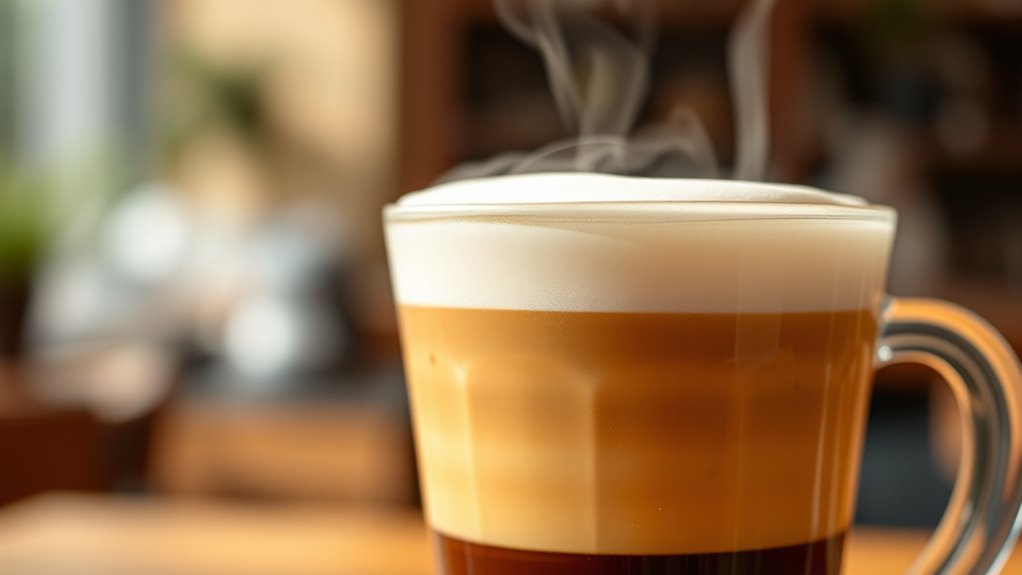
Although you might enjoy the creamy texture and mellow flavor of a latte, you should know that espresso is its essential base. Every latte starts with a shot or multiple shots of espresso, which provides the strong coffee flavor that defines the drink.
A latte’s creamy texture and mellow flavor always begin with a strong shot of espresso.
Typically, a latte combines about one-third espresso with two-thirds steamed milk, creating a balanced taste and smooth texture.
Even when you choose a flavored latte, the core ingredient remains espresso.
Without that concentrated coffee shot, your drink wouldn’t qualify as a latte. It would fall under a different category of milk-based coffee beverages.
The quality and extraction of the espresso shot are crucial to achieving the rich flavor that forms the foundation of a latte.
What Is Espresso and Why It Matters for Lattes
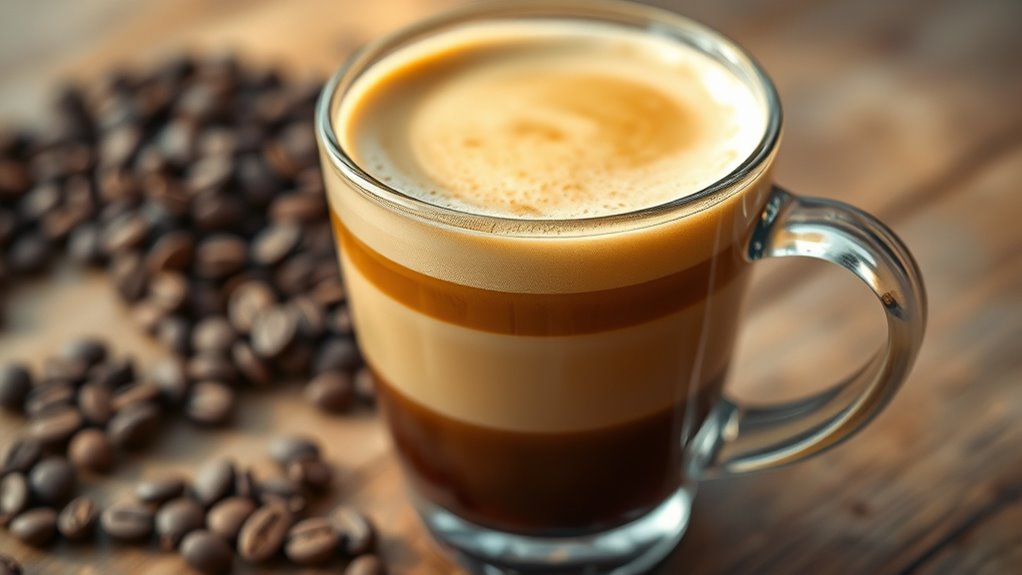
Now that you know every latte is built on espresso, it’s important to understand what espresso actually is and why it shapes the entire drink.
Espresso is a concentrated coffee brewed by forcing hot water through finely-ground beans at high pressure, around 9 bars. This process extracts intense flavors, creating the bold coffee essence that defines a latte.
When you savor a latte, the espresso provides the strong, rich base that the creamy milk mellows. The quality and extraction of the espresso directly affect the latte’s taste, strength, and aroma, making it a critical component.
Without espresso’s concentrated flavor, a latte would lack its signature character and boldness. It would just be warm milk with weak coffee hints.
The precise grind size and pressure used in espresso preparation are essential for achieving the perfect flavor balance in a latte.
How Much Espresso Goes Into a Typical Latte
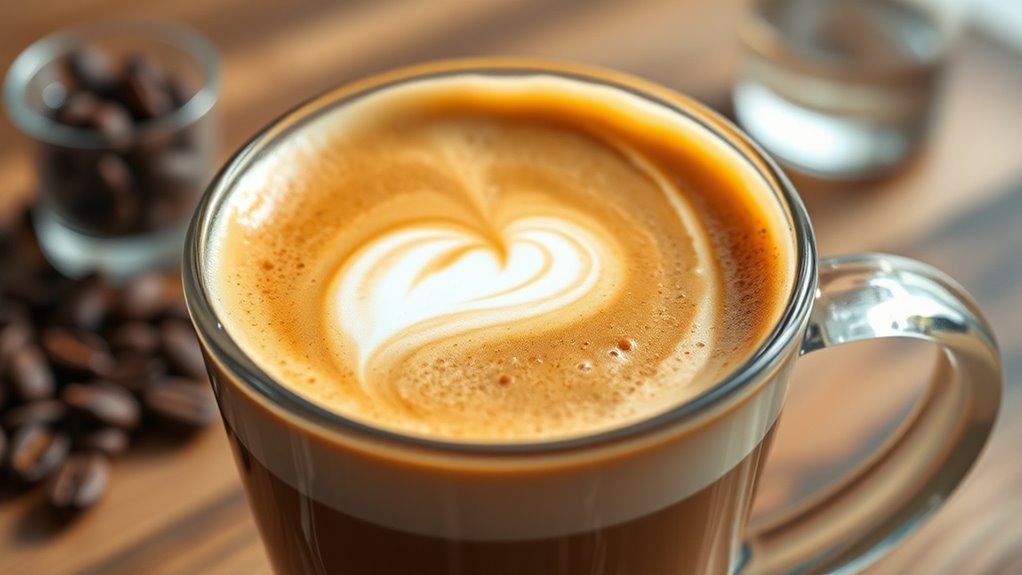
One to two shots of espresso usually form the heart of a typical latte, contributing about 1 to 2 ounces of concentrated coffee. This espresso provides the rich, bold flavor that balances perfectly with steamed milk.
Most standard lattes include a single shot, roughly 1 ounce, which is ideal for smaller sizes or lighter coffee intensity.
But if you order a larger latte or prefer a stronger taste, baristas often use a double shot, around 2 ounces, to keep the drink’s robust character. The exact amount can vary depending on the cup size and your personal preference.
Knowing this espresso base helps you appreciate how your latte gets its signature smooth and creamy flavor. It’s all about blending bold espresso with velvety milk in every satisfying sip.
A single shot of espresso typically contains about 75 mg of caffeine, which contributes to the latte’s stimulating effect.
How Different Espresso Shots Change Your Latte’s Flavor
When you choose different types of espresso shots for your latte, you directly shape its flavor profile and intensity. Opting for a ristretto shot delivers a concentrated, bolder flavor, enriching your latte with a rich, robust character.
Selecting your espresso shot defines your latte’s flavor intensity and richness.
On the other hand, a lungo shot extracts more water, creating a milder, more diluted taste that softens bitterness and acidity.
A double shot amps up both caffeine and depth, giving your latte a stronger, more complex presence.
Adjusting extraction time and pressure further balances bitterness and acidity, allowing you to fine-tune sweetness and aromatic complexity.
By selecting your espresso shot carefully, you control how vibrant, smooth, or intense your latte will be.
That way, you can tailor every cup to suit your unique taste preferences.
For an even richer experience, consider how the multidimensional richness of espresso influences the overall texture and finish of your drink.
How Steamed Milk Shapes the Taste of Your Latte
You’ll notice that the texture of steamed milk plays a vital role in shaping your latte’s flavor and mouthfeel. When it’s heated just right, the milk creates a creamy balance that softens the espresso’s intensity without masking its character.
It’s all about getting that perfect temperature and microfoam quality—these directly influence how smooth and harmonious your latte tastes. Three shots of espresso typically contain between 180 and 225 mg of caffeine, which can affect the overall strength and flavor profile of your drink, depending on the caffeine content.
Milk Texture Impact
Although espresso provides the bold foundation of a latte, the texture of steamed milk plays an essential role in shaping its final taste. When you steam milk to around 150-155°F, you create microfoam, a velvety texture that enhances smoothness and mouthfeel. This creamy consistency not only balances the espresso’s boldness but also reveals natural sweetness.
If the milk’s too frothy and airy, your latte will taste lighter and more delicate. However, overheating or poor steaming can cause burnt or bitter notes, ruining the flavor. The way milk blends with espresso depends largely on its texture, directly affecting creaminess and coffee intensity.
Mastering milk texture guarantees your latte delivers that perfect harmony between smoothness and rich espresso punch. It’s all about getting that balance just right so every sip feels satisfying and delicious. Shaking espresso with ice can create a velvety, frothy texture that complements the smoothness of steamed milk in espresso-based drinks.
Flavor Balance Dynamics
Because steamed milk softens espresso’s intensity, it plays a crucial role in defining your latte’s flavor profile. It smooths the espresso’s boldness, creating a creamy, balanced taste that’s easy to enjoy. How much milk you add directly affects whether your latte leans mild or boldly caffeinated.
Heating milk changes its sweetness and texture, which enhances flavor harmony and complements espresso’s sharp notes. Plus, the microfoam on top adds a velvety richness that makes each sip feel indulgent.
Here’s what shapes your latte’s flavor balance:
- Espresso to milk ratio controls coffee strength versus creaminess.
- Milk’s sweetness and texture, modified by steaming, boost harmony.
- Microfoam’s velvety texture enhances perceived richness and smoothness.
Understanding these will help you craft the perfect latte every time. Additionally, using a freshly ground beans base for your espresso shot ensures the deepest flavor and optimal crema, which significantly influences the overall latte experience.
Temperature’s Role
Steaming milk to the right temperature transforms your latte’s flavor and texture in ways that go beyond just mixing ingredients. When you heat milk to about 150-155°F (65-68°C), it reveals natural sweetness and creates a smooth, velvety texture essential for a balanced latte.
At this range, you also form microfoam, which gives your drink that creamy mouthfeel you crave.
If you overheat milk past 160°F (71°C), it scorches, leaving a burnt flavor that ruins the harmony with espresso.
Consistently hitting the ideal temperature guarantees your latte tastes just right every time, blending seamlessly with espresso’s boldness. Proper espresso dose and grind size balance also plays a crucial role in maintaining this harmony.
How Lattes Differ From Cappuccinos
When you order a latte or a cappuccino, you’re getting espresso-based drinks that differ mainly in their milk and foam ratios. Understanding these differences helps you choose the right one for your taste.
Lattes have about twice as much steamed milk as espresso, making them creamier and milder. Cappuccinos balance equal parts espresso, steamed milk, and microfoam for a bolder coffee flavor.
Lattes feature a thin milk foam layer, whereas cappuccinos boast thick, velvety microfoam that creates a distinct, frothy top.
Latte milk is heated without frothing, giving it a smooth texture. Cappuccino milk is frothed to produce airy microfoam.
Lattes have smooth, gently heated milk, while cappuccinos feature frothy, airy microfoam for texture.
These contrasts shape the unique texture and flavor profiles of each drink. So, knowing what you like can really help when you’re ordering your coffee.
Additionally, the espresso base in both drinks is typically extracted at an ideal 1:2 coffee-to-water ratio to balance strength and flavor.
How to Order or Make the Best Latte
If you want to enjoy a truly satisfying latte, start by pulling a high-quality shot of espresso as your base.
Next, froth fresh, cold milk until it’s smooth, creamy, and slightly microfoamed. This texture is key to that velvety mouthfeel.
Pour the milk gently over the espresso, keeping a milk-to-espresso ratio of about 2:1. This helps balance strength and creaminess.
Use proper steaming techniques to get the ideal temperature without scalding the milk, so it keeps its natural sweetness.
When ordering, just specify your preferred milk type and any flavor syrups or toppings you want to customize your latte.
Whether you’re at a café or making one at home, these steps make sure your latte is rich, flavorful, and perfectly crafted every time.
For the best flavor, ensure your espresso shot is timed correctly, ideally within the 25-30 second extraction window.
Frequently Asked Questions
Can Lattes Be Made With Decaffeinated Espresso?
Yes, you can make lattes with decaffeinated espresso. You’ll enjoy the same creamy texture and rich flavor without caffeine.
The process stays the same, so you get a satisfying, smooth coffee experience anytime you want. It’s perfect if you’re avoiding caffeine but still crave that latte goodness. Give it a try—you might be surprised how good it tastes!
What Milk Alternatives Work Best in Lattes?
Coincidentally, oat milk works best in lattes because it froths smoothly and adds natural sweetness. You’ll also enjoy almond or soy milk for a creamy texture.
Coconut milk adds richness but needs extra blending for perfect foam. Give them a try and see which one you like best!
How Long Does a Latte Stay Fresh After Brewing?
You should drink your latte within 15-20 minutes after brewing for the best flavor and texture. If you wait too long, the taste and texture can start to change.
If you refrigerate it, it stays fresh for up to 24 hours. Just keep in mind, reheating it might affect the taste and texture in a not-so-great way. So, it’s best enjoyed fresh whenever you can!
Are Flavored Syrups Commonly Added to Lattes?
Yes, you’ll often find flavored syrups added to lattes to boost sweetness and customize flavors. Baristas use vanilla, caramel, or hazelnut syrups, making your latte uniquely delicious and tailored to your taste preferences.
It’s a simple way to mix things up and enjoy new tastes with your coffee. Plus, these syrups can turn a regular latte into a special treat anytime you want.
Can I Make a Latte Without an Espresso Machine?
Of course, you can’t make a latte without an espresso machine, said no clever coffee lover ever. Just brew strong coffee or use a Moka pot, then froth milk with a whisk or jar. Easy!
Seriously, it’s that simple. You don’t need fancy gear to enjoy a tasty latte at home. Just get creative with what you’ve got!
Conclusion
Now that you know lattes always contain espresso, you can appreciate the skill behind each cup. Notably, a standard latte usually has one to two shots of espresso, which packs about 63-126 mg of caffeine. That’s enough to give you a solid energy boost without overwhelming your taste buds.
Next time you order or make a latte, remember how espresso and steamed milk blend perfectly to create that smooth, rich flavor you love.