You can’t make authentic espresso with a regular coffee maker because it can’t reach the 9 bars of pressure essential for true espresso’s rich flavor and crema. While you can use espresso grounds in a drip machine, the results will be weaker and lack depth.
Alternatives like moka pots or AeroPress can get closer but don’t fully match espresso’s quality. If you want to master espresso at home, understanding pressure, grind size, and proper techniques is key to discovering authentic flavor.
Can You Make Espresso With a Regular Coffee Maker?
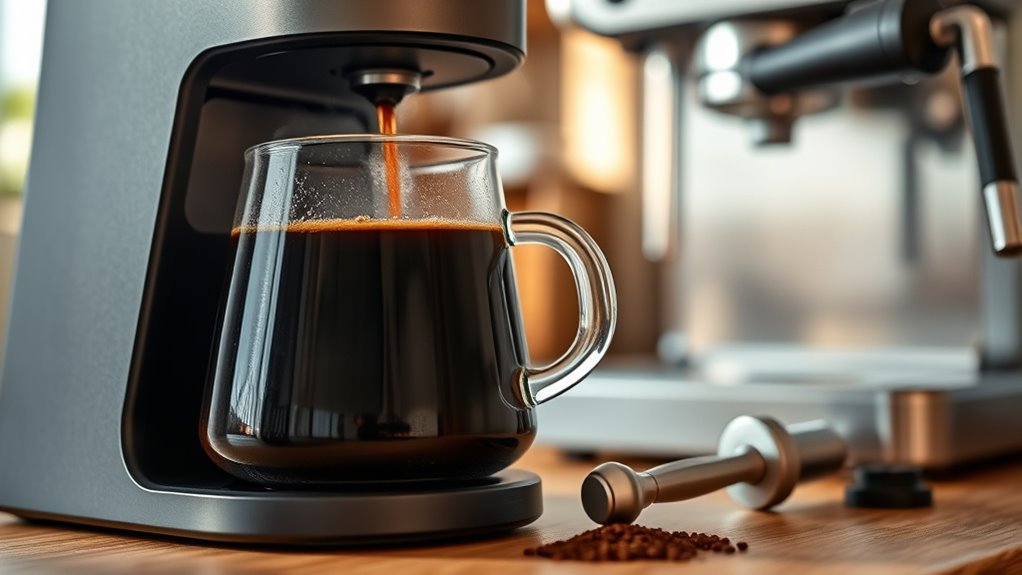
Although it might seem convenient to use your regular drip coffee maker for espresso, it simply can’t deliver the intense pressure necessary for authentic extraction. Espresso demands about 9 bars of pressure, far beyond what standard drip machines produce.
A regular drip coffee maker can’t generate the 9 bars of pressure needed for true espresso extraction.
This means your brew ends up weaker, less concentrated, and lacking the signature crema.
Even if you grind your coffee finely, your drip machine won’t replicate the richness or intensity that true espresso offers.
While some turn to moka pots or AeroPresses to get closer to that concentrated flavor, these methods don’t achieve the same extraction quality.
To experience genuine espresso, you need a specialized espresso machine or an alternative designed to mimic the high-pressure process.
A regular coffee maker just won’t cut it. Proper espresso extraction also depends on precise control of extraction time and pressure, which regular coffee makers cannot provide.
Why Pressure and Grind Size Matter for Espresso Quality
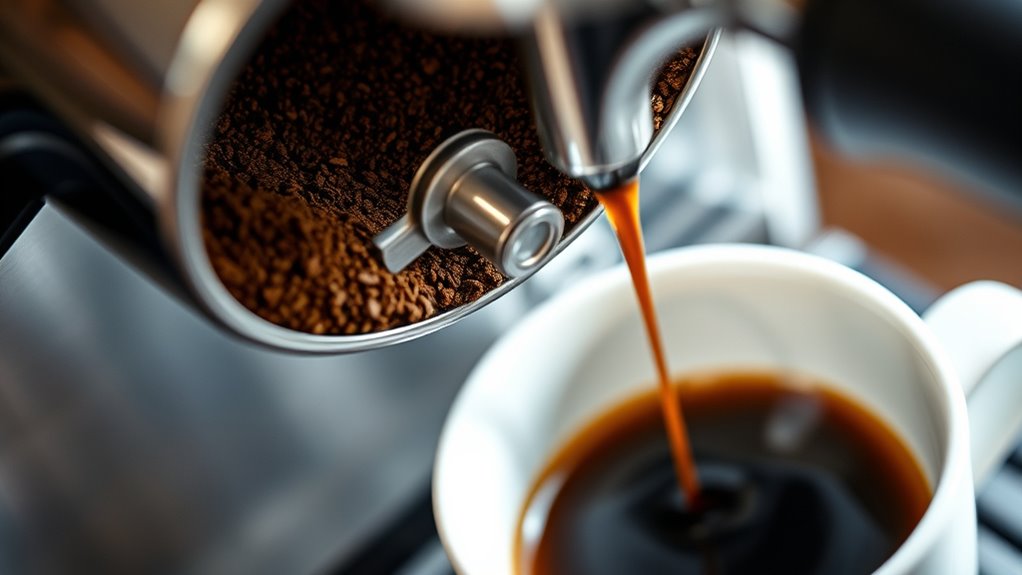
You need about 9 bars of pressure to pull out those rich flavors and get that signature crema on your espresso. It’s kind of like the magic number that helps everything come together.
And then there’s the grind size—it’s got to be just right. Fine and uniform grinds help control how the water flows through the coffee, so you don’t end up with a weak shot because of channeling.
When pressure and grind size work hand in hand, that’s when you really unlock the full complexity and balance that make a great espresso stand out.
The extraction ratio also plays a crucial role in determining the caffeine concentration and overall strength of your espresso shot.
Importance Of High Pressure
Because extracting the perfect espresso hinges on pressure, understanding its role is vital for any coffee enthusiast. High pressure, around 9 bars, forces hot water through finely ground coffee. This reveals rich flavors and creates that signature crema.
Without adequate pressure, your espresso turns weak and sour. Too much pressure risks bitterness from over-extraction. To achieve balance, pressure and grind size must work in harmony.
Water quality and temperature also play crucial roles alongside pressure in achieving a harmonious extraction and optimal flavor profile through balanced variables.
| Pressure Level | Effect on Espresso |
|---|---|
| Too Low (<9 bars) | Under-extraction, watery, sour taste |
| Ideal (~9 bars) | Rich flavor, thick crema, balanced shot |
| Too High (>9 bars) | Over-extraction, bitter, harsh taste |
| Consistent Pressure | Essential for emulsifying oils, velvety texture |
Mastering high pressure is key to authentic espresso and a rewarding coffee experience.
Optimal Grind Size
How fine should your coffee grind be to release the full potential of espresso? It needs to be very fine, like powdered sugar or fine salt. This grind size maximizes surface area, allowing high pressure (around 9 bars) to push water evenly through the compact coffee bed.
If your grind’s too coarse, under-extraction happens and you get a weak, watery shot. Too fine, and you risk clogging, which causes over-extraction and bitterness.
Consistency is just as crucial. Uneven grounds create channeling, where water bypasses coffee particles and ruins extraction.
By dialing in your grind size, you control brew time and flow rate precisely. This ensures the espresso develops the ideal strength, texture, and crema.
Mastering this balance is essential for achieving true espresso quality in any machine. Regular grinder calibration helps maintain consistent particle size and extraction quality over time.
Impact On Flavor
Mastering the grind size sets the stage, but pressure plays an equally essential role in shaping espresso’s flavor profile. You need around 9 bars of pressure to extract that rich, crema-topped shot you crave.
A finer grind increases the surface area, enabling fuller extraction and a concentrated, robust flavor.
If your grind’s too coarse, expect sour, weak notes from under-extraction. Conversely, going too fine risks bitterness due to over-extraction.
The magic happens when consistent pressure and precise grind size align perfectly, balancing intensity, smoothness, and aroma.
Each adjustment you make profoundly influences your espresso’s quality, making pressure and grind size your most critical tools in revealing the authentic, complex flavors that true espresso demands.
It’s all about finding that sweet spot where everything works together just right.
Measuring espresso yield by weight rather than volume is crucial to maintaining consistency and achieving the ideal brew ratio.
How to Use Espresso Grounds in Your Drip Coffee Maker
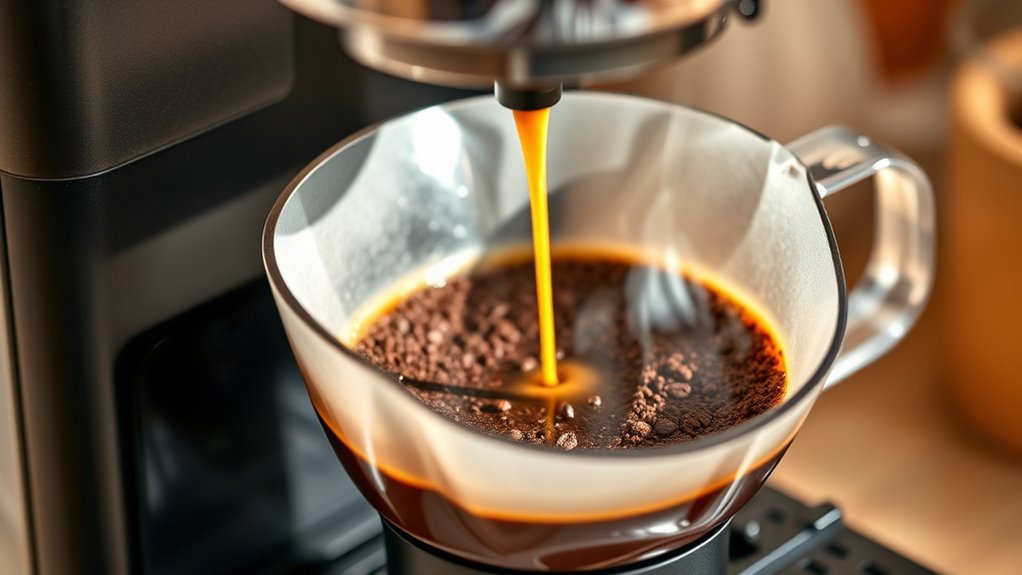
When you adjust the grind size of your espresso beans to a medium-coarse consistency, you can seamlessly use them in your drip coffee maker without risking clogs or overflows. Espresso grounds are typically finer than drip coffee grounds, but by coarsening them, you guarantee balanced extraction and smooth water flow.
Start with about 1-2 tablespoons of these grounds per 8-ounce cup to intensify the flavor without bitterness. Because espresso grounds are denser, experimenting with the coffee-to-water ratio is vital. Slight adjustments can release richer, more nuanced profiles.
Pay close attention to grind size and quantity during brewing to avoid overpowering your drip machine or compromising taste. With careful control, you’ll enjoy a robust, espresso-inspired cup from your standard coffee maker. For optimal flavor, remember to use hot water just below boiling temperature (185°F/85°C) as recommended for espresso crafting.
Ways to Make Espresso-Like Coffee Without an Espresso Machine
You don’t need an espresso machine to enjoy a bold, concentrated coffee shot. For example, a Moka pot can do the trick by forcing hot water through finely ground coffee under pressure, which brings out those rich flavors.
Or, if you want something a bit more hands-on, an AeroPress lets you control both the pressure and the brew time, so you can craft a strong, espresso-like shot just the way you like it.
Using a pressure-enhancing accessory with your AeroPress can help achieve a richer crema and more authentic espresso flavor.
AeroPress Espresso Method
How can you achieve a rich, espresso-like shot without an espresso machine? The AeroPress offers a brilliant solution.
Use about 2 tablespoons of finely ground coffee and roughly 3½ ounces of water heated to around 200°F.
Combine these, stir briskly, then press the plunger firmly to force water through the coffee under pressure. This method extracts a concentrated, flavorful shot reminiscent of espresso.
While it won’t replicate true espresso’s crema, the AeroPress delivers a similar strength and depth.
It’s perfect for standalone shots or espresso-based drinks. You can fine-tune the experience by adjusting grind size, water temperature, and pressing duration to dial in the exact intensity and richness you want.
With a bit of practice, your AeroPress can become a powerful espresso alternative. Keep in mind that extraction time influences the caffeine levels and flavor intensity of your coffee.
Moka Pot Brewing
Beyond the AeroPress, another fantastic way to craft espresso-like coffee at home lies in the Moka pot. You use finely ground coffee, similar to espresso grind, and place it in the filter basket. As the water heats on the stove, pressure forces it through the grounds, producing a rich, concentrated brew topped with crema.
Though it doesn’t reach the 9 bars of a professional espresso machine, it delivers robust flavor. Plus, it’s an affordable and convenient alternative you can enjoy anytime. However, because the Moka pot operates at a lower pressure and higher temperature than espresso machines, it cannot produce the same stable, velvety crema characteristic of true espresso.
| Feature | Details | Benefit |
|---|---|---|
| Grind Size | Fine, espresso-like | Ideal extraction |
| Pressure Level | Moderate, stove-heated | Strong, bold coffee |
| Sizes Available | 3 to 12 cups | Multiple servings |
The Moka pot is a must-have for espresso enthusiasts without machines. You’ll love how easy it is to use and the rich coffee it makes.
Pros and Cons of Making Espresso Without a Machine
Although dedicated espresso machines deliver unparalleled pressure and consistency, making espresso without one remains a viable option using tools like moka pots or AeroPresses. These alternatives let you enjoy concentrated coffee shots with rich flavor and crema-like texture, though they can’t perfectly replicate the 9-bar pressure of true espresso.
Espresso machines excel, but moka pots and AeroPress offer rich, concentrated coffee with a crema-like touch.
You’ll need to master grind size, water temperature, and timing to optimize your brew. Consider these pros and cons:
- Portability and affordability make it easy to brew espresso-like coffee anywhere.
- Variable results require patience and skill to approach authentic espresso quality.
- You’ll sacrifice some crema richness and consistency found only in specialized machines.
With careful technique, you can create satisfying espresso-style coffee without investing in an espresso machine. It just takes a bit of practice, and you might be surprised how good it can get! Using freshly ground beans before brewing is key to maximizing aroma and crema in your espresso-style coffee.
When Should You Invest in a Dedicated Espresso Machine?
If you want consistently rich, authentic espresso with the perfect crema, investing in a dedicated espresso machine becomes essential. You should consider one if you crave high-pressure brewing that manual methods can’t reliably deliver or if you make lattes and cappuccinos regularly.
A specialized espresso machine lets you refine your brewing skills, adjusting pressure, temperature, and shot timing precisely. Plus, it saves time compared to AeroPress or Moka Pot methods.
| When to Invest | Why It Matters |
|---|---|
| Frequent espresso-based drinks | Guarantees consistent quality and crema |
| Desire for skill refinement | Customize brewing parameters |
| Need for speed and efficiency | Reduces preparation time |
A dedicated machine transforms your espresso experience, making it worth every penny.
Tips for Getting the Best Espresso Flavor at Home
To unleash the full flavor potential of your espresso at home, you need more than just quality beans. You’ve got to master grind size, water temperature, and pressure.
Start by using a high-quality burr grinder to get a fine, salt-like grind. This is essential for authentic extraction.
Begin with a premium burr grinder to achieve a fine, salt-like grind for true espresso extraction.
Keep your water temperature near 200°F and aim for about 9 bars of pressure. These settings help coax rich, crema-topped shots.
Don’t forget to experiment with your brew time. Around 25 to 30 seconds is ideal. Also, adjust tamping pressure to find the right balance.
Fresh beans from trusted roasters like Atlas Coffee amplify complexity. Regular equipment cleaning ensures purity in every cup.
Picture this:
- Finely ground coffee dust swirling under precise pressure
- Golden crema forming atop a perfectly extracted shot
- Steam rising as you pull a flawless 25-second espresso
Master these, and your home espresso will rival any café.
Frequently Asked Questions
What Is the History of Espresso Coffee?
You’ll find espresso coffee began in late 1800s Italy, evolving through steam-powered machines.
Pioneers like Bezzera boosted pressure tech in the 1930s, shaping the intense, quick brew you passionately enjoy today.
How Does Water Temperature Affect Espresso Extraction?
Water temperature directly influences espresso extraction by balancing flavor compounds. Too hot burns bitterness, and too cold yields sourness.
You’ll want 195°F to 205°F for rich oils, acids, sugars, and stable crema in every shot. It really makes all the difference in how your espresso tastes.
What Types of Coffee Beans Are Best for Espresso?
Picture a dark-roasted superhero cape swirling in your espresso shot. Those beans deliver the richness and depth you crave.
But don’t underestimate fresh, single-origin beans. They bring vibrant, complex flavors that turn your espresso into an artful masterpiece.
Can You Froth Milk Without an Espresso Machine?
Yes, you can froth milk without an espresso machine by using a handheld frother, French press, or shaking heated milk in a jar. These methods create light, airy foam perfect for lattes and cappuccinos, even if less creamy.
It’s pretty simple and doesn’t require fancy equipment. Just heat your milk and try one of these easy techniques. You’ll get a nice froth in no time!
How Do Espresso Blends Differ From Regular Coffee Blends?
Espresso blends use darker roasts and specific Arabica-Robusta ratios to deliver bold, rich flavors with thick crema. They’re designed to stand up to the intense pressure and quick extraction of espresso machines.
On the other hand, regular blends focus on lighter roasts and brighter, nuanced acidity. This gives you a smoother, more diluted cup that’s easier to enjoy over time.
Conclusion
So, you want espresso from your regular coffee maker? Sure, you can try, but don’t expect a true shot of heaven. Pressure and grind size aren’t just fancy jargon; they’re the soul of espresso.
Ironically, your trusty drip machine makes coffee, not espresso. If you crave that rich crema and punch, investing in a dedicated espresso machine isn’t just smart, it’s essential.
Otherwise, enjoy your “espresso” adventure knowing you’re settling for an imposter’s charm.