Your espresso puck is wet because water isn’t draining properly, often due to grind size, dose, or tamping issues. A grind that’s too fine or inconsistent tamping traps water. At the same time, a low dose or clogged basket holes cause pooling.
Machine problems like blocked valves, worn seals, or mineral buildup also hold moisture. Start by adjusting your grind and dose, tamp firmly, and clean your machine regularly. Keep following along to uncover more precise fixes and maintenance tips.
Easy Fixes for a Wet Espresso Puck
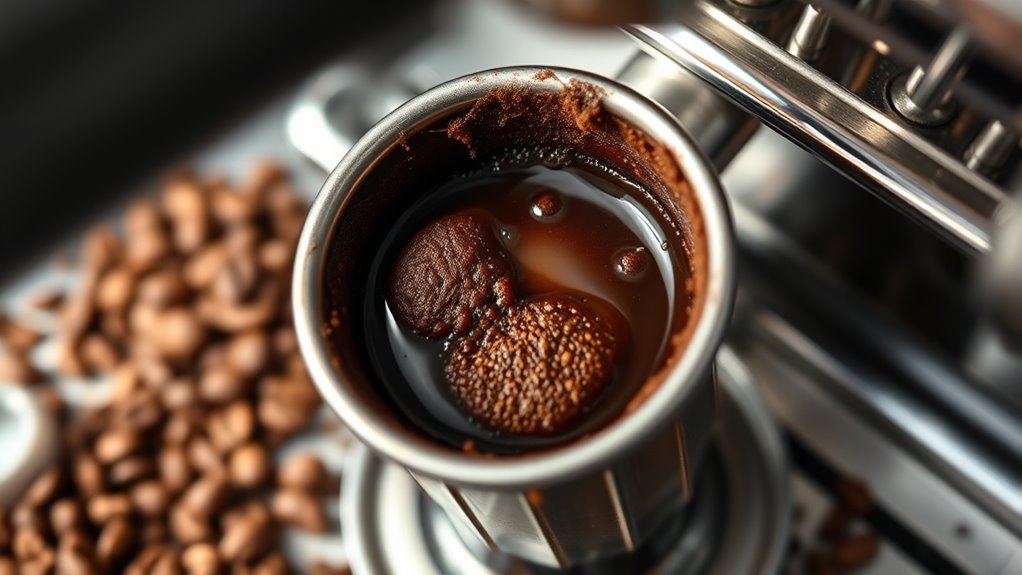
If you’re dealing with a wet espresso puck, start by adjusting your grind size to be slightly coarser. This improves water flow and reduces excess moisture trapped in the puck.
Make certain you use the correct dose. Aim to fill the basket about 2mm below the shower screen to avoid over-compactness that hinders drainage.
Tamp consistently with around 15 to 30 pounds of pressure to guarantee even compaction, preventing channeling or water pooling.
If you’re using fresh beans, switch from pressurized to non-pressurized baskets. They offer better water resistance and drainage.
Finally, remove the portafilter promptly after brewing to stop residual water from soaking into the puck. This helps keep it from staying wet.
Proper brewing techniques—including precise grind size, tamping, and extraction time—are key to achieving optimal espresso quality and puck dryness through effective extraction.
How Grind Size and Dose Affect Espresso Puck Moisture
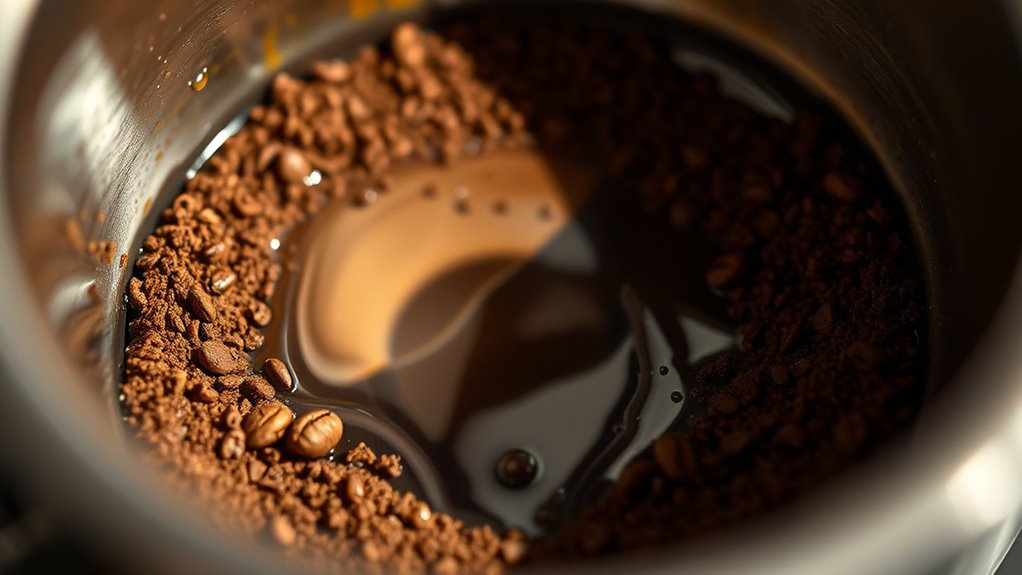
Adjusting grind size and dose plays a major role in managing espresso puck moisture. If your grind is too fine, water struggles to flow, leaving a wet puck.
Conversely, an improper dose can either create gaps that trap water or compact grounds too much, blocking water flow. Finding the right balance guarantees even extraction and a drier puck.
Using proper extraction time is also crucial to ensure optimal flavor and crema quality, which can be affected by puck moisture.
| Grind Size | Dose Amount | Effect on Puck Moisture |
|---|---|---|
| Too Fine | Proper Dose | Increased resistance, wetter puck |
| Proper Grind | Too Low Dose | Excess space, soggy puck |
| Proper Grind | Too High Dose | Over-compaction, wetter puck |
| Proper Grind | Proper Dose | Balanced flow, drier puck |
Fine-tuning these variables is key to consistent espresso quality. It’s all about getting that perfect combo so your puck isn’t too wet or too dry. Keep experimenting and you’ll find the sweet spot in no time!
Why Proper Tamping Helps Keep Your Puck Dry
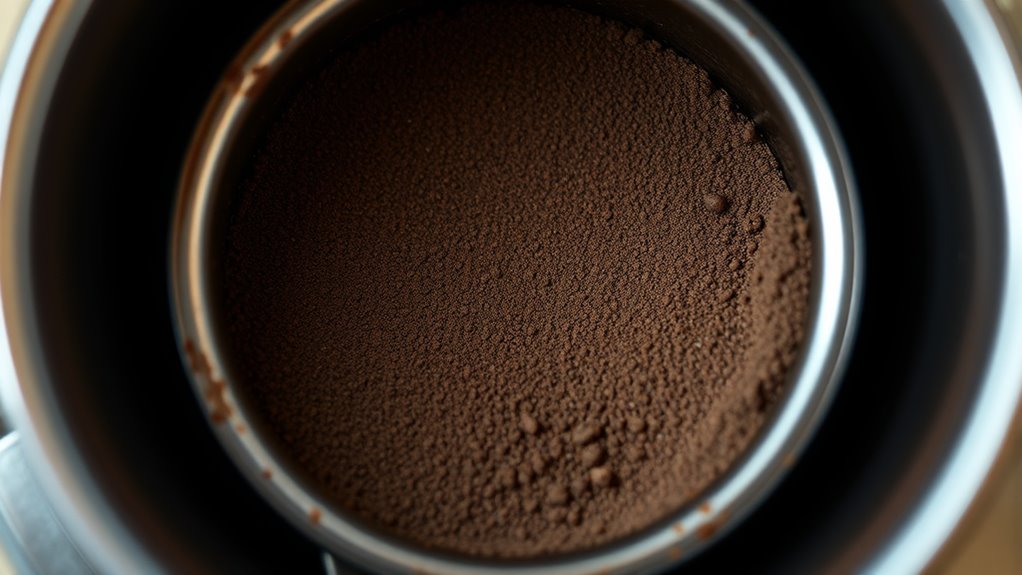
Because proper tamping applies firm, even pressure, you guarantee your espresso puck offers consistent resistance to water flow. When you tamp with 15-30 pounds of force evenly, you prevent water from creating channels that trap moisture.
Consistently tamping to the same depth and pressure compacts the grounds tightly, reducing water pooling and puck wetness.
Level tamping distributes coffee evenly, minimizing weak spots where water seeps through and causes sogginess. Eliminating voids and gaps ensures water flows uniformly, preventing excess moisture buildup.
Using a calibrated tamper helps you apply controlled pressure every time, improving puck resistance.
This tight, uniform puck reduces residual moisture, so your espresso shots come out drier and more consistent. Proper tamping is a simple, effective way to fix a wet puck issue.
Additionally, practicing with a bathroom scale can help you develop consistent tamping pressure for optimal extraction and puck dryness.
How Your Espresso Machine Affects Puck Wetness
Your espresso machine’s drainage system and valve design really make a difference in how wet your puck turns out. If the machine doesn’t drain properly or if some parts are worn out, water tends to pool and leave the puck soggy. Maintaining proper tamping pressure and consistent shot timing can also help reduce puck wetness by ensuring even extraction.
Machine Drainage Systems
While espresso puck wetness often points to grind or tamp issues, your machine’s drainage system plays a crucial role in how dry the puck ends up. Machines with three-way solenoid valves drain residual water from the group head, preventing water from pooling on the puck. Without this valve, water stays above the puck, causing wetness.
Blockages in drainage pathways also trap water, so regular cleaning is essential. Proper maintenance, including descaling and gasket checks, ensures smooth drainage. Regular descaling removes mineral deposits that can clog drainage pathways and affect puck dryness.
| Feature | Effect on Puck Wetness | Maintenance Tip |
|---|---|---|
| Three-way valve | Drains residual water fast | Inspect valve regularly |
| No three-way valve | Water pools on puck | Drain manually after shots |
| Drainage blockages | Traps water, wets puck | Clean drain holes often |
| Descaling | Prevents buildup | Schedule routine descaling |
| Gasket condition | Affects seal and drainage | Replace worn gaskets timely |
Basket And Valve Design
Although many factors influence espresso puck wetness, basket and valve design plays a crucial role in controlling water flow and drainage during extraction. Machines with three-way solenoid valves actively drain residual water from the brew group, helping keep your puck drier.
Single-wall baskets depend heavily on your grind size and dose to regulate water flow. If these aren’t dialed in, expect wetter pucks. Pressurized baskets create extra back pressure that usually leaves the puck soggy.
Also, any blockages or valve malfunctions can trap water, increasing moisture in the puck. While cleaning is important, the design itself sets the stage.
Understanding how your basket and valve work will help you troubleshoot puck wetness more effectively and ensure your espresso’s texture stays just right. Proper extraction time and full crema development also contribute to puck quality and dryness, as seen in espresso preparation techniques.
Impact Of Maintenance
Because espresso machines rely on precise water flow and pressure, regular maintenance directly impacts puck wetness. You need to clean and backflush your machine routinely to prevent blockages in the drainage system that cause water to pool above the puck.
Worn group gaskets or seals can lead to leaks or improper pressure, increasing puck moisture.
Scale buildup in water pathways and valves restricts drainage, making the puck soggier over time. Descaling and servicing solenoid valves keep water flowing smoothly and reduce retention.
Don’t overlook shower screens and basket filters; they must be free of clogs to assure proper water distribution.
Staying on top of these maintenance tasks will help you avoid a consistently wet espresso puck and improve your shot quality. It’s really about keeping everything clean and functioning well so your espresso turns out just right.
Additionally, maintaining proper brew ratios is essential, as incorrect coffee-to-water balance can also contribute to puck wetness and affect extraction quality.
How to Tell If Your Machine Is Causing a Wet Puck
If your espresso puck stays unusually wet, your machine’s drainage system might be the culprit. Pay attention to how water drains after brewing. If it lingers in the basket longer than usual or flows unevenly, that’s a clear sign of drainage issues.
Check for blocked basket holes or clogged shower screens. These restrict water flow and leave excess moisture in the puck.
Also, a malfunctioning three-way valve can fail to expel residual water, resulting in a soggy puck.
Internal faults like blocked pathways or faulty solenoid valves trap water around the puck, increasing its wetness.
Additionally, brewing variables such as pressure and extraction time can affect water flow and contribute to a wet puck if not properly adjusted, impacting caffeine extraction efficiency.
Routine Maintenance Tips to Prevent Watery Espresso Pucks
If you want to keep your espresso puck from turning watery, having a solid maintenance routine is key. Start by backflushing your machine daily—this helps clear out oils and debris that can mess with the taste.
Also, don’t forget to descale regularly. Mineral buildup can sneak in and cause all sorts of problems, so staying on top of that is important.
And make sure to clean the shower screen often, too. This keeps the water flowing just right.
Additionally, purging and wiping the steam wand immediately after each use prevents milk residue buildup that can affect espresso quality.
Daily Backflushing Routine
While daily backflushing with water might seem simple, it plays a crucial role in preventing wet espresso pucks by clearing coffee oils and grounds that block drainage. This routine keeps valves and screens free from buildup, ensuring proper flow and pressure.
Using a blind filter during backflushing helps dislodge debris, which maintains consistent extraction and dry pucks. It’s a small step that makes a big difference in your espresso quality.
Don’t forget to incorporate a weekly detergent backflush for deeper cleaning. This keeps everything running smoothly and extends the life of your machine.
Regular maintenance like backflushing is essential for optimal performance of your espresso machine and consistently good shots.
| Step | Purpose | Frequency |
|---|---|---|
| Backflush with water | Remove oils & grounds | Daily |
| Use blind filter | Clear drain valves | Daily |
| Detergent backflush | Deep internal cleaning | Weekly |
| Check group head | Inspect for clogs | Daily |
Stick to this routine to prevent water retention and enjoy better espresso quality every day.
Regular Descaling Schedule
Maintaining a consistent backflushing routine keeps your espresso machine clean, but regular descaling plays an equally important role in preventing wet pucks. Descale your machine every 1-3 months to remove mineral buildup that clogs internal water pathways. This buildup disrupts drainage and causes soggy pucks.
Use a manufacturer-recommended descaling solution to sustain proper water flow and pressure. That prevents water pooling above the puck.
Hard water deposits in the boiler and solenoid valves can impair temperature and pressure stability, resulting in inconsistent puck moisture. Routine descaling tackles this problem.
Sticking to a descaling schedule ensures your machine’s internal parts stay free of scale, promoting efficient drainage and consistent shot quality. Plus, it prolongs your espresso machine’s lifespan.
That way, every shot stays balanced and dry.
Cleaning Shower Screen
If your espresso puck keeps turning out wet, a clogged or dirty shower screen might be the culprit. Regularly remove it and scrub with a brush and approved cleaner to eliminate coffee oils and residue that block water flow.
Once a month, soak the screen in a descaling solution to dissolve mineral deposits that restrict even extraction. Use a pin or needle to clear any blocked holes, ensuring water distributes evenly across the coffee bed.
Inspect the screen for damage or corrosion and replace it if needed to maintain proper flow. Don’t forget to backflush your machine routinely with water or detergent to prevent internal buildup that compromises shower screen performance and leads to watery pucks.
Consistent maintenance keeps your shots crisp and dry. It’s a simple habit that really makes a difference in your espresso quality.
When to Adjust Your Recipe vs. Check Your Machine
Whenever your espresso puck turns out wet, deciding whether to tweak your recipe or inspect your machine depends on a few key signs.
If your shot flows too fast or water pools on top, start by increasing the coffee dose or using a finer grind. These adjustments usually help before you dive into machine checks.
But if the puck stays wet despite recipe tweaks and your extraction timing or taste feels off, it’s time to check your machine. Focus on cleaning the shower screen and basket regularly.
Then, look at drainage parts like solenoid valves and internal pathways for any blockages.
Keeping both your recipe and machine in good shape ensures consistent, drier pucks and better espresso quality. It’s all about balance and paying attention to what your shot is telling you.
Frequently Asked Questions
Can Water Temperature Affect Espresso Puck Wetness?
Yes, water temperature affects espresso puck wetness. Too hot, and it weakens the coffee bed, causing a wet puck. On the other hand, too cold leads to under-extraction and moisture.
Does Coffee Bean Freshness Influence Puck Moisture?
Yes, coffee bean freshness directly affects puck moisture. You’ll get a denser, more resilient puck with fresh beans, which reduces water retention.
On the other hand, using stale beans makes your puck fragile and wetter. This can harm espresso quality and consistency. So, keeping your beans fresh really matters.
How Does Humidity Impact Espresso Puck Dryness?
Humidity makes your espresso puck wetter by increasing moisture in the grounds and environment. This extra moisture slows drying and disrupts extraction.
Can Using Filtered Water Reduce Puck Wetness?
You can think of filtered water as a gentle river, smoothing your espresso’s path. It reduces mineral buildup and impurities, helping water flow evenly through the puck. But remember, grind and tamping still play starring roles.
Keeping your water clean is important, but it’s not the only factor. The way you grind your beans and how firmly you tamp them matter just as much. So, using filtered water is a great start, but don’t forget the rest of the process!
Is Puck Wetness Related to Shot Extraction Time?
No, puck wetness isn’t directly tied to shot extraction time. You’ll find moisture depends more on grind size, dose, and tamping.
Adjust those to control wetness, rather than focusing solely on how long the shot pulls. It’s more about the prep than the timing. Just tweak those variables, and you’ll see the difference.
Conclusion
Think of your espresso puck like a garden. Too much water drowns the roots, and too little leaves it parched. By dialing in your grind size, dose, and tamp, you’re balancing moisture perfectly.
Don’t forget your machine’s role. A well-maintained espresso maker is like fertile soil, essential for a dry, firm puck. Tweak your recipe or check your machine regularly, and you’ll brew espresso that’s always rich and satisfying. Never soggy or weak.